







































Description
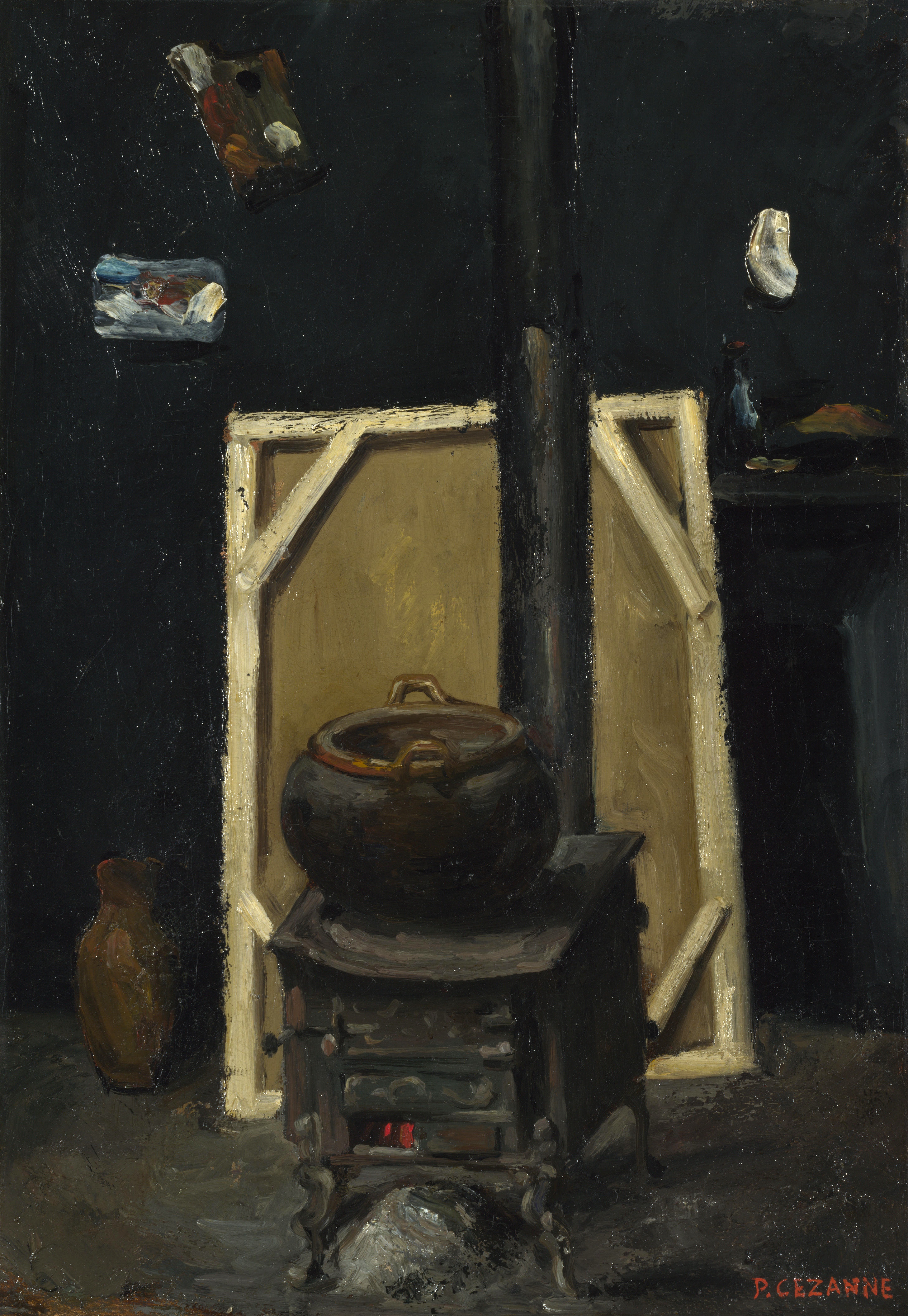
The Stove in the Studio – the canvases stand with their backs to the room
At the centre stands a small cast-iron stove on curved feet; through the grate open at the front the red embers show. On its plate squats a large dark pot with two handles and a lid, and behind it a black flue rises and leaves the upper edge. On the floor at the left stands a brown earthenware jug, at the right a dark table with a small bottle. All of it is sunk in a near-black ground. The original measures 41 × 30 cm, was made about 1865 and is held by the National Gallery in London (NG 6509). We draw it out and paint it by hand: a hand-painted painting on canvas, oil on canvas, stretched over a solid stretcher frame.
What stands behind the stove
Behind the stove two canvases lean against the wall – and they are turned the wrong way round. What faces the viewer is not the paintings but their backs: the pale wooden stretcher frame and the diagonal braces at the corners, exactly as a canvas stands while nothing has yet been painted on it, or when it is set against a wall. The catalogue raisonné lists this expressly among the motifs as an unframed canvas. A work about a studio is thus one in which every other work shows only its reverse.
The signature in red
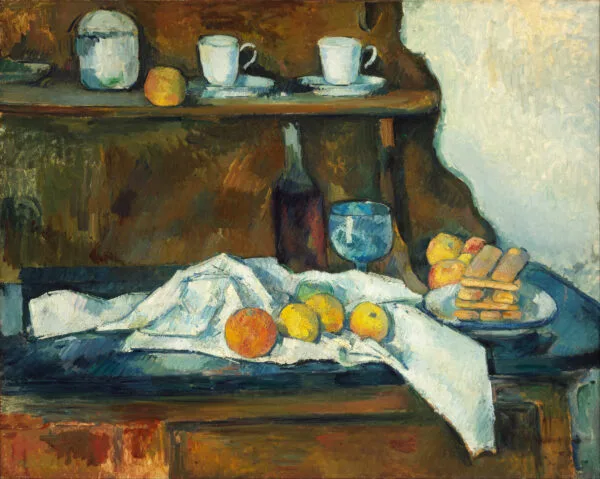
At the lower right stands the signature: P. CEZANNE, written in red and large enough to catch the eye at once. The catalogue reproduces it to the letter, full stop included. With this painter that is not a matter of course – most of his canvases stay unsigned, so the red signature in the corner of this work is something worth looking at. Another early canvas from the same moment is Bread and Eggs, likewise of 1865.
From Zola’s house into the national collection
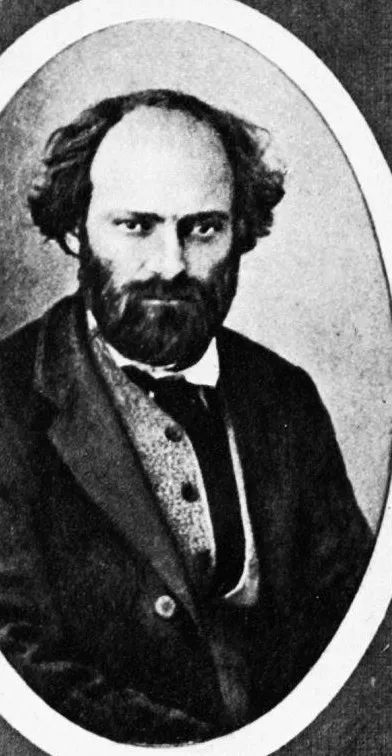
The first owner the catalogue records is the novelist Émile Zola, at home in Médan; after his death the canvas was sold in 1903 at the sale of the Zola collection at the Hôtel Drouot in Paris, as number 112. The end of the road is unusual: in 1992 London received it from the Chester Beatty family under the procedure by which a work of art is handed to the state instead of a tax payment. The work was therefore not bought but given in place of money. The painter’s face in later years is carried by the Self-Portrait with a Soft Hat.
The work is almost single-coloured: black, brown and ochre, and between them only two light accents – the wooden stretcher and the embers in the stove. That is exactly why it reads better in a darker room than in a bright one: it stands well in a small study, beside a bookshelf, or in the kitchen of an old house. Because the canvas is upright, the smallest size begins at 41 × 60 cm and the largest measures 124 × 180 cm. On request we stretch intermediate measurements to custom size as well, and the framed view is given by our 3D rendering application, measurements are in centimetres. Measurements are in centimetres. A jug like the one standing here on the floor returns in Fruit and a Jug on a Table as well, among our reproductions on canvas.
- Subject: The Stove in the Studio, Paul Cézanne, about 1865, National Gallery, London
- Technique: hand-painted painting, oil on canvas, reproduction
- Sizes: 15 dimensions, custom size on request
- Of note: the canvases behind the stove are turned round – stretcher and braces are what show