







































Description
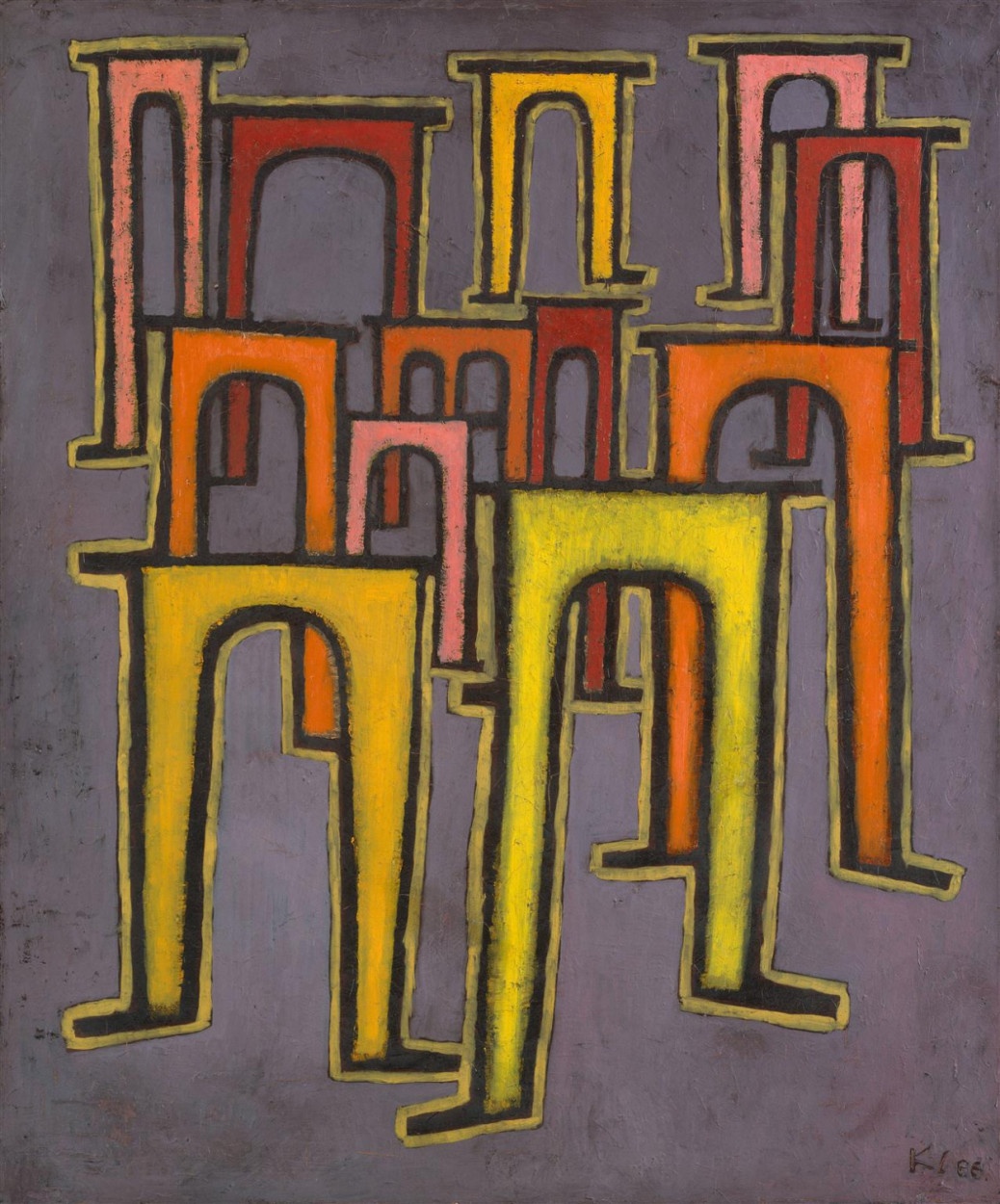
Revolution of the Viaduct is a painting by Paul Klee from 1937: on a grey-violet ground stands a crowd of bridge arches in yellow, orange, red and pink, each outlined in black and yellow, and instead of keeping in line the arches go their own way. The original is oil on cotton, 60 x 50 cm, and belongs to the Hamburger Kunsthalle in Hamburg. Our painter paints it for you by hand on canvas, in oil or acrylic, in 8 upright sizes from 36 x 43 to 90 x 103 cm or made to measure. Before the arches set off to you, we send a photograph of the finished painting.
| Title: | Revolution of the Viaduct |
| Other titles: | Revolution des Viaductes (German title) · La rivoluzione del viadotto (Italian title) |
| Painter: | Paul Klee (1879–1940) |
| Year painted: | 1937 |
| Original size: | 60 cm x 50 cm (height x width) |
| Original technique: | Oil on cotton |
| Painting style: | Modernism |
| Located at: | Hamburger Kunsthalle, Hamburg, Germany |
| Our reproduction: | Hand-painted in oil or acrylic on canvas, 8 sizes or made to measure |
Revolution of the Viaduct – Paul Klee
What does Revolution of the Viaduct show?
A viaduct is a long bridge on arches that carries a road or a railway across a valley. Klee took it apart into single arches and set them behind and beside one another on a soft grey-violet ground, rough and blotchy in places. Each arch looks like a narrow gate, with a beam across the top and two piers below.
The colours are warm: lemon and golden yellow, orange, brick red and pink. Every arch has a thick black outline with a thin yellow line running along its outer edge, so the shapes almost glow against the dark ground. The upper arches are smaller and overlap, as if further away; the lower ones are large and step right up to the viewer.
The oddest thing is that the arches do not stand in a row. The bottom ends of the piers bend like feet, so the arches seem to be setting off on a walk, some with a long stride, others with a short one. Klee signed his name at the lower right.
What does the revolt of the arches mean?
A viaduct usually stands for order: identical arches line up and carry the same load together. Here the arches differ in size, turn in different directions and walk alone, which is why the title speaks of a revolution of the bridge.
Since the 1950s the work has often been read as a response to the threat of Nazism: the arches break ranks and walk free, like individuals refusing to march in step. In 2000 the art historian Frank Zöllner argued that it is rather an expression of individual artistic resistance.
Both readings come from art historians, not from Klee himself. What is certain is that Klee painted the viaduct theme in several versions and that this one dates from 1937, the year the Nazis showed seventeen of his works in the “Degenerate art” exhibition.
Why is this painting so well known?
Because it needs no explanation. A stone bridge built to last for centuries suddenly starts to walk, and that is both funny and serious. A child sees comical coloured legs; an adult sees a crowd breaking up.
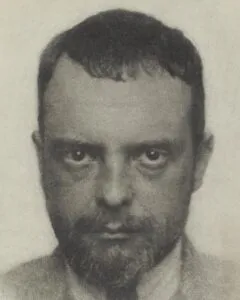
The painter of this marching bridge was born in 1879 in Münchenbuchsee near Bern, to a German music teacher and a Swiss singer. A violinist since childhood, he was described by Rilke as making drawings that read like transcriptions of music.
For more on the painter, the English Wikipedia article on Paul Klee covers his life and work; it is about the artist, not specifically about this painting.
Where is the original, and how did it come about?
The original belongs to the Hamburger Kunsthalle in Hamburg, Germany. It is painted in oil on cotton and measures 60 x 50 cm (height x width), larger than many of Klee’s works, which are often small and on paper, gauze or board.
Klee taught at the Bauhaus from January 1921 to April 1931, alongside Wassily Kandinsky, and then at the Düsseldorf Academy until 1933. In 1937, 102 of his works were seized from public collections. His output ran to more than 9,000 works by the time he died in 1940.
Revolution of the Viaduct or another Klee?
It is a canvas painting for anyone who likes clear, warm colours and a story you can read in seconds.
For a dense mosaic of colour, choose With the Rotating Black Sun and the Arrow from 1919. If you prefer dark, mysterious scenes, Omega 5 (Traps) hangs pale shapes on a wine-red ground. Rhythmical offers a beat of black, white and grey fields, and Arrow in the Garden a warm copper surface full of tiny plants and signs.
All the famous Paul Klee paintings we make to order, from small signs to broad fields of colour, are gathered on our Paul Klee page.
How do we hand-paint Revolution of the Viaduct?
Klee’s original is oil on cotton fabric, 60 x 50 cm. Ours is an oil painting reproduction on canvas: the painter works in oil or acrylic, in the size you choose, and builds up the colour in several layers.
First he draws the outlines of every arch, because the overlaps, the gaps and the “steps” of the piers must sit exactly where Klee placed them. Then he lays in the grey-violet ground with its faint blotches and fills each arch with its own colour, from pale pink to glowing yellow.
Last come the thick black outlines and the fine yellow lines beside them that make the arches shine. The result has visible brushwork and hangs on your wall like any other painted work.
Which size suits which wall?
In short: 36 x 43 or 40 x 49 cm for a hallway, a shelf or the wall beside a door, 46 x 55 and 54 x 65 cm above a desk or a bedside table, 60 x 75 and 68 x 85 cm above a chest of drawers or a bed, and 77 x 95 and 90 x 103 cm above a sofa or on a wall of its own.
We paint the work in 8 upright sizes (width x height): 36 x 43, 40 x 49, 46 x 55, 54 x 65, 60 x 75, 68 x 85, 77 x 95 and 90 x 103 cm. The original measures 50 x 60 cm (width x height), so the three smallest sizes are a little smaller than it, the larger ones enlarge it, and our largest size, 90 x 103 cm, is almost twice as wide as the painting in Hamburg.
As a painting for the living room it is at its strongest at 77 x 95 or 90 x 103 cm above the sofa, where the yellow arches seem to step into the room.
Can I order a custom size or a frame?
Yes. If your wall needs other proportions, we arrange the arches so they stay whole and widen or narrow only the grey-violet ground. Send us the size you need and we will come back with a price and a delivery date for your viaduct.
The painting reaches you rolled, stretched on a stretcher bar or framed. Our workshop in Slovenia stretches and frames the arches and readies each painting for its trip to you. You pick the moulding in our 3D app, which is for choosing the frame only; a view of the painting on your own wall is a different, separate service.
A slim black or dark grey frame echoes the black outlines; natural wood suits the warm colours.
How soon will my painting arrive?
Work on your viaduct begins as soon as you confirm the order, and it is ready to ship in 15 to 45 working days. Before it leaves we send you a photograph of the finished work, and if you want a change, we make it.
Parcels to Slovenia and the rest of the EU carry no customs duty, and every order is covered by our returns policy.
The colourful arches make a fine gift for anyone who loves architecture, bridges or modern art. Unsure which size their wall can take? With a wall art voucher, the recipient picks the viaduct size.
Frequently asked questions
Where can the original be seen?
At the Hamburger Kunsthalle in Hamburg, Germany.
What is in the picture?
Yellow, orange, red and pink bridge arches stepping out of line on a grey-violet ground.
Is this a print?
No. A painter builds every arch by brush, so you get a hand-painted copy on canvas in oil or acrylic.
How big is the original?
60 x 50 cm (height x width); our sizes run from 36 x 43 to 90 x 103 cm.
Can I order a size that is not listed?
Yes, any width and height: write to us and we will quote a price and a delivery date.
How long does it take?
15 to 45 working days, and you see a photograph of the finished painting before dispatch.
Does it suit an office or make a good gift?
Yes. Its warm colours suit an office or a living room, and it pleases anyone who loves architecture.
Does the painting carry a political message?
It is often read as a response to the threat of Nazism; Frank Zöllner saw it rather as individual artistic resistance.
- Subject: bridge arches in yellow, orange, red and pink leaving their row on a grey-violet ground.
- Original: oil on cotton, 1937, 60 x 50 cm, Hamburger Kunsthalle.
- Ours: hand-painted in oil or acrylic on canvas as a Paul Klee reproduction in 8 upright sizes, 36 x 43 to 90 x 103 cm, or made to measure.
- Worth knowing: Klee painted the viaduct theme in several versions; this one is from 1937.