







































Description
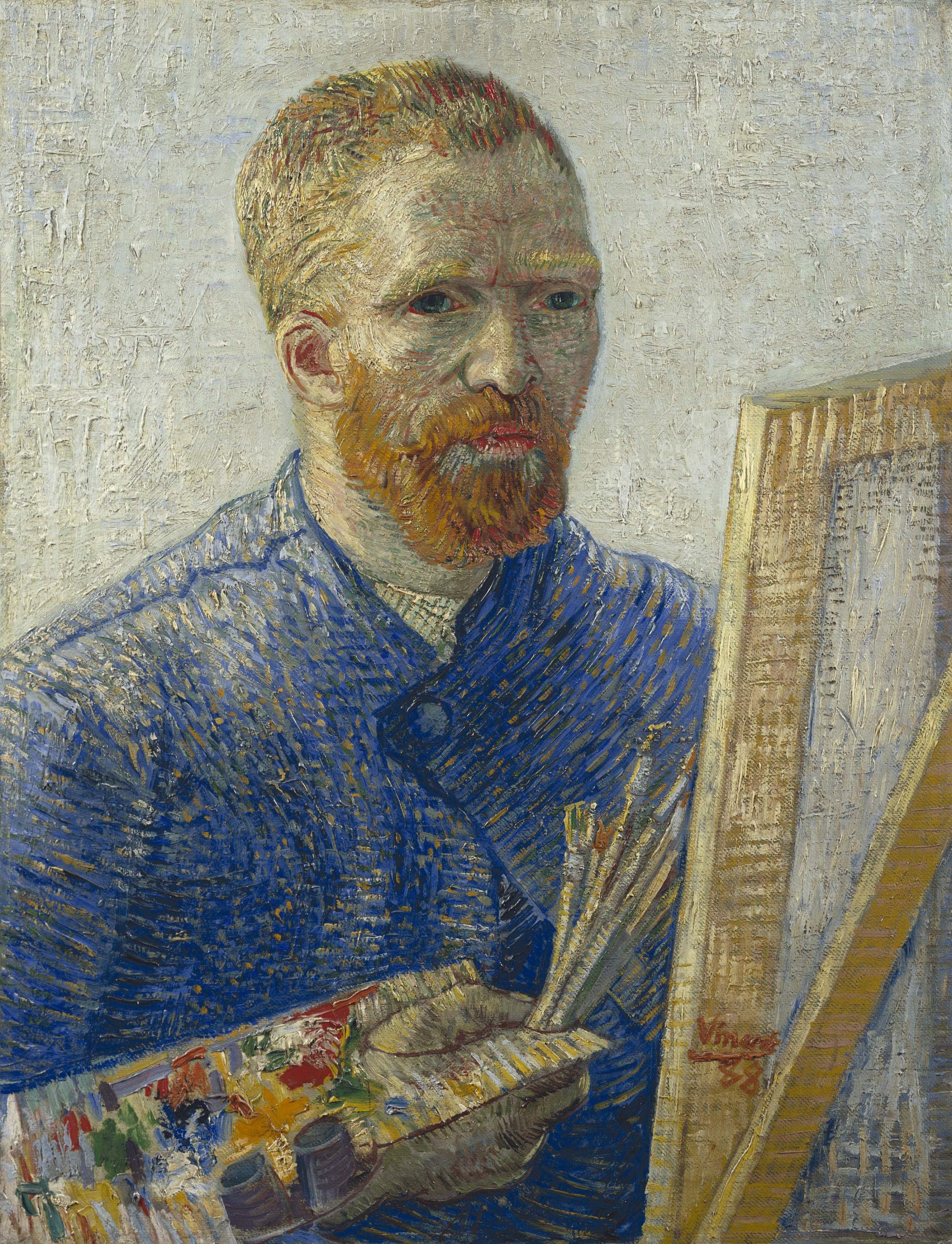
Self-Portrait as an Artist is the painting in which Vincent van Gogh presented himself as a painter in Paris at the turn of 1887 and 1888: behind his easel, palette and brushes in hand, in a blue working smock and with a blazing orange-red beard. The original measures 65.1 x 50 cm and hangs in the Van Gogh Museum in Amsterdam. We paint it by hand in oil on canvas, in 16 sizes from 40 x 50 to 151 x 190 cm or to your own measurement, and send you a photograph of the finished work for approval before dispatch.
| Title: | Self-Portrait as an Artist |
| Other titles: | Self-Portrait as a Painter · Zelfportret als schilder · Self-Portrait in Front of the Easel |
| Painter: | Vincent van Gogh (1853–1890) |
| Year painted: | December 1887 – February 1888, Paris |
| Original size: | 65.1 cm x 50 cm |
| Original technique: | Oil on canvas |
| Painting style: | Post-Impressionism |
| Located at: | Van Gogh Museum, Amsterdam (inv. s0022V1962) |
| Our reproduction: | Hand-painted oil on canvas, 16 sizes or made to measure |
Self-Portrait as an Artist – Vincent van Gogh
What does Self-Portrait as an Artist show?
Van Gogh painted himself to the waist, his body turned towards the easel at the right edge of the canvas and his head turned towards us. His hair is cropped short, his beard is a fiery orange-red, and he wears a blue working smock with dark buttons. At the lower left he holds a palette with small dabs of pure colour and a bundle of brushes, as if he had paused for a moment to look up into the mirror.
The background is light, a greyish white laid on in short, lively strokes, and on the right you see the wooden easel and the back of the canvas. On the easel he signed his name, Vincent, in red, with the year 88. Short, separate strokes follow the face and the folds of the smock, so the surface seems to vibrate.
Why did Van Gogh paint himself with a palette and an easel?
This self-portrait is a statement. Van Gogh showed himself not as a gentleman in a hat but as a painter at work. The Van Gogh Museum points out that he wanted to show he was a modern artist: he used a new style, with bright, almost unblended colours.
The palette carries pairs of complementary colours: red and green, yellow and purple, blue and orange. These are exactly the colours he used for this canvas, and he set them side by side so that each makes the other stronger – the blue of the smock against the orange-red of the beard is the clearest example.
What does Self-Portrait as an Artist tell us about the painter?
He finished it at the end of almost two years in Paris, where he had come to live with his brother Theo. The museum describes it as the last work Van Gogh produced in Paris; the city had worn him out, mentally and physically, and in February 1888 he left for the south, to Arles.
To his sister Wil he described how he had portrayed himself: wrinkles in the forehead and around the mouth, stiffly wooden, a very red beard, quite unkempt and sad. That frank description matches what you see – a serious, tired face that nothing flatters. Yet the palette and brushes show a painter sure of his craft.
Where does the original hang, and how did it reach Amsterdam?
The original hangs in the Van Gogh Museum in Amsterdam, which lists it under the object number s0022V1962. It belongs to the Vincent van Gogh Foundation, and the museum has held it on permanent loan since it opened on 2 June 1973.
Van Gogh left the canvas in his brother’s flat in Paris. After Theo died in January 1891, it passed to his widow, Jo van Gogh-Bonger, and their son, Vincent Willem. Jo lent it to the Rijksmuseum in 1909; from 1931 it hung in the Stedelijk Museum, and in 1962 it passed to the foundation.
Self-Portrait as an Artist or Self-Portrait with Bandaged Ear – which should you choose?
We paint two of Van Gogh’s self-portraits, and they are often compared. This page is Self-Portrait as an Artist, from Paris at the start of 1888: the painter with palette and brushes behind his easel, in a blue smock, against a light background, with the original in Amsterdam. The other is Self-Portrait with Bandaged Ear, painted in Arles in January 1889: Van Gogh with a bandage and a fur cap, with the original in the Courtauld Gallery in London.
For a portrait about craft, work and self-belief, choose this one; for the story of Arles and its crisis, choose the bandaged ear. Between the two came many of his best-known works: in Arles in 1888 he painted Sunflowers I and the night scene Café Terrace at Night, and in June 1889 in Saint-Rémy The Starry Night. We paint all three as well.
How is our hand-painted Self-Portrait as an Artist made?
The painter first draws the outline of the head, the shoulders, the easel and the palette, and checks the proportions against the original. Next comes the blue of the smock in short parallel strokes, then the face in small touches of orange, pink, green and blue, the beard in fiery tones, and last the light background. Our oil painting reproduction is painted by hand in oil on canvas with real impasto: the paint goes on thickly, so the brushstrokes stand up from the canvas as they do in the original and catch the light.
That matters here, because Van Gogh placed his colours side by side instead of mixing them, and raised, separate strokes make the blue and orange glow. A print shows only a flat surface; on our painting the strokes and the layers of paint are real.
Every painting is a hand-painted copy made for your order, so no two are quite the same. Before dispatch we photograph it and send you the photograph to approve.
Which size for which wall?
Short answer: 60 x 80 or 70 x 90 cm above a chest of drawers or a desk, 80 x 100 or 90 x 113 cm above a sofa or a bed, and 120 x 150 cm for a large empty wall. The upright format of a self-portrait fits well between two windows, in a hallway or on a narrow wall.
There are 16 sizes: 40 x 50, 50 x 62, 51 x 65, 56 x 70, 60 x 80, 70 x 90, 80 x 100, 85 x 105, 90 x 113, 100 x 130, 110 x 140, 120 x 150, 127 x 160, 134 x 170, 142 x 180 and 151 x 190 cm (width x height). The 51 x 65 cm size is practically the same as the original, which is 50 cm wide and 65.1 cm high, so the face on your wall is as big as it is in the museum. The smallest suit a study or a hallway, the largest a big living space or a staircase. A painting for the living room should cover about two thirds of the width of the furniture below it; an upright canvas can be narrower when it hangs above a slim piece of furniture.
Hang it with the centre of the canvas about 150 cm above the floor, so the painter meets your eyes. Above a sofa or a headboard, leave 20 to 30 cm between the furniture and the bottom edge.
What if I need a custom size or a frame?
If none of the 16 sizes fits your wall, we paint it to measure. We recommend keeping the proportions close to the original, otherwise the face and the easel get squeezed or stretched. Send us the width and height you want and we will quote a price and a lead time. Every painting we make is stretched over a wooden stretcher and ready to hang.
For the moulding, use our 3D application: it shows each of our frame profiles on this subject, so you can compare gold, silver, black, white and natural wood before you decide – the application is for choosing the frame only. If you would like to see how the painting will look on your own wall, that is our separate room placement service. The blue smock and the orange beard suit a plain dark wooden frame or a narrow gold profile that does not compete with the colours.
How does delivery work, and what is the guarantee?
Every painting is made to order in our studio in Slovenia, so allow 15 to 45 days depending on the size you choose. We ship it stretched and protected, framed if you chose a frame, across the EU with no customs. Before dispatch you receive a photograph of the finished work to approve; if anything is not right, we correct it while the canvas is still in our workshop. Our returns policy applies to every order.
More famous Van Gogh paintings are in the Vincent van Gogh gallery, and there is more about the painter in our article on Vincent van Gogh. If it is a gift and you are not sure of the size, a wall art voucher lets the recipient choose size and subject.
Frequently asked questions
Where does the original Self-Portrait as an Artist hang?
The original hangs in the Van Gogh Museum in Amsterdam, where it is currently on view. It belongs to the Vincent van Gogh Foundation, and the museum has held it on permanent loan since opening in 1973. In 2022 it was shown at the Courtauld Gallery in London, and in 2025 and 2026 it travelled to exhibitions in Japan.
When and where did Van Gogh paint Self-Portrait as an Artist?
In Paris, between December 1887 and February 1888, at the end of almost two years spent living with his brother Theo. The museum describes it as the last work he produced in Paris. The city had worn him out, and in February 1888 he moved to Arles in the south of France.
Why is Van Gogh holding a palette in Self-Portrait as an Artist?
Because he wanted to present himself as a painter, and a modern one. Behind the easel, with palette and brushes, he shows his profession; with bright, almost unblended colours he shows the new style he had developed in Paris. The colours on the palette are the very ones he used to paint this canvas.
Which colours did Van Gogh use in Self-Portrait as an Artist?
Mainly pairs of complementary colours: red and green, yellow and purple, blue and orange. He set them side by side so that each strengthens the other, most clearly in the blue smock against the orange-red beard. On our painting the painter follows these pairs and lays the colours on separately, as Van Gogh did.
How did Van Gogh himself describe Self-Portrait as an Artist?
Without mercy. He wrote to his sister Wil that he had painted himself with wrinkles in the forehead and around the mouth, stiffly wooden, with a very red beard, quite unkempt and sad. The description matches the serious, tired face on the canvas, while the palette and brushes show a painter who is determined all the same.
Is Van Gogh painting with his left hand in Self-Portrait as an Artist?
No, it only looks that way. He painted his self-portraits from a mirror, so the image is reversed: the side of the face we read as his right is really his left. That reversal is precisely what shows, in this painting, that Van Gogh painted with his right hand, even though the palette seems to say otherwise.
How many self-portraits did Van Gogh paint, and where does Self-Portrait as an Artist fit?
He painted dozens, and they are an important part of his work; the earliest that survives dates from 1886. Self-Portrait as an Artist is the last of the Paris period, and the later ones include the bandaged-ear portrait from Arles. An overview of his self-portraits with dates and museums is on Wikipedia.
How big is the original Self-Portrait as an Artist?
The original is 65.1 cm high and 50 cm wide, a usual size for a portrait, which already hangs well above a desk or a chest of drawers. Our 51 x 65 cm size is practically the same as the original, and there are smaller and larger sizes up to 151 x 190 cm, as well as custom sizes.
Is the original Self-Portrait as an Artist for sale, and what is it worth?
No, the original is not for sale. It belongs to the Vincent van Gogh Foundation and is on permanent loan to the Van Gogh Museum, so it has no market price. What we can state is the price of our hand-painted version, shown on this page for the size you choose: a real canvas painting in oil for your own wall.
Does your Self-Portrait as an Artist have the raised brushstrokes of the original?
Yes. We paint our Self-Portrait as an Artist in impasto: the paint goes on thickly, so the brushstrokes stand up from the canvas as on Van Gogh’s original. You see it best in the blue smock and in the beard, where the short strokes catch the light. A print cannot have this relief, because its surface is flat.
- Subject: Van Gogh behind his easel with palette and brushes, in a blue working smock.
- Original: December 1887 – February 1888, Paris, 65.1 x 50 cm, Van Gogh Museum, Amsterdam.
- Ours: a Van Gogh reproduction painted by hand in oil on canvas, in 16 sizes from 40 x 50 to 151 x 190 cm or made to measure.
- Worth knowing: you receive a photograph of the finished work for approval before dispatch.