Description
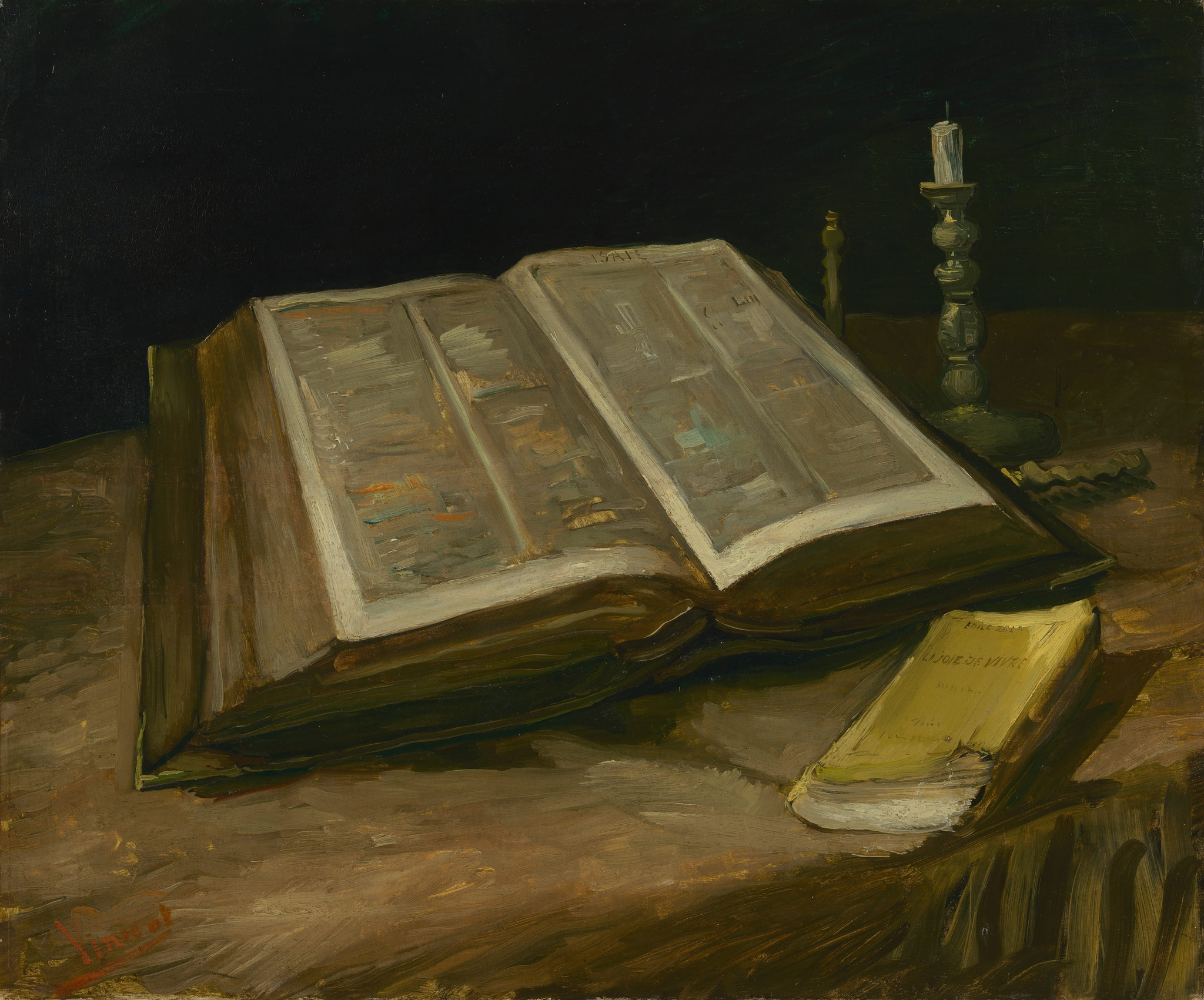
Still Life with Bible is the painting Vincent van Gogh made in Nuenen in October 1885: his late father’s large open Bible lies on a table next to an extinguished candle and a small yellow novel by Émile Zola, against a black background. The original measures 65.7 x 78.5 cm and hangs in the Van Gogh Museum in Amsterdam. We paint it by hand in oil on canvas, in 17 sizes from 50 x 40 to 150 x 120 cm or to your own measurement, and send you a photograph of the finished work for approval before dispatch.
| Title: | Still Life with Bible |
| Other titles: | Stilleven met bijbel · Natura morta con Bibbia |
| Painter: | Vincent van Gogh (1853–1890) |
| Year painted: | October 1885, Nuenen |
| Original size: | 65.7 cm x 78.5 cm |
| Original technique: | Oil on canvas |
| Painting style: | Realism |
| Located at: | Van Gogh Museum, Amsterdam (inv. s0008V1962) |
| Our reproduction: | Hand-painted oil on canvas, 17 sizes or made to measure |
Still Life with Bible – Vincent van Gogh
What does Still Life with Bible show?
A heavy Bible lies open on a table covered with a brown cloth. Its pages are not white but off-white and greyish, painted in quick strokes that suggest the columns of print without spelling out a single word. Behind it on the right stands a brass candlestick with a candle that has gone out, and in front, on the corner of the table, lies a small worn paperback with a lemon-yellow cover. Everything else disappears into a black background.
Van Gogh described the canvas to his brother Theo in almost the same words: an open, hence off-white Bible, bound in leather, against a black background with a yellow-brown foreground, with an additional note of lemon yellow. That note of yellow is the novel, and it is the brightest colour in the painting.
Why did Van Gogh paint his father’s Bible?
The Bible belonged to his father, Theodorus van Gogh, a Protestant minister in the village of Nuenen, who died on 26 March 1885. The Van Gogh Museum notes that Vincent painted it just after his father’s death. Their relationship had been difficult, and they saw the world in very different ways; the painting brings those differences together on one table.
Next to the Bible he placed his own copy of La joie de vivre by Émile Zola. According to the museum, that book was a kind of bible for modern life, and the two books stand for the different views of the world held by the father and the son. The Italian Wikipedia adds that his father considered Zola and the French naturalist writers immoral.
What does Still Life with Bible mean?
The painting is built on contrasts: a large book and a small one, old and new, a sombre leather binding and a bright yellow cover. The extinguished candle belongs to the tradition of seventeenth-century Dutch still life, where a candle that has gone out reminds the viewer how short life is. The Italian Wikipedia also notes that the Bible lies open at chapter 53 of the book of Isaiah.
There is a second meaning, about painting itself. Theo found Vincent’s canvases too dark and urged him towards the lighter, brighter colours of the Impressionists. With this still life Vincent wanted to show that black could be effective. In the same letter he wrote that he had painted it in one go, in a single day, and that it now came quite readily to him to paint any object, whatever its shape or colour.
Where does the original hang?
The original hangs in the Van Gogh Museum in Amsterdam, which lists it as Still Life with Bible, Nuenen, October 1885, oil on canvas, 65.7 x 78.5 cm, under the object number s0008V1962. It belongs to the Vincent van Gogh Foundation.
Van Gogh took the canvas with him from Nuenen to Antwerp in November 1885 and brought it to Theo in Paris at the end of February 1886. After Theo’s death it passed to his widow, Jo van Gogh-Bonger, and their son, and it has been in the museum since its opening in 1973. The letter in which Van Gogh describes the painting can be read in full at the Van Gogh Letters project.
Still Life with Bible or The Potato Eaters – which should you choose?
Both paintings come from Nuenen and from the same year, 1885, and both are painted in the dark earth colours of his Dutch period. The Potato Eaters, finished in the spring, shows five peasants at their evening meal under a lamp; Still Life with Bible, painted in the autumn, shows no people at all, only three objects that stand for a family. From the same year in Nuenen there is also Autumn Landscape with Four Trees.
Choose The Potato Eaters for a large figure scene and Still Life with Bible for a quiet object painting above a desk or a bookshelf. If you like the idea of a still life with a message, Skull with Burning Cigarette, a still life from early 1886, is its very different counterpart, and Sunflowers I from Arles shows how far his colours travelled within three years.
How is our hand-painted Still Life with Bible made?
The painter first draws the table, the open book, the candlestick and the small novel, and checks the perspective against the original, because the Bible is seen slightly from above and its pages must curve correctly. Then comes the black background, laid on in several layers so that it stays deep and not flat, then the brown cloth, the greyish pages, the brass of the candlestick and last the lemon-yellow cover. Our oil painting reproduction is painted by hand in oil on canvas with real impasto: the paint goes on thickly, so the brushstrokes stand up from the canvas as they do in the original and catch the light.
On this painting the relief matters on the pages of the Bible, where Van Gogh painted the lines of print as raised strokes, and on the edge of the yellow book. A print shows only a flat surface; on our painting the strokes are real.
Every painting is a hand-painted copy made for your order, so no two are quite the same. Before dispatch we photograph it, sending you the photograph to approve.
Which size for which wall?
Short answer: 70 x 56 or 80 x 66 cm above a desk, a sideboard or a bookshelf, 100 x 80 or 120 x 100 cm above a sofa, and 150 x 120 cm for a large empty wall. The landscape format works well in a study, a library, a home office or a dining room.
There are 17 sizes: 50 x 40, 60 x 50, 67 x 55, 70 x 56, 70 x 59, 74 x 61, 75 x 65, 80 x 66, 80 x 70, 85 x 72, 90 x 75, 100 x 80, 105 x 85, 110 x 90, 115 x 93, 120 x 100 and 150 x 120 cm (width x height). The original is 78.5 cm wide and 65.7 cm high; our 80 x 66 cm size is the closest to it, so the painting on your wall is almost as large as it is in the museum. A dark painting needs a light wall and good light: hang it on a white or pale wall and give it a warm lamp or daylight from the side, and the black background will look deep instead of heavy. A painting for the living room should cover about two thirds of the width of the furniture below it.
Hang it with the centre of the canvas about 150 cm above the floor. Above a sofa or a sideboard, leave 20 to 30 cm between the furniture and the bottom edge.
What if I need a custom size or a frame?
If none of the 17 sizes fits your wall, we paint it to measure. We recommend keeping the proportions close to the original, otherwise the book and the table get squeezed or stretched. Send us the width and height you want and we will quote a price and a lead time. Every painting we make is stretched over a wooden stretcher and ready to hang.
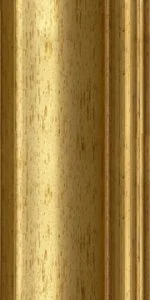
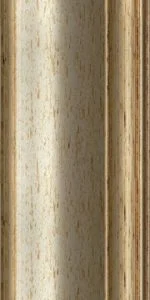
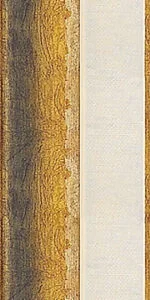
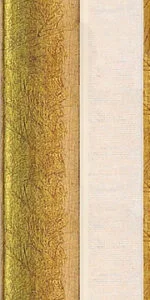
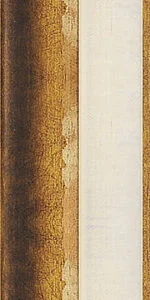
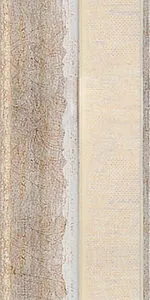
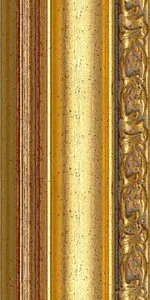
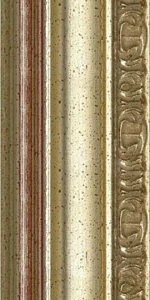
For the moulding, use our 3D application: it shows each of our frame profiles on this subject, so you can compare gold, silver, black, white and natural wood – the application is for choosing the frame only. Seeing the painting on your own wall is our separate room placement service. A gold frame picks up the brass candlestick and the yellow book, and a dark wood frame keeps the painting calm and close to its period.
How does delivery work, and what is the guarantee?
Every painting is made to order in our studio in Slovenia, so allow 15 to 45 days depending on the size you choose. We ship it stretched and protected, framed if you chose a frame, across the EU with no customs. Before dispatch you receive a photograph of the finished work to approve, and we correct anything that is not right. Our returns policy applies to every order.
More famous Van Gogh paintings are in the Vincent van Gogh gallery, and there is more about the painter in our article on Vincent van Gogh. If you are giving it as a present and are not sure of the size, a wall art voucher lets the recipient choose.
Frequently asked questions
Where is the original Still Life with Bible today?
In the Van Gogh Museum in Amsterdam. The museum lists it as Still Life with Bible, oil on canvas, 65.7 x 78.5 cm, under the object number s0008V1962, as part of the collection of the Vincent van Gogh Foundation. Van Gogh sent it to his brother Theo in Paris in 1886, and it stayed in the family until it came to the museum.
When and where did Van Gogh paint Still Life with Bible?
In October 1885 in Nuenen, the Brabant village where his father was the minister, a few months after his father’s death in March of that year. In a letter to Theo written around 28 October 1885 he said that he had painted it in one go, in a single day. A month later he left Nuenen for Antwerp.
Whose Bible is in Still Life with Bible?
It was his father’s Bible. Theodorus van Gogh was a Protestant minister, and the Van Gogh Museum calls it a hefty Bible that had belonged to him. Vincent painted it after his father died, and set his own copy of Émile Zola’s novel La joie de vivre beside it, so the two books stand for father and son.
What is the message of Still Life with Bible?
It sets two views of life side by side: the father’s faith, in the large old Bible, and the son’s modern world, in the small yellow novel by Zola, which the museum calls a kind of bible for modern life. The extinguished candle recalls the Dutch tradition of still lifes about how short life is, and the black background shows that dark colours can still be strong.
What is the yellow book in Still Life with Bible?
It is La joie de vivre, a novel by Émile Zola, Van Gogh’s own copy. The title is painted on its cover. Its lemon-yellow colour is the brightest note in the painting, and Van Gogh mentioned it himself when he described the canvas to Theo as having an additional note of lemon yellow against the black background.
Why is Still Life with Bible so dark?
Because Van Gogh wanted to prove a point. His brother Theo found his canvases too dark and urged him to use the lighter colours of the Impressionists, and this still life was meant to show that black could be effective. Compare it with Sunflowers I, painted three years later in Arles, to see how far his colours changed.
How big is the original Still Life with Bible?
The original is 65.7 cm high and 78.5 cm wide, a landscape format that suits a desk, a sideboard or a bookshelf. Our 80 x 66 cm size is the closest to the original, and there are smaller and larger sizes from 50 x 40 up to 150 x 120 cm, as well as custom sizes for a particular wall.
Is Still Life with Bible a good painting to give as a gift?
It is a quiet, thoughtful gift rather than a cheerful one. It suits a reader, a writer or a teacher, someone who works with books, or anyone who wants a serious canvas painting for a study, a library or a home office. The story of a father and a son in two books also makes it a personal present for a family.
Does your Still Life with Bible have the raised brushstrokes of the original?
Yes. We paint our Still Life with Bible in impasto: the paint goes on thickly, so the brushstrokes stand up from the canvas as on Van Gogh’s original. You see it best on the pages of the open Bible, the edge of the yellow book and the brass candlestick, where the relief catches the light. A print cannot have this relief, because its surface is flat.
- Subject: his father’s open Bible, an extinguished candle and Zola’s yellow novel La joie de vivre against a black background.
- Original: October 1885, Nuenen, 65.7 x 78.5 cm, Van Gogh Museum, Amsterdam.
- Ours: a Van Gogh reproduction painted by hand in oil on canvas, in 17 sizes from 50 x 40 to 150 x 120 cm or made to measure.
- Worth knowing: you receive a photograph of the finished work for approval before dispatch.