







































Description
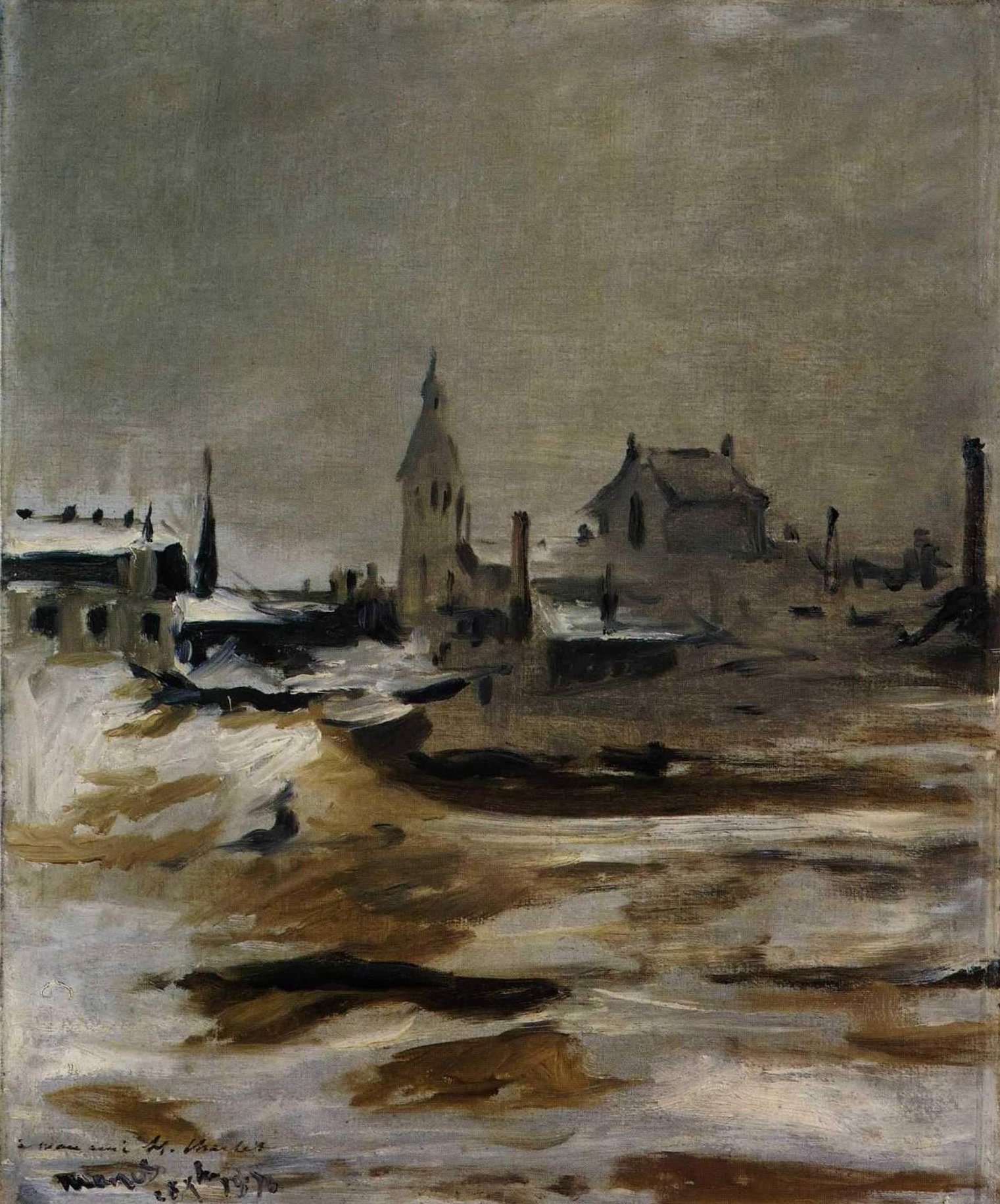
Effect of Snow on Petit-Montrouge is a winter landscape Édouard Manet painted in 1870, while he served in the National Guard during the Siege of Paris: under a heavy grey sky a church tower rises among snow-covered roofs on the horizon, and a muddy, snowy field stretches across the foreground. The original is oil on canvas, 59.7 x 49.7 cm, and belongs to Amgueddfa Cymru – National Museum Wales in Cardiff. Our painter paints it for you by hand in oil on canvas, in 8 portrait sizes from 36 x 43 to 124 x 150 cm, or made to measure, and we send you a photograph of the finished painting before dispatch.
| Title: | Effect of Snow on Petit-Montrouge |
| Other titles: | Effet de neige à Petit-Montrouge (French title) · Snow at Montrouge |
| Painter: | Édouard Manet (1832–1883) |
| Year painted: | 1870 |
| Original size: | 59.7 cm x 49.7 cm (height x width) |
| Original technique: | Oil on canvas |
| Painting style: | Realism and Impressionism |
| Located at: | Amgueddfa Cymru – National Museum Wales, Cardiff, United Kingdom |
| Our reproduction: | Hand-painted in oil on canvas, 8 sizes or made to measure |
Effect of Snow on Petit-Montrouge – Édouard Manet
What does Effect of Snow on Petit-Montrouge show?
The canvas splits horizontally into two near-equal halves: an almost monochrome grey sky above, and below it a snowy landscape laid in with broad, coarse strokes of black, brown, ochre and white.
Between them runs a horizon of buildings. At the centre stands a tower with a pointed spire, identified as the bell tower of Saint-Pierre de Montrouge, a church built in the 1860s; to its right rises the crossing tower, with the snowy roof of the nave between them. At the left edge, a house shows only its top floor and roof, its windows three black dabs.
To the right the lower half is calmer, probably a field; on the left a patch of ochre suggests an earth mound with traces of snow. There is no green anywhere and no shadow. At the lower left are Manet’s signature, the date and a dedication to his friend H. Charlet.
What story lies behind this winter view of 1870?
In July 1870 France declared war on Prussia. Manet, a committed Republican, sent his mother, wife and son to safety in Oloron-Sainte-Marie in the Pyrenees, while he stayed in Paris and enlisted in the National Guard. Some artist friends, Claude Monet among them, had left for London before the war; he stood sentry on the city’s fortifications.
With the city surrounded, his letters left by balloon, telling of drills, guard duty and boredom, then of rising food costs and hunger.
Unlike the history painters of his day, Manet shows no heroic battle, only the dusky mood of a battle still to come, read as his loss of hope, his loneliness and the hardship of those months. The earth mound at the front left is thought to allude to the war; the absence of soldiers is considered striking.
Charlet is not in Manet’s address book, so scholars take him for a comrade from the National Guard; the signature is dated 28 December 1870.
Why does this painting matter in Manet’s work?
Édouard Manet (1832–1883), among the first to paint modern life and pivotal between Realism and Impressionism, rarely painted landscape: this is one of his few, and one of his first made outdoors.
The Rouart and Wildenstein catalogue lists it as Manet’s only painting from the siege. Recording an impression in quick, loose strokes instead of telling a story, it counts among his earliest Impressionist landscapes, years before the first Impressionist group show of 1874.
The church, the dedication and Manet’s siege letters are covered in the Wikipedia article on the painting, written in English.
Where is the original, and how did it reach Cardiff?
The original, oil on canvas measuring 59.7 x 49.7 cm (height x width), belongs to Amgueddfa Cymru – National Museum Wales in Cardiff, under accession number NMW A 2468.
It is not in Manet’s sales records, so he may have given it to Charlet; the Rouart and Wildenstein authors suggest instead that the journalist Pierre Giffard (1853–1922) received it and sold it to the dealers Durand-Ruel in 1905.
In October 1912 the Welsh collector Gwendoline Davies bought it, and after her death it passed with her collection to the present National Museum in Cardiff.
Effect of Snow on Petit-Montrouge or another Manet?
This canvas painting suits lovers of quiet winter scenes, muted greys and a city barely showing on the horizon.
Its closest relative is The Funeral: there too Paris, with the Panthéon and other domes, stands under a stormy sky, and a small funeral procession winds below in the same quick, unfinished manner.
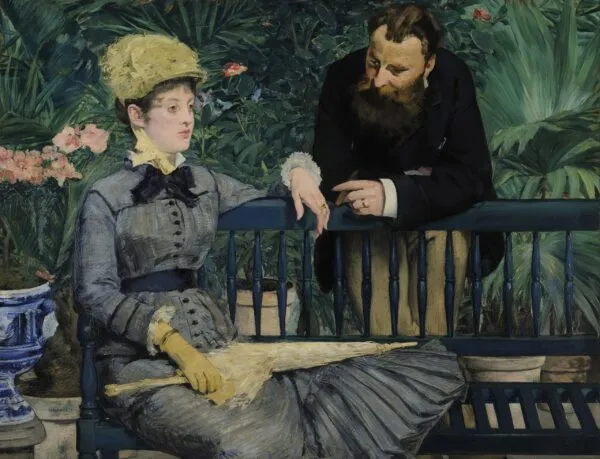
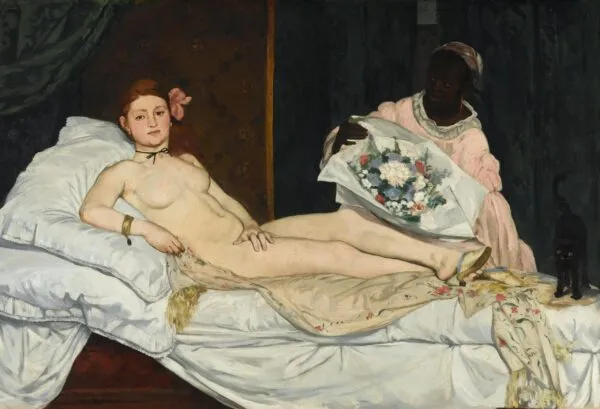
If you prefer Manet’s figures, his youngest brother Gustave posed for Young Man in the Costume of a Majo, and his brother Eugène raises a black hat and holds a red cape in The Matador Saluting. Players in a sunlit garden fill The Croquet Game.
Every one of the famous Manet paintings we paint to order is gathered on our Édouard Manet page.
How do we hand-paint Effect of Snow on Petit-Montrouge?
Manet’s original is a small oil on canvas just under 60 cm high, unlike many of his large canvases. We make it as an oil painting reproduction: our painter works in oil on canvas, at the size you pick, in several layers.
He first fixes the horizon at half height and draws the towers, roofs and chimneys, then builds the sky in thin layers of grey with a hint of ochre, even and shadowless.
The lower half follows with a fuller brush, in wide strokes of black, brown, ochre and white left unsmoothed, since these rough marks give snow and mud their weight; like Manet, he uses no green.
Which size suits your wall?
In short: 36 x 43 or 40 x 49 cm above a bedside table or on a shelf, 54 x 65 and 60 x 75 cm for a study or hallway, 68 x 85 and 90 x 103 cm above a chest of drawers or bed, 97 x 122 or 124 x 150 cm for a larger wall.
We paint it in 8 portrait sizes (width x height): 36 x 43, 40 x 49, 54 x 65, 60 x 75, 68 x 85, 90 x 103, 97 x 122 and 124 x 150 cm. The original measures 49.7 x 59.7 cm (width x height), so only 36 x 43 and 40 x 49 cm are smaller, 54 x 65 cm already slightly exceeds it, and every size above that is larger; the largest, 124 x 150 cm, is about two and a half times as wide.
As a painting for the living room it works best at 97 x 122 or 124 x 150 cm, where the tower and the broad strokes in the snow read from across the room.
Can I order another size or a frame?
Yes. For other proportions we keep the whole horizon and add sky or widen the snowy field. Tell us the width and height you want for this winter view, and we reply with a price and a date.
This snow scene travels rolled, on a stretcher bar or framed by our workshop in Slovenia. Its frame is picked in our 3D app, made only for choosing frames; a view of the painting on your own wall is a separate service.
Dark wood or slim antique gold suits its greys and ochres.
When will the painting arrive, and how is it sent?
Work on the grey sky and the church tower begins once you confirm the order, and the painting is ready to ship within 15 to 45 working days. You receive a photograph of the finished canvas before packing, and we make any changes you ask for.
Parcels to Slovenia and the rest of the EU travel without customs duties, under our returns policy.
This quiet winter view is a thoughtful gift for lovers of Paris or history. Unsure of the wall? With a wall art voucher, the recipient picks the size of the snow scene.
Frequently asked questions
Where can I see the original?
At Amgueddfa Cymru – National Museum Wales in Cardiff, under accession number NMW A 2468.
Which church stands on the horizon?
The bell tower of Saint-Pierre de Montrouge, in the fourteenth arrondissement of Paris.
Is this a printed reproduction?
No. You receive a hand-painted copy, worked in oil on canvas by our painter.
How big is Manet’s canvas?
It measures 59.7 x 49.7 cm (height x width); all our sizes from 54 x 65 cm upwards are larger.
Can I order a size that is not listed?
Of course. Tell us the width and height you need, and we will answer with a price and a production time.
How long does the painting take?
Between 15 and 45 working days; before dispatch you get a photograph of the finished painting to approve.
Will this grey winter scene suit a bedroom?
Yes. Its calm greys suit a bedroom or a study, and it makes a fine gift for lovers of Paris and winter landscapes.
Why are there no soldiers, if it was painted in wartime?
Instead of a heroic battle, Manet paints the gloomy mood of the besieged city; only the earth mound at the front left may hint at the war.
- Subject: the church tower and snowy roofs of Petit-Montrouge under a grey sky, with a muddy, snow-covered field in front.
- Original: oil on canvas, 1870, 59.7 x 49.7 cm, Amgueddfa Cymru – National Museum Wales, Cardiff.
- Ours: an Édouard Manet reproduction, hand-painted in oil on canvas in 8 portrait sizes from 36 x 43 to 124 x 150 cm or made to measure.
- Worth knowing: Manet painted it as a National Guardsman during the Siege of Paris.