







































Description
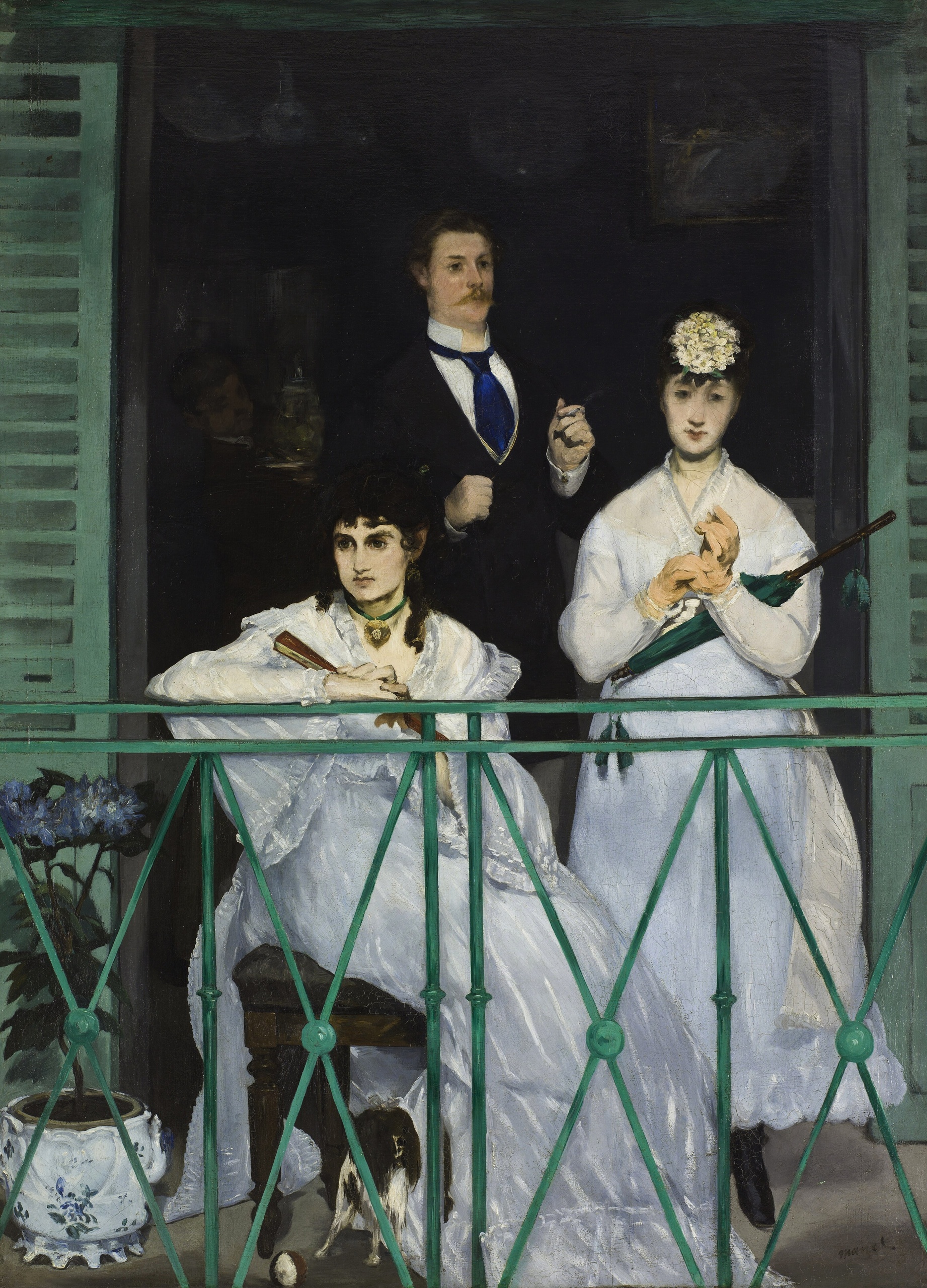
The Balcony is a painting by Édouard Manet from 1868: behind a bright green iron railing a young dark-haired woman in white sits with a fan, a second woman stands beside her with a parasol and gloves, and between them a man in a blue tie steps out of a shadowy room. The original is a large oil on canvas, 170 x 124.5 cm, in the Musée d’Orsay in Paris. Our painter paints it by hand in oil on canvas, in 8 upright sizes from 30 x 40 to 151 x 200 cm or made to measure, and before dispatch we send you a photograph of the finished painting.
| Title: | The Balcony |
| Other titles: | Le Balcon (French title) · Der Balkon (German title) |
| Painter: | Édouard Manet (1832–1883) |
| Year painted: | 1868 |
| Original size: | 170 cm x 124.5 cm (height x width) |
| Original technique: | Oil on canvas |
| Painting style: | Realism and Impressionism |
| Located at: | Musée d’Orsay, Paris, France |
| Our reproduction: | Hand-painted in oil on canvas, 8 sizes or made to measure |
The Balcony – Édouard Manet
What does The Balcony show?
An open French window with green shutters frames the scene. Across the full width runs an iron railing in the same vivid green, with crossed bars and round knobs. Behind it lies a dark interior, from which three figures step into daylight.
On the left sits a young woman with dark hair to her shoulders. She rests her forearms on the railing, holds a closed red fan and wears a green ribbon with a pendant at her throat. She looks past us, serious, into the distance.
On the right stands a second woman in white, with white flowers in her hair. She is buttoning yellow gloves, a furled green parasol under her arm. Between them, a step further back, stands a man with a full moustache and blue tie, a cigarette in his right hand.
In the darkness behind them a boy can just be made out. At the lower left is a blue-and-white pot with a hydrangea, under the chair a small black-and-white dog with a ball, and at the lower right the signature: manet.
Who are the people at the railing, and what does the scene mean?
All three were friends of Manet. Seated is the painter Berthe Morisot, who married Manet’s brother Eugène in 1874; this was the first portrait Manet painted of her. In the middle stands the painter Antoine Guillemet, on the right the violinist Fanny Claus, and the boy in the background is probably Manet’s son Léon Leenhoff.
The idea came from Goya’s Majas on a Balcony, which also shows figures behind a railing; Manet moved the scene into his own circle.
None of the three looks at the others. English Wikipedia says Manet deliberately abandoned any connection between the figures, treating them almost like objects in a still life. Morisot seems a romantic, unreachable heroine, while the other two look indifferent.
Why is The Balcony so famous?
At the Paris Salon of 1869 the critics turned against it. The press called it discordant, the caricaturist Cham mockingly asked for the shutters to be closed, and Albert Wolff spoke of coarse art at the level of house painters.
The bold green jarred most. The palette is restrained, white, green and black, lifted only by the blue tie and the red fan. The sharp contrast of black background, white dresses and green iron gives the scene its air of mystery.
Morisot wrote that she looked more peculiar than ugly in it, and that the curious had called her a femme fatale. Through her, Manet befriended Degas, Monet, Renoir and other Impressionists, though he stayed loyal to the Salon.
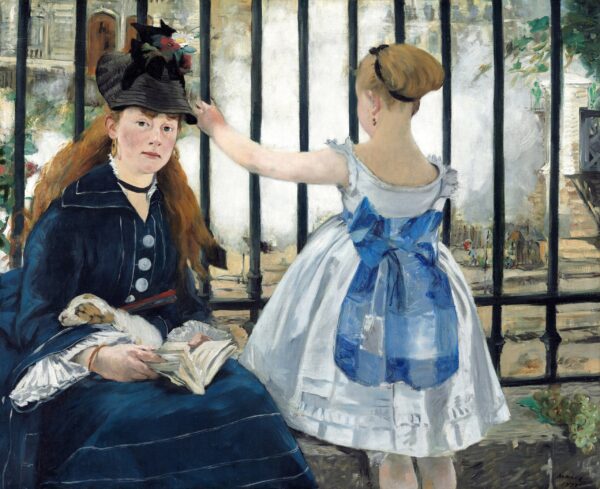
In 1950 René Magritte painted Perspective II: Manet’s Balcony, with coffins in place of the figures. Manet set people behind iron bars again in The Railway of 1873, where a little girl looks through the railing at a cloud of steam. The English Wikipedia article on the painting, written in English, tells more.
Where is the original today, and how did it get there?
The original belongs to the Musée d’Orsay in Paris, inventory number RF 2772; the canvas is 170 cm high and 124.5 cm wide.
Manet kept it until his death in 1883, hanging near his Olympia. In 1884 the painter Gustave Caillebotte bought it from Manet’s estate, and on his death in 1894 his will left it to the French state.
From 1896 it hung in the Musée du Luxembourg, then in the Louvre and the Jeu de Paume, and since 1986 it has been in the Musée d’Orsay. Beforehand Manet painted each sitter on their own many times, Guillemet as many as fifteen.
The Balcony or another Manet?
The Balcony is a canvas painting for lovers of quiet, slightly mysterious scenes, and it suits a dining room, a hallway or the wall above a chest of drawers.
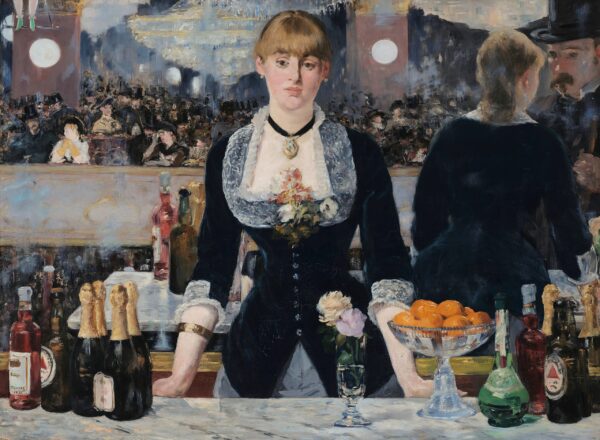
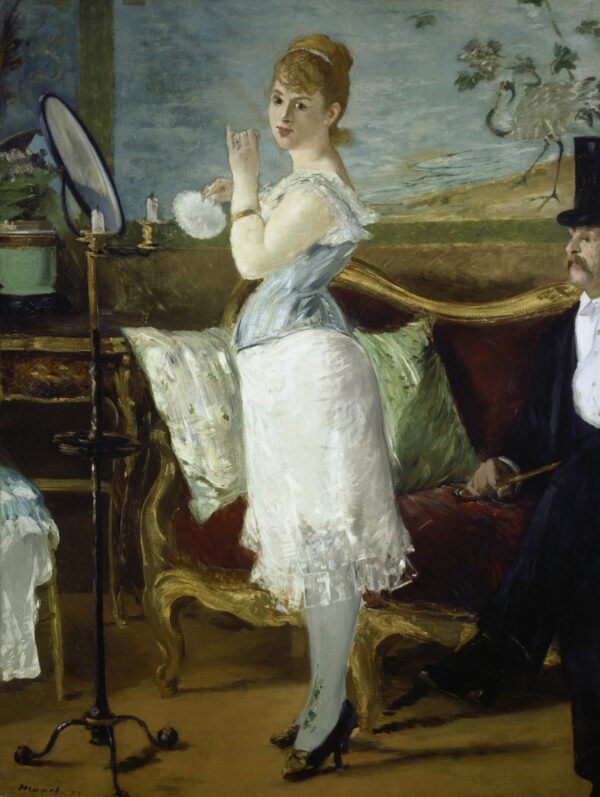
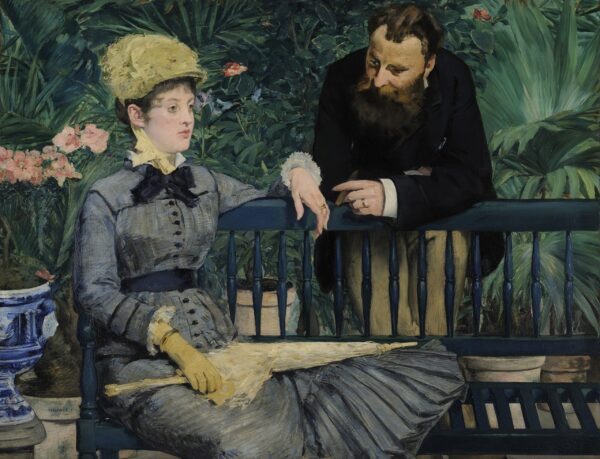
For late Manet, see A Bar at the Folies-Bergère, with the barmaid before a mirror. A couple among green plants appears in In the Conservatory, and a confident single figure in Nana.
Other famous Manet paintings we paint to order sit together on our Édouard Manet page.
How do we hand-paint The Balcony on canvas?
Manet painted his original as a large oil on canvas. Ours is an oil painting reproduction made by hand: the painter works with a brush in oil on canvas, in the size you choose, layer by layer.
He first places the shutters, the railing with its diagonal bars and the three heads in proportion, then lays in the dark interior and the green surfaces, and finally the white dresses.
Manet’s white is never flat: greyish, bluish and warm tones mix in the folds. The painter renders it with loose strokes, while he works the faces, gloves, fan and hydrangea more closely.
Which size fits which wall?
In short: 30 x 40 and 40 x 52 cm for a narrow wall or a hallway, 45 x 60 and 57 x 79 cm above a chest of drawers or a bed, 73 x 100 and 91 x 127 cm above a sofa, and 120 x 160 or 151 x 200 cm for a tall, empty wall where the scene opens like a window into the room.
We paint it in 8 upright sizes (width x height): 30 x 40, 40 x 52, 45 x 60, 57 x 79, 73 x 100, 91 x 127, 120 x 160 and 151 x 200 cm. The original measures 124.5 x 170 cm (width x height): the first seven sizes are smaller, 120 x 160 cm comes fairly close, and 151 x 200 cm is both taller and wider than the canvas in Paris.
As a painting for the living room it works best at 91 x 127 or 120 x 160 cm, and the tall composition fits well on a wall between two windows.
Can I order a different size or a frame?
Yes. With other proportions all three figures stay whole; we adjust only the shutters or the dark background. Tell us the size you have in mind and we will come back with a price and a date.
The Balcony travels rolled, stretched on a stretcher bar or framed; our workshop in Slovenia does the stretching and framing. You choose the moulding in our 3D app, while viewing the painting on your own wall is a separate service. A dark wooden frame suits the green railing.
When will my painting arrive, and how?
After you confirm the order, The Balcony is ready to ship within 15 to 45 working days. Before packing, you get a photograph of the finished painting, and we make any change you ask for.
Shipping within Slovenia and the EU carries no customs duties, and our returns policy applies.
Three friends at a green railing make a fine gift for an Impressionism lover or a new home. If you are unsure of the size, give a wall art voucher.
Frequently asked questions
Where can I see Manet’s original?
At the Musée d’Orsay in Paris, inventory number RF 2772.
Who is shown in the painting?
Berthe Morisot, Antoine Guillemet and Fanny Claus, with Manet’s son Léon probably in the background.
Is it a print?
No, it is a hand-painted copy, brushed in oil on canvas by our painter.
How large is Manet’s original?
170 x 124.5 cm; our largest size, 151 x 200 cm, is bigger.
Will you paint The Balcony in a size not on the list?
Yes. Send us the width and height and we will quote for it.
How long will I wait for The Balcony?
From 15 to 45 working days, plus a photograph of the finished painting before it ships.
Would The Balcony suit a dining room, or make a good gift?
Yes. The calm upright scene suits a dining room, and it delights anyone who loves Manet.
Why do the figures not look at each other?
Manet left out any connection between them on purpose, which makes the scene feel mysterious.
- Subject: two women in white and a man in a dark suit behind a green iron railing, with a small dog and a hydrangea below.
- Original: oil on canvas, 1868, 170 x 124.5 cm, Musée d’Orsay, Paris.
- Ours: an Édouard Manet reproduction hand-painted in oil on canvas, 8 sizes from 30 x 40 to 151 x 200 cm, or made to measure.
- Worth knowing: the seated woman is the painter Berthe Morisot; this was the first portrait Manet painted of her.