







































Description
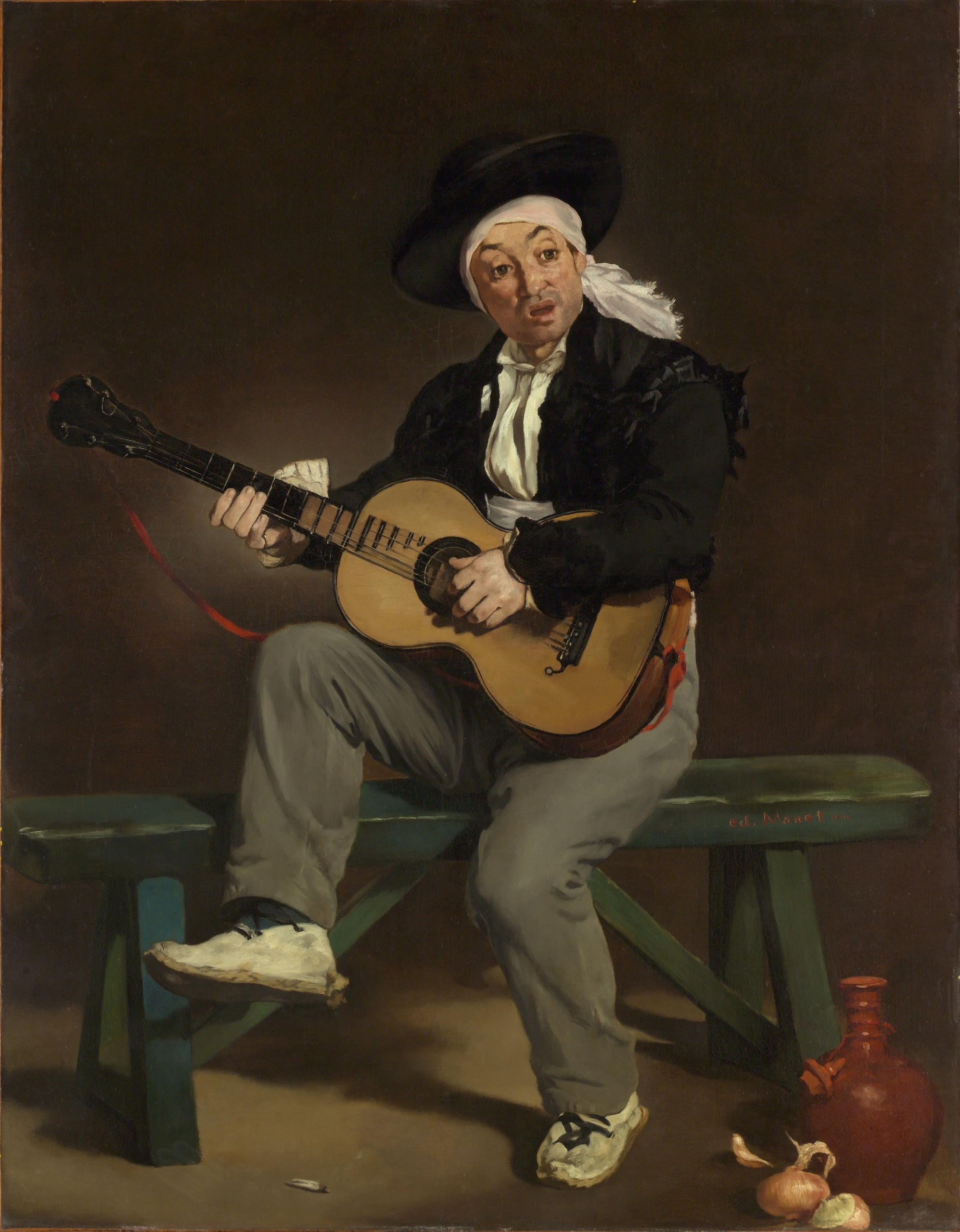
The Spanish Singer is the painting that first got Édouard Manet into the Paris Salon, in 1861: a man in a black jacket, white shirt and grey trousers, with a white headscarf under a round black hat, sits on a green wooden bench, strumming a guitar and singing. The 1860 original is oil on canvas, 147.3 x 114.3 cm, and belongs to the Metropolitan Museum of Art in New York. Our painter recreates the singer by hand in oil on canvas, in 8 portrait sizes from 30 x 40 to 156 x 200 cm, or made to measure. Before it is shipped, you receive a photograph of the finished painting.
| Title: | The Spanish Singer |
| Other titles: | Le Chanteur espagnol (French title) · Guitarrero |
| Painter: | Édouard Manet (1832–1883) |
| Year painted: | 1860 |
| Original size: | 147.3 cm x 114.3 cm (height x width) |
| Original technique: | Oil on canvas |
| Painting style: | Realism and Impressionism |
| Located at: | Metropolitan Museum of Art, New York, United States |
| Our reproduction: | Hand-painted in oil on canvas, 8 sizes or made to measure |
The Spanish Singer – Édouard Manet
What does The Spanish Singer show?
In the middle of the canvas a life-sized man sits on a green wooden bench, playing a guitar. A white scarf is knotted round his head, with a broad, round black hat on top. He wears a black jacket, a loose-collared white shirt, a wide white sash, grey trousers and pale rope-soled shoes. His open mouth tells us he is singing, and his eyes look straight out at the viewer.
One leg is raised, the guitar rests on his knee, and a red ribbon hangs from the neck of the instrument. On the floor by his feet stand a red clay jug and a few onions, with a cigarette end lying a little further off. Manet signed his name in red letters on the front edge of the bench.
Is the singer really Spanish?
Despite the title, the clothes belong to no particular region of Spain. Manet staged the scene indoors with a model and props he had to hand, and used the same props again in at least one later painting.
The writer Théophile Gautier recognised the jacket as a Marseilles type and thought the man looked more French than Spanish, calling him a “guitarrero from Montmartre”.
Who posed is uncertain. Adolphe Tabarant suggested that the Andalusian guitarist Trinidad Huerta inspired the scene and that Manet painted a model from Seville; others name a musician known as Bosch. The work is at once realistic and exotic, and it shows the pull of Spanish art on Manet, above all Diego Velázquez.
Why is the painting so well known?
Édouard Manet (1832–1883) was born in Paris into a wealthy family, trained under Thomas Couture and copied Velázquez and Titian in the Louvre. The Spanish Singer opened the Salon to him: in 1861 the jury accepted two of his works for the first time, this one and a portrait of his parents.
At first it was hung very high, but visitors liked it so much that it was moved lower, to a better spot. Gautier praised its “very true color” and “vigorous brush”, and the poet Charles Baudelaire admired it too.
One contemporary wrote that the work, painted in a “strange new fashion”, made many painters open their eyes. Young artists such as Henri Fantin-Latour and Carolus-Duran went to see Manet, who now led the Paris avant-garde. For more on the model, the costume and the critics, read the Wikipedia article on The Spanish Singer, written in English.
Where is the original, and what came after it?
The original, oil on canvas measuring 147.3 x 114.3 cm (height x width), has belonged since 1949 to the Metropolitan Museum of Art in New York, accession number 49.58.2.
After the Salon success Manet repeated the subject in other media. The etching dates from 1861–1862 and was printed by the noted printer Auguste Delâtre. A watercolour, a reduced version of the large oil, is now in the Dallas Museum of Art.
The watercolour was probably made at the request of Manet’s friend Antonin Proust. According to Juliet Wilson-Bareau, Manet first traced a photograph of the painting and used that outline for both the watercolour and the etching.
The Spanish Singer or another Manet?
This canvas painting suits anyone who loves the guitar, Spanish subjects and warm browns lit by bright white.
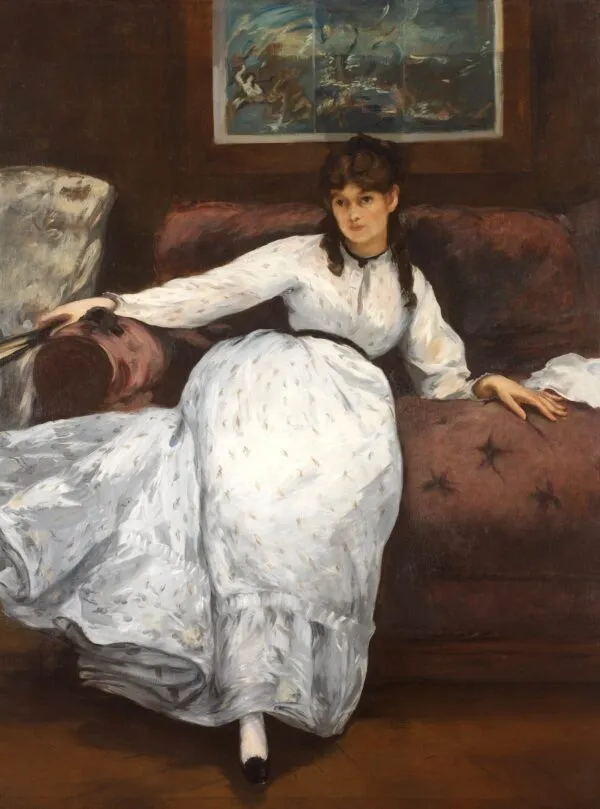
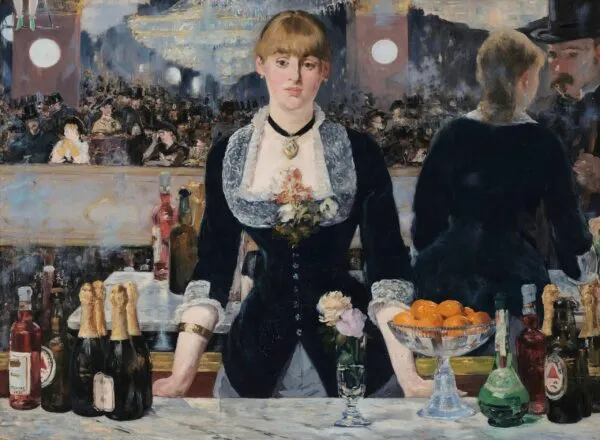
A dancer in a lace mantilla holding a closed fan appears in Lola de Valence, and another musician with a guitar under her arm in The Street Singer. For a quiet scene at home, choose Repose, a young woman in white on a red sofa; for a crowd of top hats there is Masked Ball at the Opera.
You will find more famous Manet paintings, every one painted to order, on our Édouard Manet page.
How do we hand-paint The Spanish Singer?
Manet’s original is an oil on canvas almost one and a half metres tall. Yours will be an oil painting reproduction on fresh canvas, which the painter works in oil on canvas in the size you choose, layer by layer.
He begins with the dark brown ground and the outline of the man on the bench, since the diagonal of the guitar and the raised leg hold the whole composition together. Then come the black jacket and grey trousers in broad strokes, and last the white highlights on scarf, shirt and shoes and the warm wood of the guitar.
Manet painted with a quick, decisive brush, so our painter keeps the strokes loose, down to the jug and onions on the floor.
Which size suits which wall?
In short: 30 x 40 or 36 x 48 cm for a shelf or a narrow wall, 48 x 60 and 60 x 81 cm for a hallway or a home office, 77 x 100 and 97 x 127 cm above a sofa or a chest of drawers, and 124 x 157 or 156 x 200 cm for a tall wall in a living area or music room.
The singer comes in 8 portrait sizes (width x height): 30 x 40, 36 x 48, 48 x 60, 60 x 81, 77 x 100, 97 x 127, 124 x 157 and 156 x 200 cm. The original measures 114.3 x 147.3 cm (width x height), so all six sizes up to 97 x 127 cm are smaller than it, 124 x 157 cm is already slightly larger, and 156 x 200 cm clearly exceeds it.
As a painting for the living room it works best at 97 x 127 or 124 x 157 cm, where singer, guitar and jug stand out above a sofa or beside a piano.
Can I order another size or a frame?
Yes. If your wall needs different proportions, we keep the singer, the bench and the jug whole and adjust only the empty brown background. Send us the size you need for the singer, and we will reply with a price and a date.
The singer travels to you rolled, stretched on a stretcher bar or framed, with the stretching and framing done in our workshop in Slovenia. The moulding for the singer is chosen in our 3D app, a tool for picking the frame and nothing else; seeing the painting on your own wall is a separate service.
When will The Spanish Singer arrive?
Work on the singer begins once you confirm the order, and the painting is ready to ship within 15 to 45 working days. Before packing, we send you a photograph of the finished work and make any changes you ask for.
Shipments within Slovenia and to the rest of the EU travel without customs duties, and our returns policy applies to every order.
The guitarist makes a fine gift for a musician, a guitar teacher or anyone who loves Spain. Unsure which wall he will hang on? Give a wall art voucher, and the lucky guitar fan picks the size.
Frequently asked questions
Where can I see the original?
At the Metropolitan Museum of Art in New York, where it has been since 1949, accession number 49.58.2.
What is the man on the bench doing?
He sits on a green bench, playing the guitar and singing, with a clay jug and a few onions by his feet.
Is this a print?
No. You receive a hand-painted copy, made by our painter with brushes and oil colours on canvas.
How big is the original?
It is 147.3 cm high and 114.3 cm wide; our 124 x 157 and 156 x 200 cm sizes are larger.
Can I order the singer in a size that is not listed?
Yes. Give us the width and height you have in mind, and we will quote a price and a delivery time for the singer.
How long do painting and delivery take?
Expect 15 to 45 working days until the singer is ready to ship, with a photograph sent to you before he leaves.
Does it suit a bedroom or a music room?
Yes. The warm browns and calm figure suit a bedroom, while the guitar and song belong in a music room or beside a piano.
Why is the singer not entirely Spanish?
Because Manet used clothes he had to hand; Gautier identified the jacket as a type from Marseilles.
- Subject: a man in Spanish costume on a green bench, singing to his guitar, a jug and onions at his feet.
- Original: oil on canvas, 1860, 147.3 x 114.3 cm, Metropolitan Museum of Art, New York.
- Ours: an Édouard Manet reproduction, hand-painted in oil on canvas in 8 sizes from 30 x 40 to 156 x 200 cm or made to measure.
- Worth knowing: with this painting Manet was accepted at the Paris Salon for the first time, in 1861.