




Description
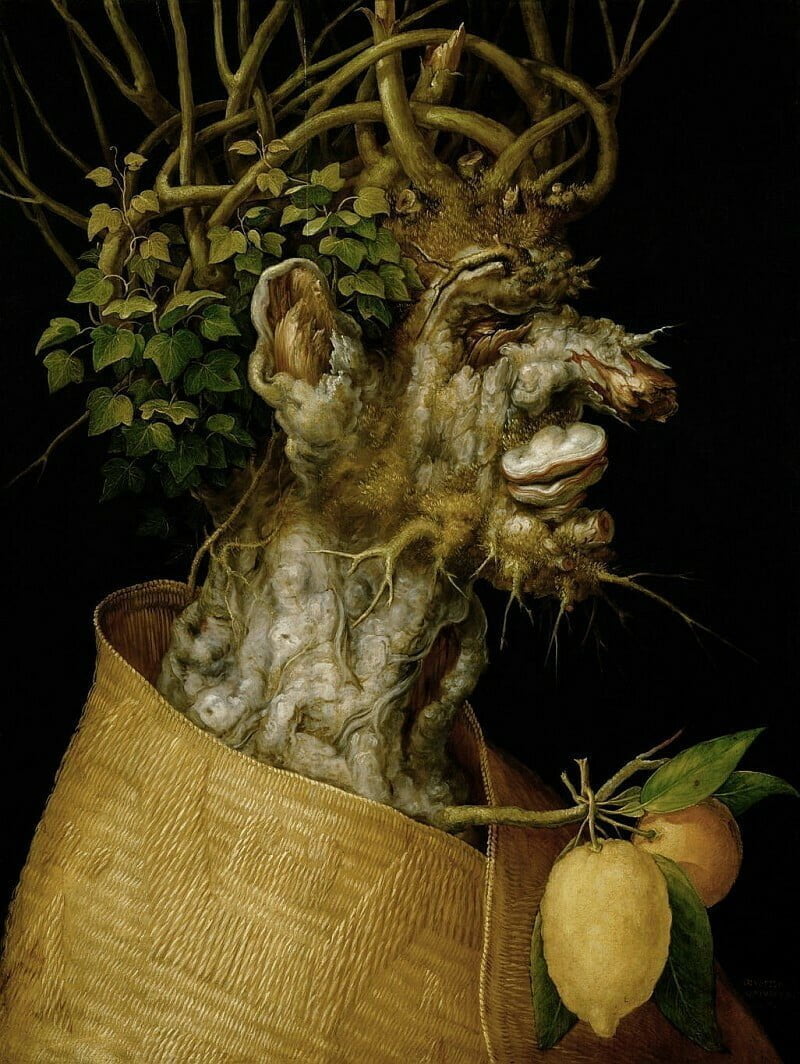
Winter is the head of an old man in profile that Giuseppe Arcimboldo assembled from an old tree stump: cracked bark is the skin, a broken branch the nose, a bracket fungus the mouth, bare twigs the hair, and a woven straw mat is wrapped round the shoulders. The original, dated 1563 and painted on a limewood panel, is held by the Kunsthistorisches Museum in Vienna under inventory number GG 1590, and the museum gives its size as 66.6 x 50.5 cm. We make it as a hand-painted reproduction in oil on canvas, in five sizes or a size of your own, and you receive a photograph of the finished painting for approval before dispatch.
| Title: | Winter |
| Other titles: | Der Winter · Hiems · Zima · L’inverno · A tél |
| Painter: | Giuseppe Arcimboldo (1527–1593) |
| Year: | 1563 (dated on the back of the panel) |
| Original size: | 66.6 x 50.5 cm, as the museum gives it |
| Original technique: | painted on a limewood panel |
| Style: | Mannerism |
| Location: | Kunsthistorisches Museum, Vienna (inv. GG 1590) |
| Our reproduction: | hand-painted oil on canvas, five sizes from 30 x 40 to 70 x 80 cm, custom size on request |
Winter – Giuseppe Arcimboldo
What does the painting show?
The head and shoulders of an old man in profile, facing the right edge, on an almost black ground. Here the old man is not a person with a name but a season: winter as an old, twisted stump with only a little life still clinging to it. The museum places the work in the series of seasons the painter made for the imperial court, and notes that the letter M on the straw of the collar points to the Emperor Maximilian II, who commissioned the series. On the back of the panel, the museum records the inscription 1563 HIEMS, Latin for winter.
What is the head made of?
In the museum’s words: assembled from parts of plants and fruit, Winter nowhere shows the surface of a natural face. The skin is the cracked, knotted bark of an old trunk, grey and brown, greenish in places. The nose is a short broken stub of branch, the mouth a bracket fungus, the ear the scar of a sawn-off branch. Chin and cheek are scattered with tiny roots and snapped twigs, like unshaven skin. Bare branches tangle in place of hair, and ivy clings to the back of the head. A cloak of woven straw covers the shoulders, and beside it hangs a twig bearing a lemon and an orange, the only fruit in the whole painting. At lower right, along the edge, is the signature, which the museum reads as GIVSEPPE ARCIMBOLDO. F.
Why does this painting matter?
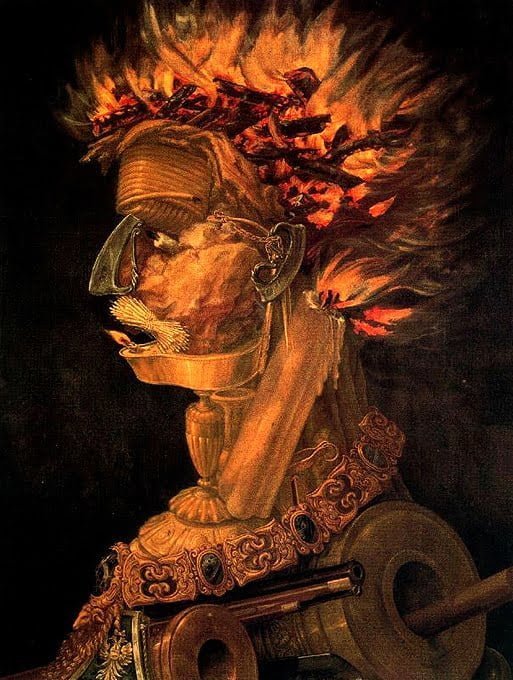
Because it belongs to the 1563 series of the seasons on which, in the museum’s words, the painter’s posthumous fame rests. The museum notes that Arcimboldo was imperial court painter in Vienna and Prague from 1562, prized above all as director and designer of court tournaments and weddings. The Winter from that series is in Vienna today, together with the Summer of the same year. The Vienna record for Water, a work from the later series of the four elements, links the two series: Winter corresponds to Water, Summer to Fire, Spring to Air and Autumn to Earth. How the painter built his heads is the subject of our article about Arcimboldo.
What does the painting mean?
At first glance the wooden old man is a joke; at a second, he is part of an imperial allegory. The letter M in the collar ties the painting to Maximilian, the patron, and so to the court it was made for. The Madrid Academy, which holds the Spring of the same year, reads the series of the seasons as an allegory of imperial power, in which the seasons are also linked to the four ages of man; in that reading winter belongs to old age, which suits a stump that is barely alive.
From the imperial collection to the painting gallery
The museum gives the painting’s history, with a question mark on its first stage: it may have been painted for the Archduke Maximilian, later emperor. It was then in the Kunstkammer of the Emperor Rudolf II, in 1748 in the imperial treasury in Vienna, and from 1830 in the painting gallery, where the museum still holds it.
Which Winter is this?
The one we paint is the Vienna panel of 1563. There is a second Winter by Arcimboldo that is easily confused with it: the Louvre’s Winter, part of the Paris series of the four seasons. The Louvre records it as oil on canvas, 76 cm high and 63.6 cm wide, dated to the third quarter of the sixteenth century, and notes that the series was very probably commissioned in 1573 as a gift from the Emperor Maximilian II to the Elector Augustus of Saxony; the Louvre bought it in 1964, and today it is at the Louvre-Lens. The two paintings share a subject but are not the same work.
The Four Seasons
This painting belongs to a cycle. All four are available here:
- Giuseppe Arcimboldo – Winter
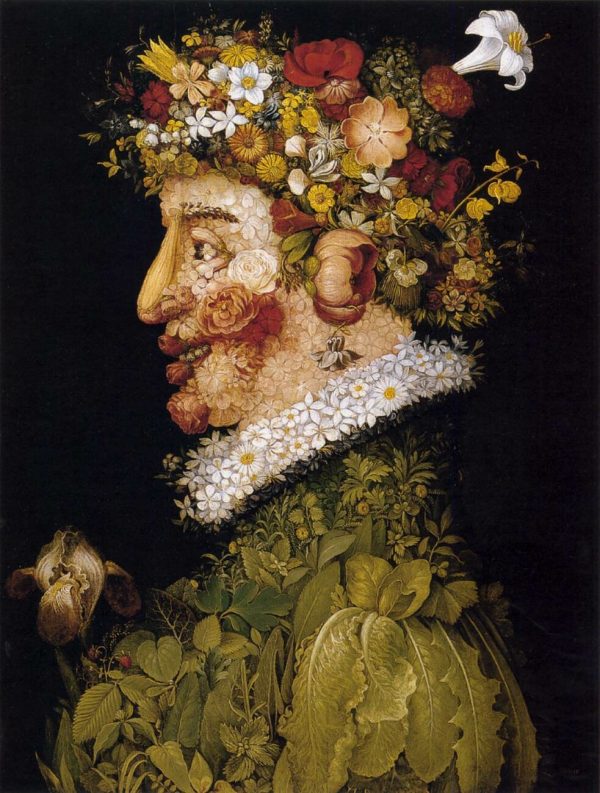
- Giuseppe Arcimboldo – Spring
- Giuseppe Arcimboldo – Summer
- Giuseppe Arcimboldo – Autumn
Hung as a matched group of four, the sizes 30 × 40, 40 × 50, 50 × 60, 64 × 76, 70 × 80 cm work — every one of the four is available in them.
More on both cycles as a wall group: Arcimboldo’s Four Seasons and Four Elements as a wall group
How is our hand-painted version made?
Every copy is hand-painted in oil on canvas; none is printed. Winter is demanding because of its surface: close up the bark has to be cracked and knotted, and from a distance it has to melt into an old, furrowed face. Our painter first lays in the dark ground and the outline of the head, then builds the bark in thin layers from the dark cracks towards the lighter edges, and then adds the fungus, the ivy and the tangle of branches. The lemon and the orange come last, in clean warm colour, because they have to glow against the grey wood. To be clear: the original is painted on a wooden panel, while our version is made on canvas, as is usual for work of this kind. The brushstrokes stay visible close up, and no two copies are ever quite the same.
Which size for which wall?
For most rooms 50 x 60 cm is right. The smaller sizes, 30 x 40 cm and 40 x 50 cm, belong in a hallway, on a shelf or above a desk, where the bark can be seen close up. The 50 x 60 cm and 64 x 76 cm sizes suit a wall over a chest of drawers or a bed, and 70 x 80 cm a free wall over a sofa, with room to step back. The 64 x 76 cm size is close to the canvas of the Louvre’s version, which is 63.6 cm wide and 76 cm high: ours is 4 mm wider and the same height. The Vienna panel we paint measures 66.6 x 50.5 cm, as the museum gives it; the record does not say which figure is the height.
Custom size, stretcher bar and frame
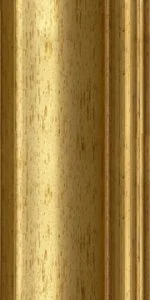
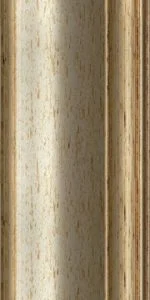
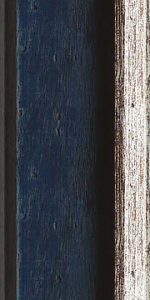
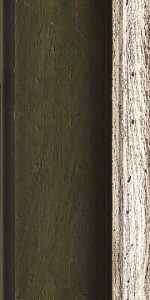
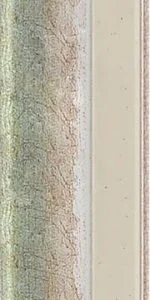
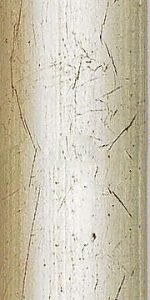
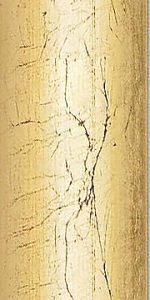
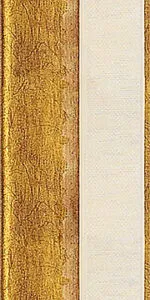
If none of the five sizes fits, we paint in the size you ask for; send width and height through the paintings made to order page and we will prepare a quote. The painting is delivered stretched on a wooden stretcher bar and ready to hang, or rolled in a tube. You choose the frame on this page: the 3D frame selector offers 62 profiles, and the painting can also be ordered without a frame.
Delivery and guarantee
We paint to order, so it takes a few weeks, depending on size and on how busy the workshop is. We ship to sixteen countries in the European Union. Before dispatch you receive a photograph of the finished painting; if something is not as you expected, we correct it before it goes out, at no extra cost.
Frequently asked questions
Where is the original?
At the Kunsthistorisches Museum in Vienna, inventory number GG 1590. The record is public and linked in the table; the year, size, material and history come from it.
Who is shown in the work?
No one in particular: winter in the figure of an old man. The museum names no sitter, only the letter M in the collar, which points to the patron, the Emperor Maximilian II.
Is the Louvre’s Winter the same work?
No. The Louvre’s Winter is a separate version on canvas, very probably commissioned in 1573 as a gift; we paint the Vienna panel of 1563.
Is this a print?
No. Every oil painting reproduction we sell is painted by hand, on canvas.
Which size should I choose?
If you cannot decide, take 50 x 60 cm. For a wall seen close up a smaller size suits better; for a larger free wall, 70 x 80 cm.
Can I have a size that is not listed?
You can. We paint in any size; send width and height through the custom order page.
How is it delivered?
Stretched on the bar and ready to hang, or rolled in a tube.
What is the work about, in one sentence?
That winter, assembled from old wood, stands for old age, and that the letter in the collar points to the emperor who commissioned the series.
Is the original for sale and what is it worth?
It is not for sale: it belongs to the museum’s collection in Vienna. We give no value, because the record carries none.
How high should I hang it?
Centre it about 145 cm from the floor, the eye height of an average adult; over furniture, with the lower edge 20 to 30 cm above it.
Is it suitable as a gift?
It is, and if you cannot pick a size you can give a gift voucher instead, leaving the choice to whoever receives it.
- Subject: an old man made of an old stump, with bark for skin, a fungus for a mouth and a straw cloak beside which a lemon and an orange hang.
- Original: painted on a limewood panel, 66.6 x 50.5 cm as the museum gives it, dated 1563, Kunsthistorisches Museum, Vienna (inv. GG 1590).
- Ours: a hand-painted copy in oil on canvas, five sizes or your own, with a photograph for approval before dispatch. You choose the frame on this page, or order the painting without one.
- Worth knowing: the back reads 1563 HIEMS, and the straw collar carries the letter M, which the museum reads as pointing to the Emperor Maximilian II.