


Description
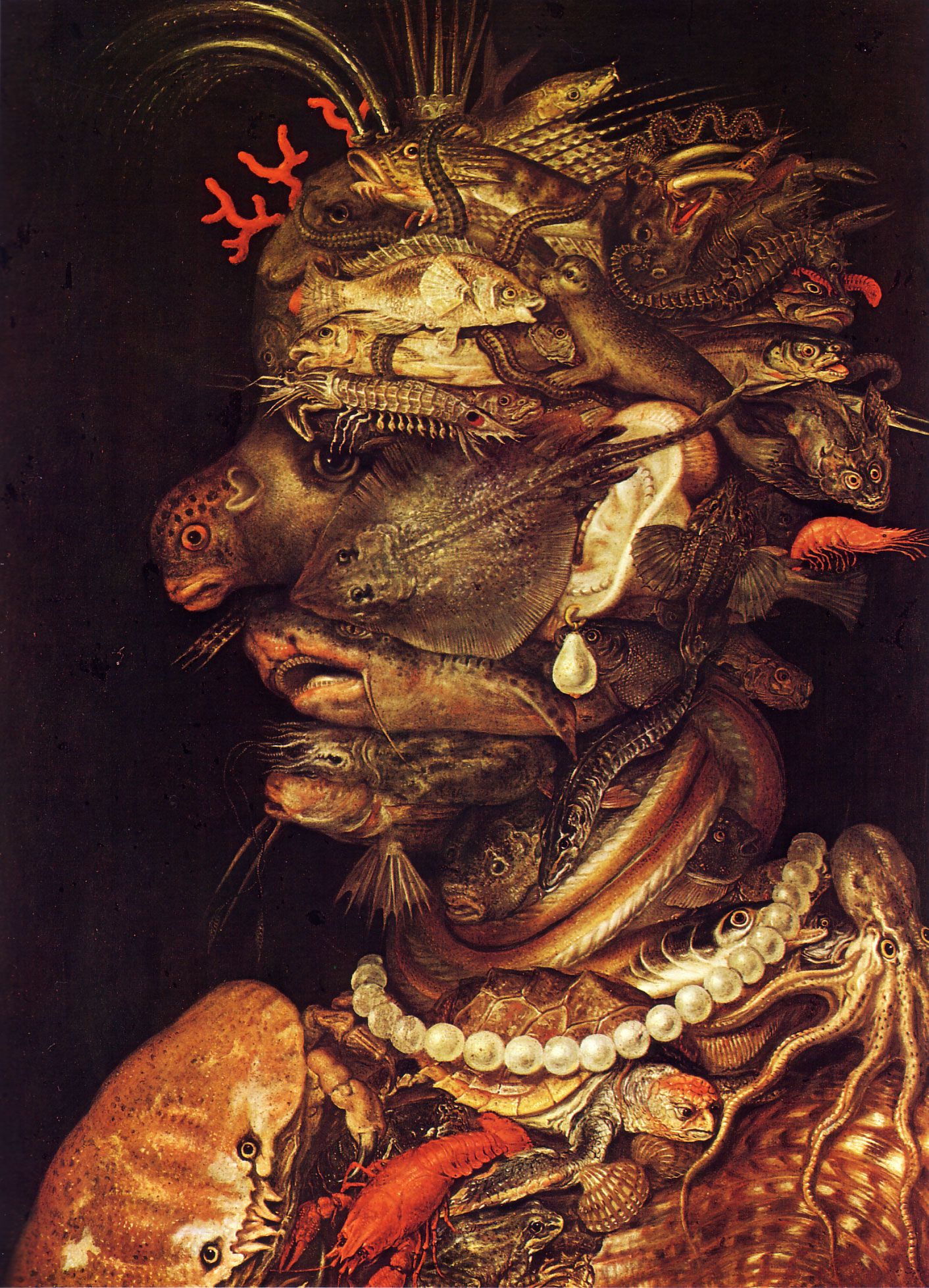
Water is the head of a figure in profile that Giuseppe Arcimboldo assembled from creatures of the sea and of fresh water: a spotted fish is the nose, a flat ray the cheek, the gaping mouth of a large fish the mouth, and a pearl hangs from the ear like an earring. The original, which the museum dates to 1566 and which is painted on an alder panel, is held by the Kunsthistorisches Museum in Vienna under inventory number GG 1586, and the museum gives its size as 66.5 x 50.5 cm. We make it as a hand-painted reproduction in oil on canvas, in fifteen sizes or a size of your own, and you receive a photograph of the finished painting for approval before dispatch.
| Title: | Water |
| Other titles: | Das Wasser · Aqua · Voda · L’acqua · A víz |
| Painter: | Giuseppe Arcimboldo (1527–1593) |
| Year: | 1566 |
| Original size: | 66.5 x 50.5 cm, as the museum gives it |
| Original technique: | painted on an alder panel |
| Style: | Mannerism |
| Location: | Kunsthistorisches Museum, Vienna (inv. GG 1586) |
| Our reproduction: | hand-painted oil on canvas, fifteen sizes from 30 x 40 to 105 x 145 cm, custom size on request |
Water – Giuseppe Arcimboldo
What does the painting show?
The head and shoulders of a figure in profile, facing the left edge, on a black ground. Here the figure is not a person with a name but an element: water, built from the animals that live in it. The museum places the work in the series of the four elements, which it reads together with the painter’s earlier series of the seasons, and notes that a little crown in the painting is a hidden reference to the emperor, and so to the patron. On the back of the panel, the museum records the inscription AQUA, the Latin word for water.
What is the head made of?
The nose is a small orange-brown fish with dark spots and a round orange-red eye, its mouth forming the tip of the nose. The cheek is a flat grey ray, and the mouth is the wide-open mouth of a large fish with long whiskers. The eye of the figure is a large dark eye, and above it lies a pale, many-legged crustacean like an eyebrow. The ear is a pale shell, and from it hangs a single large pearl on a gold hook. The crown of the head is a crowded heap of fish, eels and small sea animals, among them a grey seal-like creature, and red branches of coral stand up from the top. Around the neck, eels are wound like a scarf, and a string of large pearls lies across the chest. The chest itself is made of a turtle, a bright red crayfish, a large orange crab at the left, a toad, small ribbed shells, a large ribbed shell at the right and an octopus whose arms reach down over it.
Why does this painting matter?
Because it is one of the two elements that the museum in Vienna holds from the series of the four elements; the other is Fire. The museum reads the elements together with the seasons Arcimboldo had painted earlier, in 1563, and pairs them: Winter corresponds to Water, Summer to Fire, Spring to Air and Autumn to Earth. Its records also note that Arcimboldo was imperial court painter in Vienna and Prague from 1562, and that his posthumous fame rests on the series of the seasons. How the painter built his heads is the subject of our article about Arcimboldo.
What does the painting mean?
At first glance Water is a crowd of animals; at a second, it is a calm profile wearing pearls. The museum names one sign: the little crown, which it reads as a hidden reference to the emperor, and so to the patron. The pearls are our own reading, not the museum’s: an earring and a necklace turn the catch of the sea into jewellery, so that water appears not only as the home of animals but also as a source of wealth.
From the imperial collection to the painting gallery
The museum gives the painting’s history, with a question mark on its first stage: it may have been painted for the Emperor Maximilian. It was then in the Kunstkammer of the Emperor Rudolf II, in 1748 in the imperial treasury in Vienna, and from 1830 in the painting gallery, where the museum still holds it.
Water and Winter
The museum pairs Water with Winter, painted three years earlier and also held in Vienna; the museum’s record for Winter is public. Winter is an old man made of a tree stump, Water a head made of water creatures, and the two panels are of almost the same size: the museum gives Winter as 66.6 x 50.5 cm and Water as 66.5 x 50.5 cm, so Winter is 1 mm longer on one side and the same on the other. Neither record says which figure is the height.
The Four Elements
This painting belongs to a cycle. All four are available here:
- Giuseppe Arcimboldo – Water
- Giuseppe Arcimboldo – Air
- Giuseppe Arcimboldo – Fire
- Giuseppe Arcimboldo – Earth
As a matched group of four there is a single shared size today: 30 × 40 cm. Larger sizes exist for individual paintings, but not across all four at once.
More on both cycles as a wall group: Arcimboldo’s Four Seasons and Four Elements as a wall group
How is our hand-painted version made?
Every oil painting reproduction we make is hand-painted on canvas; none is printed. Water is demanding because of its many surfaces: wet fish skin, pearly shell, the hard shine of the pearls and the bright red of coral and crayfish all sit side by side, and each has to be told apart. Our painter first lays in the black ground and the outline of the profile, then the large forms, the ray, the big fish and the crab, and only then the small animals of the crown one by one. The pearls come last, each with its own highlight. The original is painted on a wooden panel, while our version is made on canvas, as is usual for work of this kind. The brushstrokes stay visible close up, and no two copies are ever quite the same.
Which size for which wall?
For most living rooms 60 x 80 cm is right. The smaller sizes, 30 x 40 cm and 40 x 50 cm, belong in a hallway or above a desk, where the animals can be seen close up. The 49 x 65 cm and 60 x 80 cm sizes suit a wall over a chest of drawers or a bed, and 70 x 90 cm and 80 x 110 cm a wall over a sofa. 90 x 120 cm needs a free wall with room to step back. The eight largest sizes, from 98 x 135 cm to 105 x 145 cm, differ from one another by at most 7 cm in width and 15 cm in height. The panel in Vienna measures 66.5 x 50.5 cm, as the museum gives it; the record does not say which figure is the height. Our 49 x 65 cm is the closest size: 1.5 cm smaller than each of those two figures.
Custom size, stretcher bar and frame
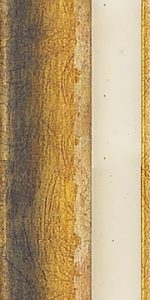
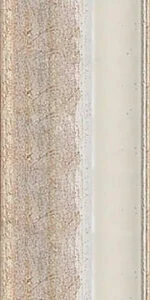
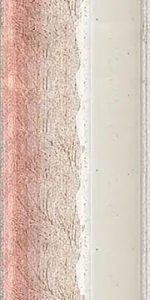
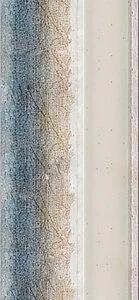
If none of the fifteen sizes fits, we paint in the size you ask for; send width and height through the paintings made to order page and we will prepare a quote. The painting is delivered stretched on a wooden stretcher bar and ready to hang, or rolled in a tube. You choose the frame on this page: the 3D frame selector offers 62 profiles, and the painting can also be ordered without a frame.
Delivery and guarantee
We paint to order, so it takes a few weeks, depending on size and on how busy the workshop is. We ship to sixteen countries in the European Union. Before dispatch you receive a photograph of the finished painting; if something is not as you expected, we correct it before it goes out, at no extra cost.
Frequently asked questions
Where is the original?
At the Kunsthistorisches Museum in Vienna, inventory number GG 1586. The year, size, material and history on this page come from the museum’s public record.
Who is shown in the work?
No one in particular: water in the figure of a head made of water creatures. The museum names no sitter; it reads the little crown as a hidden reference to the emperor, and so to the patron.
Is it painted on canvas like ours?
No. The museum records the original as painted on an alder panel; our version is painted on canvas.
Is this a print?
No. Every copy is painted by hand, in oil on canvas.
Which size should I choose?
If you cannot decide, take 60 x 80 cm. For a wall seen close up a smaller size suits better; for a large free wall, 90 x 120 cm or larger.
Can I have a size that is not listed?
You can. We paint in any size; send width and height through the custom order page.
How is it delivered?
Stretched on the bar and ready to hang, or rolled in a tube.
What is the work about, in one sentence?
That water, assembled from the animals that live in it, becomes a calm profile, and that a little crown in the painting points, as the museum reads it, to the emperor.
Is the original for sale and what is it worth?
It is not for sale: it belongs to the museum’s collection in Vienna. We give no value, because the record carries none.
How high should I hang it?
Centre it about 145 cm from the floor; over furniture, with the lower edge 20 to 30 cm above it.
Is it suitable as a gift?
It is, and if you cannot pick a size you can give a gift voucher instead, leaving the choice to whoever receives it.
- Subject: a head made of water creatures, with a spotted fish for a nose, a ray for a cheek, a pearl at the ear and a crab, a turtle and an octopus for a chest.
- Original: painted on an alder panel, 66.5 x 50.5 cm as the museum gives it, 1566, Kunsthistorisches Museum, Vienna (inv. GG 1586).
- Ours: a hand-painted copy in oil on canvas, fifteen sizes or your own, with a photograph for approval before dispatch. You choose the frame on this page, or order the painting without one.
- Worth knowing: the back of the panel reads AQUA, and the museum pairs Water with Winter, which it also holds.