







































Description
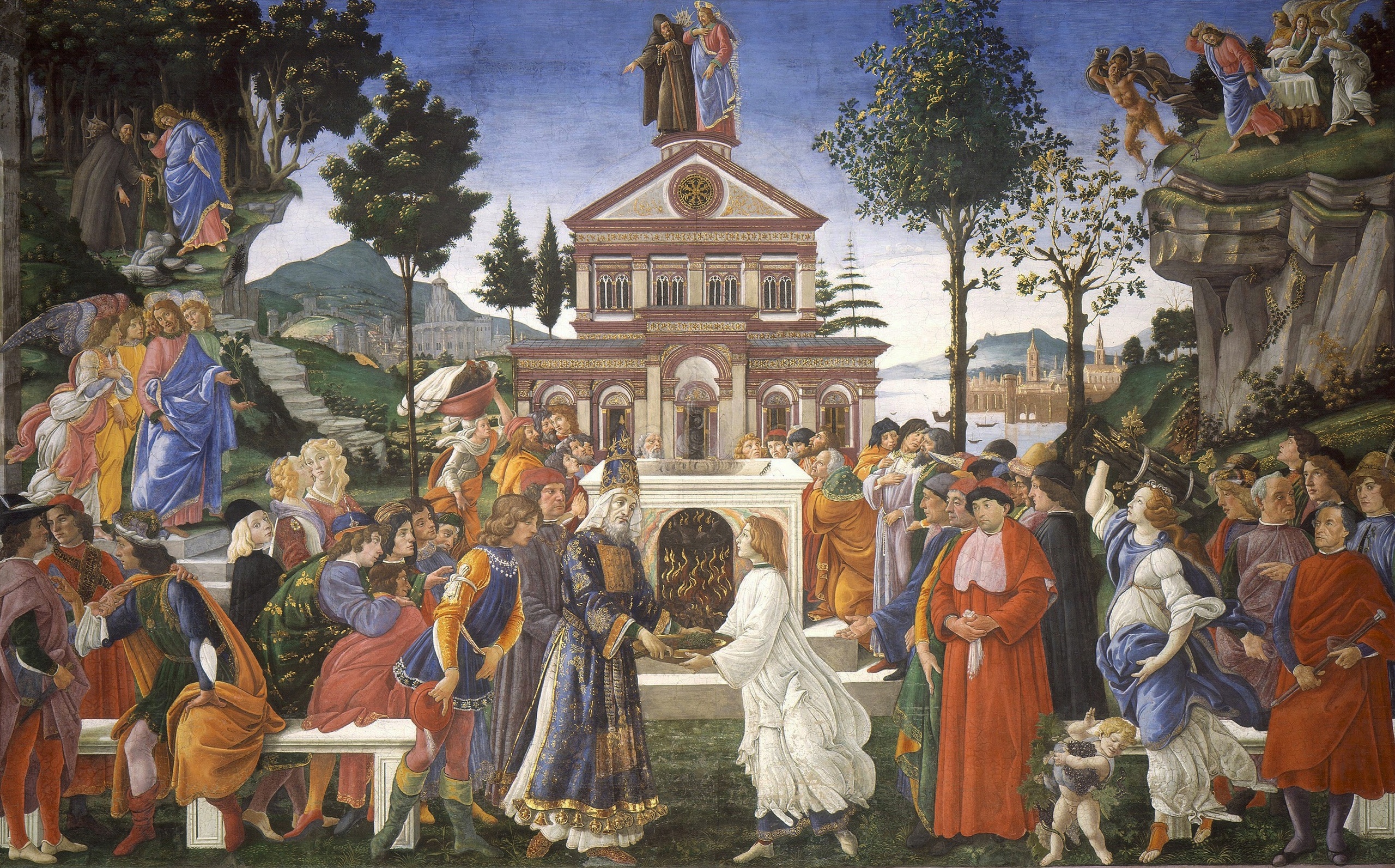
The Temptations of Christ is a fresco that Sandro Botticelli and his assistants painted in 1480–1482 in the Sistine Chapel in the Vatican: in the background the Devil, disguised as a hermit, tempts Christ three times; in the foreground a healed leper’s offering is brought to the High Priest before a classical temple. The original measures 345 x 555 cm and is still on its wall. Our painter paints it for you by hand in oil on canvas, in 5 landscape sizes from 90 x 55 to 200 x 130 cm or made to measure. Before it ships, we send you a photograph of your painting.
| Title: | The Temptations of Christ |
| Other titles: | Prove di Cristo (Italian title) · Temptation of Christ |
| Painter: | Sandro Botticelli (c. 1445–1510) |
| Year painted: | 1480–1482 |
| Original size: | 345 cm x 555 cm (height x width) |
| Original technique: | Fresco |
| Painting style: | Early Renaissance |
| Located at: | Sistine Chapel, Vatican City |
| Our reproduction: | Hand-painted in oil on canvas, 5 sizes or made to measure |
The Temptations of Christ – Sandro Botticelli
What does The Temptations of Christ show?
The fresco tells its story in several episodes, with the same figures appearing more than once. Top left, on a wooded slope, Christ in a blue mantle faces a stooped man in a brown habit with a staff and a rosary: the Devil in the guise of a hermit.
In the centre rises a temple with a classical front and gilded windows. On its roof stand Christ and the hermit, who points down into the void. At the top right a dark figure tumbles from a rocky crag into the gorge, while behind Christ three angels lay a table.
Below, a crowd gathers before the temple. The High Priest, in a gold-embroidered blue robe and tall headdress, stands at a white marble altar with a fire inside; a young man in white hands him a basin. On the right a young woman in blue and white carries a bundle of wood on her head, and a small boy beside her holds grapes.
What story does the fresco tell?
Three scenes from the Gospels run along the top. On the left the Devil urges the fasting Christ to turn stones into bread. In the centre, on the Temple in Jerusalem, he dares him to throw himself down, since God promised that angels would catch him. On the right he offers him power over the beauties of the earth if Christ will bow down to him; Christ sends him away, and angels come to minister to him.
In the foreground a leper whom Christ has healed presents himself to the High Priest to be declared clean. The young man carries a basin of water with a sprig of hyssop; one woman brings two birds for the sacrifice, another cedar wood, the three things the cleansing ritual required.
The High Priest may stand for Moses, who handed down the Law, and the young man for Christ, who would himself be sacrificed for mankind. A painted frieze beneath the fresco reads TEMPTATIO IESU CHRISTI LATORIS EVANGELICAE LEGIS, Latin for the Temptations of Christ, Bringer of the Evangelic Law.
Why is the fresco so famous?
It is one of only three frescoes Botticelli painted in the Sistine Chapel for Pope Sixtus IV, during one of only two long periods he worked away from Florence. Many people search for it as the Temptation of Christ, in the singular.
The chapel walls set the life of Moses against the life of Christ, to show the Old and New Testaments as one story leading to Peter, the first bishop of Rome, and so to the popes as his successors.
On the opposite wall Botticelli painted The Trials of Moses as the counterpart to this scene.
Art lovers return to it for the faces: the foreground crowd is painted with such life that the figures read as portraits. The temptations and the ritual are explained in an English-language Wikipedia article.
Where is the original today?
The original is still on the wall of the Sistine Chapel in the Vatican, where Botticelli painted it. The fresco measures 345 x 555 cm.
On 27 October 1480 Botticelli left for Rome with Domenico Ghirlandaio and Cosimo Rosselli, called as part of a reconciliation between Lorenzo de’ Medici, the de facto ruler of Florence, and Pope Sixtus IV.
Helped by numerous assistants, Botticelli painted three scenes. On 17 February 1482 his contract was renewed for further parts of the decoration, but on 20 February his father died; he went back to Florence and stayed there.
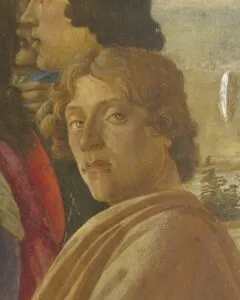
Botticelli, born Alessandro di Mariano di Vanni Filipepi around 1445, was a Florentine tanner’s son and a pupil of Filippo Lippi; he died in 1510.
The Temptations of Christ or another Botticelli?
Among famous Botticelli paintings, this one suits buyers who like to read a large composition: three biblical stories, a ritual and a crowd of faces on one canvas.
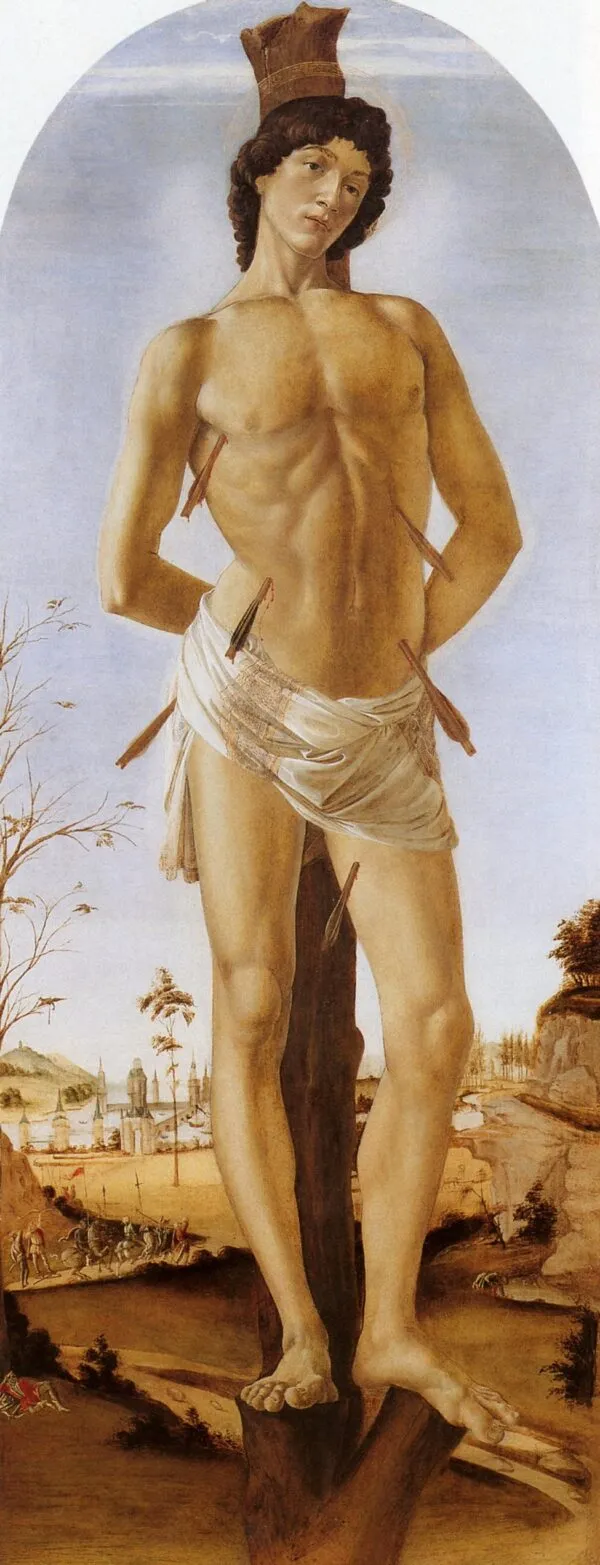
From the same chapel comes The Punishment of the Rebels, where the earth swallows the men who rose against Moses and Aaron. On panel, The Story of Nastagio degli Onesti, Part One tells a tale from Boccaccio’s Decameron in a pine forest, and Saint Sebastian shows the young martyr before a winter landscape.
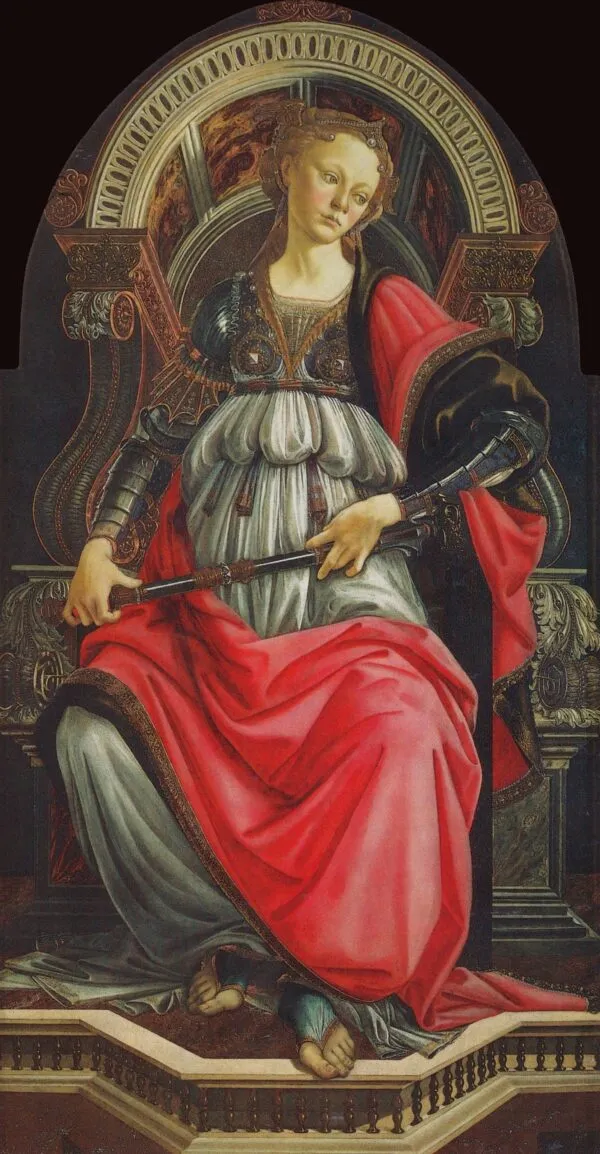
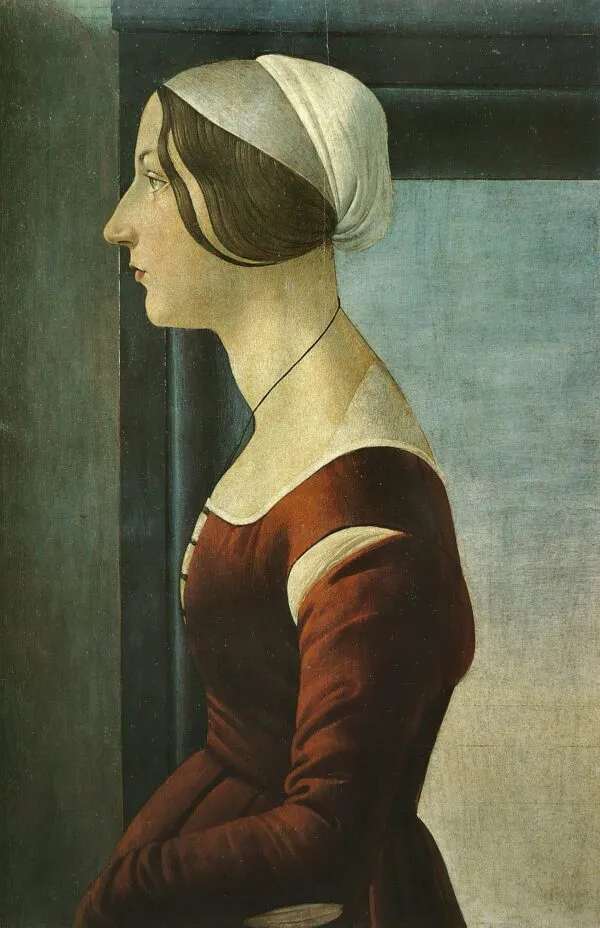
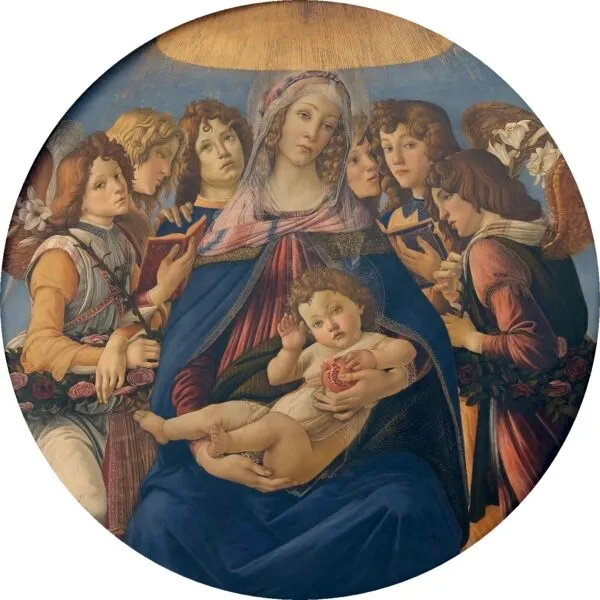
Every Sandro Botticelli reproduction we paint to order is gathered on the Sandro Botticelli page, from the Madonnas to the great mythologies.
How do we hand-paint The Temptations of Christ?
The original is neither on canvas nor in oil: it is a fresco painted straight onto the chapel wall, 345 x 555 cm. Ours is an oil painting reproduction built up layer by layer on canvas, showing the whole fresco as the photograph records it, so it can ship rolled, stretched on a stretcher bar or framed.
He then paints the crowd face by face, and last the small figures of the temptations, the leaves, the boats, the flames in the altar and the gold highlights the chapel painters added so that the walls would glow by torch and candle light.
Which size for which wall?
In short: small sizes for a hallway or a desk corner, medium ones above a chest of drawers or a bed, the largest for a long wall above the sofa.
We paint The Temptations of Christ in 5 landscape sizes (width x height): 90 x 55, 115 x 70, 130 x 80, 165 x 100 and 200 x 130 cm. The fresco in the Vatican measures about 555 x 345 cm, so every one of our sizes is far smaller; even 200 x 130 cm reaches only a little more than a third of its width.
From 90 x 55 to 115 x 70 cm it suits a chest of drawers or a bed. As a painting for the living room it comes into its own from 130 x 80 cm, where single faces read from the sofa.
Can I order another size, and which frame suits it?
Yes. For a different ratio we keep the temple and the three temptations whole and adjust the sky, grass or edge trees. Send us the size you need for a price and lead time.
You can receive The Temptations of Christ rolled in a tube, stretched on a wooden stretcher bar or ready framed. Our workshop in Slovenia does the stretching and framing and packs each canvas painting for the journey.
The frame itself is picked in our 3D app; a view of the painting on your own wall is a separate service.
When will your Temptations of Christ arrive?
Painting and preparing for dispatch take 15 to 45 working days from order confirmation. As soon as your copy is finished, we send you a photograph; any change you ask for is made before packing.
Within Slovenia and to the other EU countries it travels without customs duty, and our returns policy applies to every order.
If you are unsure which size fits the recipient’s wall, give a gift voucher and let them choose.
Frequently asked questions
Where can I see the original fresco?
On the wall of the Sistine Chapel in the Vatican, where Botticelli painted it in 1480–1482.
What is the Devil doing on the temple roof?
He dares Christ to throw himself down, because God has promised that angels would catch him.
Is this a print?
No. It is a hand-painted copy in oil on canvas; our painter paints every figure with a brush.
How big is the original?
345 x 555 cm (height x width); all of our sizes are far smaller.
Is a size outside the list possible?
Yes. Write to us with the width and height, and we will reply with the price and lead time.
How long until it ships, and in what form?
It ships 15 to 45 working days after you order, rolled, stretched or framed.
Does it suit a bedroom or an office?
Yes. Its calm greens and blues sit well with wood and light walls.
What does the scene with the High Priest mean?
The cleansing ritual of a healed leper; the priest is often read as Moses, the young man as Christ.
- Subject: the three temptations of Christ in the background, the cleansing of the leper before the temple and a crowd of Florentine and Roman faces.
- Original: fresco, 1480–1482, 345 x 555 cm, Sistine Chapel, Vatican.
- Our painting: painted by hand in oil on canvas, in 5 landscape sizes (90 x 55 to 200 x 130 cm) or made to measure.
- Good to know: facing it in the chapel is Botticelli’s fresco of Moses, its counterpart in meaning.