







































Description
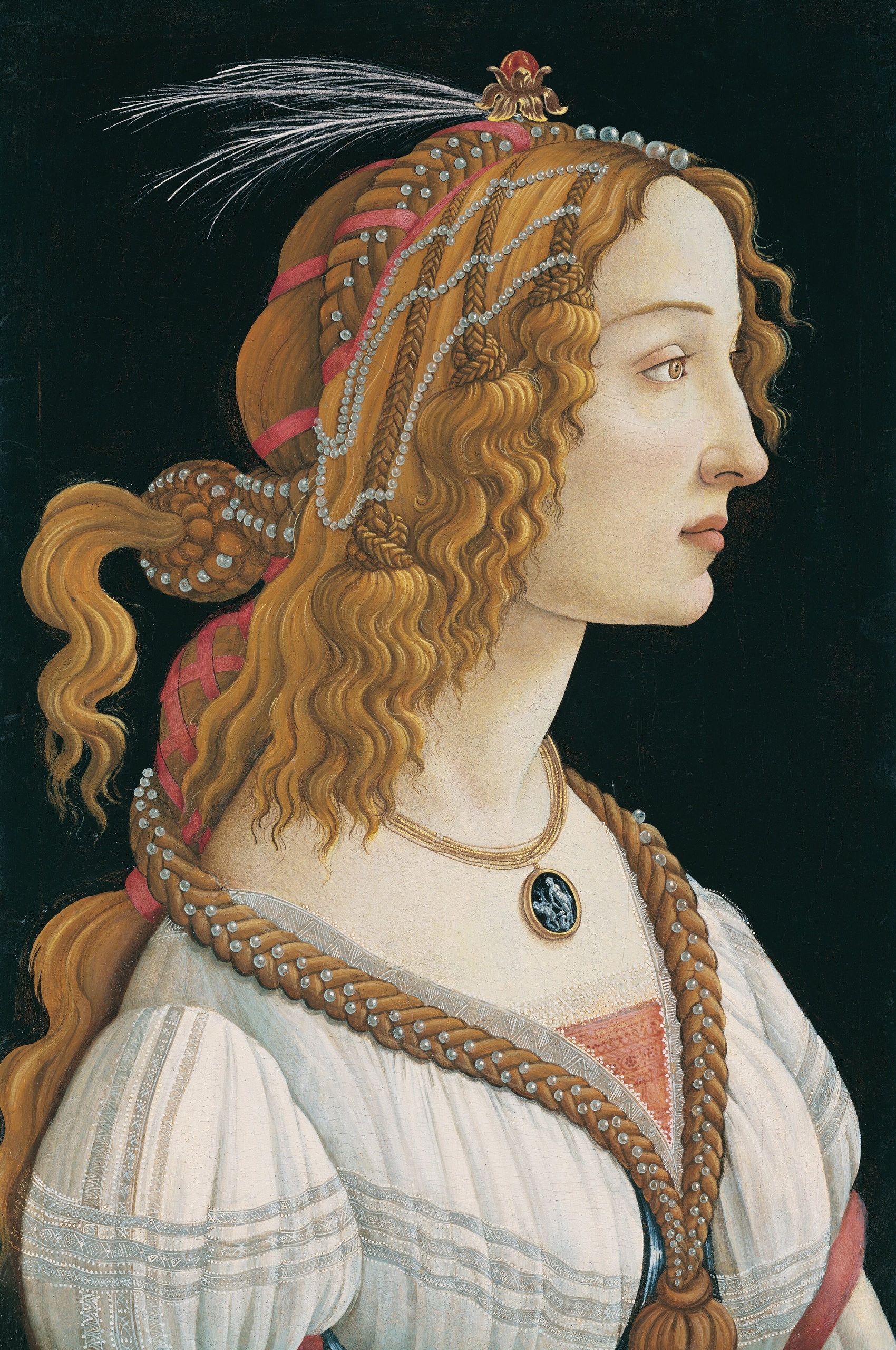
Idealized Portrait of a Lady (Simonetta Vespucci) is a painting by Sandro Botticelli from around 1480–1485: a young woman in strict profile, facing right, stands out against a black ground, her long red-gold hair woven with pearls and ribbons, a white feather rising from the top of her head and a cameo hanging from a gold chain at her throat. The original, tempera on a poplar panel measuring 81.3 x 54 cm, belongs to the Städel Museum in Frankfurt am Main. One of our painters paints it for you by hand in oil on canvas, in 8 portrait sizes from 29 x 46 to 128 x 191 cm, or made to measure. Once it is finished, we photograph your portrait and send you the photo for approval.
| Title: | Idealized Portrait of a Lady (Simonetta Vespucci) |
| Other titles: | Ritratto ideale di giovane donna (Italian title) · Idealised Portrait of a Lady (Portrait of Simonetta Vespucci as Nymph) (Städel title) |
| Painter: | Sandro Botticelli (c. 1445–1510) |
| Year painted: | c. 1480–1485 |
| Original size: | 81.3 cm x 54 cm (height x width) |
| Original technique: | Tempera on poplar panel |
| Painting style: | Early Renaissance |
| Located at: | Städel Museum, Frankfurt am Main, Germany, inv. 936 |
| Our reproduction: | Hand-painted in oil on canvas, 8 sizes or made to measure |
Idealized Portrait of a Lady (Simonetta Vespucci) – Sandro Botticelli
What does Idealized Portrait of a Lady show?
Her head is shown in pure profile, while her bust turns in three-quarter view so that the eye goes straight to the cameo below her neck. The empty black ground makes her pale skin and golden hair stand out all the more.
Most of the space belongs to the hair. Above the forehead it is plaited into thin braids threaded with strings of tiny pearls and a pink ribbon winds round the head. A small gold ornament set with a red stone sits on the crown, and from it fans a spray of fine white feathers.
The face is pale and calm, the brown eye looking ahead. She wears a white pleated blouse with puffed sleeves and silvery embroidered bands. Around her long neck lies a fine gold chain with a cameo on which small figures can be made out.
Who is the woman, and what does the painting mean?
The art historian Aby Warburg was the first to suggest that the painting is an idealized portrait of Simonetta Vespucci. Tradition says Giuliano de’ Medici adored her and that she died young. It is not certain, though: the name is a traditional identification.
Warburg’s reading challenged an older view of German scholars, in which the painting shows an ideally beautiful young woman cast as a nymph or goddess. That view lives on in the title the Städel gives the work.
The cameo is no invented jewel. It copies in reverse a famous antique carnelian known as Nero’s Seal, showing Apollo and Marsyas, which belonged to Lorenzo de’ Medici.
The art historian Emanuele Lugli has suggested that the three tassels of hair at the centre of the painting represent flames pointing downwards. They would stand for the love a viewer ought to feel on looking at the portrait, since in the Renaissance it was thought that hair inflames desire.
Why is this portrait so well known?
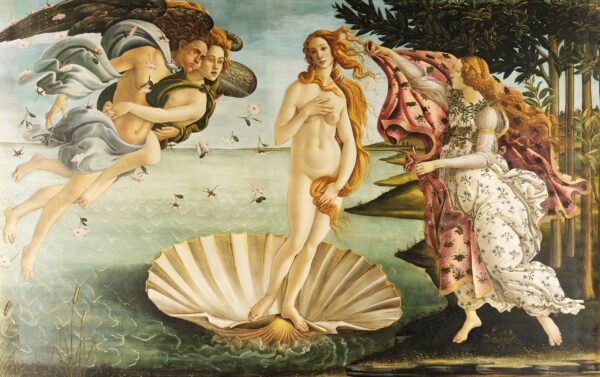
Its fame comes above all from the link with Simonetta Vespucci. When scholars compared this woman with other presumed likenesses of Simonetta, such as the goddess in The Birth of Venus or a portrait by Piero di Cosimo, they noted quite similar features.
In Florence the profile was the traditional pose for portraits of the nobility. Botticelli traces it with a thin, clear contour, which makes the figure elegant and highly idealized.
The painting belongs to a group of similar female portraits by Botticelli or his workshop. Related works are in the National Gallery, London, the Gemäldegalerie, Berlin, and the Marubeni Collection, Tokyo. Some authorities attribute the portrait to Jacopo da Sellaio.
The cameo and the related portraits are covered in the English Wikipedia article, written in English.
Where is the original kept?
The original hangs in the Städel Museum in Frankfurt am Main, inventory number 936. It is tempera on a poplar panel, 81.3 cm high and 54 cm wide.
Its early provenance is not documented. The date of 1480 to 1485 places it in Botticelli’s most successful decade, which also produced his large mythologies and many of his Madonnas.
Sandro Botticelli was born Alessandro di Mariano di Vanni Filipepi around 1445 in the Ognissanti quarter of Florence, the son of a tanner. Vasari says he trained first as a goldsmith and then learned painting under Filippo Lippi. He died on 17 May 1510; after a long eclipse the Pre-Raphaelites rediscovered him in the late 19th century.
Idealized Portrait of a Lady or another Botticelli?
This canvas painting suits you if one richly adorned face appeals more than a crowded story. Its tall, narrow format fits well on a wall between two windows.
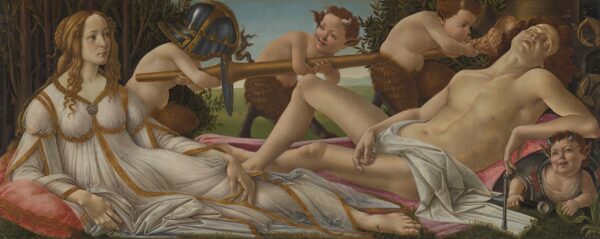
Another female profile by Botticelli is Portrait of a Young Woman from the Palazzo Pitti. For a quiet reading corner there is Madonna of the Book, in which Mary reads. If you want a bolder story, choose Pallas and the Centaur, where the goddess, an olive wreath in her hair, grips the centaur by his hair.
You will find all the famous Botticelli paintings our painters make to order on one page: Sandro Botticelli.
How do we hand-paint Idealized Portrait of a Lady?
The original is not an oil painting: Botticelli painted it in tempera on a poplar panel of 81.3 x 54 cm. Our Sandro Botticelli reproduction is painted by hand in oil on canvas, layer by layer, so it can travel rolled, stretched on a stretcher bar or framed.
The painter begins with the dark ground and a clean line for the profile. Then he lays the warm skin tones on face, neck and shoulder and blocks in the hair in ochres and coppery reds.
The hair takes longest: every curl, every braid and every turn of the ribbon gets its own stroke. The pearls go on one by one as small points of light, the white feathers with a fine brush, and last come the blouse, the chain and the cameo.
Which size for which wall?
In short: the small sizes for a bedroom or hallway, 55 x 85 cm above a chest of drawers, 70 x 110 cm and up for a living room or a tall wall.
We paint Idealized Portrait of a Lady in 8 portrait sizes (width x height): 29 x 46, 38 x 55, 42 x 65, 55 x 85, 70 x 110, 81 x 120, 100 x 155 and 128 x 191 cm. The original measures 54 x 81.3 cm (width x height). Sizes up to 42 x 65 cm are therefore smaller, 55 x 85 cm is about the size of the panel in Frankfurt, and from 70 x 110 cm upwards every size is larger.
At 29 x 46 and 38 x 55 cm the portrait feels intimate, right for a bedroom. 42 x 65 and 55 x 85 cm fill the wall above a chest of drawers. As a painting for the living room it comes into its own from 70 x 110 cm; at 100 x 155 or 128 x 191 cm the pearls read from across the room.
Can I order another size, and which frame suits it?
Yes. In other proportions the profile, hairstyle and cameo stay whole; we adjust only the black ground, so you still get a complete oil painting reproduction of the portrait. Send us the size you need for a price and a date.
We send it rolled in a tube, stretched on a stretcher bar or framed; our workshop in Slovenia does the stretching and framing. Our 3D app is for choosing the frame moulding only; a view of the portrait on your own wall is a separate service. A slim gilded frame or dark wood suits the black ground and golden hair.
When will your portrait arrive?
We dispatch the painting 15 to 45 working days after you confirm your order. When the portrait is finished we send you a photograph of it and make any changes you ask for before it ships.
It travels without customs within Slovenia and to the other EU countries, and our returns policy applies to every order.
Not sure what the person you are buying for would choose? Give a gift voucher and let them pick the painting themselves.
Frequently asked questions
Where can I see the original?
In the Städel Museum in Frankfurt am Main, inventory number 936.
Is the woman really Simonetta Vespucci?
That is not certain; Aby Warburg proposed the name.
Is it a print?
No. You receive a hand-painted copy: our painter brushes in every curl and every pearl.
How large is the original?
81.3 x 54 cm (height x width); our 55 x 85 cm size comes close to it.
Can you paint the portrait in a size that is not listed?
Yes. Give us the width and height, and we will quote a price and a date.
How long does the portrait take, and how does it travel?
Allow 15 to 45 working days; the portrait ships rolled, stretched or framed.
Does the portrait suit a bedroom or make a good gift?
Yes. The calm profile and warm hair tones suit a bedroom well.
What does the cameo at her neck show?
Apollo and Marsyas: it is a reversed copy of the antique Nero’s Seal, once owned by Lorenzo de’ Medici.
- Subject: a young woman in strict profile against black, with pearls in her golden hair and a cameo on a chain.
- Original: tempera on poplar panel, c. 1480–1485, 81.3 x 54 cm, Städel Museum, Frankfurt am Main.
- Ours: hand-painted in oil on canvas, 8 sizes from 29 x 46 to 128 x 191 cm, or made to measure.
- Worth knowing: the cameo at her neck copies an antique gem owned by Lorenzo de’ Medici.