







































Description
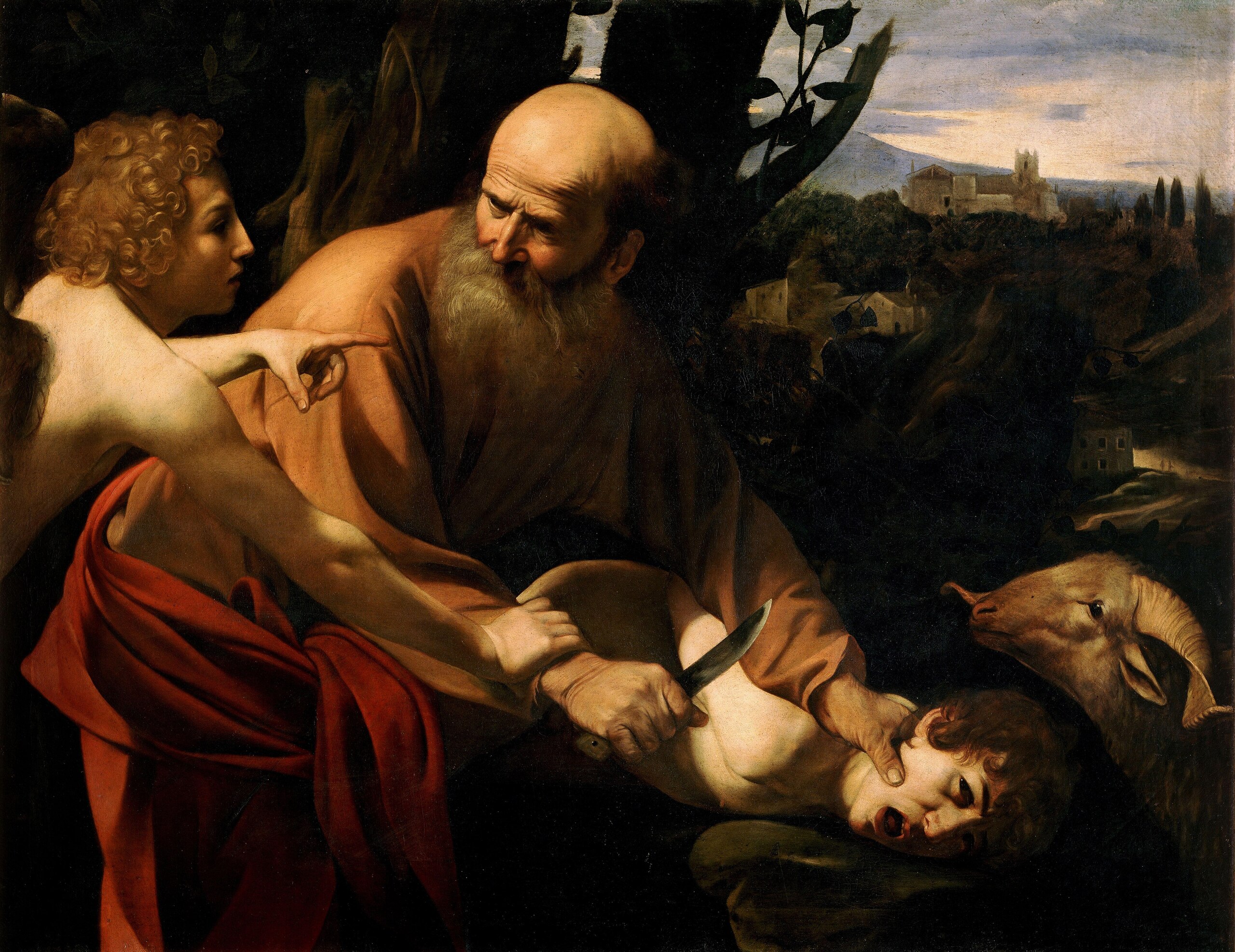
The Sacrifice of Isaac is a Caravaggio of 1603 that seizes the tensest moment of the Bible story: old Abraham presses his son’s head down on a stone with one hand and holds a knife in the other, when an angel grabs his wrist at the last instant and points to a ram. The original, oil on canvas, is 135 cm wide and 104 cm high and belongs to the Uffizi Gallery in Florence. Our painter paints it to your order by hand in oils on canvas, in 8 landscape sizes from 52 x 42 to 190 x 150 cm or made to measure, and you receive a photograph of the finished painting before it leaves us.
| Title: | The Sacrifice of Isaac |
| Other titles: | Sacrificio di Isacco · Die Opferung Isaaks |
| Painter: | Michelangelo Merisi da Caravaggio (1571–1610) |
| Year painted: | 1603 |
| Original size: | 104 cm x 135 cm (height x width) |
| Original technique: | Oil on canvas |
| Painting style: | Baroque, tenebrism |
| Located at: | Galleria degli Uffizi, Florence, Italy |
| Our reproduction: | Hand-painted oil on canvas, 8 sizes or made to measure |
The Sacrifice of Isaac – Caravaggio
What does The Sacrifice of Isaac show?
At the left edge stands an angel with golden curls, bare to the waist, a red cloth wound around his hips.
In the centre Abraham leans over the scene, a bald old man with a long grey beard in an orange-brown robe. His right hand grips a short knife; his left holds his son’s head pressed against the stone. The angel clamps his wrist firmly and, with the outstretched forefinger of his other hand, points towards the ram.
Lower right lies Isaac, bare to the waist, his mouth wide open in a cry, his eyes turned towards the viewer. Close beside him the head of a ram with curling horns pushes out of the darkness. Upper right, a wide landscape opens: a building with a tower on a hill, houses and cypresses among the trees, a bluish mountain and an evening sky with clouds.
What is the story of Abraham and Isaac?
The story is told in chapter 22 of the Book of Genesis. God asks Abraham to offer up his son Isaac as a sacrifice. Abraham obeys, climbs a mountain and prepares the offering, but as he raises the knife an angel stops him. In place of his son, Abraham sacrifices a ram.
Caravaggio paints neither the climb up the mountain nor the relief afterwards, but the split second in which everything turns. The knife is still in the old man’s hand and Isaac is still crying out, yet the angel’s hand already holds the wrist.
The ram carries a meaning of its own. Christian readings see it as a figure of Christ, the Lamb of God, foreshadowing his sacrifice on the cross.
Why is The Sacrifice of Isaac so admired?
Because it turns a story of obedience and rescue into a scene you feel almost physically. The hands link like a chain: the angel’s holds Abraham’s, and Abraham’s holds both the knife and Isaac’s head.
Abraham is a tired old man with a furrowed brow rather than a lofty patriarch, and Isaac’s cry is the cry of a frightened boy. Light falls from the left across the angel’s back, Abraham’s bald head and Isaac’s chest, leaving the tree and the undergrowth in shadow.
The English-language Wikipedia article covers both paintings that share this title.
Where is the original, and who was it painted for?
The original is in the Uffizi Gallery in Florence, inventory number 4659.
According to the early biographer Giovanni Pietro Bellori, Caravaggio painted this subject for Cardinal Maffeo Barberini, later Pope Urban VIII. The cardinal paid him in a series of instalments between May 1603 and January 1604. Caravaggio had already painted the cardinal’s portrait.
The model for Isaac has been identified as Cecco Boneri, who appears in several other works by Caravaggio. A second version of the subject exists, with a disputed attribution; our painting follows the one in Florence.
The Sacrifice of Isaac or another Caravaggio?
The Sacrifice of Isaac is a canvas painting for lovers of the Baroque and of Bible stories who do not shy away from a powerful scene. It suits a spacious living room, a library or a hallway.
If a young hero and the silence after the fight appeal to you, look at David and Goliath, where a boy ties the hair of the giant’s severed head. Bolder still is Judith Beheading Holofernes.
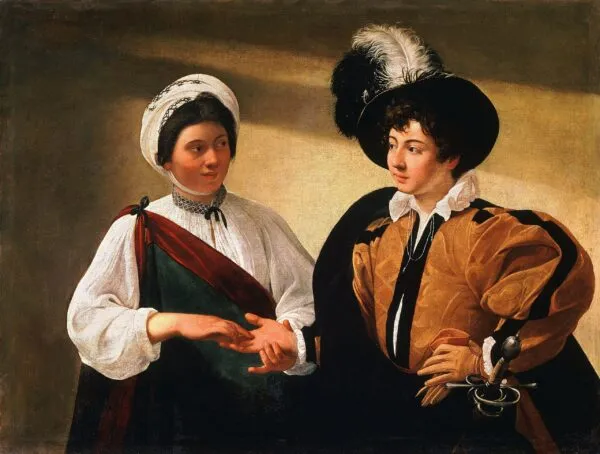
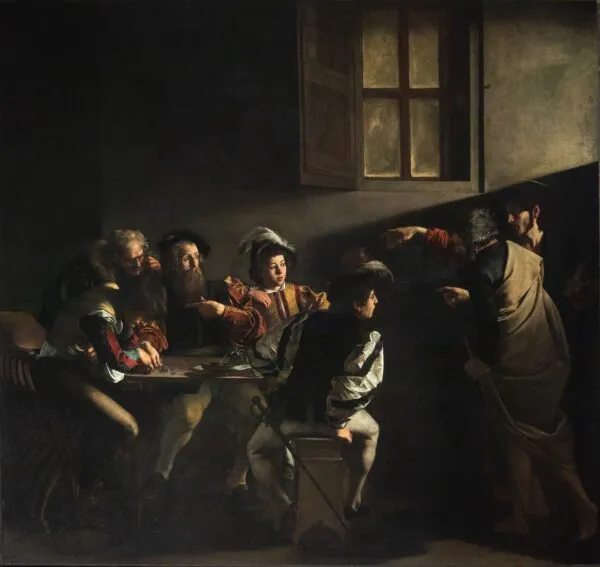
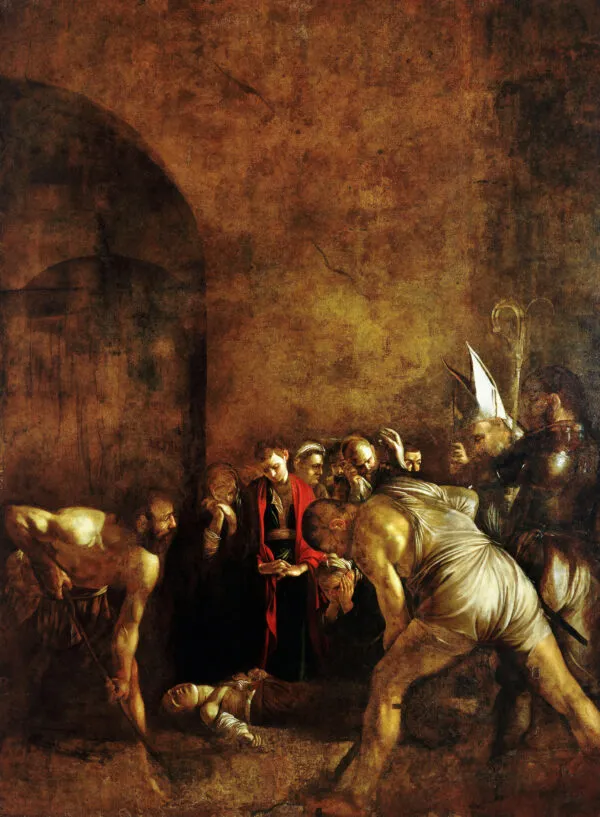
A quieter moment of recognition is The Supper at Emmaus, where the risen Christ reveals himself to two disciples at table, while doubt and touch are the theme of The Incredulity of Saint Thomas, in which the apostle touches Christ’s wound with his finger. The Caravaggio page gathers all the famous Caravaggio paintings we can paint for you.
How does our painter paint The Sacrifice of Isaac?
We start only once your order arrives. The painter first covers the canvas with a dark, warm underpainting and draws on it the three figures, the ram and the outline of the landscape.
He then builds the painting up in thin layers. The shadows stay deep and warm while the lit passages gain more colour: the angel’s skin, Abraham’s head, Isaac’s chest. The red cloth around the angel’s hips needs several glazes before it glows, and the orange-brown robe must stay soft and heavy.
Under raking light a Caravaggio reproduction painted by hand shows every brushstroke. As dark passages dominate here, this oil painting reproduction needs good lighting: a wall light or a spotlight above it lifts the pale figures, just as Caravaggio’s light from the left does.
Which size suits which wall?
In short: 52 x 42 or 66 x 53 cm for a home office, a bookcase or a narrow wall, 75 x 59 or 95 x 75 cm above a chest of drawers or in a hallway, 110 x 82 or 135 x 106 cm above a sofa, and 150 x 120 or 190 x 150 cm for a large wall, a stairwell or a hall.
We paint The Sacrifice of Isaac in 8 landscape sizes (width x height): 52 x 42, 66 x 53, 75 x 59, 95 x 75, 110 x 82, 135 x 106, 150 x 120 and 190 x 150 cm. The closest to the original is 135 x 106 cm: the same width and just 2 cm taller.
As a painting for the living room it works best at 110 x 82 or 135 x 106 cm. Hang it so that Abraham’s face sits at about eye level.
Can I have another size or a frame?
Yes. If you need a different proportion, we adapt the composition so that the angel’s hand, the knife, Isaac’s face and the ram’s head stay whole. Tell us the size you have in mind, and we will reply with a price and a lead time.
The Sacrifice of Isaac can leave us rolled, stretched on a stretcher bar or already framed. Our workshop in Slovenia handles the stretching and the framing. You pick the frame in our 3D app, which exists only for choosing the moulding; showing the painting on your own wall is a separate service.
A broad dark moulding with a gold edge, or a classic gilded frame, suits the red cloth, the orange robe and the dark green of the trees.
How long does it take, and how does the painting travel?
Once you confirm the order the painter begins, and The Sacrifice of Isaac is ready to leave within 15 to 45 working days. Before packing we send you a photograph of the finished painting; if you want a change, we make it before dispatch. Deliveries within Slovenia and the rest of the EU carry no customs charges, and every order is covered by our returns policy.
It makes a thoughtful gift for a lover of the Baroque or of Bible stories. If you are unsure about the size, give a wall art voucher and let them choose the painting and the format.
Frequently asked questions
Where does the original hang?
In the Uffizi Gallery in Florence, where it is registered under inventory number 4659.
Who appears in the painting?
Abraham with the knife, his son Isaac, the angel who stops the old man, and the ram that will be sacrificed in the boy’s place.
Is it a print?
No. You receive a hand-painted copy, built up layer by layer with brush and oil paint on canvas.
How big is the original?
It is 135 cm wide and 104 cm high; our nearest size, 135 x 106 cm, is 2 cm taller.
What does the ram mean?
In the story Abraham sacrifices it instead of his son; Christian readings see in it a foreshadowing of Christ’s sacrifice.
Is it suitable for a bedroom?
Given the dramatic scene, we would suggest a living room, library or hallway rather than a bedroom.
Can I order a size that is not listed?
Of course. Send us the width and height, and we will answer with a price and an expected completion date.
How long will I wait for it?
Painting takes 15 to 45 working days, and you see the photograph of the finished work before dispatch.
- Subject: an angel stops Abraham’s knife hand as he presses his son Isaac onto a stone; on the right, a ram and an evening landscape.
- Original: 1603, oil on canvas, 135 x 104 cm, Uffizi Gallery, Florence.
- Ours: painted by hand to your order in oils on canvas, in 8 landscape sizes between 52 x 42 and 190 x 150 cm, or made to measure.
- Worth knowing: according to Bellori, it was commissioned by Cardinal Maffeo Barberini, the future Pope Urban VIII.