







































Description
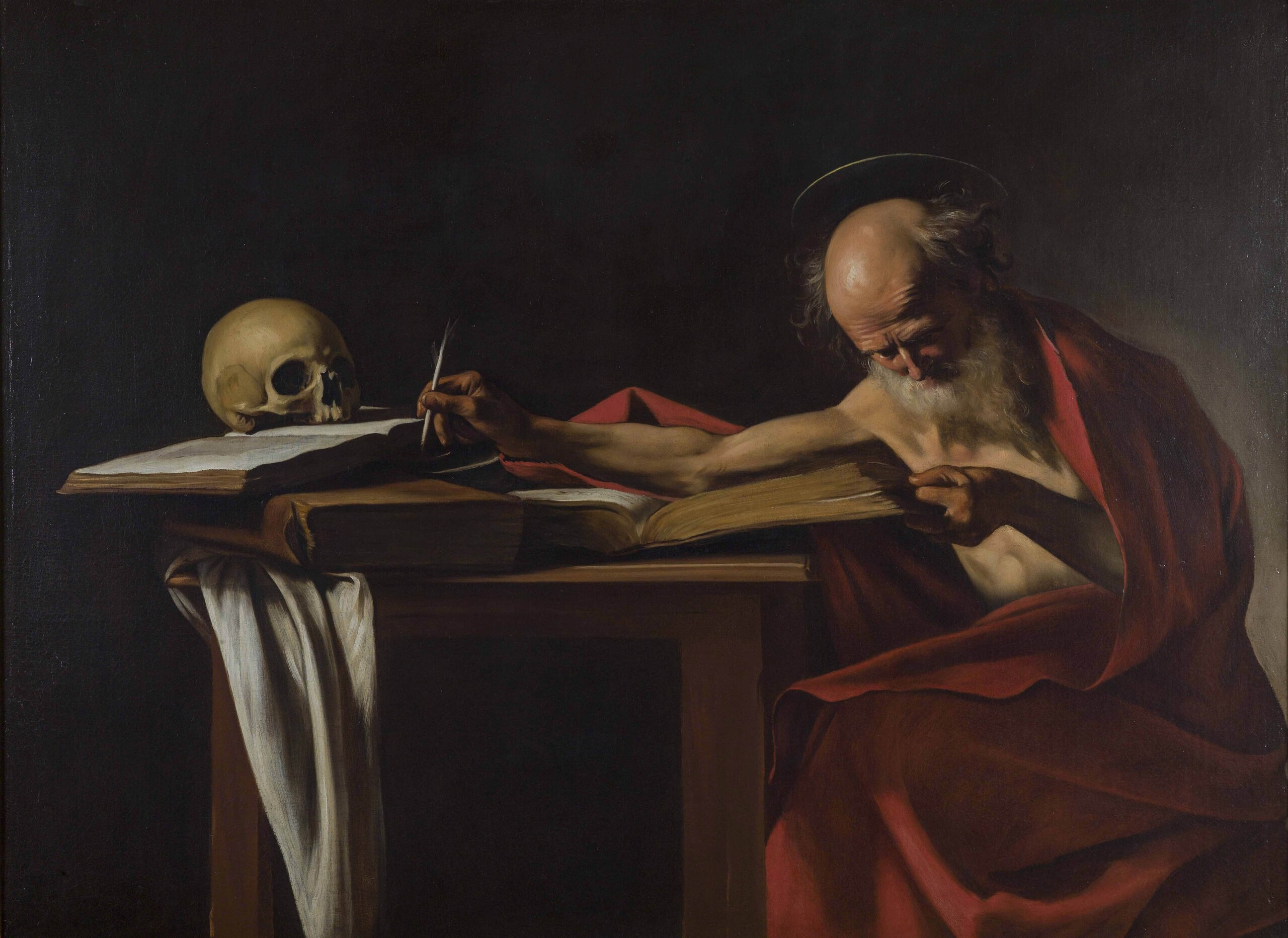
Saint Jerome Writing is a horizontal canvas by Caravaggio, painted around 1605–1606: the elderly, bald saint with a white beard, wrapped in a red mantle, reads a thick book and stretches his right arm across the table to hold his quill over a second open book, while on the left a skull rests on the volumes. The original, oil on canvas, is 116 cm high and 153 cm wide and belongs to the Galleria Borghese in Rome. Our painter paints it for you by hand in oil on canvas in 8 landscape sizes, from 50 x 39 to 190 x 145 cm, or to your own measurement, and before dispatch we send you a photograph of the finished painting.
| Title: | Saint Jerome Writing |
| Other titles: | San Girolamo scrivente · Der heilige Hieronymus beim Schreiben |
| Painter: | Michelangelo Merisi da Caravaggio (1571–1610) |
| Year painted: | c. 1605–1606 |
| Original size: | 116 cm x 153 cm (height x width) |
| Original technique: | Oil on canvas |
| Painting style: | Baroque, tenebrism |
| Located at: | Galleria Borghese, Rome (inv. 056) |
| Our reproduction: | Hand-painted oil on canvas, 8 sizes or made to measure |
Saint Jerome Writing – Caravaggio
What can you see in the painting?
The scene is plain and quiet. An old man with a bald head and a long white beard sits at a table, and above his head a thin halo is barely visible. He is wrapped in a red mantle that leaves his shoulders bare.
His eyes are on a large book in front of him, while his right arm reaches across the whole table and holds the quill above another open book. At the left end of the table a skull lies on a pile of books, and a white cloth hangs down over the table edge.
The background is dark and empty, and only the head, arm, books, cloth and skull come out of the shadow, leading the eye in one horizontal line from the saint’s bald crown to the skull.
Who was Saint Jerome, and what does the skull mean?
Jerome is one of the Doctors of the Church. He is honoured above all for translating the Scriptures into Latin, the version known as the Vulgate. That is why Caravaggio shows him among books, pen in hand, at work.
The skull beside the books is a reminder that life passes. The Galleria Borghese describes the painting as a dialogue between two fields of colour: a warm one, made of the saint’s skin and the red mantle, and a cold one, holding the skull and the white cloth against the open book. Life and death share the same table.
Even so, this is not a sad painting. The old man does not look at the skull; he reads and writes, absorbed in his work, and that calm concentration is what holds the viewer.
Why is this work so admired?
Caravaggio painted from live models, and you notice it everywhere here: in the lines on the forehead, the thin arm, the aged skin of the shoulder. The saint is not idealised; he is an old man you might pass in the street.
The composition is unusually wide and simple. Head, outstretched arm and skull sit at almost the same height, and the dark emptiness around them makes them stand out even more. This sharp contrast of light and darkness is called tenebrism.
Some critics believe the canvas was never finished, because certain details are painted very quickly. That quick brushwork gives it a directness worth seeing up close. The Wikipedia article (in English) tells you more.
Where is the original, and how did it get there?
The original belongs to the Galleria Borghese in Rome (inv. 056), where it hangs in Room 8, the Silenus Room. The museum dates it to around 1606, while the art historian Denis Mahon proposed 1602–1604.
According to the 17th-century biographer Giovanni Pietro Bellori, Caravaggio painted it for Cardinal Scipione Borghese, a great admirer of his work.
From 1700 to 1893 the Borghese inventories gave it to the Spanish painter Jusepe de Ribera. In 1902 the Italian state bought it together with the whole Borghese collection.
Saint Jerome Writing or another Caravaggio?
This canvas painting suits rooms where people read, write or work: a home office, a library or a hallway lined with bookshelves. The subject is serious, but there is no violence and no drama in it.
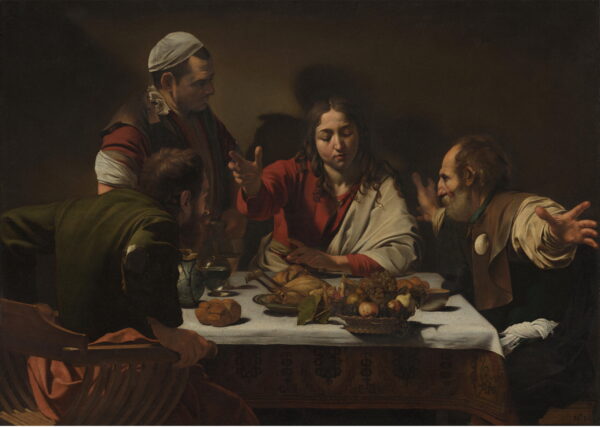
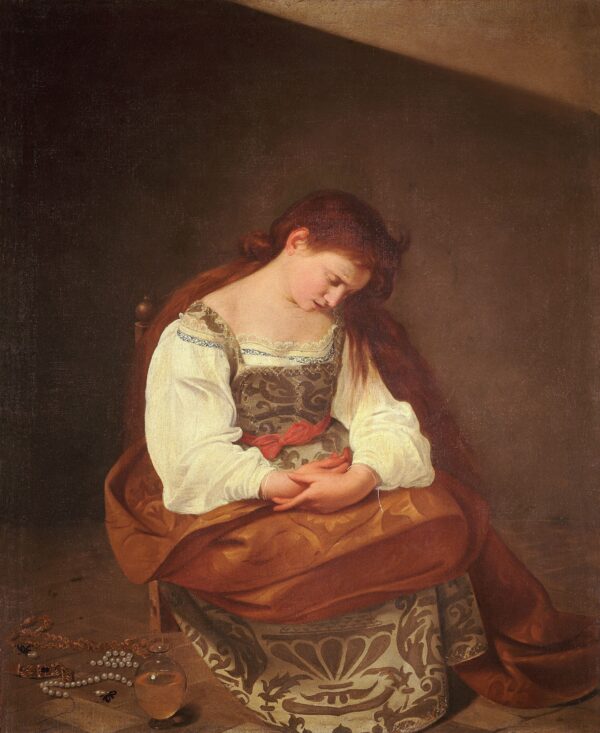
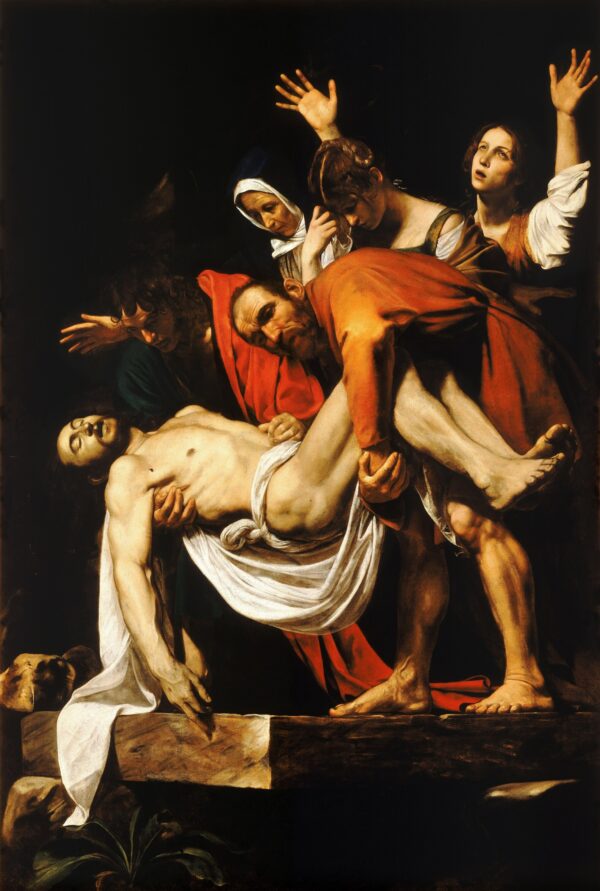
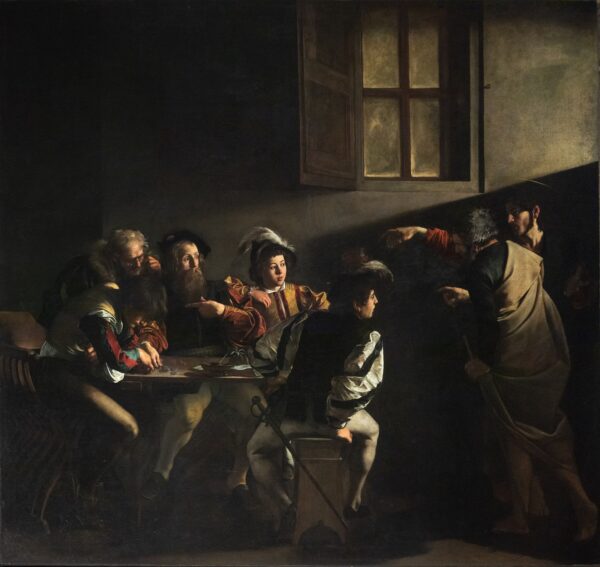
If a scene at a table appeals to you, look at The Supper at Emmaus, which also takes place around a table, or The Calling of Saint Matthew, with its men sitting over their coins. For a quieter, more private scene there is Penitent Magdalene, and for a tall wall the upright canvas of The Entombment of Christ.
Our Caravaggio page lists all the famous Caravaggio paintings we make to order; among them Jerome is the most inward and settles easily into a quiet room.
How does our painter paint your Saint Jerome?
Painting begins only once you order, layer by layer in oil on canvas. The painter first lays down the dark ground and blocks in the light areas, head, arm, books, cloth and skull, so the balance of light and shadow is right from day one.
Next comes the skin, which has to look warm and alive, with the lines of the forehead and the bones of the shoulder beneath it. Then the red mantle with its deep folds, the pages of the books, the white cloth and the cool, bone-grey skull, and last of all the thin halo and the quill between the fingers.
A Caravaggio reproduction painted like this shows brushstrokes on its surface and colour laid in several layers, which no print can give you. An oil painting reproduction of this kind changes with the light in the room: under an evening lamp the red mantle glows differently than by day.
Which size for which wall?
In short: 50 x 39 or 65 x 49 cm for a small wall or above a shelf, 74 x 55 or 92 x 73 cm above a desk or a chest of drawers, 104 x 81 or 130 x 102 cm above a sofa or bed, and 170 x 125 or 190 x 145 cm for a large open wall.
There are 8 landscape sizes (width x height): 50 x 39, 65 x 49, 74 x 55, 92 x 73, 104 x 81, 130 x 102, 170 x 125 and 190 x 145 cm. None of them matches the original, which measures 153 x 116 cm. The nearest are 130 x 102 cm, 23 cm narrower and 14 cm lower, and 170 x 125 cm, 17 cm wider and 9 cm taller.
As a painting for the living room above a sofa about two metres wide, 130 x 102 cm works well, because the landscape format follows the line of the backrest. Above a desk, hang the bottom edge 20 to 30 cm over the desktop, putting arm and skull at eye level when you sit.
Can I order a different size or a frame?
Yes. The original is roughly 4 : 3 in proportion, so we can move it onto sizes that are not on the list without the skull or the saint’s head crowding the edge. Tell us the width and height you need and we will send you a price and a date.
We ship it rolled, stretched on a stretcher bar or framed, and the stretching and framing are done by our workshop in Slovenia. You choose the frame in our 3D application, which exists only for picking frames; a view of the painting on your own wall is a separate service.
Dark wood with a narrow gold edge suits the red mantle, and a plain black frame suits the calm dark ground.
When and how does the painting arrive?
We start on your Jerome when the order arrives, and he is ready in 15 to 45 working days. Before dispatch we send you a photograph of the finished painting and, if you wish, we adjust it. There are no customs within Slovenia or anywhere else in the EU, and our returns policy covers every order.
It is a thoughtful gift for someone who reads, writes, translates or teaches a great deal. If you are unsure of the size, give a wall art voucher and let them choose.
Frequently asked questions
Where is the original painting?
In Rome, in Room 8 of the Galleria Borghese.
What is the saint doing?
He reads a large book and, with his right arm stretched out, holds his quill over a second open book.
Will I receive a print?
No, it is a hand-painted copy in oil on canvas that our painter makes specially for you.
How large is the original?
It is 116 cm high and 153 cm wide; our closest sizes are 130 x 102 and 170 x 125 cm.
Which size should I choose above a sofa?
For a sofa about 200 cm wide, choose 130 x 102 or 170 x 125 cm.
Does it suit an office or a library?
Very well, because it shows a man absorbed in reading and writing, without any violence.
What does the skull on the table mean?
It recalls death and passing time, while the saint calmly works on beside it.
How long does it take to make?
15 to 45 working days; before dispatch we send you a photograph of the painting.
- Subject: the elderly Saint Jerome in a red mantle reads and writes at a table, with a skull on the books to the left.
- Original: c. 1605–1606, oil on canvas, 116 x 153 cm, Galleria Borghese, Rome (inv. 056).
- Ours: painted by hand in oil on canvas, in 8 landscape sizes from 50 x 39 to 190 x 145 cm or to your measurement.
- Worth knowing: for almost two centuries the painting was thought to be by Jusepe de Ribera.