




Description
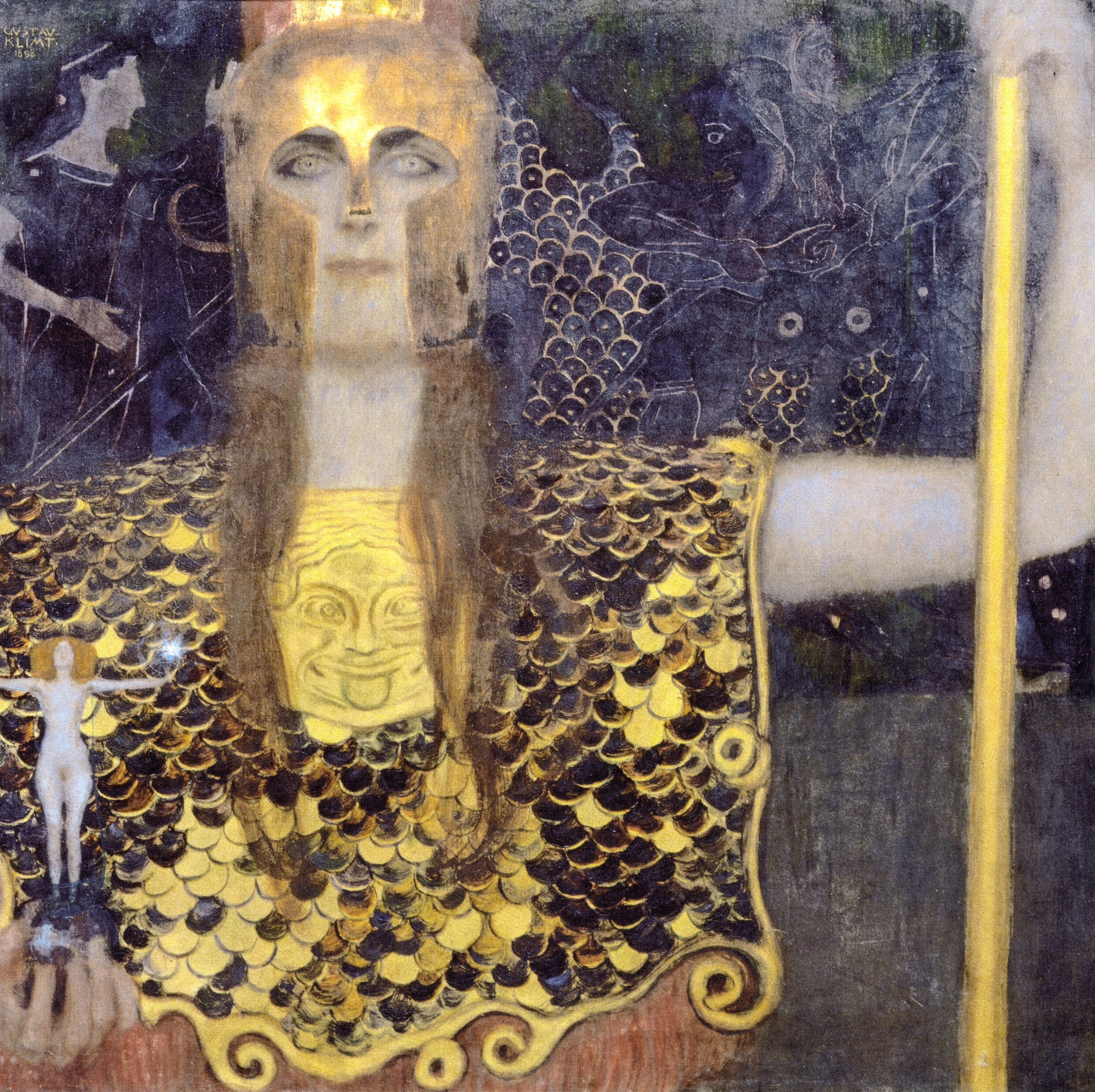
Pallas Athena is Klimt’s goddess of wisdom and the arts, painted in 1898: in a golden helmet and golden armour she looks straight at us, and instead of the goddess of victory she holds a tiny naked Truth with a mirror. The painting was a symbol of the young Vienna Secession and is often called the first work of Klimt’s Golden Period. We paint it by hand in oil on canvas, in eight square sizes from 60 x 60 to 150 x 150 cm or to your own measurement, and send you a photograph of the finished work for approval before dispatch.
| Title: | Pallas Athena |
| Other titles: | Pallas Athene · Pallade Atena · Palas Atena |
| Painter: | Gustav Klimt (1862–1918) |
| Year painted: | 1898 |
| Original size: | 75 cm x 75 cm |
| Original technique: | Oil on canvas |
| Painting style: | Vienna Secession, start of the Golden Period |
| Located at: | Wien Museum, Vienna (inv. 100686) |
| Our reproduction: | Hand-painted oil on canvas, golden helmet and armour in gold paint, eight square sizes or made to measure |
Pallas Athena – Gustav Klimt
What does the painting show?
The goddess faces us head-on and looks us straight in the eye. She wears a golden helmet, and a golden armour of small scales, the aegis, covers her chest and shoulders. At its centre sits a grotesque Medusa head with its tongue stuck out; long hair falls from under the helmet, and she holds a spear.
On her hand stands a small naked female figure holding a mirror. This is Nuda Veritas, naked Truth, placed by Klimt where Athena traditionally held Nike, the goddess of victory. The background is dark, and in it you can just make out Heracles fighting Triton, taken from a Greek black-figure vase. Because the background is so dark, the gold of the helmet and armour shines all the more – it is the first thing you notice on the wall.
Who is Pallas Athena, and why did the Secession choose her?
In Greek mythology Pallas Athena is the goddess of wisdom, the arts and the defence of the city, born, so the myth says, from the head of Zeus already in armour. On her chest she wears the aegis with the head of Medusa, whose gaze turned to stone anyone who met it. She is a goddess who defends thought and art as well as embodying them.
In 1897 the young artists of Vienna broke away from the official artists’ association and founded the Secession, with Klimt as its first president. They chose Pallas Athena, goddess of wisdom and the arts, as their patron. Klimt made her the face of the movement – not a gentle muse but a self-assured warrior who does not ask permission for the new art.
What does the painting mean?
The key change is in the goddess’s hand. Traditionally Athena holds Nike, victory; Klimt gave her Nuda Veritas, naked Truth holding up a mirror. Most interpretations read this as the Secession’s programme: art should not celebrate victory but show the truth, even when it is uncomfortable.
The Medusa sticking out her tongue on the armour is almost a joke in the middle of a serious painting. Some read it as mockery of the Secession’s opponents, who attacked the new art in the newspapers. And Heracles wrestling a sea creature in the background is a reminder that the fight for new art is as old as the Greek myths.
How was the painting first shown?
Klimt painted it in 1898 and signed and dated it at the top left: GVSTAV KLIMT 1898. In November of that year he showed it at the second exhibition of the Vienna Secession. The original sits in a hammered metal frame made by his brother Georg Klimt, lettered PALLAS ATHENE at the top.
Today the painting is in the collection of the Wien Museum in Vienna under inventory number 100686; the basic data are also gathered in its Wikidata record. Because it was the first time Klimt used gold so boldly, it is often called the first work of his Golden Period, which reached its peak ten years later.
Pallas Athena among Klimt’s works
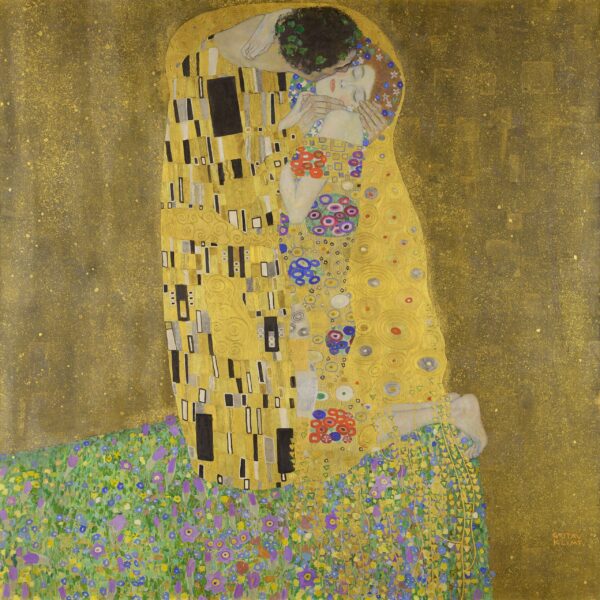
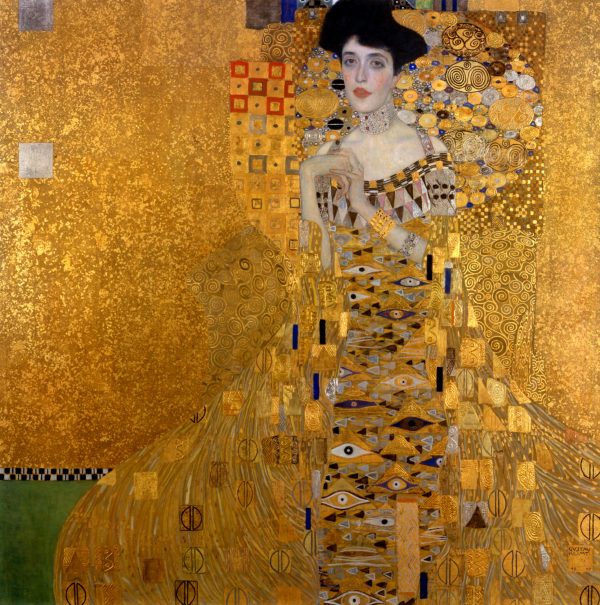
Pallas Athena is the start of a road you can follow through several of our paintings. Three years later came Judith I, another woman looking straight at us out of the gold. Then followed Hope II and Portrait of Adele Bloch-Bauer I, and the peak is The Kiss.
Choose Pallas Athena if you like a strong, upright female figure and more dark background than in the later golden paintings. On the wall it looks more serious and more graphic than The Kiss, so it suits a study, a library or a room where you want an accent that is not romantic.
How is our hand-painted Pallas Athena made?
The painter starts with a drawing of the goddess, her face and the helmet, then lays down the dark background in thin layers, so that the scene of Heracles and Triton stays in shadow as on the original. Then come the hair, the face and the skin, and only at the very end, with a fine brush, the Medusa head and the tiny figure of Truth with her mirror.
On our painting the golden helmet and the golden armour are painted by hand in gold paint, scale by scale, so the gold catches the light in the room and changes as you walk past. The gold is not printed.
We paint the canvas only: Georg Klimt’s metal frame with its lettering is not part of the painting, so we offer you our own frames. Every painting is a hand-painted copy made for your order, so no two are ever quite the same. A printed oil painting reproduction cannot show the relief of the brushstrokes and the shine of the gold paint on the armour.
Which size for which wall?
Short answer: 90 x 90 cm above a sofa or bed, 70 x 70 cm above a chest of drawers or in a smaller room, and 120 x 120 cm for a large wall. The original is quite small, so 70 x 70 and 80 x 80 cm come closest to the size Klimt painted.
There are eight square sizes: 60 x 60, 70 x 70, 80 x 80, 90 x 90, 100 x 100, 110 x 110, 120 x 120 and 150 x 150 cm. The smaller ones suit a study, a hallway or the wall above a desk, the middle ones go above furniture, and the largest belong on a big empty wall or a staircase. A painting for the living room should take up about two thirds of the width of the furniture below it; above a sofa 140 cm wide, that is 90 x 90 cm.
Hang it with the centre of the canvas about 150 cm above the floor, and 20 to 30 cm above a sofa or a headboard.
Custom size, stretcher and frame
If none of the eight sizes fits your wall, we paint it to measure; it works best kept square, like the original. Send us the width and height you want and we will quote a price and a lead time. Every painting we make is stretched over a wooden stretcher and ready to hang.
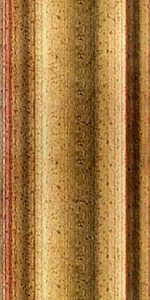
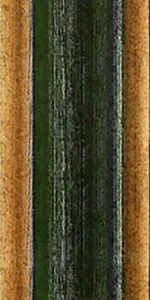
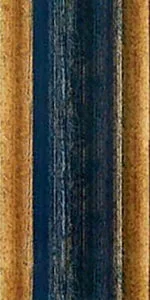
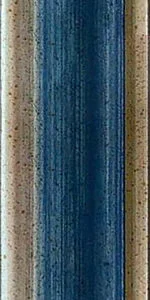
For the moulding, use our 3D application: it shows every one of our frame profiles on this subject, so you can compare gold, silver, black, white and natural wood before deciding – the application is for choosing the frame only. If you would like to see how the painting will look on your own wall, that is our separate room placement service. A wider gold or dark wooden frame suits the dark background and the golden armour, and echoes the metal frame of the original.
Delivery and guarantee
Every painting is made to order in our studio in Slovenia, so allow 15 to 45 days depending on the size you choose. We ship it stretched and protected for transport, framed if you chose a frame, across the EU with no customs. Before dispatch you receive a photograph of the finished work to approve; if anything is not right, we correct it while the canvas is still in our workshop. Our returns policy applies to every order.
If it is a present and you do not know the right size, there is a wall art voucher. Every other Klimt work we paint is in the Gustav Klimt gallery, and there is more on the painter in our article ten interesting facts about Gustav Klimt.
Frequently asked questions
Where is the original Pallas Athena?
The original is in the collection of the Wien Museum in Vienna, under inventory number 100686. The canvas measures 75 x 75 cm and still sits in the metal frame made for it by Klimt’s brother Georg. It was first exhibited in November 1898 at the second exhibition of the Vienna Secession. There is more on it on Wikipedia.
What does Pallas Athena show?
It shows the Greek goddess of wisdom standing face-on and looking straight at the viewer. She wears a golden helmet and golden scale armour with a Medusa head sticking out its tongue, holds a spear, and carries on her hand a small naked figure of Truth with a mirror. In the dark background Heracles fights Triton, a scene taken from a Greek black-figure vase.
What is the meaning of Klimt’s Pallas Athena?
The painting is a manifesto of the Vienna Secession: the goddess of wisdom and the arts defending the new art. The key is the figure in her hand, because instead of victory, Nike, she holds naked Truth with a mirror, which most interpretations read as a message that art must show the truth. Some see the Medusa sticking out her tongue as mocking the Secession’s opponents.
Why did Pallas Athena become the symbol of the Secession?
Because the young Viennese artists who founded the Secession in 1897 chose Pallas Athena, goddess of wisdom and the arts, as their patron. Klimt, the Secession’s first president, painted her as a self-assured warrior and showed her in November 1898 at the movement’s second exhibition. So the painting became the face of the whole movement.
When was Pallas Athena painted?
It was painted in 1898. Klimt signed and dated it at the top left with GVSTAV KLIMT 1898 and exhibited it in November of the same year at the second exhibition of the Vienna Secession. Because it was the first time he used gold so strikingly, it is often called the first work of his Golden Period, a decade before The Kiss.
Who is the small naked figure that Pallas Athena holds?
It is Nuda Veritas, naked Truth, holding up a mirror. Klimt put her where Athena traditionally held Nike, the goddess of victory, in Greek art. The mirror means that truth shows society its real face. A year later Klimt painted the same figure again in a large painting of its own called Nuda Veritas.
Is the gold on your Pallas Athena real gold?
No, on our painting the golden helmet and armour are painted by hand in gold paint, layer by layer and scale by scale. So the whole canvas painting, gold included, is painted by hand and nothing is printed. Gold paint catches the light in the room, so the armour on your wall changes depending on where the light falls from.
Does Pallas Athena come in a frame like the original?
No, we paint the canvas only. The metal frame lettered PALLAS ATHENE that Georg Klimt made for the original is not part of the painting. You can choose one of our own frames instead; a wider gold or a dark wooden one suits the dark background. You can compare every profile in our 3D application, and without a frame the canvas comes stretched and ready to hang.
Which size of Pallas Athena is right for my wall?
For most walls a middle size is right. Above a sofa or bed 90 x 90 cm is a good choice, in a smaller room or above a chest of drawers 70 x 70 cm, and for a large wall 120 x 120 cm. If you want the size closest to the original, choose 70 x 70 or 80 x 80 cm. A useful rule is about two thirds of the width of the furniture below.
- Subject: the goddess of wisdom in golden helmet and armour, naked Truth in her hand, symbol of the Vienna Secession.
- Original: 1898, oil on canvas, 75 x 75 cm, Wien Museum, Vienna.
- Ours: a Klimt reproduction painted by hand in oil on canvas with gold paint, in eight sizes or made to measure.
- Worth knowing: you receive a photograph of the finished work for approval before dispatch.