







































Description
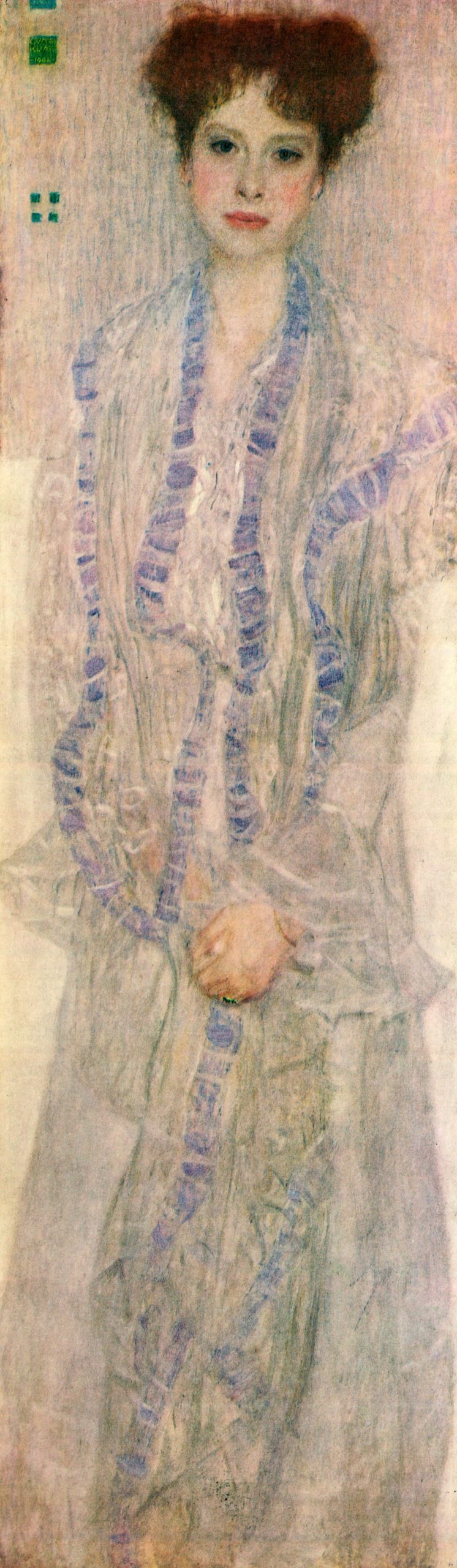
Portrait of Gertha Felsöványi is Gustav Klimt’s full-length portrait of 1902 of the 19-year-old Gertrud Loew: a slender young woman in a flowing white dress, painted on a very tall, narrow canvas against a pale pink background. The original is in a private collection. We paint it by hand in oil on canvas, in eight tall sizes from 30 x 100 to 75 x 250 cm or to your own measurement.
| Title: | Portrait of Gertha Felsöványi |
| Other titles: | Portrait of Gertrud Loew · Gertha Felsöványi · Ritratto di Gertha Felsöványi |
| Painter: | Gustav Klimt (1862–1918) |
| Year painted: | 1902 |
| Original size: | 149.5 cm x 45 cm |
| Original technique: | Oil on canvas |
| Painting style: | Vienna Secession |
| Located at: | Private collection |
| Our reproduction: | Hand-painted oil on canvas, eight tall sizes or made to measure |
Portrait of Gertha Felsöványi – Gustav Klimt
What does the painting show?
A slender young woman stands before us at full length on a very tall, narrow canvas. She wears a long, flowing white dress with soft folds, trimmed with ruffles in violet and blue that run down the front and along the sleeves. Her auburn hair is piled up high, and her hands are joined quietly at her waist.
Behind her there is almost nothing: a pale pink background, with a few small green squares at the upper left. The figure seems to float in this soft light, delicate and almost weightless. Only the face, with its calm, direct gaze, is painted in sharper detail, so it holds your attention even from across the room.
Who was the young woman in the portrait?
She was born Gertrud Loew in Vienna, and she was 19 when Klimt painted this commissioned portrait in 1902. Her father, Anton Loew, ran a sanatorium in Vienna. After her second marriage she was known as Gertha Felsöványi, which is why the painting carries both names today.
In 1939 she fled Vienna from the Nazis, and the portrait stayed behind. Around 1941 it came into the hands of Gustav Ucicky, a film director and Klimt’s son. How the painting returned to the market more than seventy years later is told in the section on where it is today.
What does the portrait mean?
It is a portrait of youth and quiet elegance. Klimt chose a very tall, narrow canvas, so the figure seems taller and lighter than in life, and he lets the white dress dissolve into soft folds and pale colours. Nothing in the background distracts from her: the whole painting is about the young woman and the light around her.
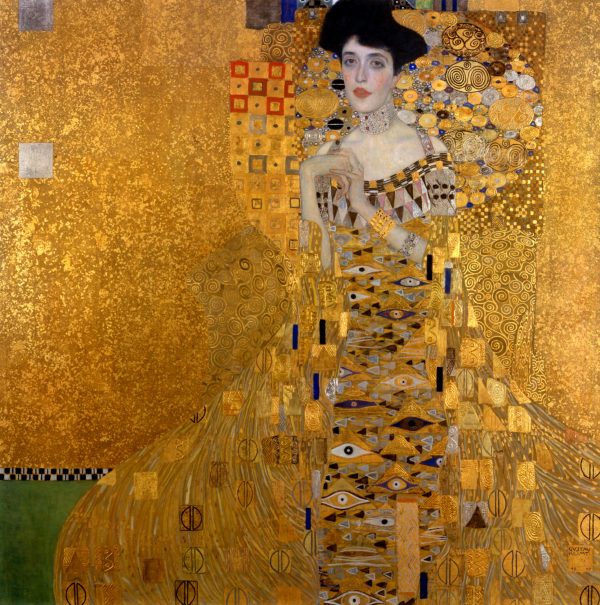
It was painted a few years before golden portraits such as Adele Bloch-Bauer I, and it is restrained and airy rather than ornamental. The soft pinks and whites give it a calm, gentle mood that suits a bedroom or a quiet corner as well as a living room, and the slim format fits walls where a wider painting would not.
Where is the painting today?
The original, an oil on canvas 149.5 cm high and 45 cm wide, is in a private collection. After an out-of-court settlement between the Klimt Foundation and Gertha’s heirs, the portrait was sold at Sotheby’s in London on 24 June 2015 for 22 million pounds, and the proceeds were split between the two sides. The Klimt Foundation describes the settlement at the time.
More about Klimt’s life and work is on Wikipedia. Because the original is privately owned and not on public view, a version painted by hand is the way to bring this portrait into your home: we paint it for you, in the size you choose.
Gertha Felsöványi among Klimt’s portraits of women
Its closest relative is Emilie Flöge, the other tall, narrow full-length portrait Klimt painted in the same year, 1902. The Portrait of Sonja Knips and the Portrait of Hermine Gallia show the same quiet, elegant women of Vienna around 1900, and the Portrait of Adele Bloch-Bauer I shows where Klimt’s portraits went a few years later, into gold.
Which to choose? Take Gertha Felsöványi if you want a pale, delicate figure in white and pink; take Emilie Flöge if you prefer deep blue and ornament; take Adele Bloch-Bauer I if you want gold. The two tall portraits of 1902 can also hang side by side, painted to the same height.
How do we paint Portrait of Gertha Felsöványi by hand?
The painter first draws the figure on the tall canvas, checking the long line from the piled-up hair to the hem of the dress, so that the slim proportions sit as in the original. Then the pale pink background is laid in with thin, soft layers, because it has to stay light and airy.
Next comes the dress, built up in whites, greys and pale lilac, with the violet-blue ruffles painted in quick, curving strokes. The face, the auburn hair and the joined hands are painted last and most carefully, because the whole portrait rests on them. A printed oil painting reproduction cannot show these thin layers; by hand, every stroke keeps its texture. Every painting is a hand-painted copy made for your order, so no two are ever exactly alike.
There is no gold in this portrait, so we work only with oil colours, keeping the soft, misty light of the original.
Which size for which wall?
Short answer: 30 x 100 or 40 x 130 cm for a narrow wall beside a door or a window, 46 x 150 or 50 x 165 cm for a hallway or between two windows, and 60 x 200, 65 x 210, 70 x 230 or 75 x 250 cm for a high wall or a staircase.
All eight sizes are tall and narrow: 30 x 100, 40 x 130, 46 x 150, 50 x 165, 60 x 200, 65 x 210, 70 x 230 and 75 x 250 cm. The size 46 x 150 cm is about the size of the original. As a painting for the living room it works beautifully between two windows, beside a bookshelf or in a niche, where a tall format fills a space that a wider painting cannot.
Hang it so that the face sits at about eye level, roughly 160 to 170 cm above the floor; above furniture, leave 20 to 30 cm between the top of the piece and the lower edge of the canvas.
Custom size, stretcher and frame
If none of the eight sizes fits your wall, we paint it to measure. Send us the width and height you want and we will quote a price and a lead time. Every painting we make is stretched over a wooden stretcher and ready to hang.
For the moulding, use our 3D application: it shows every one of our frame profiles on this subject, so you can compare gold, silver, black, white and natural wood before deciding – the application is for choosing the frame only. If you would like to see how the painting will look on your own wall, that is our separate room placement service. A thin white or silver frame keeps the portrait light; a warm gold frame brings out the pink of the background; natural wood softens the whole.
Delivery and guarantee
Every painting is made to order in our studio in Slovenia, so allow 15 to 45 days depending on the size you choose. We ship it stretched and protected for transport, framed if you chose a frame, across the EU with no customs. Before dispatch you receive a photograph of the finished work to approve; if anything is not right, we correct it while the canvas is still in our workshop. Our returns policy applies to every order.
If it is a present and you do not know the right size, there is a wall art voucher. Every other Klimt work we paint is in the Gustav Klimt gallery, and there is more on the painter in our article ten interesting facts about Gustav Klimt.
Frequently asked questions
Where is the original Portrait of Gertha Felsöványi?
The original is in a private collection and is not on public view. It is an oil on canvas from 1902, 149.5 cm high and only 45 cm wide. It was sold at Sotheby’s in London in June 2015. Because you cannot visit it, a version painted by hand in oil is the way to have this portrait on your own wall.
Who was Gertha Felsöványi?
She was born Gertrud Loew in Vienna, the daughter of Anton Loew, who ran a sanatorium in the city. Klimt painted her in 1902, when she was 19. After her second marriage she was known as Gertha Felsöványi. In 1939 she fled Vienna from the Nazis and had to leave the portrait behind.
Is Portrait of Gertha Felsöványi the same as Portrait of Gertrud Loew?
Yes, they are two names for the same painting. Gertrud Loew was the sitter’s name when Klimt painted her in 1902; Gertha Felsöványi is the name she used after her second marriage. Auction houses and newspapers often use Portrait of Gertrud Loew, while our shop has always listed it under the later name.
What happened to Portrait of Gertha Felsöványi after 1939?
When Gertha fled Vienna in 1939, the portrait stayed behind. Around 1941 it came into the hands of Gustav Ucicky, a film director and Klimt’s son. Decades later, the Klimt Foundation and Gertha’s heirs reached an out-of-court settlement, and the painting was sold at auction in 2015, with the proceeds split between them.
How much did Portrait of Gertha Felsöványi sell for in 2015?
It was sold at Sotheby’s in London on 24 June 2015 for 22 million pounds. The sale followed an out-of-court settlement between the Klimt Foundation and the heirs of Gertha Felsöványi, who shared the proceeds. The painting has been in a private collection since then, so a hand-painted version is the way to live with it.
Which size of Portrait of Gertha Felsöványi suits my wall?
For a narrow wall beside a door or a window, choose 30 x 100 or 40 x 130 cm. For a hallway or between two windows, 46 x 150 or 50 x 165 cm works well, and for a high wall or a staircase 60 x 200 cm or larger. The size 46 x 150 cm is about the size of the original.
Which room suits Portrait of Gertha Felsöványi?
It suits a bedroom, a hallway, a living room or a dressing room, anywhere you want a calm, light figure on a narrow wall. As a canvas painting it looks especially good on white, cream or soft pink walls and next to pale wood. Because it is so tall and slim, it fits spaces where other paintings would not.
Is there gold in Portrait of Gertha Felsöványi?
No, there is no gold in this portrait. Klimt painted it in soft whites, pinks and lilac tones, a few years before his golden portraits such as Adele Bloch-Bauer I. That is why we paint it only with oil colours, in thin layers, to keep the misty, delicate light that makes the original so gentle.
Is Portrait of Gertha Felsöványi a good gift?
Yes, for anyone who loves Klimt, Vienna around 1900 or elegant portraits of women. It is calm and delicate, and the story of the painting, from 1902 to its sale in 2015, makes it a talking point. If you are unsure of the size, 40 x 130 cm suits most narrow walls, or give a voucher so the recipient can choose.
- Subject: a slender young woman in a flowing white dress, at full length, against a pale pink background.
- Original: 1902, oil on canvas, 149.5 x 45 cm, private collection.
- Ours: a Klimt reproduction painted by hand in oil on canvas, in eight tall sizes or made to measure.
- Worth knowing: you receive a photograph of the finished work for approval before dispatch.