


Description
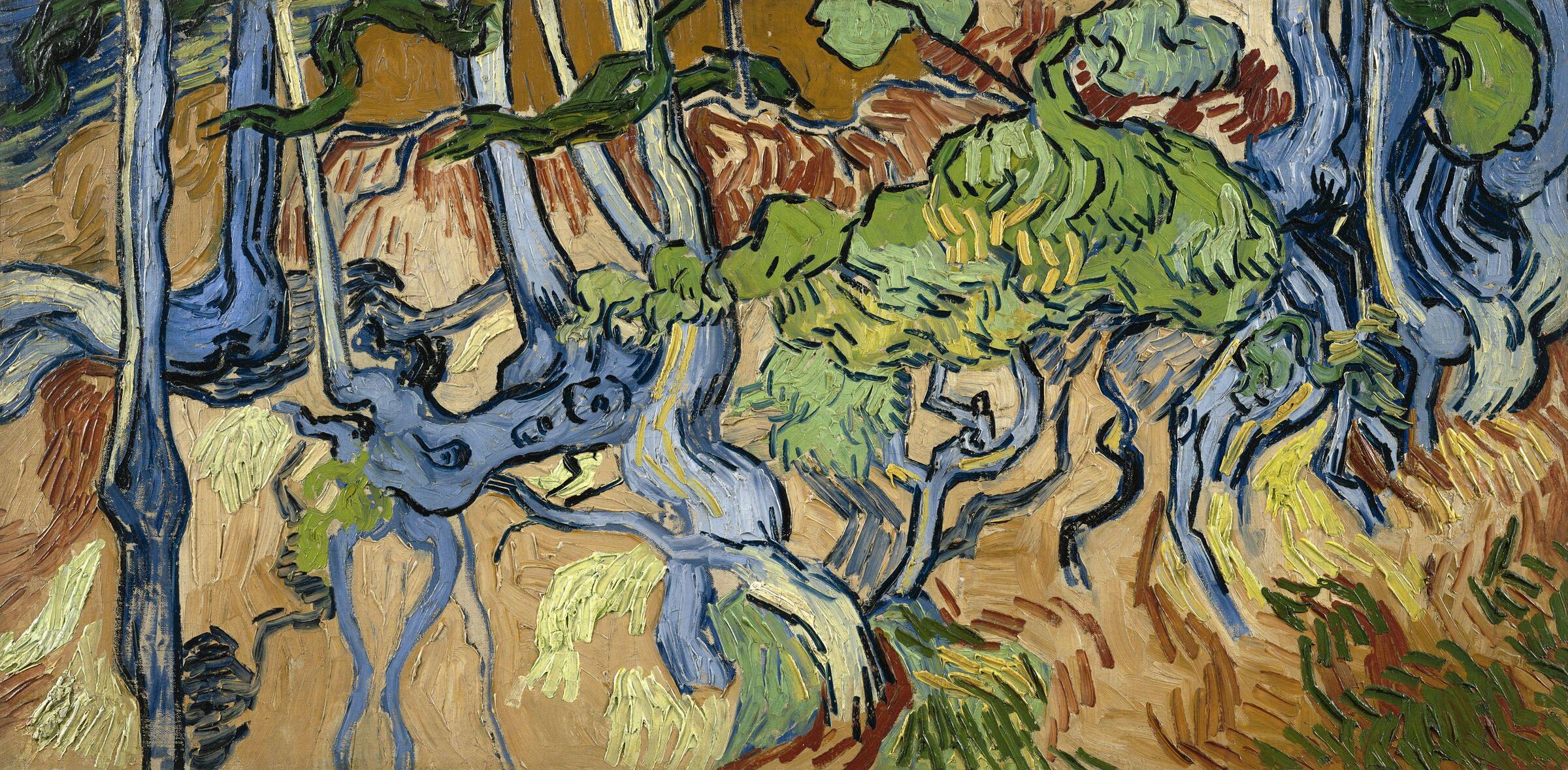
Tree Roots is the painting Vincent van Gogh worked on in July 1890 in Auvers-sur-Oise: blue trunks and twisting roots on a sandy slope, with clumps of green leaves, painted so close up that at first it looks almost abstract. The original measures 50.3 x 100.1 cm, a very wide format, and hangs in the Van Gogh Museum in Amsterdam, which considers it probably his very last painting. We paint it by hand in oil on canvas, in 15 sizes from 80 x 40 to 200 x 100 cm or to your own measurements, and send you a photograph of the finished painting for approval before dispatch.
| Title: | Tree Roots |
| Other titles: | Boomwortels · Racines d’arbres |
| Painter: | Vincent van Gogh (1853–1890) |
| Year painted: | July 1890, Auvers-sur-Oise |
| Original size: | 50.3 cm x 100.1 cm |
| Original technique: | Oil on canvas |
| Painting style: | Post-Impressionism |
| Located at: | Van Gogh Museum, Amsterdam (inv. s0195V1962) |
| Our reproduction: | Hand-painted oil on canvas, 15 sizes or made to measure |
Tree Roots – Vincent van Gogh
What does Tree Roots show?
At first sight you see a tangle of bright colours and strange shapes. Look a little longer and a slope appears: tree trunks in blue and violet-blue rise out of the ground, their roots twist across the earth like ropes, and clumps of light and dark green leaves hang between them. The ground is sandy ochre, broken by rust-red patches of bare earth and short yellow and green strokes of grass. Every shape has a dark outline, and the trunks are cut off by the top edge, so you never see a single whole tree.
The Van Gogh Museum explains what the place was: trees grown for timber in a marl quarry, the kind of quarry found around Auvers. There is no sky and no horizon, only roots, trunks and earth filling the long canvas.
Why does Tree Roots look unfinished?
Because it is. The museum states plainly that the work was not entirely completed, and that this explains its unfinished appearance. In places the strokes are dense; elsewhere the shapes are only drawn in with a few lines of colour.
The museum calls it probably his very last painting. Andries Bonger, the brother-in-law of Vincent’s brother Theo, wrote in a letter that the morning before his death Vincent had painted a sous-bois, a forest scene, full of sun and life. Van Gogh died at the end of July 1890, so the canvas stayed as it was on the last day he worked on it.
What does Tree Roots mean?
Van Gogh left no letter about this painting. Eight years earlier, in The Hague in 1882, he had drawn a study of tree roots and wrote to Theo that he wanted to express something of life’s struggle in those gnarled black roots with their knots. Whether he returned to that thought in 1890 is not known: the letters give no hint, and the colours of Tree Roots are perhaps too bright for such sombre ideas.
What the experts do agree on is how new it looks. The Van Gogh scholar Jan Hulsker considered it the most original of his double-square canvases, the long format he used for his last landscapes. The authors Wouter van der Veen and Knapp observed that here the painting itself matters more than the subject, and saw in it a herald of abstract painting and German expressionism.
Where does the original hang?
The original hangs in the Van Gogh Museum in Amsterdam (object number s0195V1962). After Vincent’s death the canvas stayed with his brother Theo in Paris; when Theo died on 25 January 1891 it passed to his widow, Jo van Gogh-Bonger, and their son, Vincent Willem van Gogh. From 1931 it was on loan to the Stedelijk Museum in Amsterdam, in 1962 it was transferred to the foundation, and since the museum opened in 1973 it has hung in the Van Gogh Museum.
On 14 April 1991 it was one of twenty paintings stolen from the museum, and it was recovered. In 2020 Wouter van der Veen, scientific director of the Institut Van Gogh, identified the probable spot where Van Gogh painted it, on the rue Daubigny in Auvers, from a historical postcard, and confirmed it in 2021 with a photograph from around 1907. The place is about 150 metres from the Auberge Ravoux, where Van Gogh was staying. More is on Wikipedia.
Tree Roots or Wheat Field with Crows – which should you choose?
Both paintings were made in Auvers in July 1890, and both share the same long format, about twice as wide as it is high. Wheat Field with Crows opens out into a wide landscape: yellow wheat under a dark blue sky with black crows. Tree Roots does the opposite and comes very close, with no sky at all, only trunks, roots and earth in blue, green and ochre.
Choose Tree Roots if you want a modern, almost abstract surface that reads as pattern and colour from across the room; choose Wheat Field with Crows if you want a landscape with depth and drama. For another nature subject in a lighter mood there is Almond Blossom, painted in February 1890, and from the year before, at Saint-Rémy, Irises and The Starry Night.
How is our hand-painted Tree Roots made?
The painter first draws the trunks and the main roots on the long canvas and checks their rhythm against the original, because the whole painting depends on how the shapes interlock. Then come the ochre and rust-red ground, the blue trunks with their dark outlines, the green clumps of leaves and finally the short yellow and green strokes of grass. Our oil painting reproduction is painted by hand on canvas, with real impasto: the paint goes on thickly, so the brushstrokes stand up from the canvas as they do in the original and catch the light.
In this painting the strokes are the subject. The painter follows their direction as Van Gogh laid them down, dense in some places and open where he left the canvas unfinished. A print is completely flat; on our painting the relief is real.
Every painting is a hand-painted copy made for your order, so no two are quite the same.
Which size for which wall?
Short answer: 160 x 77 or 180 x 90 cm above a sofa, 120 x 60 or 130 x 65 cm above a sideboard or a chest of drawers, 140 x 68 or 150 x 70 cm above a double bed, and 90 x 45 or 103 x 50 cm for a long hallway or above a desk. For a large empty wall there is 200 x 100 cm.
There are 15 sizes: 80 x 40, 90 x 42, 90 x 45, 103 x 50, 110 x 55, 120 x 60, 130 x 61, 130 x 65, 140 x 68, 150 x 70, 160 x 77, 165 x 80, 170 x 85, 180 x 90 and 200 x 100 cm (width x height). The original is 100.1 cm wide and 50.3 cm high; our 103 x 50 cm size is the closest to it, so the painting on your wall is almost exactly as large as it is in the museum. The wide format is made for long furniture and long walls: above a sofa, a sideboard, a bed headboard or along a corridor, where an upright painting would look lost. A painting for the living room should cover about two thirds of the width of the furniture below it.
Hang it with the centre of the canvas about 150 cm above the floor. Above a sofa or a headboard, leave 20 to 30 cm between the top of the furniture and the bottom of the canvas.
What if I need a custom size or a frame?
If none of the 15 sizes fits your wall, we paint it to measure. We recommend keeping the proportion close to two to one, as in the original, otherwise the roots get squeezed or stretched. Send us the width and height you want and we will quote you a price and a delivery time. Every painting we make is mounted on a wooden stretcher, ready to hang.
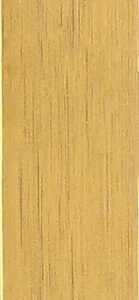
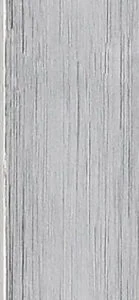
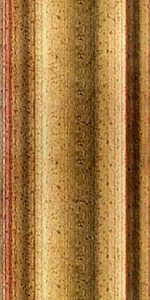
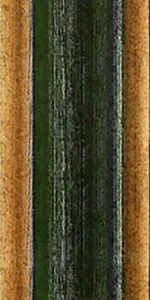
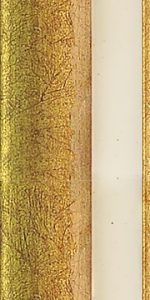
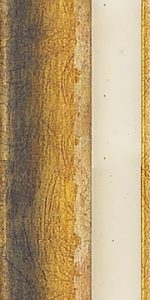
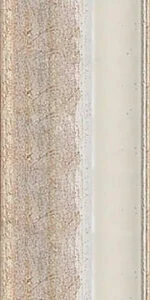
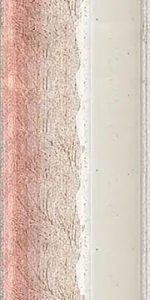
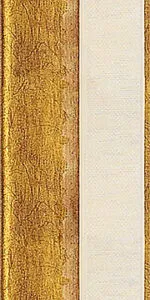
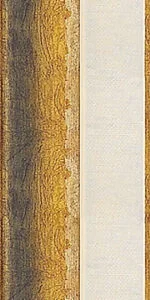
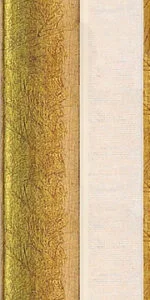
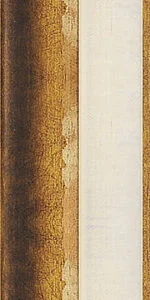
Our 3D app shows each of our frame profiles on this painting, so you can compare gold, silver, black, white and natural wood. The app is for choosing the frame only. To see the painting on your own wall, use our separate room placement service. Because the surface is so busy, a thin black profile or a plain natural wood frame suits it best, especially in a modern interior or an office.
How does delivery work, and what is the guarantee?
Every painting is made to order in our studio in Slovenia, so allow 15 to 45 days depending on the size you choose. We ship it on its stretcher, carefully packed (and framed, if you chose a frame), across the EU with no customs duty. Before dispatch we send you a photograph of the finished painting to approve, and we correct anything that is not right. Our returns policy applies to every order.
You will find more of Van Gogh’s famous paintings in our Vincent van Gogh gallery, and there is more about the painter in our article on Vincent van Gogh. As a gift, Tree Roots suits someone who loves nature, gardens or modern art. If you are not sure of the size, a wall art voucher lets the recipient choose.
Frequently asked questions
Where is the original Tree Roots by Van Gogh today?
In the Van Gogh Museum in Amsterdam under the object number s0195V1962. It belongs to the Vincent van Gogh Foundation and came there through Van Gogh’s own family: his brother Theo, then Theo’s widow Jo van Gogh-Bonger and their son. It has been in the museum since it opened in 1973.
When and where did Van Gogh paint Tree Roots?
In July 1890 in Auvers-sur-Oise, a small town north of Paris where he spent the last months of his life after leaving the asylum at Saint-Rémy in May 1890. The motif was a slope with timber trees in a marl quarry, on the rue Daubigny, about 150 metres from the inn where he was lodging.
Is Tree Roots Van Gogh’s last painting?
Probably, yes. The Van Gogh Museum calls it probably his very last painting, and it was not entirely completed. Andries Bonger, Theo’s brother-in-law, wrote that the morning before his death Vincent had painted a forest scene full of sun and life. No one can say it with complete certainty, which is why the museum keeps the word probably.
What exactly can you see in Tree Roots?
A slope seen from very close: blue and violet-blue tree trunks, roots twisting across sandy ochre earth, rust-red patches of bare ground and clumps of green leaves. There is no sky and no horizon, and the trunks are cut off at the top edge. That is why the painting first looks like a pattern of colours and only then becomes a landscape.
Is Tree Roots an abstract painting?
No, it shows a real place, but it comes close. The museum describes it as looking at first like a jumble of bright colours and fanciful abstract forms. The authors Wouter van der Veen and Knapp saw it as a herald of abstract painting and German expressionism, because here the painting itself matters more than the subject.
How do we know where Tree Roots was painted?
From an old postcard and a photograph. In 2020 Wouter van der Veen of the Institut Van Gogh recognised the slope on a historical postcard of the rue Daubigny in Auvers, and in 2021 he confirmed the spot with a photograph from around 1907. The trees and roots on that slope match the painting, about 150 metres from the Auberge Ravoux.
Was Tree Roots ever stolen?
Yes, once. On 14 April 1991 Tree Roots was among twenty paintings stolen from the Van Gogh Museum in Amsterdam, and it was recovered.
How big is the original Tree Roots?
The original is 50.3 cm high and 100.1 cm wide, a double-square format twice as wide as it is high. Our 103 x 50 cm size is the closest to it. Because the format is so long, this canvas painting also works very well larger, at 160 x 77 or 180 x 90 cm above a sofa, or at 200 x 100 cm on a big wall.
Does your Tree Roots have the raised brushstrokes of the original?
Yes. We paint it in impasto, building up each brushstroke in thick oil, so the surface is raised like Van Gogh’s original. You see this best on the blue trunks, the twisting roots and the short strokes of grass, where the relief catches the light.
- Subject: blue tree trunks and twisting roots on a sandy slope, with clumps of green leaves, seen from very close.
- Original: July 1890, Auvers-sur-Oise, 50.3 x 100.1 cm, Van Gogh Museum, Amsterdam.
- Ours: a Van Gogh reproduction painted by hand in oil on canvas, in 15 sizes from 80 x 40 to 200 x 100 cm or made to measure.