


Description
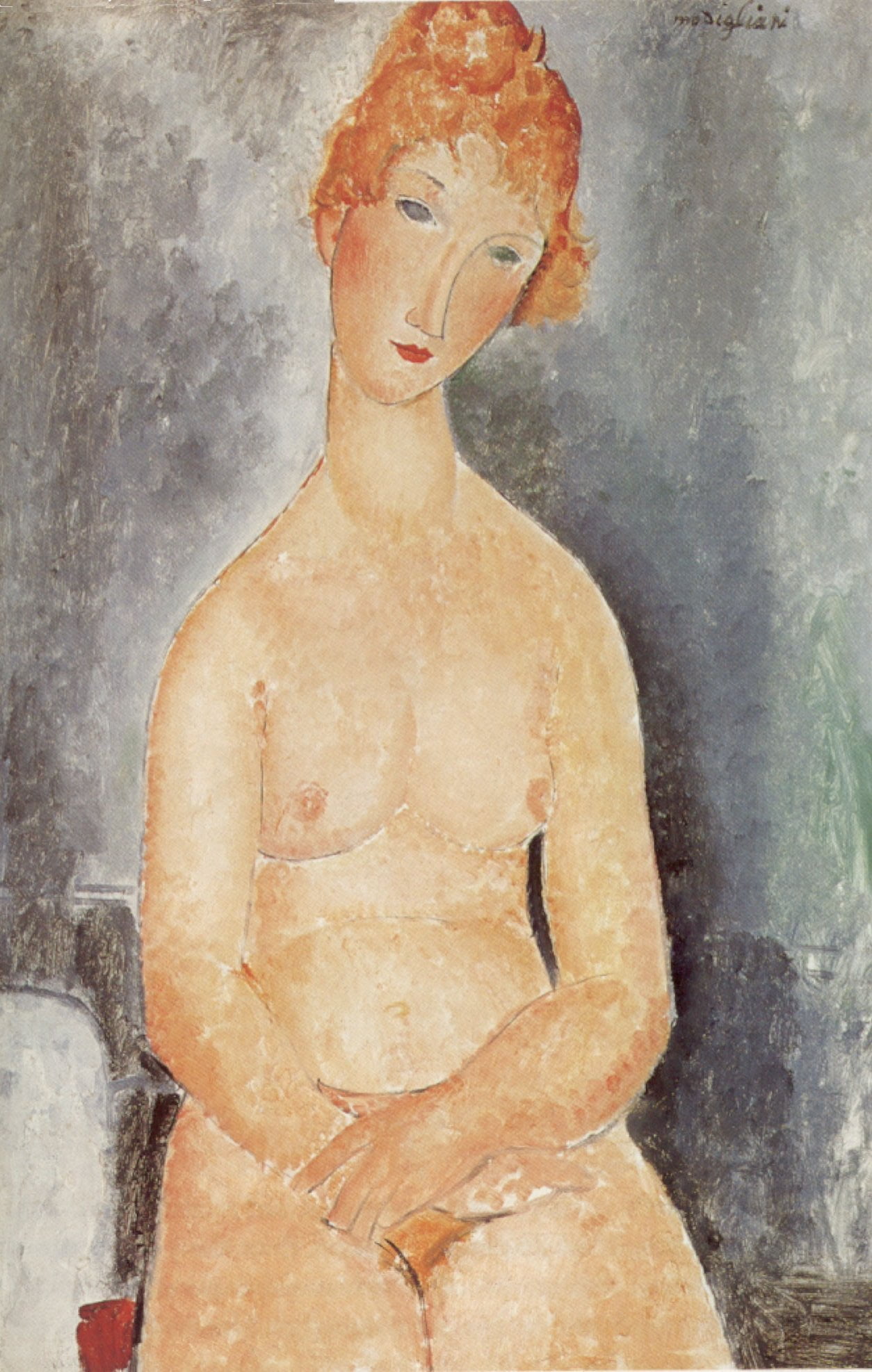
Seated Nude is an oil on canvas painted by Amedeo Modigliani in 1918; the original measures 100.3 × 64.8 cm, is signed upper right and hangs in the Honolulu Museum of Art under accession number 2895.1. Our canvas painting is a hand-painted copy of that work: an academy-trained painter makes it in oil on cotton canvas, in eight sizes from 40 × 60 cm to 120 × 180 cm or in the size you specify, and before dispatch we photograph it and send you the photograph for approval.
| Title: | Seated Nude |
| Other titles: | Seated Nude (1918) · Nu assis |
| Painter: | Amedeo Modigliani (1884–1920) |
| Year: | 1918 |
| Original size (height × width): | 100.3 × 64.8 cm, portrait format |
| Original technique: | Oil on canvas, signed upper right |
| Painting style: | Modern art, École de Paris |
| Where it is: | Honolulu Museum of Art, acc. 2895.1, gift of Mrs Carter Galt, 1960 – the museum on this work |
| Our reproduction: | hand-painted oil on canvas, eight sizes from 40 × 60 cm to 120 × 180 cm; one of them, 65 × 100 cm, is the original’s measurement to within three millimetres |
Seated Nude – Amedeo Modigliani
What is on the canvas?
The canvas stands upright and the figure fills it. A woman sits facing us, the head tilted onto one shoulder. Her hair is short, curled and coppery red, close around the face — the first thing that tells this canvas apart from the other seated nudes. The face is long and cream-coloured with a warm flush, the nose long, the mouth small and dark red, and the eyes are open, pale blue-grey with the pupils drawn in; she is looking, not sleeping. The skin is cream and apricot rather than brown, laid on thinly and held together by a fine dark contour that runs from the shoulder down the whole outer edge of the body. Her right arm hangs along her side; the left forearm crosses low in front, and the hands rest one over the other in her lap. Behind her the ground is a brushed grey-green, with a paler green strip at the right edge, a dark mass in the lower right corner, a pale blue-grey shape at the left that reads as the back of a chair, and a small red patch at the bottom left. The signature sits in the top right corner. It is a post-impressionist painting in the sense in which post-impressionism meant building a body out of contour and flat colour rather than out of the light in a room. In Paris Modigliani belonged to that circle of immigrant painters we now call the École de Paris.
Where is the original today?
In the Honolulu Museum of Art, under accession number 2895.1. It came to the museum in 1960 as the gift of Mrs Carter Galt, and the recorded owners before that run from the Bernheim-Jeune gallery in Paris through a private Paris collection and the Helen Hughes Richards collection to the Galt collection in Honolulu. The museum’s measurement is 100.3 by 64.8 centimetres; a rounded 100 by 65 is what you will usually meet elsewhere. The institution’s name has changed within living memory: it was the Honolulu Academy of Arts until 2012, so older books and older versions of this page are historically accurate and no longer current.
Which Seated Nude is this?
We sell two paintings called Seated Nude and they are different canvases. This is the 1918 one in Honolulu: 100.3 × 64.8 cm, red curled hair, open eyes, the hands resting one over the other in the lap. The other is Seated Nude of 1916, a smaller canvas at 92.4 × 59.8 cm, with the head inclined and the arms down at the sides. Both titles come from the works themselves and we have renamed neither, so what tells them apart on our shelf is the year, the size and the hair. Modigliani painted dozens of nudes between 1916 and 1919 and several carry the same plain title; that is a habit of the catalogues rather than a mistake in them.
The eyes are open, and that is not the rule
Modigliani is known for faces whose eyes are blank almonds with no pupil, and a great many of his sitters do look like that. This one does not. Both eyes are drawn, pale and blue-grey, with the pupils in place, and the head is turned enough that she is plainly looking at something. Whatever the blank eye meant to him, it was a decision he made picture by picture and not a manner he could not escape. On this canvas he made the other decision, and it is worth knowing before you order, because a copyist who paints the eyes blank here is painting a different woman.
Bold, with the faintest suggestion of a setting
The nudes of these years are set down without a story: no room around them, no furniture that explains anything, no drapery arranged for effect — only a body, a contour and a ground broken into a few quiet areas. That is what makes them modern and it is also what made them difficult in their own time: the exhibition Berthe Weill gave him in December 1917 was closed by the police on its opening day because the nudes were visible from the street. He died in January 1920, at thirty-five, and this canvas was painted in the last full year of his working life.
How is our hand-painted version made?
The work is made by an academy-trained painter in oil on cotton canvas over a wooden frame. It is not a print: every stroke is laid by hand, and your canvas always differs a little from any other. The difficulty here is that almost the whole surface is one colour. The body is a single field of cream and apricot, and what keeps it from going flat is the thin contour and the small changes of warmth inside it, which have to be laid while the paint is still open. Overwork the skin and the figure turns into a cut-out. The second difficulty is the hair: it is the only strong colour on the canvas and it has to stay a colour rather than becoming a shape.
Which size for which wall?
The original is 100.3 cm high and 64.8 cm wide, and our 65 × 100 cm is that canvas to within three millimetres, so if you want it at the size Modigliani painted it, that is the rung. The smaller sizes, 40 × 60 and 50 × 70 cm, suit a hallway, a stairwell or a bedroom wall. From 70 × 110 and 80 × 120 cm the figure comes close to life size, which is the most natural reading of a standing-height nude on a living-room wall. The largest, 90 × 140, 100 × 150 and 120 × 180 cm, want a free wall and about three metres of distance. Hang it with the centre around 145 cm above the floor. The picture is pale and cool with one hot note in the hair, so it holds a white or grey wall and is lost against a warm one.
Custom size, stretcher and frame
If your wall asks for a size that is not listed, we will make it. Give us the width and height in centimetres; we check whether the proportion carries the composition and tell you what changes at the edges. Here it shows at the bottom, where the thighs are already cut by the edge, and at the top, where the signature sits close to the corner. A wider format opens empty ground beside the figure and weakens the compression that makes the picture work. It arrives either stretched on a wooden frame, ready to hang, or rolled in a tube, which is cheaper to ship. You pick the frame in our 3D application, which shows it realistically on the work, and on request we set it into a photograph of your wall. If you are looking for a work we do not carry, see our made-to-order paintings.
Delivery and guarantee
We deliver to your address, the canvas clear of the outer wall of the packaging. Lead time depends on size and the workshop load: we estimate it when you order and tell you if it changes. We guarantee workmanship and materials: if the work arrives damaged or does not match the photograph you approved, we repaint it at our cost. Because you see it photographed before it ships, most questions are settled before it leaves.
Frequently asked questions
Where is the original?
In the Honolulu Museum of Art, Hawaii.
What is the accession number?
2895.1, a gift of Mrs Carter Galt in 1960.
Was the museum not called something else?
It was the Honolulu Academy of Arts until 2012. Older sources use that name for the same institution.
Is the painting signed?
Yes, in the top right corner.
Do you have the original’s size?
Effectively yes. The original is 100.3 × 64.8 cm and our 65 × 100 cm rung differs by two to three millimetres.
Which size should I choose?
For a living-room wall, 80 × 120 cm. For a hallway or bedroom, 50 × 70 cm.
You have two works with this title — which is which?
This one is the 1918 canvas in Honolulu, with red curled hair. The other is the 1916 canvas, smaller, with the arms down at the sides. This work has its own article, and so does the 1916 one.
Which other Modigliani nudes do you have?
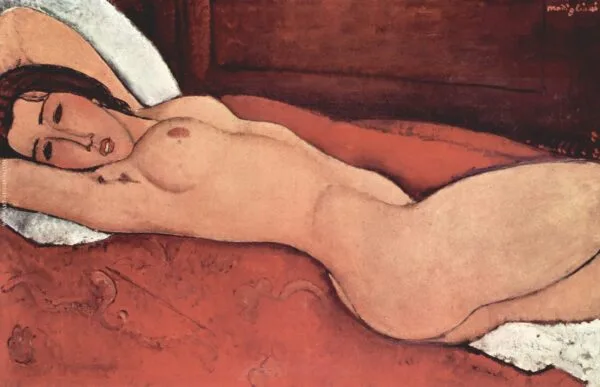
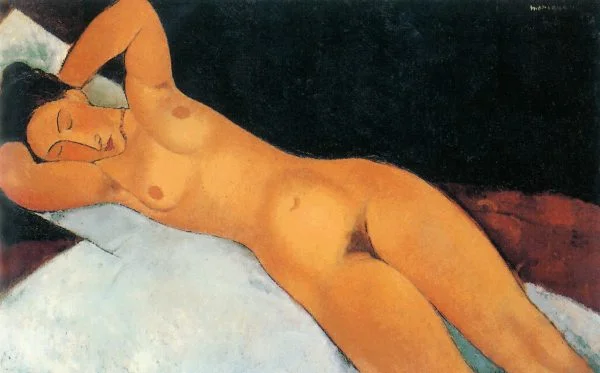
See Reclining Nude II, Red Nude and Nude Sitting on a Divan. The full choice is in the Amedeo Modigliani gallery, and we have written a longer article about the painter.
How closely does it follow the original’s proportions?
The original measures 64.8 × 100.3 cm, and that is exactly the size we list: 65 x 100 cm. The proportions are the original’s, with no deviation.
- Subject: a seated female figure facing the viewer, short coppery hair, open pale eyes, the hands resting one over the other in the lap
- Original: 100.3 × 64.8 cm, oil on canvas, 1918, Honolulu Museum of Art (acc. 2895.1)
- Our version: hand-painted oil on canvas, eight sizes from 40 × 60 to 120 × 180 cm, one of them the original’s measurement to within three millimetres
- Worth knowing: we sell two different paintings called Seated Nude; this is the 1918 one, and the year, the size and the red hair tell them apart
The eyes on this canvas are painted without pupils. We counted all 76 Modigliani works on this shelf: 53 are like that, 17 are not – work by work.