


Description


| Original size: | 110.3 cm x 131 cm |
| Paint style: | Impressionism |
| Original technique: | Oil on canvas |
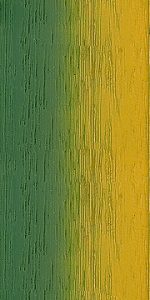
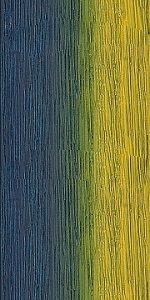
Weeping Willow is a hand-painted oil reproduction of a late tree motif by Monet: a single tree fills the whole surface, the trunk rises at the centre, a cool blue-green mass of branches hangs at the left and a golden-yellow curtain of shoots at the right.
Weeping Willow – Claude Monet
What is on the canvas
There is a single tree on the canvas and nothing else — no sky, no horizon, no path.
The trunk rises at the centre, dense and twisting, painted in red-brown, orange
and violet strokes that wind upward beside one another; in the upper third it forks into a few
strong boughs arching out to both sides. Shoots hang from them. At the left those shoots are dark
and cool: blue, deep green and grey interweave into a dense mass through which almost nothing can
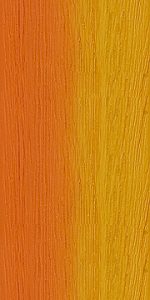
be seen. At the right the same curtain is golden yellow and orange, far lighter,
and red-brown branches are drawn through it in long curved strokes. A band of ground runs along
the bottom edge, laid in horizontal orange, red and green strokes. The paint stands very thick
everywhere and the strokes sit above the canvas; the forms are indicated, not drawn.
One tree, two climates
What is unusual in this scene is that the tree falls into two halves. The left is in shade and
cool, the right in light and warm, and there is no transition — the border runs straight through
the trunk. That is exactly why the work does not read as the portrait of a tree but as two states
of the same thing set side by side. With no sky and no ground in the usual sense there is no depth
either: everything lies in one plane, and density stands in for distance. This oil on canvas
reproduction is among the most agitated in the range — the stroke is short, twisted and in places
almost kneaded, so the surface changes at the smallest movement of the viewer.
The subject among Monet’s works — and what is not established about this original
The group of the same trees at the water is The Willows.
The tree as a vertical in a row stands in Poplars
and in A Row of Poplars, where
the stroke is still quiet and the forms stay recognisable. How far Monet pushed reflection once
the water became the main subject is shown by
Morning on the Seine, near Giverny.
What we deliberately do not state here: Monet painted this motif in more than
one version, so which of them is the original behind this particular reproduction is not
established. You will therefore find no year of execution, no collection name and no accession
number on this page. We say what is visible on the canvas and nothing beyond it.
How it works on the wall
The format is upright, in a ratio of about 5 : 6 — tall, but not narrow. Because the subject
closes off neither at the top nor at the bottom, it works well at eye level; the gaze falls
straight into the fork of the boughs. 60 x 70 cm and 70 x 80 cm suit a hallway or a smaller wall.
80 x 100 cm and 90 x 110 cm are the usual choices above a sideboard. 100 x 120 cm is balanced
above a sofa. 110 x 131 cm is the closest to the original and is therefore the
most faithful choice. 120 x 140 cm and 150 x 180 cm are meant for large walls, where the single
strokes become visible as forms in their own right. Because the work is exceptionally rich in
colour, hand-painted canvas art of this kind asks for a quiet, single-colour wall and enough
distance — close up it breaks into colour, from across the room it gathers into a tree.
Hand-painted, not printed
This fine art reproduction is made with a brush, not a printer, and in this subject the
difference is at its greatest. A print lays the colour in an evenly thin film, so a kneaded
surface comes out looking like a photograph of thick paint. Applied by hand the paint really is
thick: the strokes lift above the canvas, overlap one another and cast small shadows on each
other. It is those shadows that give the foliage a depth a print cannot imitate, because there
everything is the same thickness. Because it is handwork, every copy differs a little.
Custom sizes, frame, and the view on your own wall
If none of the eight sizes suits your room, we paint to the size you set yourself, keeping the
ratio of the sides so the fork of the boughs stays where it belongs. A 3D application is available
for the frame — it is for frame selection only and does not place the work in your
room. If you want to see how it will look on your own wall, that is the separate visualisation
service. The two do not overlap, so we do not mix them.
Ordering, lead time and approval before dispatch
The work is painted to order, so the lead time is 15 to 45 days, and in this
subject often nearer the upper end, because thick paint needs longer to dry. Before anything is
sent we send you a photograph of the finished piece for approval; only once you confirm do we
stretch the canvas on a wooden frame and prepare it for hanging. As wall decor it belongs where
the light comes from the side, because that is when the thickness of the paint reads best. The
whole range, including further reproductions on canvas and famous paintings on canvas, is in the
Claude Monet gallery.
- Subject: a single tree across the whole surface, a twisting trunk at the centre, a cool mass at the left and a golden curtain at the right.
- Technique: oil on canvas; very thick paint, the strokes short, twisted and in places kneaded.
- Sizes: upright format 5 : 6, eight sizes from 60 x 70 cm to 150 x 180 cm; 110 x 131 cm is the closest to the original.
- Worth knowing: the border between shade and light runs straight through the trunk — left and right are two climates of the same tree.