



Description
| Title: | Poppies near Argenteuil |
| Other titles: | Coquelicots ; La promenade · Mohnfeld bei Argenteuil |
| Painter: | Claude Monet (1840–1926) |
| Year painted: | 1873 |
| Original size: | 65.3 cm x 50 cm |
| Original technique: | Oil on canvas |
| Painting style: | Impressionism |
| Located at: | Musée d’Orsay, Paris (inv. RF 1676) |
| Our reproduction: | Hand-painted oil on canvas, nine sizes or made to measure |
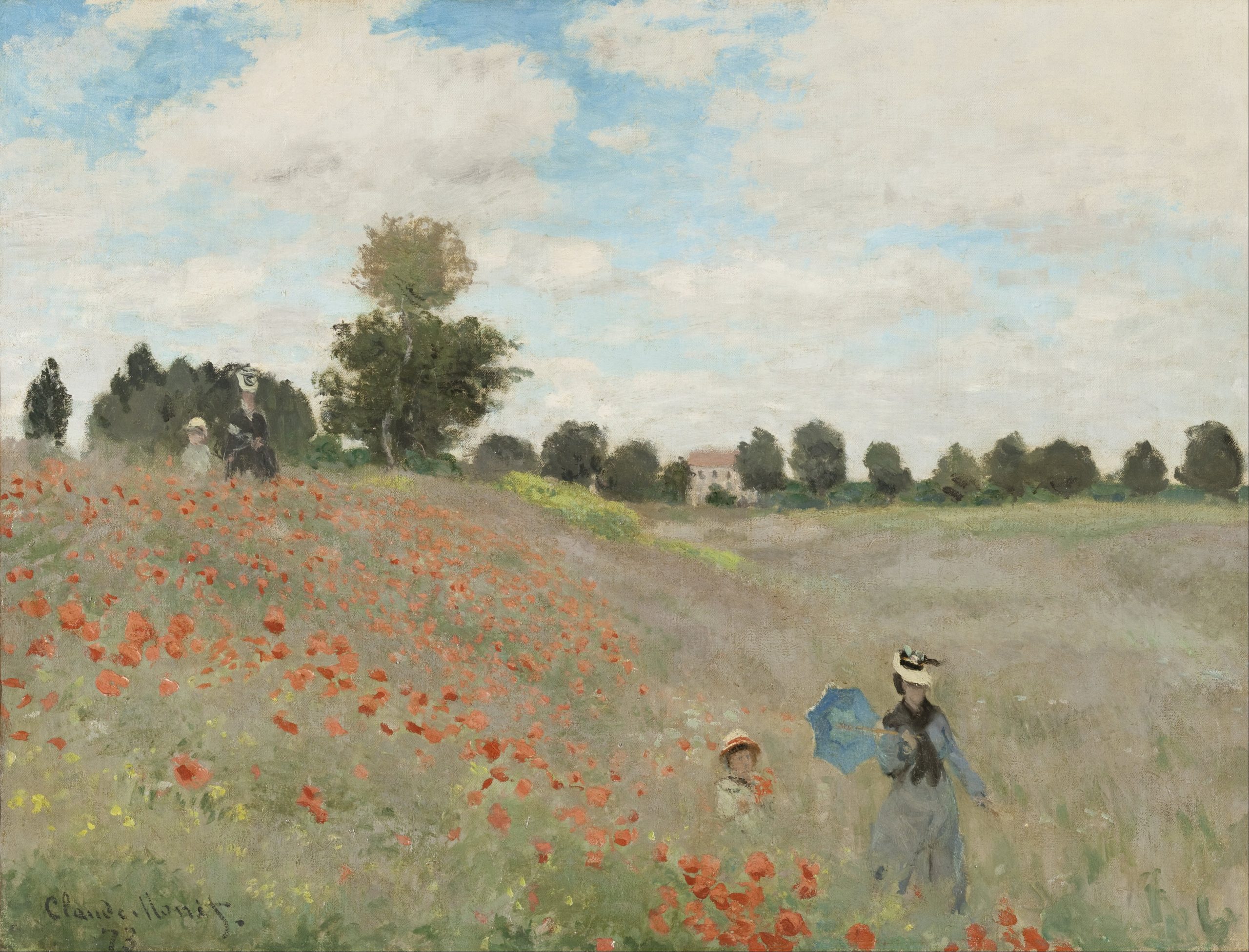
Poppies near Argenteuil is Monet’s canvas of 1873: a slope covered in red poppies, a woman with a blue parasol and a child walking down through them, and a high sky with scattered cloud above. The original hangs in the Musée d’Orsay in Paris. We make it as a hand-painted copy in oil on canvas, in nine sizes or to your own measurement, with a photograph of the finished work sent for approval before dispatch.
Poppies near Argenteuil – Claude Monet
What is shown?
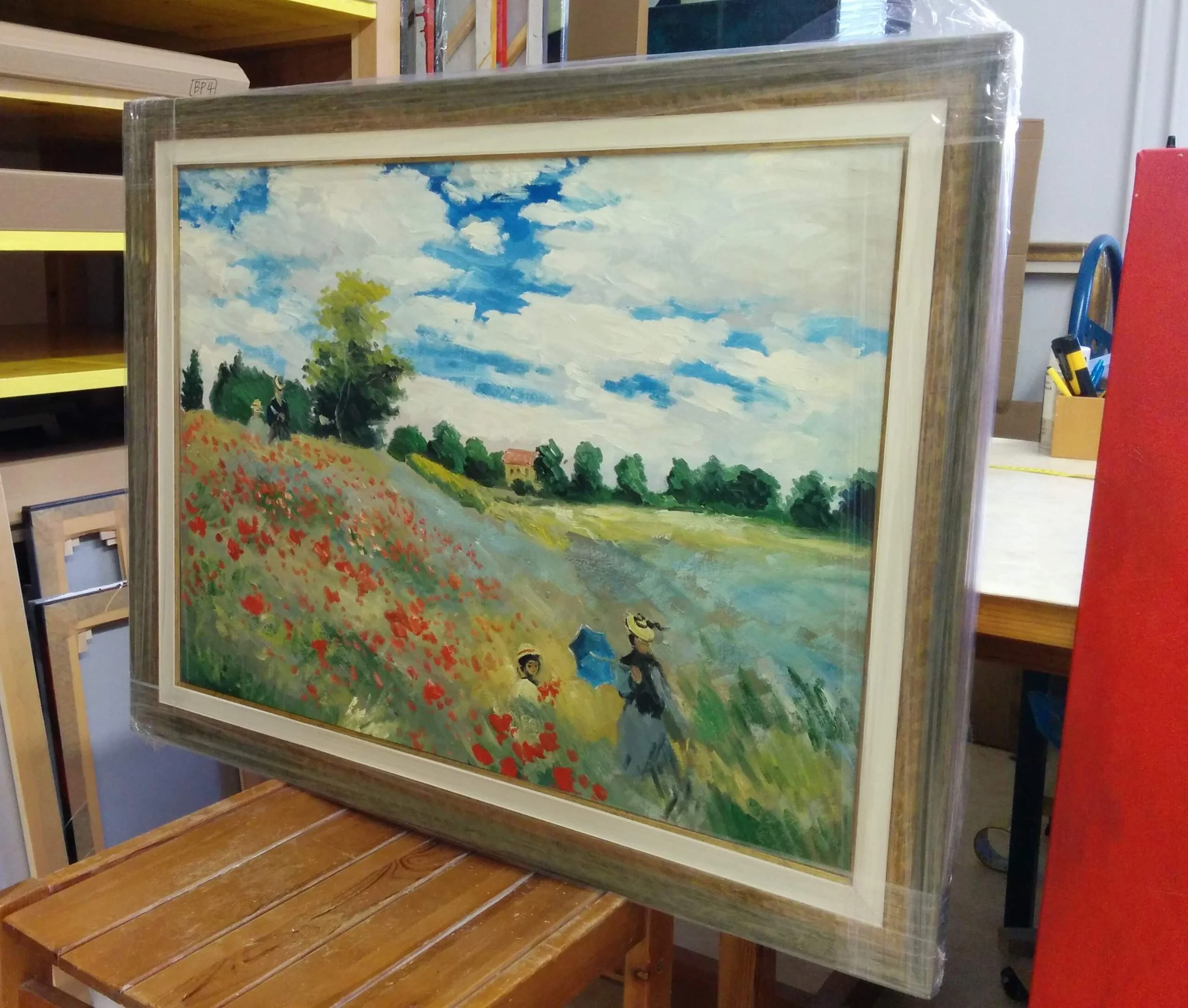
A summer afternoon on the meadow above Argenteuil, where Monet was living at the time. A field of poppies falls down the slope from the left edge, and two figures come down through it: a woman with a dark blue parasol and a child in a straw hat ahead of her. To the right lies pale grass, a line of trees along the horizon and a house with a red roof among them. This canvas painting has neither an event nor a story — it is the record of a walk, and that is exactly why the museum also lists it under a second name, La promenade.
What is on the canvas?
At the top left, on the lip of the slope, stand two more figures, smaller than the first: the same woman and the same child, painted a second time, higher and further away. That is what makes the meadow read as a path rather than a surface — the eye goes from the upper pair to the lower one and covers the distance on the way. The poppies are not drawn but set down as separate red touches, denser at the lower left and thinner towards the middle; between them the grass is green, yellow and in places bluish. The sky takes the upper third and is painted in broad white and blue strokes. An impressionist painting is built here out of two opposites: the quiet horizontal of the skyline, and the restless scattered red beneath it.
Why does this work matter?
Because it was among the works Monet showed at the first impressionist exhibition. At the time it was a disconcerting thing: no finished faces, no drawing, flowers that are only a red dot. An oil painting reproduction that neither narrates nor finishes was hard for a visitor in 1874; today that same lightness is why the subject feels relaxed rather than old.
Who are the figures in the meadow?
The museum does name them, and hedges it itself: the young woman with the parasol and the child in the foreground are, its record says, «sans doute» — no doubt — Camille, the artist’s wife, and their son Jean. It says no more than that, and neither will we. Something else is certain: the figures appear twice, large below and small above, and that repetition is what gives the work its movement. Whoever copies it must therefore not paint both pairs with equal emphasis — the upper one has to stay barely indicated.
Which of Monet’s Argenteuil pictures is this?
Argenteuil is the place Monet painted most: several hundred canvases in seven years there. The walk along the river is — The Promenade near Argenteuil; the road bridge over the Seine is — Bridge at Argenteuil; the sailing boats in the basin are — The Argenteuil Basin. Later, at Giverny, he came back to poppies at another scale — Poppy Field (Giverny). A caution when searching: the Poppy Fields near Argenteuil in the Metropolitan Museum is a different canvas, two years later and without figures in the foreground. Monet’s garden at Argenteuil in 1872, with a young woman reading in the grass while sunlight falls through the leaves, is Springtime.
How is our hand-painted version made?
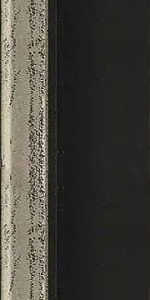
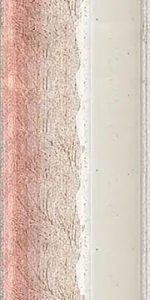
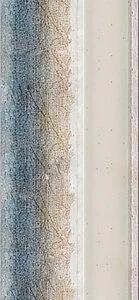
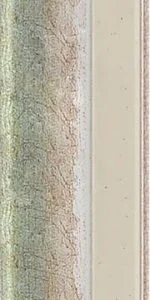
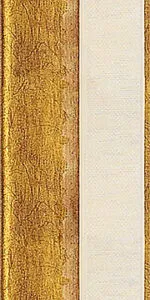
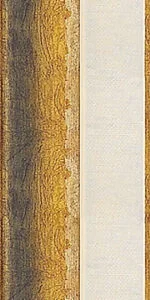
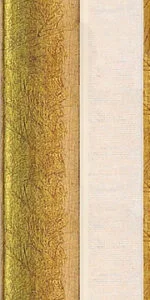
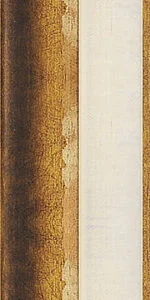
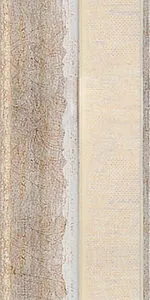
The sky first, then the grass, and only last the poppies — each one its own touch, with no drawing underneath. This is exactly where hand copies separate: if the poppies are spread evenly the field becomes a pattern; if they are spread as in the original, in clusters and gaps, it stays a meadow. In the first photograph the finished work stands in a grey-brown moulding with a wide cream inner edge, still in its protective film, on the bench in our workshop — so you can see how the subject works framed and how it is prepared for dispatch.
Every piece is a hand-painted oil painting, made for the order. The photograph shows the strokes standing above the surface; a printed reproduction is flat.
Which size for which wall?
Short answer: 100 x 80 cm for a living room, 65 x 50 cm for a smaller wall — 3 mm narrower than the original — and 130 x 100 or 150 x 120 cm for a large one. A painting for living room walls should take up roughly two thirds of the width of the sofa or sideboard. The middle sizes, 80 x 60, 90 x 70 and 110 x 90 cm, cover most bedrooms and dining rooms. As impressionist wall art this subject is pale and good-humoured, so it also survives a narrow hallway, where people see it close up and notice the separate touches.
How high to hang the painting: put the centre of the canvas about 150 cm above the floor. The subject is horizontal and quiet, so do not hang it too high.
Made to measure, stretcher and frame
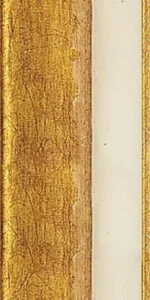
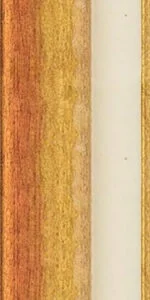
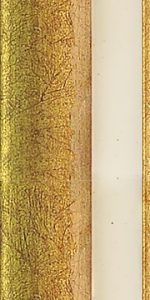
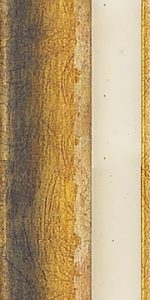
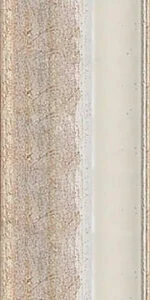
If none of the listed sizes suits, we paint to measure — send the width and the height and we will quote a price and a lead time. The original measures 65.3 x 50 cm, a ratio of about 1.31 : 1. The canvas is stretched over a wooden stretcher and the edges are painted, so it does not look unfinished without a frame. In the photograph it sits in a grey-brown moulding with a cream edge; pale natural mouldings suit this subject too.
Delivery and guarantee
We ship to the United Kingdom, Ireland and across the EU, wrapped in protective film and packed in a rigid box — exactly as the photograph shows. Before dispatch we send a photograph of the finished work; if something on it is wrong, it is corrected before the piece leaves the workshop. Every other Monet reproduction we paint is in the Claude Monet gallery, and we write about painting and about choosing a subject on the blog.
If the painting is a gift and you are unsure of the size, there is a wall art voucher: the recipient chooses the size and the subject.
Frequently asked questions
Where is the original?
In the Musée d’Orsay in Paris, under inventory number RF 1676. The museum received it in 1906 in the donation of Étienne Moreau-Nélaton.
What year is it from?
From 1873. The museum also records the size as 50 cm high and 65.3 cm wide, and the technique as oil on canvas.
Why do the figures appear twice?
Because Monet was not painting a scene but the walk through it. The lower pair is near and large, the upper pair far and small; between them lies a distance the eye covers. With only one pair, the meadow would be a surface.
What does the painting mean?
It tells no story and stands for nothing beyond itself. Monet painted the light and colour of a summer afternoon on the meadow above Argenteuil, where he was living at the time; the figures matter less than the red touches of the poppies around them.
- Painted by hand. Oil on canvas, no print and no machine application.
- Nine sizes or made to measure. From 50 x 40 to 150 x 120 cm, including 65 x 50 cm, 3 mm narrower than the original.
- A photograph before dispatch. You see the finished work framed before it leaves the workshop.
- Figures from the museum. Year, size and inventory number are given as the Musée d’Orsay records them.