




Description
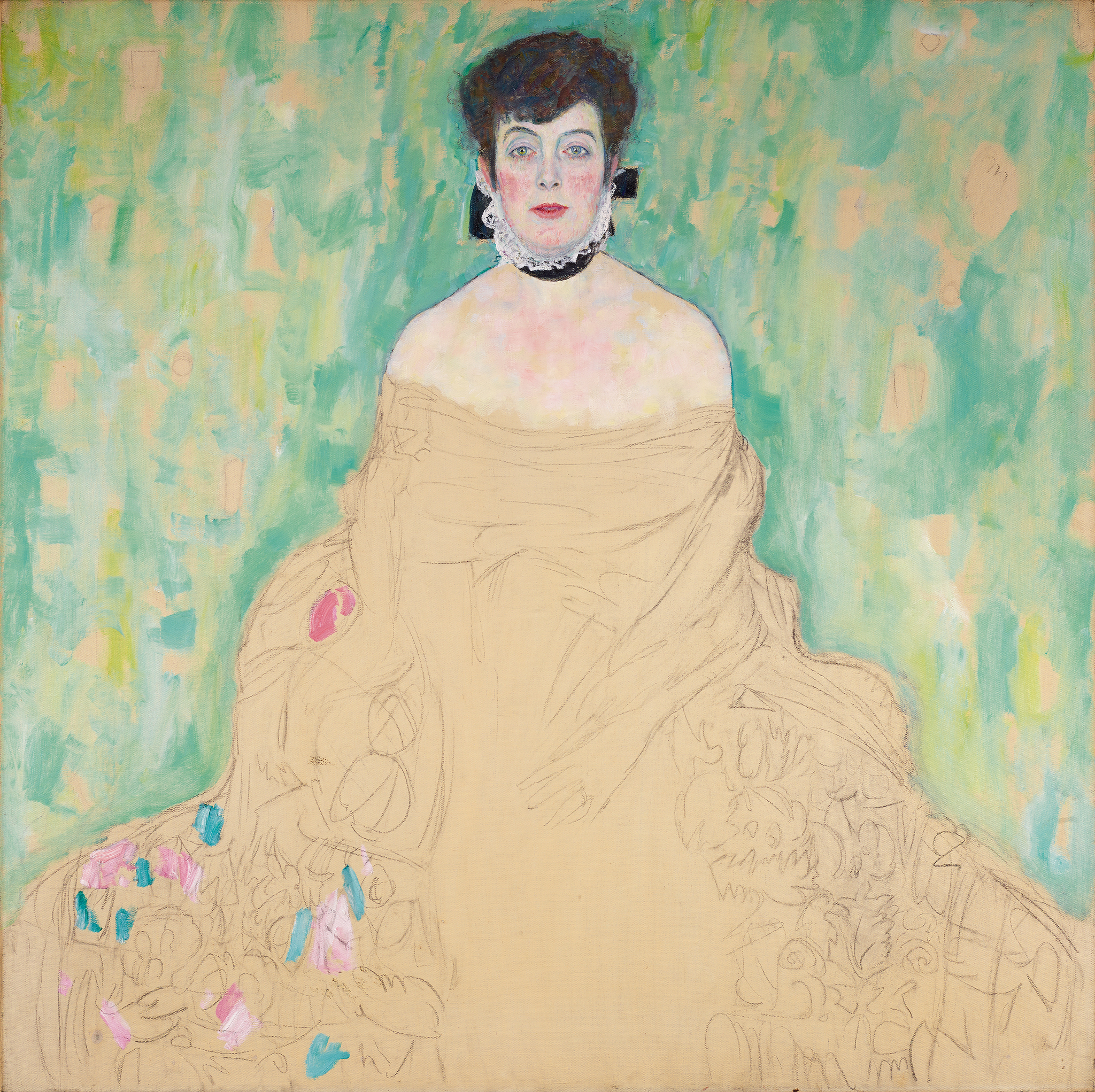
Portrait of Amalie Zuckerkandl is one of Klimt’s last portraits, left unfinished when he died in 1918: her face is fully painted, with rosy cheeks, dark hair and a white ruff at the throat, while her wide gown exists only as pencil lines on a pale ochre ground in front of a bright green-turquoise background. The original, 128 by 128 cm, hangs in the Upper Belvedere in Vienna. We paint it by hand in oil on canvas, unfinished lines included, in eight square sizes from 60 x 60 to 150 x 150 cm or to your own measurement, and send you a photograph of the finished work for approval before dispatch.
| Title: | Portrait of Amalie Zuckerkandl |
| Other titles: | Amalie Zuckerkandl · Ritratto di Amalie Zuckerkandl · Portret Amalie Zuckerkandl |
| Painter: | Gustav Klimt (1862–1918) |
| Year painted: | 1917–1918, unfinished (commissioned 1913/14) |
| Original size: | 128 cm x 128 cm |
| Original technique: | Oil on canvas, unfinished |
| Painting style: | Vienna Secession, late portrait |
| Located at: | Belvedere, Vienna (inv. 7700) |
| Our reproduction: | Hand-painted oil on canvas, eight square sizes or made to measure |
Portrait of Amalie Zuckerkandl – Gustav Klimt
What does the painting show?
Amalie Zuckerkandl sits facing us in the middle of a large square canvas. Her face is finished: dark hair, rosy cheeks, red lips and a calm, direct gaze. A black ribbon and a white ruff close around her throat, and her shoulders are bare. Below that the painting changes completely. Her wide gown is only drawn – pencil lines on a pale ochre ground, with a few touches of pink, blue and green where Klimt had begun to lay in colour.
Around her the background is a bright, almost glowing green-turquoise, painted in loose and lively strokes. The contrast is what people notice first: a finished face, a body still in drawing, and strong colour behind both. There is no gold anywhere; this is the colourful late Klimt, not the golden one.
Why is the portrait unfinished?
Klimt received the commission for this portrait in 1913 or 1914. Work stopped when the Zuckerkandl family moved house, and he took the portrait up again in 1917. He was still working on it when he died suddenly early in 1918, so the canvas stayed exactly as he had left it.
That is why it looks the way it does. It is not a sketch and not a study for another painting: it is a large commissioned portrait caught halfway. The Belvedere describes it as a work that clearly shows how Klimt went about his late portraits, and that is exactly what makes it worth hanging.
What does the unfinished portrait reveal?
In his late portraits Klimt began with the face. He painted it carefully first and only indicated the body and the clothes with quick, sketchy strokes, meaning to work them out later. Here you can see that order on the canvas itself: the face is complete, the dress is still a drawing, and the first patches of colour show where the pattern of the gown would have gone.
For many people this is the appeal. The portrait feels open and modern, a drawing and a painting in one, and the bright background keeps it light. It shows a woman of Vienna in the years of the First World War looking straight at you, without the gold that surrounds the sitters of his famous portraits.
Who was Amalie Zuckerkandl, and where is the original?
Amalie Zuckerkandl was the wife of the surgeon Otto Zuckerkandl and the sister-in-law of the writer Berta Zuckerkandl. Klimt painted her in the last years of his life, and the portrait remained unfinished at his death.
Today the original belongs to the Belvedere in Vienna, where it hangs in the Upper Belvedere under inventory number 7700. It came to the museum in 1988 as a gift from Vita and Gustav Künstler. It is large, 128 by 128 cm, painted in oil on canvas. More about the painter’s life is on Wikipedia. Our version is not a print: it is painted for you, by hand, at the size you choose.
The Zuckerkandl portrait among Klimt’s works
Amalie Zuckerkandl belongs to Klimt’s last years, and our gallery lets you see where it comes from. The Portrait of Sonja Knips, painted around 1898, was his first large portrait in a square format – the same square he still chose twenty years later. The Portrait of Adele Bloch-Bauer II of 1912 already shows the colourful style without gold that you see here. The Italian Garden Landscape of 1913 carries the same bright palette into a landscape, and Sappho takes you back to the academic beginnings.
Choose Amalie Zuckerkandl if you like a portrait that feels unfinished and alive at the same time, with strong green and a calm face. If you prefer a finished portrait full of colour, Adele Bloch-Bauer II is the closer match; for a soft, pale square portrait, Sonja Knips.
How do we paint the Zuckerkandl portrait by hand?
The painter starts with the pale ochre ground that covers most of the original and with the green-turquoise background, laid in loose, visible strokes. Then the face is built up in thin layers – the skin, the rosy cheeks, the dark hair, the white ruff and the black ribbon – until it has the same quiet presence as the original.
The gown needs the most care. We do not invent the dress Klimt never painted: its lines are drawn on the ochre ground as they are on the original, and only the few touches of pink, blue and green are added in colour. The result is the portrait as Klimt left it, painted by hand in oil on canvas. A printed oil painting reproduction flattens the difference between a drawn line and a painted surface; by hand it stays visible. Every painting is a hand-painted copy made for your order, so no two are ever quite the same.
Which size for which wall?
Short answer: 100 x 100 or 110 x 110 cm above a sofa or a bed, 60 x 60 or 70 x 70 cm for a study, a hallway or a narrow wall, and 120 x 120 or 150 x 150 cm for a large wall. The original measures 128 by 128 cm, so our two largest sizes come closest to its real presence.
There are eight square sizes: 60 x 60, 70 x 70, 80 x 80, 90 x 90, 100 x 100, 110 x 110, 120 x 120 and 150 x 150 cm. Because the original is square, every size keeps the composition exactly as it is – the face in the upper half, the drawn gown below, the green all around. A painting for the living room should take up about two thirds of the width of the furniture below it; above a sofa 160 cm wide, that is 100 x 100 or 110 x 110 cm. The calm face and the fresh green also suit a bedroom or a dining room.
Hang it with the centre of the canvas about 150 cm above the floor, and 20 to 30 cm above a sofa or a headboard.
Custom size, stretcher and frame
If none of the eight sizes fits your wall, we paint it to measure; keep it square, so that the portrait is not stretched. Send us the size you want and we will quote a price and a lead time. Every painting we make is stretched over a wooden stretcher and ready to hang.
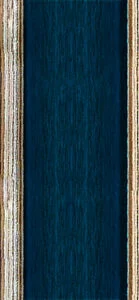
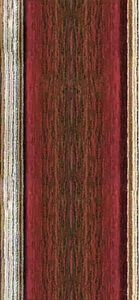
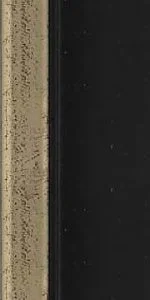
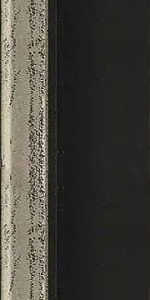
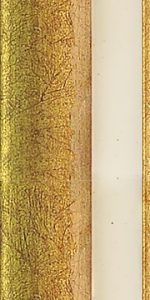
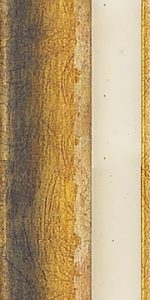
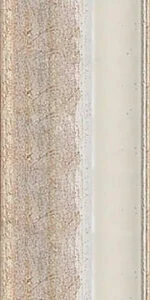
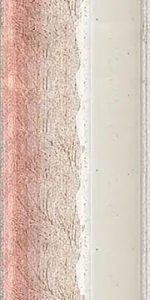
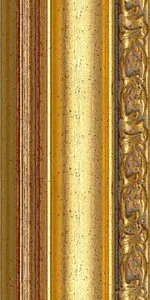
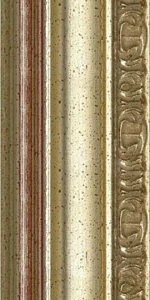
For the moulding, use our 3D application: it shows every one of our frame profiles on this subject, so you can compare gold, silver, black, white and natural wood before deciding – the application is for choosing the frame only. If you would like to see how the painting will look on your own wall, that is our separate room placement service. A thin white or light wood frame keeps the portrait fresh; a dark frame makes the green glow more strongly.
Delivery and guarantee
Every painting is made to order in our studio in Slovenia, so allow 15 to 45 days depending on the size you choose. We ship it stretched and protected for transport, framed if you chose a frame, across the EU with no customs. Before dispatch you receive a photograph of the finished work to approve; if anything is not right, we correct it while the canvas is still in our workshop. Our returns policy applies to every order.
If it is a present and you do not know the right size, there is a wall art voucher. Every other Klimt work we paint is in the Gustav Klimt gallery, and there is more on the painter in our article ten interesting facts about Gustav Klimt.
Frequently asked questions
Where is the original of Klimt’s Portrait of Amalie Zuckerkandl?
The original hangs in the Upper Belvedere in Vienna, under inventory number 7700. It is a large oil on canvas, 128 by 128 cm, dated 1917–1918. The Belvedere received it in 1988 as a gift from Vita and Gustav Künstler. It is one of the last portraits Klimt worked on before his death.
Why is the Portrait of Amalie Zuckerkandl unfinished?
Because Klimt died before he could finish it. He received the commission in 1913 or 1914, stopped when the Zuckerkandl family moved house, and resumed work in 1917. When he died suddenly early in 1918, the face was painted, but the gown was still only drawn in pencil lines on the canvas.
Who was Amalie Zuckerkandl?
Amalie Zuckerkandl was the wife of the surgeon Otto Zuckerkandl and the sister-in-law of the writer Berta Zuckerkandl. Klimt painted her in his last years. Beyond these family ties the museum record says little about her life, so we describe only what the portrait shows: a calm, direct woman with dark hair and a white ruff.
What does Klimt’s Amalie Zuckerkandl show?
It shows a woman seated facing us, with dark hair, rosy cheeks, a black ribbon and a white ruff at her throat and bare shoulders. Her wide gown is only sketched in pencil lines on a pale ochre ground, with a few touches of pink, blue and green, in front of a bright green-turquoise background.
Do you paint the Zuckerkandl portrait unfinished, like the original?
Yes. We paint the portrait as Klimt left it: the finished face, the drawn lines of the gown on the ochre ground and the first few touches of colour. Inventing the missing dress would turn it into a different painting. If you would like something else, ask us before ordering and we will tell you honestly what is possible.
How big is the original Zuckerkandl portrait, and which size should I choose?
The original is 128 by 128 cm, a large square. Above a sofa or a bed the usual choice is 100 x 100 or 110 x 110 cm. For a study or a narrow wall 60 x 60 or 70 x 70 cm is enough, and 120 x 120 or 150 x 150 cm comes closest to the presence of the original.
Which room does the Portrait of Amalie Zuckerkandl suit?
It suits a living room, a bedroom, a dining room or a study. The bright green-turquoise works well with white, grey and natural wood, and the unfinished gown gives the room a modern, airy feel. Because there is no gold, a canvas painting like this one also fits contemporary interiors that would find The Kiss too ornate.
Is the Zuckerkandl portrait a good gift?
Yes, especially for someone who loves Vienna around 1900, portraits or drawing, and who already knows Klimt’s golden paintings. It is a less familiar Klimt with a story: a commissioned portrait left unfinished at his death. If you are unsure of the size, choose 80 x 80 cm, or give a voucher so the recipient can choose.
What is the difference between Amalie Zuckerkandl and Klimt’s golden portraits?
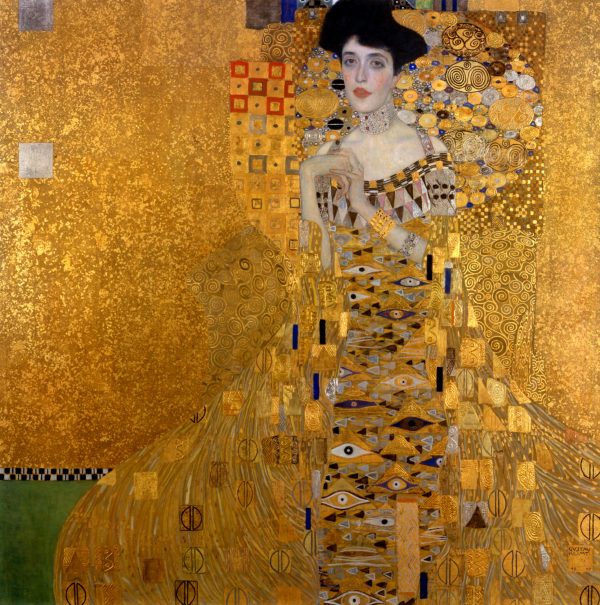
The golden portraits, such as Adele Bloch-Bauer I, cover the dress and the background in gold and ornament. Amalie Zuckerkandl comes from Klimt’s last years: no gold, a bright green background, a fully painted face and a gown still in drawing. Choose it if you want a lighter, more modern Klimt portrait for your wall.
- Subject: Amalie Zuckerkandl seated facing us: a finished face, a gown still in pencil lines, a bright green-turquoise background.
- Original: 1917–1918, unfinished, oil on canvas, 128 x 128 cm, Belvedere, Vienna (inv. 7700).
- Ours: a Klimt reproduction painted by hand in oil on canvas, in eight square sizes or made to measure.
- Worth knowing: you receive a photograph of the finished work for approval before dispatch.