





















Description
Portrait of Margaret Stonborough-Wittgenstein is Gustav Klimt’s life-size wedding portrait of 1905: a young woman in a long white dress stands almost at full length, turned slightly to the left, her hands clasped at her waist, in front of a pale grey wall crowned by a band of geometric squares and gold-brown blocks. Her parents commissioned it when she became engaged to the American Jerome Stonborough. The original belongs to the Bavarian State Painting Collections in Munich. We paint it by hand in oil on canvas, in five tall sizes from 40 x 80 to 80 x 160 cm or made to measure, and send you a photograph of the finished work for approval before dispatch.
| Title: | Portrait of Margaret Stonborough-Wittgenstein |
| Other titles: | Margaret Stonborough-Wittgenstein · Margarethe Wittgenstein |
| Painter: | Gustav Klimt (1862–1918) |
| Year painted: | 1905 |
| Original size: | 179.8 cm x 90.5 cm |
| Original technique: | Oil on canvas |
| Painting style: | Vienna Secession, portrait |
| Located at: | Neue Pinakothek, Munich (Bavarian State Painting Collections), currently shown in the Alte Pinakothek (inv. 13074) |
| Our reproduction: | Hand-painted oil on canvas, five tall sizes or made to measure |
Portrait of Margaret Stonborough-Wittgenstein – Gustav Klimt
What does the portrait show?
A young woman stands almost at full length, her body turned slightly to the left. Her dark hair is pinned up, her face is pale and serious, and her hands are clasped loosely at her waist. She wears a long white dress that falls in soft folds to the floor, with lace and light, airy fabric at the shoulders and sleeves. Klimt paints the white in dozens of shades, from cool grey to warm cream, so the dress seems to shimmer.
Behind her the wall is a pale grey-white and almost empty. Only at the top runs a band of geometric shapes: small white and grey squares and brown and gold-brown blocks that frame her head like a piece of modern decoration. Near the floor a dark checked strip closes the composition. The calm figure and the clean, geometric background give the painting a cool, elegant mood that is very different from Klimt’s golden portraits.
Why was the portrait painted?
It is a wedding portrait. In 1903 Margarethe Wittgenstein, the youngest daughter of the industrialist Karl Wittgenstein, became engaged to the wealthy American Jerome Stonborough, and her parents commissioned Klimt to paint a life-size portrait of the young bride. After her marriage she preferred the English form of her name, Margaret, which is why the painting is known as Margaret Stonborough-Wittgenstein.
Klimt did not finish it quickly. According to the Klimt Foundation, the work took a long time and went through repeated phases of overpainting before he was satisfied; it is dated 1905. He showed it for the first time in Berlin.
The Wittgenstein family and Klimt
Karl Wittgenstein was one of the wealthiest industrialists of Austria-Hungary and one of Klimt’s most important patrons. He owned Klimt’s Golden Knight, the painting we offer under the name Gold Cavalier, so a portrait of his daughter by the same painter was a natural step for the family.
Margaret’s brother was the philosopher Ludwig Wittgenstein, one of the best-known thinkers of the twentieth century. The portrait therefore shows a young woman from one of the most remarkable families of Vienna around 1900: rich, cultivated and closely tied to the modern art of the city. Klimt gives her no jewels and no gold dress, only quiet dignity and a white gown.
Where is the original?
The original, painted in oil on canvas and 179.8 cm high by 90.5 cm wide, belongs to the Bavarian State Painting Collections in Munich, which acquired it from a private collection in 1960. It is part of the Neue Pinakothek; while that building is closed for renovation, the portrait is currently shown in the Alte Pinakothek in Munich.
If you plan to see it, check the museum’s website first, because displays change. Our version is painted for your own wall: by hand, in oil, and in the same tall proportion as Klimt’s canvas, so the slender figure keeps its height.
Margaret Stonborough-Wittgenstein among Klimt’s portraits
Klimt painted several full-length portraits of women in the years around 1900, and our gallery offers a number of them. Emilie Flöge shows his companion in a long, patterned blue dress; Portrait of Hermine Gallia is another elegant woman in white from the same years; Portrait of Fritza Riedler sits in an armchair covered with eye-shaped patterns; and Portrait of Baroness Elisabeth Bachofen-Echt is a later young woman in white, set against a crowd of East Asian figures.
Choose Margaret Stonborough-Wittgenstein if you want a calm, light portrait in white and grey with a touch of geometric ornament; if you prefer strong colour and pattern, Emilie Flöge or Fritza Riedler suits you better. More about Klimt’s life is on Wikipedia’s Klimt page.
How do we paint the portrait by hand?
The painter first draws the figure on the tall canvas: the outline of the dress, the head and the hands, and the position of the band at the top. Then the background goes on in thin layers of grey and white, followed by the dress, which is built up from many shades of white – cool where it lies in shadow, warm where the light falls on it.
After that come the details: the folds and the lace, the pale face and the dark hair, the clasped hands, and finally the squares and blocks at the top. The gold-brown blocks are painted in warm ochres with a little gold paint, applied by hand, never as gold leaf. A printed oil painting reproduction turns all these whites into one flat surface; painted by hand, each fold keeps its own light. Every painting is a hand-painted copy made for your order, so no two are exactly alike.
Which size for which wall?
In short: 40 x 80 or 50 x 100 cm for a narrow wall, a hallway or a bedroom; 60 x 120 cm between two windows or beside a wardrobe; and 70 x 140 or 80 x 160 cm for a high wall, a staircase or a spacious living room. The original is about 90 cm wide and 180 cm tall, so our largest size is a little smaller than life-size.
All five sizes keep the exact 1:2 proportion of Klimt’s canvas, so nothing is cropped and the figure keeps its slender, upright presence. Because the portrait is tall, it works best on a vertical stretch of wall: beside a sofa rather than above it, in a hallway, a stairwell or a bedroom. As a painting for the living room, 70 x 140 cm next to a bookcase or a tall plant gives the young woman real presence. If you need it larger, we paint it to measure.
Hang it with the centre of the canvas about 150 to 160 cm above the floor; with the two largest sizes the lower edge can come down to 40 or 50 cm above the floor, so the figure stands almost at your eye level.
Custom size, stretcher and frame
If none of the five sizes fits, we paint it to measure; keep the proportion close to 1:2 so the figure is not stretched. Send us the width and height you want and we will quote the price and the delivery time. Every painting we make is stretched on a wooden stretcher frame and ready to hang.
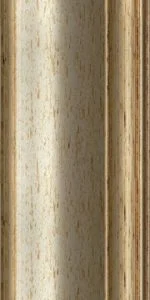
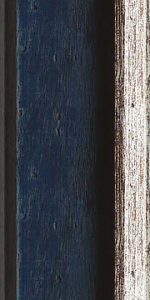
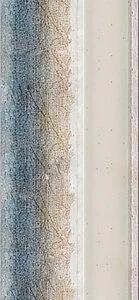
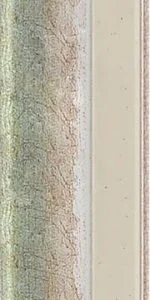
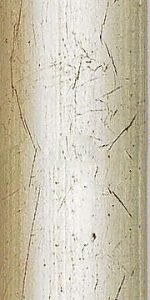
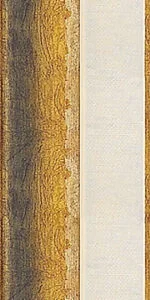
To choose the frame, use our 3D application: it shows all our frame profiles on this motif, so you can compare gold, silver, black, white and natural wood before you decide – the application is only for choosing the frame. To see the painting on your own wall, ask for our separate room placement service. A thin white or silver frame suits the cool whites and greys; a narrow gold frame picks up the gold-brown blocks at the top.
Delivery and guarantee
Each painting is made to order in our studio in Slovenia, so allow 15 to 45 days depending on the size. It travels stretched and protected, framed if you ordered a frame, anywhere in the EU without customs. Before it leaves us you receive a photograph of the finished work for approval, and if something needs changing we correct it while the canvas is still in our workshop. Our returns policy applies to every order.
For a wedding or anniversary gift when you do not know the right size, there is our gift voucher. You will find more of Klimt’s work in our Gustav Klimt gallery and more about the painter in the article 10 interesting facts about Gustav Klimt.
Frequently asked questions
Where is the original Portrait of Margaret Stonborough-Wittgenstein?
It belongs to the Bavarian State Painting Collections in Munich and is part of the Neue Pinakothek; while that building is closed for renovation, it is shown in the Alte Pinakothek. The museum acquired it from a private collection in 1960. The original is painted in oil on canvas and measures 179.8 by 90.5 cm.
Who was Margaret Stonborough-Wittgenstein?
She was Margarethe Wittgenstein, the youngest daughter of the Viennese industrialist Karl Wittgenstein, one of Klimt’s most important patrons, and the sister of the philosopher Ludwig Wittgenstein. In 1903 she became engaged to the American Jerome Stonborough, and after her marriage she preferred the English form of her name, Margaret.
Why did Klimt paint the Stonborough-Wittgenstein portrait?
Her parents commissioned it as a wedding portrait. When their daughter became engaged to Jerome Stonborough in 1903, they asked Klimt for a life-size portrait of the young bride. The work took a long time, with repeated overpainting, and is dated 1905; Klimt first exhibited it in Berlin.
What does the Stonborough-Wittgenstein portrait show?
It shows a young woman standing almost at full length in a long white dress with soft folds and lace, her dark hair pinned up and her hands clasped at her waist. Behind her is a pale grey wall with a band of small squares and gold-brown blocks at the top and a dark checked strip near the floor.
Is there gold in the Stonborough-Wittgenstein portrait?
Only a little. The dress, the wall and the face are painted in whites and greys, and the gold appears only in the brown and gold-brown blocks of the band at the top. On our version those blocks are painted in warm ochre with a touch of gold paint applied by hand, never with gold leaf.
Which size of the Stonborough portrait suits my wall?
For a narrow wall, a hallway or a bedroom choose 40 x 80 or 50 x 100 cm; between two windows 60 x 120 cm; for a high wall or a staircase 70 x 140 or 80 x 160 cm. All sizes keep the 1:2 proportion of the original, which is about 90 cm wide and 180 cm tall.
Is the Stonborough portrait a good wedding gift?
Yes, it is a natural choice for a wedding or an anniversary, because Klimt painted it as the portrait of a young bride. Its whites and greys suit almost any interior, and the tall format fits beside a bed or in a hallway. If you are unsure of the size, a gift voucher lets the couple choose for themselves.
Which room suits the Stonborough-Wittgenstein portrait?
A bedroom, a hallway, a dressing room or a quiet corner of the living room all suit it, because the portrait is calm and tall. As a canvas painting in white, grey and gold-brown it sits well with light walls, pale wood, linen and brass. Beside a window or a mirror its whites catch the daylight.
How do you paint the white dress of the Stonborough portrait?
By hand, in layers. The painter lays in the dress in thin coats of white and grey, then builds up the folds and the lace with lighter and darker whites, so the fabric seems to move. Because every stroke is applied by hand, the dress has a depth and texture that a print cannot give.
- Subject: a young bride in a long white dress before a pale grey wall with a band of squares and gold-brown blocks.
- Original: 1905, oil on canvas, 179.8 x 90.5 cm, Neue Pinakothek, Munich (inv. 13074).
- Our version: a Klimt reproduction painted by hand in oil on canvas, in five tall sizes or made to measure.
- Good to know: before dispatch you receive a photograph of the finished work for approval.