



The question almost always arrives in the same shape: there is a gap on the dining room wall, and whatever goes there should be neither off-the-shelf decoration nor a gallery pose. An Arcimboldo is built for exactly that spot, and the reason is more ordinary than you would expect.
The subject is the food itself
An Arcimboldo composite head is made of fruit, vegetables, grain, roots and fish. There is no subject that needs less explaining in a kitchen. What hangs on the wall answers what is on the table – without still-life sweetness, because here the produce is not filling a bowl, it is building a face.
In a restaurant or wine bar the same subject works as a conversation opener. A guest sees a portrait first, then finds the pear doing duty as a cheek, and the wait has something in it.
Height and scale above a table or counter
Three rules of thumb that hold up in practice:
- Open wall: centre of the picture about 150 cm from the floor – standing eye level.
- Above a dining table or sideboard: do not measure from eye level, measure from the furniture. Leave 25 to 30 cm between the top of the furniture and the bottom of the frame. With a table at 75 cm, the bottom of the frame lands at about 105 cm.
- Above a kitchen counter (usually 90 cm) leave nearer 40 cm, so the frame stays clear of the working zone.
On width: the work – or the group – about two thirds the width of the furniture beneath it. A 180 cm sideboard therefore carries around 120 cm of painting comfortably, as one piece or as a row.
Near and far, in the same room
A dining room is the rare place where both readings happen daily. Someone coming in stands three or four metres away and sees a face in profile. Someone seated is a metre and a half away and sees onions, ears of wheat, a fish tail doing the work of a chin. The same painting gives you two different things depending on whether you have just walked in or already sat down.
That is why a format that holds up close is worth having here. A very small piece loses the fine detail that is the whole appeal.
Hand-painted or machine-made, at a metre and a half
At three metres you can barely tell. At a metre and a half – seated, at the table – you can tell at once. A hand-painted reproduction carries paint that has structure; the light from a low-hung lamp catches in the brushmark and travels as your eye moves. A machine-made sheet stays flat at the same spot, because there is nothing standing there for light to catch on.
At a dining table that distance is the normal one. It is the place where the difference stops being theoretical, which is the argument for an oil painting reproduction in a room where people sit close.
Which work for which room
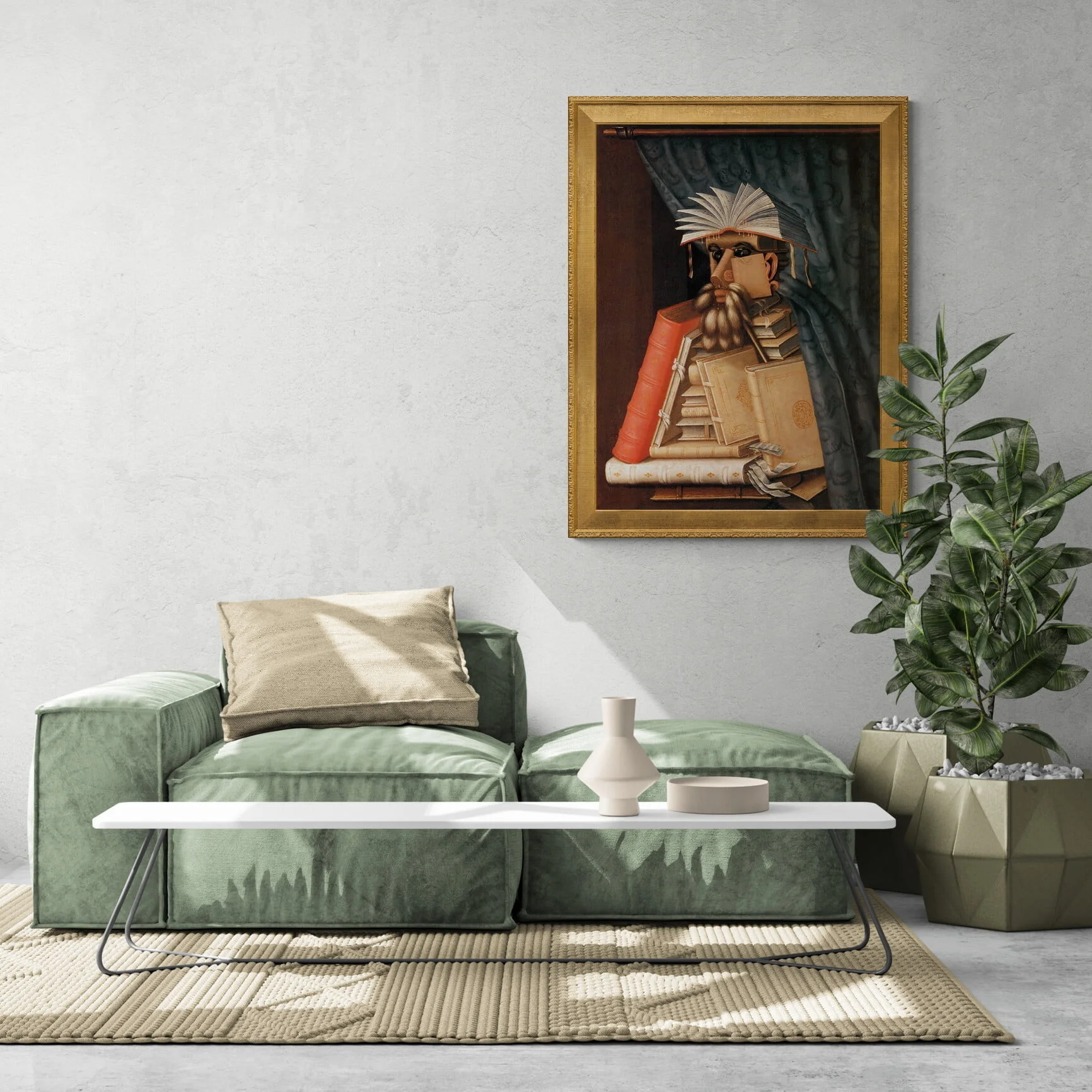
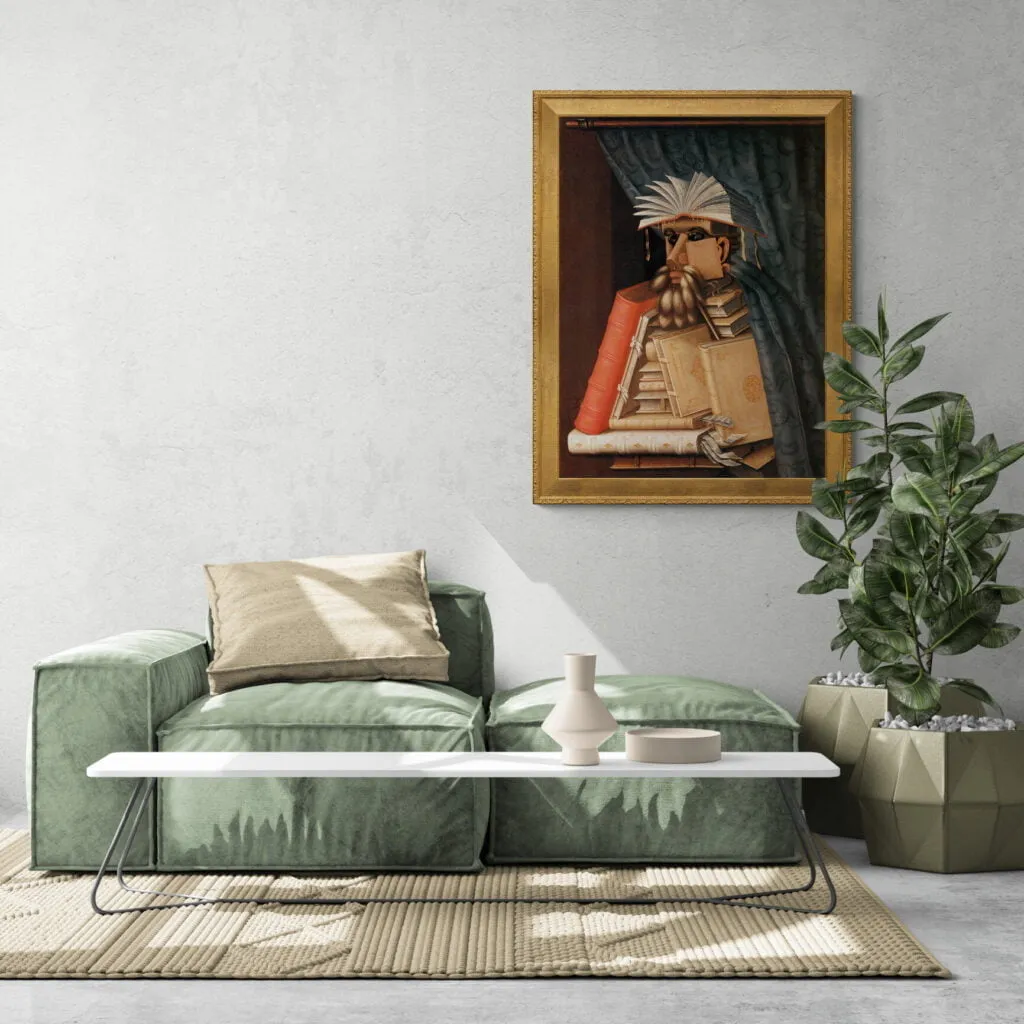
The Four Seasons are built from growing things and belong where people eat. The Four Elements – animals, birds, fish – take a quieter room: a hallway, a study, a stairwell. The Librarian, built from books, belongs in a study or against a wall of shelves.
As wall art for the dining room a row of four panels hangs particularly well; how to arrange and measure four canvases of equal size is set out in the piece on the Four Seasons as a wall group. All of the painter’s work is in the Giuseppe Arcimboldo gallery.