Description
A Pair of Shoes is the painting Vincent van Gogh made in Paris between September and November 1886: two worn, dark leather work boots with loose laces, standing on a pale floor in brown and grey tones. The original measures 38.1 x 45.3 cm and hangs in the Van Gogh Museum in Amsterdam. We paint it by hand in oil on canvas, in 17 sizes from 45 x 38 to 190 x 151 cm or to your own measurement, and send you a photograph of the finished work for approval before dispatch.
| Title: | A Pair of Shoes |
| Other titles: | Shoes · Schoenen |
| Painter: | Vincent van Gogh (1853–1890) |
| Year painted: | September–November 1886, Paris |
| Original size: | 38.1 cm x 45.3 cm |
| Original technique: | Oil on canvas |
| Painting style: | Post-Impressionism |
| Located at: | Van Gogh Museum, Amsterdam (inv. s0011V1962) |
| Our reproduction: | Hand-painted oil on canvas, 17 sizes or made to measure |
A Pair of Shoes – Vincent van Gogh
What does A Pair of Shoes show?
A Pair of Shoes shows nothing but two old work boots, seen close up, as if just taken off and left on the floor. The left boot has slumped: its shaft folds over to one side and the leather is creased and cracked. The right boot still stands upright, its top turned outwards, and one long lace has come loose and trails across the floor to the right, ending in a loop. Small metal eyelets catch the light along the laces.
The boots stand on a pale floor painted in ochre, cream and grey, with a dark shadow to their left. A band of dark brown wall closes the top of the canvas, and in the upper left corner is Van Gogh’s signature in red. The palette keeps to earth colours, so the eye goes straight to the leather and the toecaps worn pale.
Why did Van Gogh paint a pair of old shoes?
Because he wanted them worn. The Van Gogh Museum writes that an acquaintance of Van Gogh’s in Paris described how he bought old work shoes at a flea market. Then he walked through the mud in them until they were filthy, and only then did he feel they were interesting enough to paint. Wikipedia adds that he brought them to his studio in Montmartre and that, according to some sources, the shoes did not fit him well, so he used them as a prop.
There is also a practical side to the canvas. The museum notes that he painted Shoes over another painting: a view from his brother Theo’s apartment in Paris. Van Gogh reused canvases on other occasions too; it was a way of saving money.
What does A Pair of Shoes mean?
The museum’s own text keeps to the facts: worn-out shoes were an unusual choice of subject for a painting, and Van Gogh made a number of still lifes of this subject. The museum does not give the boots a fixed meaning. Two empty boots that have clearly walked a long way make you think of the person who wore them.
That openness has drawn many writers. The Wikipedia article on Shoes lists art-historical and philosophical analyses by Martin Heidegger, Meyer Schapiro, Fredric Jameson and Jacques Derrida, among others, and cites a description of it as the most celebrated footwear in the history of modern art. In 2009 and 2010 the Wallraf-Richartz-Museum in Cologne showed it in an exhibition called Van Goghs Schuhe. Ein Streitgespräch, Van Gogh’s shoes, a debate.
Where does the original hang?
The original hangs in the Van Gogh Museum in Amsterdam, which lists it as Shoes, Paris, September–November 1886, oil on canvas, 38.1 x 45.3 cm, under the object number s0011V1962. It belongs to the Vincent van Gogh Foundation.
Van Gogh left the canvas at Theo’s apartment in Paris in the autumn of 1886. After Theo died in January 1891 it passed to his widow, Jo van Gogh-Bonger, and their son, Vincent Willem van Gogh. After loans to the Mesdag Museum in The Hague and the Stedelijk Museum in Amsterdam, it was transferred to the foundation in 1962 and has been in the museum since it opened on 2 June 1973.
A Pair of Shoes or another Van Gogh still life – which should you choose?
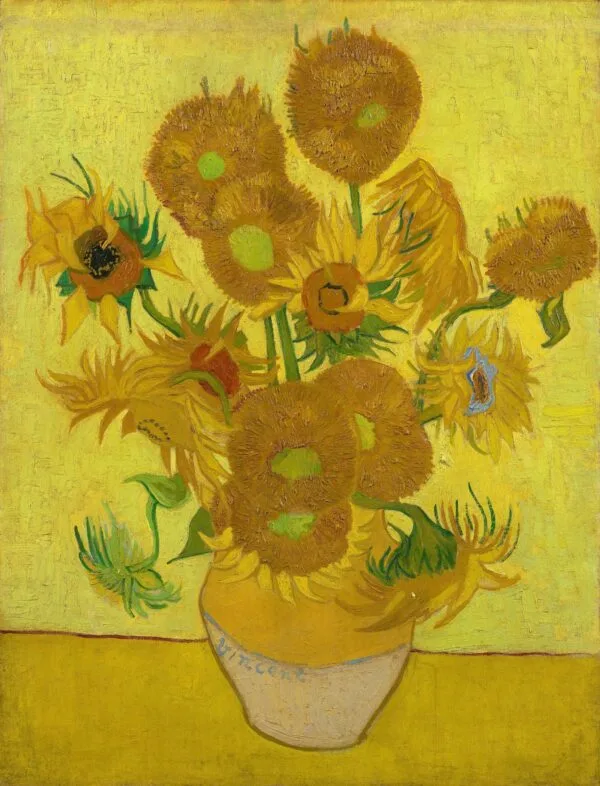
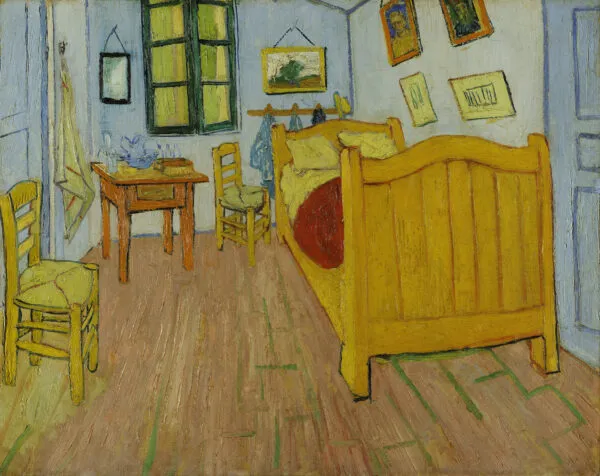
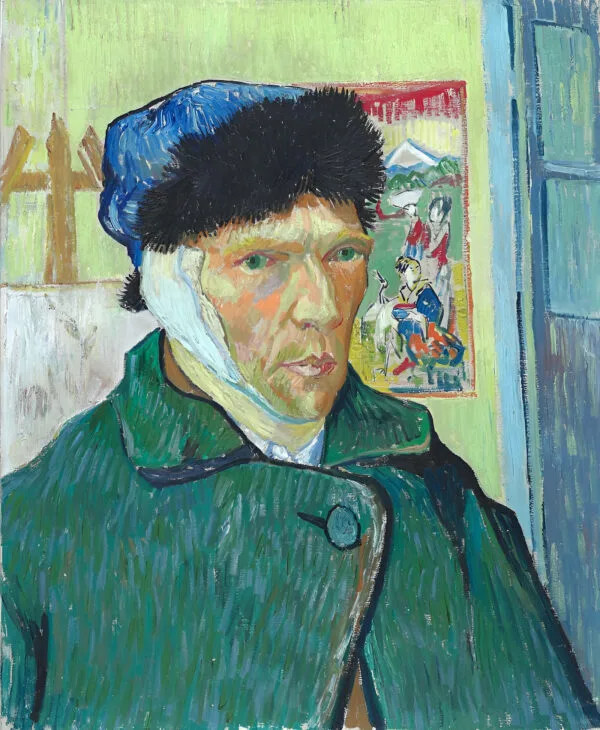
A Pair of Shoes belongs with the plain, dark paintings of his early years. The Potato Eaters, painted in Nuenen in 1885, shows the peasants whose life and work he wanted to paint, at their evening meal. Still Life with Bible, from October 1885, is another still life of a few personal objects, his late father’s Bible beside a candle and a novel. Skull with Burning Cigarette, from early 1886, is another dark still life, a skull with a cigarette between its teeth, and Van Gogh’s Chair, painted in Arles in 1888, gives another simple everyday object the whole canvas, but in bright colour.
Choose A Pair of Shoes for a quiet, sober still life in earth colours, and Van Gogh’s Chair if you want the same idea in yellow and blue.
How is our hand-painted A Pair of Shoes made?
The painter first draws the two boots, the line where the floor meets the wall and the shape of the shadow, and checks the proportions against the original, so the boots keep their weight and their lean. Then come the dark wall and the pale floor in broad strokes, the leather in browns, blacks and greys, the light on the worn toecaps, and last the laces, the eyelets and the signature. Our oil painting reproduction is painted by hand in oil on canvas with real impasto: the paint goes on thickly, so the brushstrokes stand up from the canvas as they do in the original and catch the light.
On this painting the relief matters most in the pale floor, laid on in short, crossing strokes, in the highlights on the toecaps and in the folds of the leather. A print shows only a flat surface; on our painting the strokes are real.
Every painting is a hand-painted copy made for your order, so no two are quite the same.
Which size for which wall?
Short answer: 45 x 38 or 55 x 45 cm for a desk, a shelf or a narrow hallway, 80 x 60 or 90 x 70 cm above a sideboard or a bed, 120 x 100 or 140 x 105 cm above a sofa, and 190 x 151 cm for a large empty wall. The landscape format suits a study, a hallway, an entrance or a living room.
There are 17 sizes: 45 x 38, 50 x 40, 55 x 45, 60 x 50, 65 x 49, 70 x 60, 80 x 60, 90 x 70, 95 x 78, 105 x 83, 120 x 100, 140 x 105, 150 x 120, 160 x 127, 170 x 134, 180 x 142 and 190 x 151 cm (width x height). The original is only 45.3 cm wide and 38.1 cm high; our 45 x 38 cm size is practically the same, so the painting on your wall is as large as in the museum. This dark, earthy painting works on a white, cream or warm grey wall, and on a deep green or brick-coloured one. A painting for the living room should cover about two thirds of the width of the furniture below it.
Hang it with the centre of the canvas about 150 cm above the floor, leaving 20 to 30 cm between the furniture and the bottom edge.
What if I need a custom size or a frame?
If none of the 17 sizes fits your wall, we paint it to measure. Keep the proportions close to the original, otherwise the boots get squeezed or stretched. Send us the width and height you want and we will quote a price and a lead time. Every painting we make is stretched over a wooden stretcher and ready to hang.
For the moulding, use our 3D application: it shows each of our frame profiles on this subject, so you can compare gold, silver, black, white and natural wood – the application is for choosing the frame only. Seeing the painting on your own wall is our separate room placement service. A dark wood or black frame suits the brown and grey of the boots, and an old gold frame warms them up.
How does delivery work, and what is the guarantee?
Every painting is made to order in our studio in Slovenia, so allow 15 to 45 days depending on the size you choose. We ship it stretched and protected, framed if you chose a frame, across the EU with no customs. Before dispatch you receive a photograph of the finished work to approve, and we correct anything that is not right. Our returns policy applies to every order.
More famous Van Gogh paintings are in the Vincent van Gogh gallery, and there is more about the painter in our article on Vincent van Gogh. If you are giving it as a present and are not sure of the size, a wall art voucher lets the recipient choose.
Frequently asked questions
Where is the original A Pair of Shoes by Van Gogh today?
In the Van Gogh Museum in Amsterdam. The museum lists it as Shoes, Paris, September–November 1886, oil on canvas, 38.1 x 45.3 cm, object number s0011V1962, in the collection of the Vincent van Gogh Foundation. Van Gogh left it at his brother Theo’s apartment in Paris, and it stayed in the family until it came to the museum.
Was A Pair of Shoes painted in 1886 or 1887?
The canvas in the Van Gogh Museum was painted in 1886, in Paris, between September and November. The confusion comes from the other versions, as Van Gogh made a number of still lifes of shoes: Wikipedia lists four more from 1887, including one on paper in the same museum and Three Pairs of Shoes in the Fogg Museum, and a pair from August 1888 in New York.
What is the meaning of A Pair of Shoes by Van Gogh?
The museum gives it no single meaning; it calls worn-out shoes an unusual subject for a painting. What you see is a portrait of use: boots that have walked a long way, creased, scuffed and left with loose laces. That openness is why philosophers and art historians have written so much about these two boots.
Which philosophers wrote about A Pair of Shoes?
Martin Heidegger, Meyer Schapiro, Fredric Jameson and Jacques Derrida, among others. Wikipedia names them as authors of art-historical and philosophical analyses of the painting. The discussion became a subject in its own right: in 2009 the Wallraf-Richartz-Museum in Cologne built an exhibition around it, under the title Van Goghs Schuhe. Ein Streitgespräch.
Why did Van Gogh buy the boots in A Pair of Shoes at a flea market?
To paint them. According to an acquaintance quoted by the Van Gogh Museum, he bought old work shoes at a flea market in Paris and then walked through the mud in them until they were filthy. Only then did he find them interesting enough. Wikipedia adds that, according to some sources, they did not fit him well.
What is hidden under A Pair of Shoes?
Another painting. The Van Gogh Museum writes that Van Gogh painted Shoes over an earlier painting, a view from his brother Theo’s apartment in Paris. He reused canvases on other occasions too, because it saved money. You cannot see the view with the naked eye; it lies under the boots and the floor.
How big is the original A Pair of Shoes?
The original is 38.1 cm high and 45.3 cm wide, a small landscape format. Our 45 x 38 cm size is practically the same as the original and suits a desk, a shelf or a hallway. For a wall above a sofa or a bed there are larger sizes up to 190 x 151 cm, as well as custom sizes.
Is A Pair of Shoes a good painting to give as a gift?
It is an unusual and thoughtful gift: for a keen walker or hiker, a shoemaker, someone who studies philosophy or art history, or anyone who prefers a quiet canvas painting to a bright one. A Pair of Shoes suits a study, an office or an entrance hall, and the small 45 x 38 cm size is easy to hang anywhere.
Does your A Pair of Shoes have the raised brushstrokes of the original?
Yes. We paint our copy in impasto: the paint goes on thickly, so the brushstrokes stand up from the canvas as on Van Gogh’s original. You see it best in the pale floor, on the worn toecaps and in the folds of the leather, where the relief catches the light.
- Subject: two worn, dark leather work boots with loose laces on a pale floor, in brown, grey and ochre.
- Original: September–November 1886, Paris, 38.1 x 45.3 cm, Van Gogh Museum, Amsterdam.
- Ours: a Van Gogh reproduction painted by hand in oil on canvas, in 17 sizes from 45 x 38 to 190 x 151 cm or made to measure.