







































Description
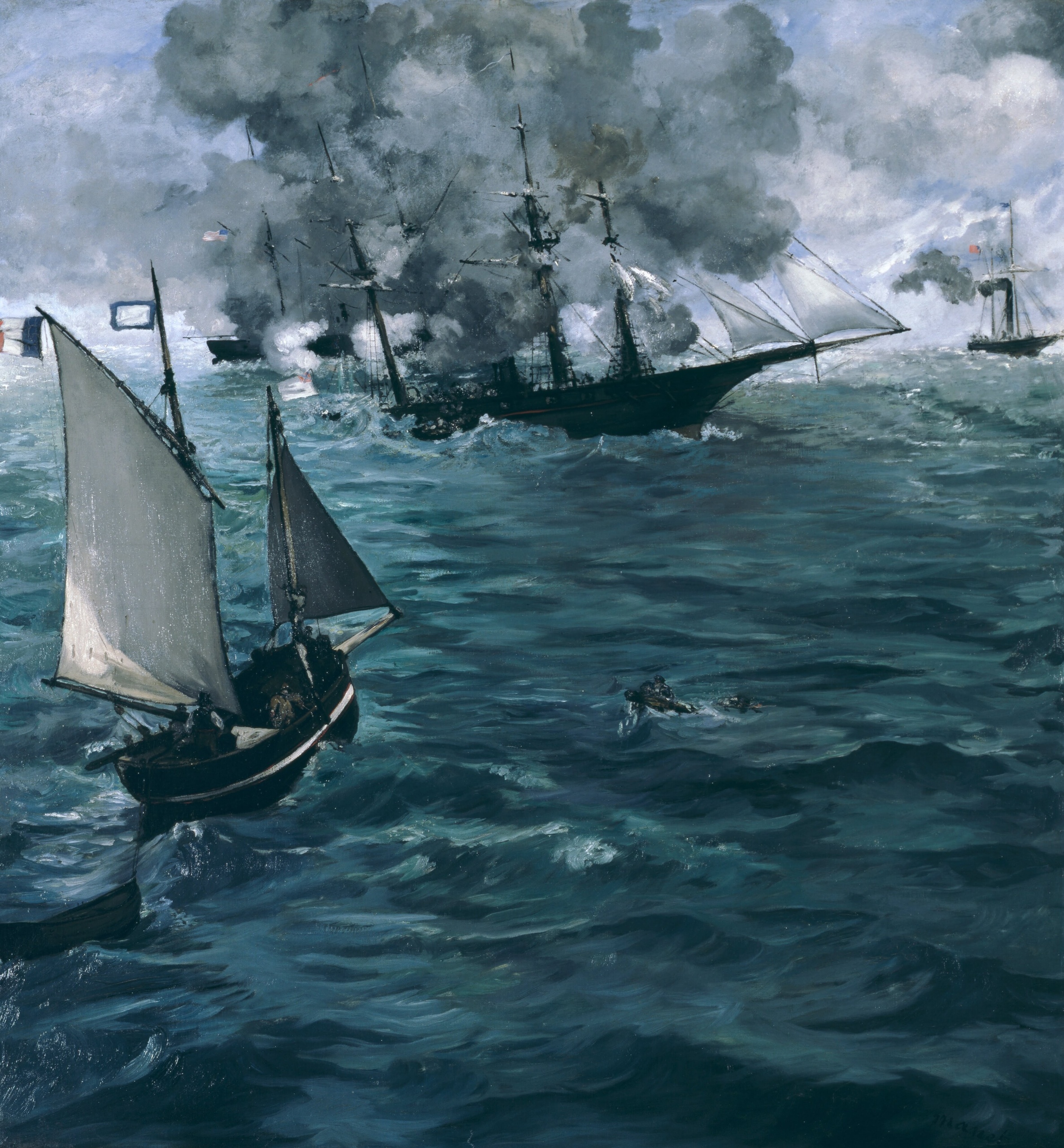
The Battle of the Kearsarge and the Alabama is Manet’s view of a naval clash of the American Civil War, watched by crowds from the French coast off Cherbourg on 19 June 1864: two warships fade into grey smoke far out on the horizon, while in front a small French boat flying the tricolour heels over on a dark, rough sea. The 1864 original, oil on canvas, is 137.9 cm high and 129 cm wide and belongs to the Philadelphia Museum of Art. We hand-paint it for you in oil on canvas, in 8 near-square sizes from 40 x 41 to 190 x 200 cm, or made to measure. Once it is done, a photograph of it reaches you before it ships.
| Title: | The Battle of the Kearsarge and the Alabama |
| Other titles: | The Battle of the USS Kearsarge and the CSS Alabama · Le Combat du Kearsarge et de l’Alabama (French title) |
| Painter: | Édouard Manet (1832–1883) |
| Year painted: | 1864 |
| Original size: | 137.9 cm x 129 cm (height x width) |
| Original technique: | Oil on canvas |
| Painting style: | Realism and Impressionism |
| Located at: | Philadelphia Museum of Art, Philadelphia, United States |
| Our reproduction: | Hand-painted in oil on canvas, 8 sizes or made to measure |
The Battle of the Kearsarge and the Alabama – Édouard Manet
What does The Battle of the Kearsarge and the Alabama show?
The sea fills most of the canvas. Its waves are dark green, blue and grey, pale turquoise in places, with white crests, and they climb all the way to a horizon set very high. The cloudy sky gets only a strip along the top.
On the horizon two warships fight, wrapped in thick clouds of grey-white smoke. The ship in the middle, with a dark hull and pale sails, is described as the Alabama on the point of sinking, while the Kearsarge behind her can barely be made out through the smoke. To the right a steamer pours out black smoke; it is probably the British yacht Deerhound, whose crew pulled several of the Alabama’s sailors out of the water and so saved them from capture.
At the lower left a French boat with one white and one grey sail and the tricolour at the masthead leans into the wind. It is heading for men in the middle of the waves who cling to a piece of wreckage. At the bottom left the dark bow of another boat breaks the surface.
What happened off Cherbourg in 1864?
The Battle of Cherbourg was a naval engagement of the American Civil War between the Union cruiser USS Kearsarge and the Confederate raider CSS Alabama. It took place close to the French coast, so many onlookers on land saw the Kearsarge sink the Alabama.
Manet was not there. The French press covered the fight at length, and he built the scene from newspaper descriptions. Just 26 days after the battle the canvas was on show in Alfred Cadart’s print shop on the Rue de Richelieu in Paris.
The article on Manet names this canvas as the first of his works about war, which can be read as an updated form of history painting.
Why is this painting so admired?
Édouard Manet (1832–1883) was one of the first nineteenth-century artists to paint modern life and a pivotal figure between Realism and Impressionism.
In 1872 the writer Barbey d’Aurevilly called it a magnificent marine painting and wrote that its sea is more frightening than the battle itself. At Cadart’s the critic Philippe Burty praised it as well.
Manet painted many views of the sea and of harbours, and until a few years before his death they were the only landscapes he made. His voyage to Brazil at sixteen and many holidays on the Channel coast probably played a part. The high horizon of these seascapes may owe something to Japanese prints. To read more, see the Wikipedia article on the painting, written in English.
Where is the original today?
The original is oil on canvas measuring 137.9 x 129 cm (height x width). It belongs to the Philadelphia Museum of Art, in the John G. Johnson Collection, where it is catalogue number 1027.
The French collector Marguerite Charpentier acquired it in 1878; today it is part of the museum’s permanent collection in Philadelphia.
The Battle of the Kearsarge and the Alabama or another Manet?
This is a canvas painting for lovers of the sea, sailing and naval history, who feel the power of the waves more than the glory of the winners.
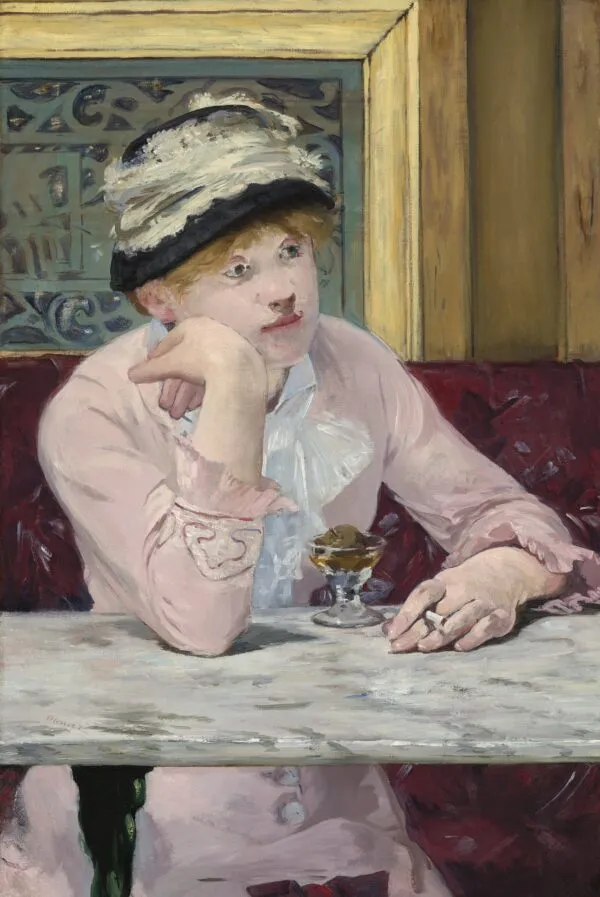
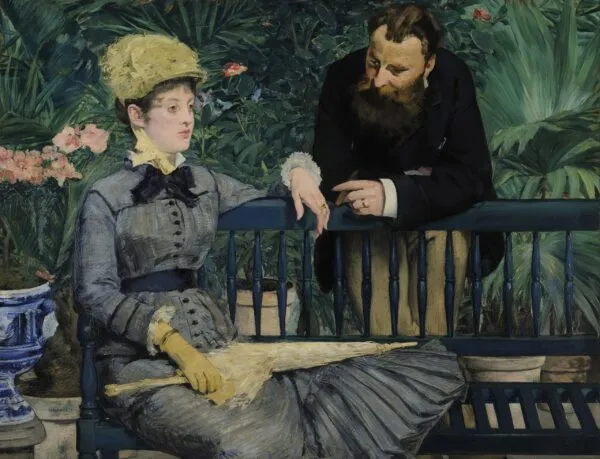
For Manet in a different mood, see The Races at Longchamp, with the horses charging straight at the viewer, or Chez le Père Lathuille, a young man and a lady at a table in a garden restaurant. Quieter still are the portraits Boy Blowing Bubbles and Young Lady in 1866.
Portraits, Paris scenes and more famous Manet paintings, all painted to order, wait on our Édouard Manet page.
How do we hand-paint The Battle of the Kearsarge and the Alabama?
Manet’s original is an oil on canvas almost 138 cm tall. Ours is an oil painting reproduction on fresh canvas: the painter works it in oil on canvas at the size you choose, laying the colour down in several layers.
He first fixes the high horizon and the ships, smoke and boat, since the sea needs all the room below. Then he builds the waves in dark greens and blues with turquoise passages, and at the end adds the foam, the sails and the bright edges of the clouds in white.
Our painter keeps the quick, light touch Manet gave the smoke and masts, so the ships stay soft and hazy while the waves in front gain weight.
Which size fits which wall?
In short: 40 x 41 or 45 x 50 cm for a shelf or a narrow wall, 59 x 65 and 77 x 85 cm for a hallway or above a chest of drawers, 100 x 105 and 125 x 140 cm above a sofa, and 145 x 160 or 190 x 200 cm for a tall wall.
We paint it in 8 sizes that are only slightly taller than wide (width x height): 40 x 41, 45 x 50, 59 x 65, 77 x 85, 100 x 105, 125 x 140, 145 x 160 and 190 x 200 cm. The original measures 129 x 137.9 cm (width x height), so all five sizes up to 100 x 105 cm are smaller than it, 125 x 140 cm is very close to it, and 145 x 160 and 190 x 200 cm are larger.
As a painting for the living room it comes into its own from 125 x 140 cm upwards, where the sea fills the wall and the sailors in the water are clearly visible.
Can I have another size or a frame?
Yes. For other proportions we keep the ships, boat and sailors whole and adjust a band of sea at the edge. Send us the size you have in mind, and we will reply with a price and a date.
The sea battle travels rolled, stretched on a stretcher bar or ready framed. Our workshop in Slovenia does the stretching and framing and packs every painting safely for the journey.
The frame for this seascape is chosen in our 3D app, which only handles the choice of moulding; a view of the painting on your own wall is a separate service. A dark wood moulding matches the hulls, a grey or silver one the smoke and the sails.
When can you expect the painting?
Once you confirm the order, the painter begins with the horizon and the ships, and the sea battle is ready to ship within 15 to 45 working days. Before we pack it, we send you a photograph of the finished work and make any changes you ask for.
It crosses no customs border within Slovenia or on its way to any other EU country, and our returns policy covers every order.
Not sure which wall it will hang on? A wall art voucher lets the recipient pick the size for this sea battle.
Frequently asked questions
Where can I see the original?
At the Philadelphia Museum of Art in the United States, as part of the John G. Johnson Collection.
Which battle does it depict?
The 1864 naval battle off Cherbourg, in which the Union ship Kearsarge sank the Confederate Alabama.
Is this a print?
No. Every hand-painted copy is made with a brush and oil paint on real canvas, with no printing at all.
How big is the original?
It is 137.9 cm high and 129 cm wide; our 145 x 160 and 190 x 200 cm sizes are larger.
Do you paint it in a size that is not listed?
Yes. Tell us the width and height you need, and we will send an offer with a delivery time.
How long does it take to make?
Between 15 and 45 working days; you receive a photograph of the finished painting before we send it.
Does it suit an office or a bedroom?
Very well in an office, a study or a house by the sea; in a bedroom the stormy sea may feel too lively.
Did Manet see the battle himself?
No. He painted it from French press reports and put it on show only 26 days after the fight.
- Subject: a rough sea, two warships in smoke on the horizon and a French boat hurrying to help sailors in the water.
- Original: oil on canvas, 1864, 137.9 x 129 cm, Philadelphia Museum of Art.
- Ours: an Édouard Manet reproduction painted by hand in oil on canvas, 8 sizes from 40 x 41 to 190 x 200 cm, or made to measure.
- Worth knowing: Manet painted the battle from newspaper reports and showed it less than a month after the fight.