







































Description
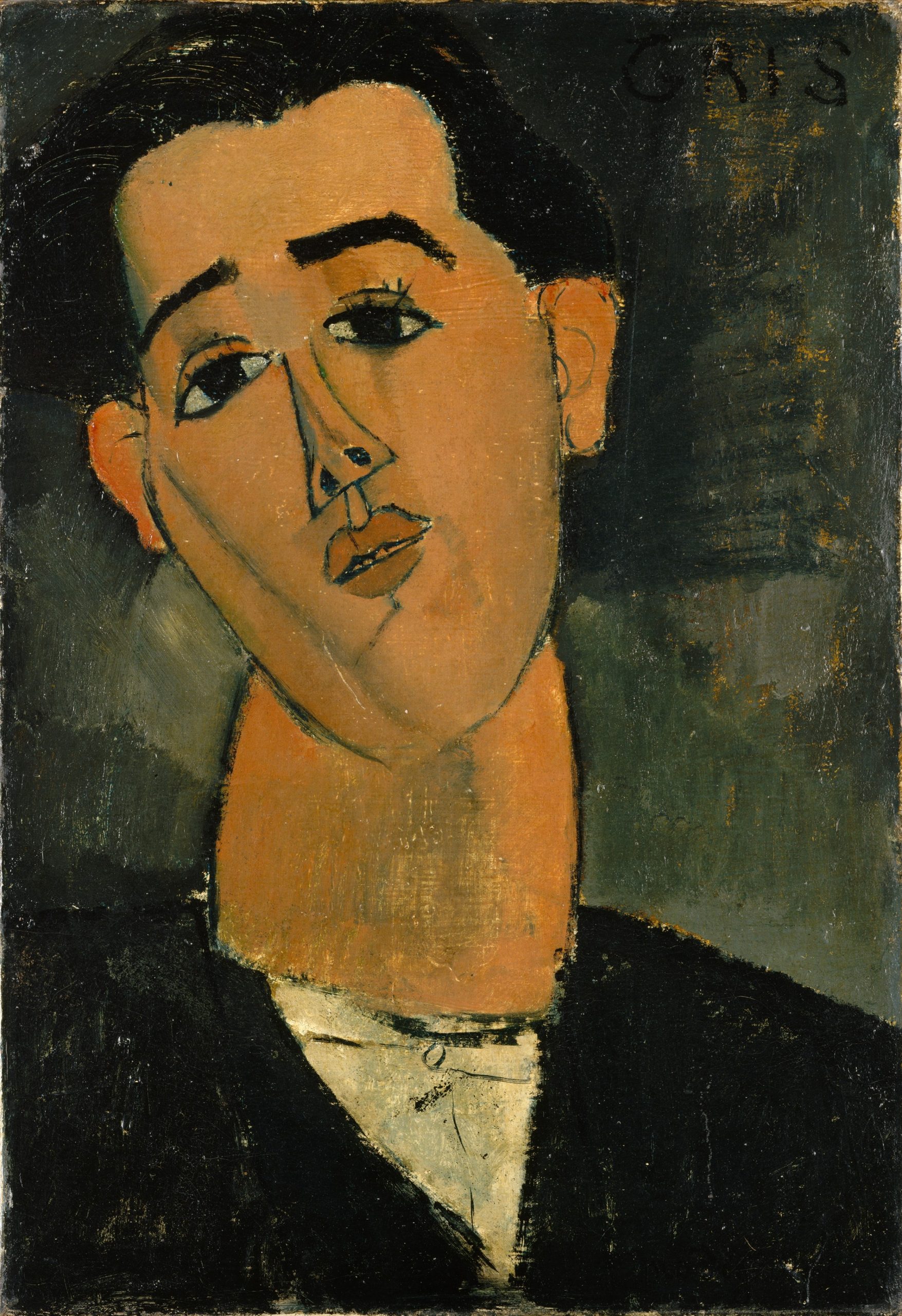
Portrait of Juan Gris is an oil on canvas painted by Amedeo Modigliani in 1915; the original measures 55.2 × 38.3 cm and hangs in The Metropolitan Museum of Art in New York under accession number 67.187.85. Our canvas painting is a hand-painted copy of that work: an academy-trained painter makes it in oil on cotton canvas, in eight sizes from 38 × 55 cm to 120 × 170 cm or in the size you specify, and before dispatch we photograph it and send you the photograph for approval.
| Title: | Portrait of Juan Gris |
| Other titles: | Juan Gris (at the museum) · Juan Gris (1887–1927) |
| Painter: | Amedeo Modigliani (1884–1920) |
| Year: | 1915 |
| Original size (height × width): | 55.2 × 38.3 cm, portrait format |
| Original technique: | Oil on canvas, unsigned, inscribed GRIS upper right |
| Painting style: | Modern art, École de Paris |
| Where it is: | The Metropolitan Museum of Art, New York, acc. 67.187.85, Bequest of Miss Adelaide Milton de Groot – the museum’s own object record |
| Our reproduction: | hand-painted oil on canvas, eight sizes from 38 × 55 cm to 120 × 170 cm; the smallest is the original’s measurement to within three millimetres |
Portrait of Juan Gris – Amedeo Modigliani
What is on the canvas?
The canvas is small and upright, and it holds a head, a long neck and the top of a jacket, nothing else. The head tilts to the sitter’s right and the neck curves with it, so the whole figure leans slightly out of the vertical. The face is a warm salmon orange, drawn with a dark contour that runs from the temple down the cheek; the brows are heavy and almost joined, the nose is long and given two dark nostril marks, the mouth is full and dark. The eyes are wide open, not the blank almonds of the later portraits: the whites are painted, the irises are dark, and the upper lashes are drawn in as separate strokes. One ear is set down in outline only, an unpainted scroll on the orange of the neck. Below, a white shirt front opens at an unbuttoned collar, with a small dark buttonhole, and a dark jacket closes the picture at the bottom edge. The ground is dark olive-green, divided into a few flat planes with a lighter grey-green panel at the right and a few ochre streaks at the edge. In the top right corner, in dark capitals, stands the word GRIS. It is a post-impressionist painting in the sense in which post-impressionism meant building a head out of line and flat colour rather than out of the light falling on it. In Paris Modigliani belonged to that circle of immigrant painters we now call the École de Paris.
Where is the original today?
In The Metropolitan Museum of Art in New York, accession number 67.187.85, in the department of Modern and Contemporary Art. The museum’s record gives 1915, oil on canvas, 21 3/4 × 15 1/16 inches, which is 55.2 × 38.3 cm, and the credit line “Bequest of Miss Adelaide Milton de Groot (1876–1967), 1967”. At the museum the work is titled simply Juan Gris; we carry the longer form because on a shelf of thirty-odd portraits a bare name does not say what the picture is.
Which measurement is right?
Two sizes are in circulation for this canvas and they differ by about three millimetres each way. The museum that owns it gives 55.2 × 38.3 cm. The structured record at Wikidata, from which a great many art sites take their data, gives 54.9 × 38.1 cm, and that is the figure you will meet most often elsewhere. Both agree with the proportions of any photograph of the work, so nothing about the picture decides between them; what decides is the source, and we print the museum’s, because the museum has the object in front of it. Our own listing once said 38 by 55.5 cm, which matched neither, and we corrected it.
A painter painting a painter
Juan Gris was a Spanish painter and, with Picasso and Braque, one of the central figures of Cubism. He lived in the same Paris circle as Modigliani and this is a portrait of a colleague, not a commission from a client. It shows. There is no attribute to say what the sitter does for a living: no brush, no easel, no studio, not even a tie. What Modigliani gives instead is the sitter’s name, painted onto the canvas itself in the top right corner — the picture is unsigned by the painter and labelled with the person. That is a rare thing in his work and it is the first thing to look for on this canvas.
From Paul Guillaume to the de Groot bequest
The recorded owners begin with the dealer Paul Guillaume in Paris. The canvas was in a private American collection by 1947, passed through Perls Galleries in New York in 1950, and was bought that year by Adelaide Milton de Groot, who kept it for seventeen years and left it to the Metropolitan on her death in 1967. The same bequest brought the museum a second Modigliani, Lola de Valence, which carries the accession number immediately before this one. The picture has travelled since: Boston in 1961, Edinburgh in 1963, the Tate Gallery in London in 1968, the Royal Academy in 2006 and Tate Modern in 2017 and 2018.
How is our hand-painted version made?
The work is made by an academy-trained painter in oil on cotton canvas over a wooden frame. It is not a print: every stroke is laid by hand, and your canvas always differs a little from any other. The difficulty here is drawing, not colour. Almost everything that carries the likeness is a line — the contour of the cheek, the two curves of the brows, the outline of the ear, the lashes — and a line either has the right speed or it does not. The painter therefore draws the head before any colour goes down, and the orange is laid inside the drawing rather than over it. The second difficulty is the ground: it has to stay dark and dull enough for that orange to carry, without turning into a flat black rectangle.
Which size for which wall?
The original is 55.2 cm high and 38.3 cm wide, which is small for a painting people know this well. Our smallest rung, 38 × 55 cm, is that canvas to within three millimetres, so if you want it at the size Modigliani painted it, that is the one, and it belongs at eye level on a narrow wall where someone will stand close to it. The middle sizes, 50 × 70, 60 × 90 and 70 × 100 cm, are the usual choice above a desk or a chest of drawers. The large ones, 80 × 120, 90 × 130, 100 × 150 and 120 × 170 cm, turn the head life-size and larger and want a free wall with about three metres in front of it. Hang it with the centre around 145 cm from the floor; a tall format wants a little more wall above than below. The colouring is dark and cool with one hot face in it, so a white or pale grey wall serves it best.
Custom size, stretcher and frame
If your wall asks for a size that is not listed, we will make it. Give us the width and height in centimetres; we check whether the proportion carries the composition and tell you what changes at the edges. Here it shows at the top, where the inscribed name sits close to the corner and is the first thing a crop removes, and at the bottom, where the jacket is already cut. It arrives either stretched on a wooden frame, ready to hang, or rolled in a tube, which is cheaper to ship. You pick the frame in our 3D application, which shows it realistically on the work, and on request we set it into a photograph of your wall. If you are looking for a work we do not carry, see our made-to-order paintings.
Delivery and guarantee
We deliver to your address, the canvas clear of the outer wall of the packaging. Lead time depends on size and the workshop load: we estimate it when you order and tell you if it changes. We guarantee workmanship and materials: if the work arrives damaged or does not match the photograph you approved, we repaint it at our cost. Because you see it photographed before it ships, most questions are settled before it leaves.
Frequently asked questions
Where is the original?
In The Metropolitan Museum of Art in New York.
What is the accession number?
67.187.85, from the bequest of Adelaide Milton de Groot, 1967.
What is the work called at the museum?
Simply Juan Gris, sometimes with the sitter’s dates after it.
Is the painting signed?
No. Modigliani did not sign it. The word GRIS is painted in the top right corner, naming the sitter rather than the painter.
When was it painted?
1915, as both the museum and the structured records give it; some catalogues have argued for 1916 or 1918.
Do you have the original’s size?
Effectively yes. The original is 55.2 × 38.3 cm and our smallest rung, 38 × 55 cm, differs by two to three millimetres.
Which size should I choose?
For a wall people walk past, 70 × 100 cm. For a wall people stand at, the original size, 38 × 55 cm.
Which other Modigliani portraits of artists do you have?
See Portrait of Chaïm Soutine, Portrait of Max Jacob, Portrait of Moïse Kisling and Jacques and Berthe Lipchitz. The full choice is in the Amedeo Modigliani gallery, and we have written a longer article about the painter.
How closely does it follow the original’s proportions?
The original measures 38.3 × 55.2 cm, and that is exactly the size we list: 38 x 55 cm. The proportions are the original’s, with no deviation.
- Subject: the head and shoulders of the cubist painter Juan Gris, tilted on a long neck, an open white collar below, a dark green ground behind
- Original: 55.2 × 38.3 cm, oil on canvas, 1915, The Metropolitan Museum of Art, New York (acc. 67.187.85)
- Our version: hand-painted oil on canvas, eight sizes from 38 × 55 to 120 × 170 cm, the smallest the original’s own measurement
- Worth knowing: the canvas is unsigned and carries the sitter’s name, GRIS, painted in the top right corner
The eyes on this canvas do have pupils. Of the 76 Modigliani works on this shelf 17 are like that, and 53 have no pupils – work by work.