







































Description
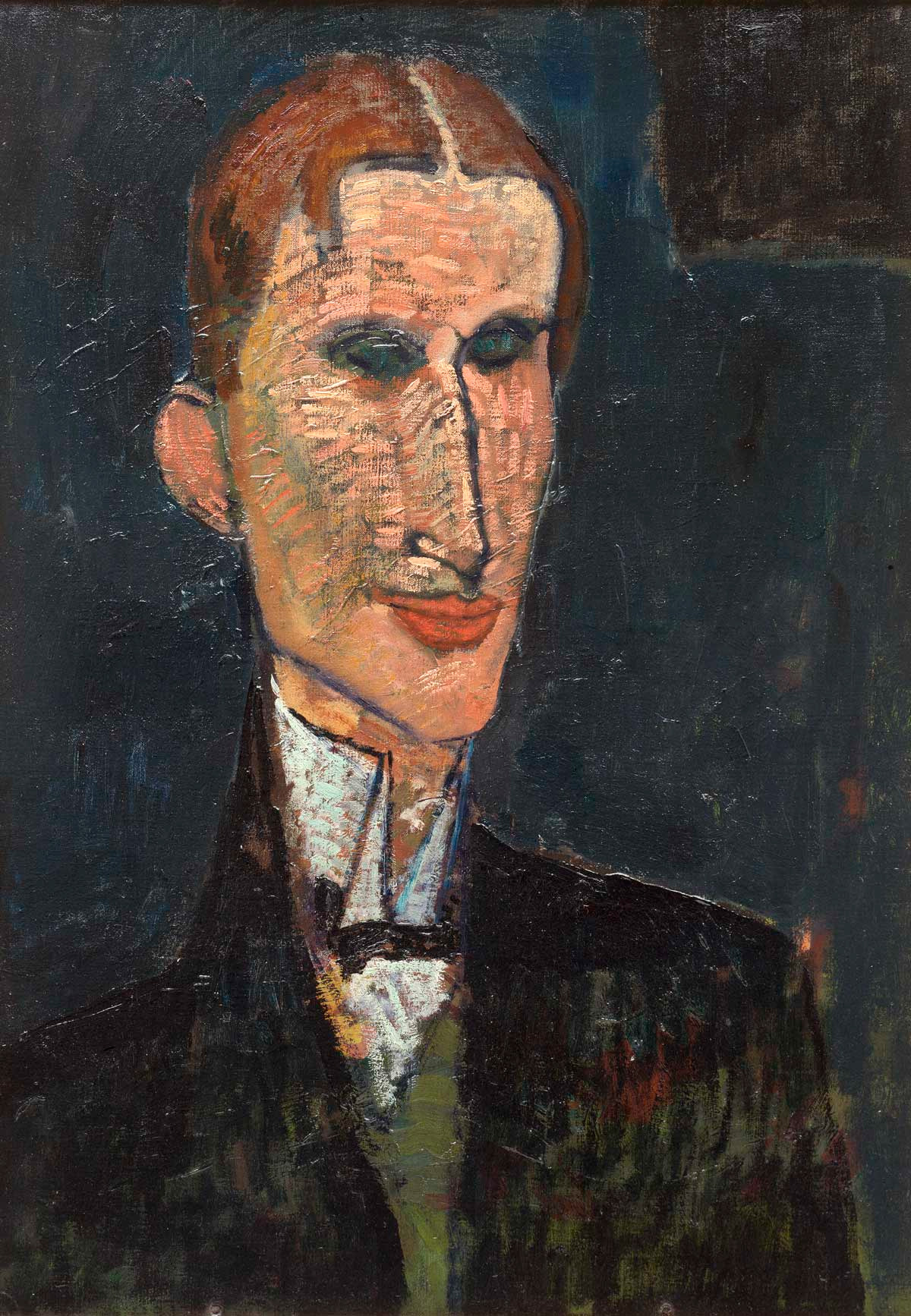
Viking Eggeling is a canvas of 1916 held by the LaM in Villeneuve-d’Ascq near Lille, under the number 979.4.102, given to the museum by Geneviève and Jean Masurel in 1979. The sitter is shown to the chest against a dark blue-green wall, and the face is not smoothed into a mask but built from short, visible strokes. With us it is made as a hand-painted copy, oil on canvas, to order, in eight sizes or in a size you give us; before dispatch we send you a photograph of the finished canvas.
| Title: | Viking Eggeling |
| Other titles: | catalogued as Lanthemann 201 and Ceroni 149 |
| Painter: | Amedeo Modigliani (1884–1920) |
| Year of creation: | 1916 |
| Original size (width × height): | 46 × 65 cm |
| Original technique: | oil on canvas (huile sur toile) |
| Painting style: | expressionism, École de Paris |
| Located: | LaM – Lille Métropole, Villeneuve-d’Ascq (inv. 979.4.102, gift of Geneviève and Jean Masurel, 1979) |
| Our reproduction: | hand-painted copy, oil on canvas, eight sizes or a custom size |
Viking Eggeling – Amedeo Modigliani
What is on the canvas?
The sitter is shown to the chest, slightly turned, against a dark blue-green wall broken at the upper right by a brown rectangle. The hair is reddish-brown and recedes from a high forehead, with a pale parting line running up the centre. The face is long and angular and built from short crossing strokes of pink, ochre and pale green — the colour is laid on rather than blended into a smooth field. The eyes are blue-green almonds and, unlike most Modigliani portraits, they carry pupils; the gaze is an actual gaze. The nose is long and straight, the mouth full and orange-red, the left ear prominent. He wears a dark jacket over a pale striped shirt with a dark bow at the throat.
Why does this face look unlike his others?
Because it is painted rather than drawn. The Modigliani most people carry in their heads is a long oval filled with one even colour and an empty almond for an eye — a mask. This is the opposite: the face is assembled from short crossing touches that stay visible, so the head has weather in it, and the eyes have pupils and therefore a direction. Whatever else changes in his work, that combination is rare, and it is the reason this canvas rewards being seen large. It belongs to the years and the circle we now call the École de Paris, when he was painting the people who were working alongside him.
The record of the original, and a chain of owners the museum names
The original is oil on canvas — the museum writes it huile sur toile — and it measures 65 cm high by 46 cm wide; we give width first, so on our page it reads 46 × 65 cm. The year 1916, the number 979.4.102 and the 1979 gift from Geneviève and Jean Masurel are the museum’s own, as is the note that the image is in the public domain. Unusually, the LaM also publishes the ownership history by name and by date: the Galerie Percier in Paris until 22 May 1923; Roger Dutilleul in Paris from that day until 1956; and Jean Masurel from 1956 to 1979, who the museum says acquired it by inheritance from Dutilleul. Very few of the records behind this shelf name every holder with a date on both ends, and where a museum goes to that trouble we reproduce it rather than summarise it away. The museum also lists the work in two catalogues raisonnés, as Lanthemann 201 and as Ceroni 149. It has its own Wikidata entry as well.
The motif among the painter’s works
Modigliani painted the people he worked among, and this shelf carries several of them: Léon Indenbaum, a sculptor, and Léon Bakst, a stage designer — both, like this one, men painted at their trade. From the same year 1916 there is The Servant Girl, which is the plainer treatment: no setting, no pupils, no visible weave of strokes. Set beside it, this canvas shows how much range those two years actually held. The whole selection is in the Amedeo Modigliani gallery, and we have written a longer article about the painter.
How is our hand-painted version made?
A painter paints it, with a brush, in oil on canvas, to your order. Every canvas painting takes some weeks, and each copy comes out slightly its own; that is the consequence of a person working rather than a machine. On this motif the whole difficulty is the handwriting. The face is short crossing strokes of pink, ochre and pale green, and if they are blended the head turns into the smooth mask this picture deliberately is not. They must stay separate and still read as one face at a normal viewing distance. The pupils are the other thing to get right: they are small, and moving one slightly changes where the man is looking. Before dispatch you receive a photograph of the finished canvas and approve it. It is never a print.
Which size for which wall?
For this motif we suggest 70 × 100 cm. It is upright and restrained in colour — a dark blue-green ground and one warm mass of face — so it holds a study, a library or an entrance hall, where a picture is asked to carry order rather than mood. Size matters here more than usual: because the face is built from visible strokes, that handwriting only comes into its own on the larger canvases and merges at the small ones, so we would not put this motif at 33 × 46 cm unless the wall demands it. Of the sizes we offer, 120 × 170 cm follows the proportions of the original most closely. A post-impressionist painting in a size that is not on the list is no trouble: we make it to order.
Frequently asked questions
Where is the original?
In the LaM at Villeneuve-d’Ascq near Lille, inventory number 979.4.102, given by Geneviève and Jean Masurel in 1979.
Who was Viking Eggeling?
The man Modigliani painted here in 1916. The museum records the sitter’s name in the title and nothing further about him, and we add nothing the record does not carry.
Why do the eyes look different from other Modiglianis?
Because they have pupils. He often leaves the eye an empty almond; here there is a gaze, which is part of why this canvas stands out on the shelf.
How closely does it follow the original’s proportions?
The original measures 46 × 65 cm. The closest of our sizes is 120 x 170 cm, which departs from the original’s proportions by 0.26%.
- Subject: a man to the chest against a dark blue-green wall, face built from short crossing strokes, eyes with pupils, dark jacket over a striped shirt
- Original: 46 × 65 cm, oil on canvas, 1916, LaM Villeneuve-d’Ascq, inv. 979.4.102
- Ours: hand-painted oil on canvas, eight sizes or a custom size, with a photograph to approve before dispatch
- Worth knowing: the museum names every owner with a date at both ends — Galerie Percier, then Dutilleul from 22 May 1923, then Masurel by inheritance
The eyes on this canvas are painted without pupils. We counted all 76 Modigliani works on this shelf: 53 are like that, 17 are not – work by work.