







































Description
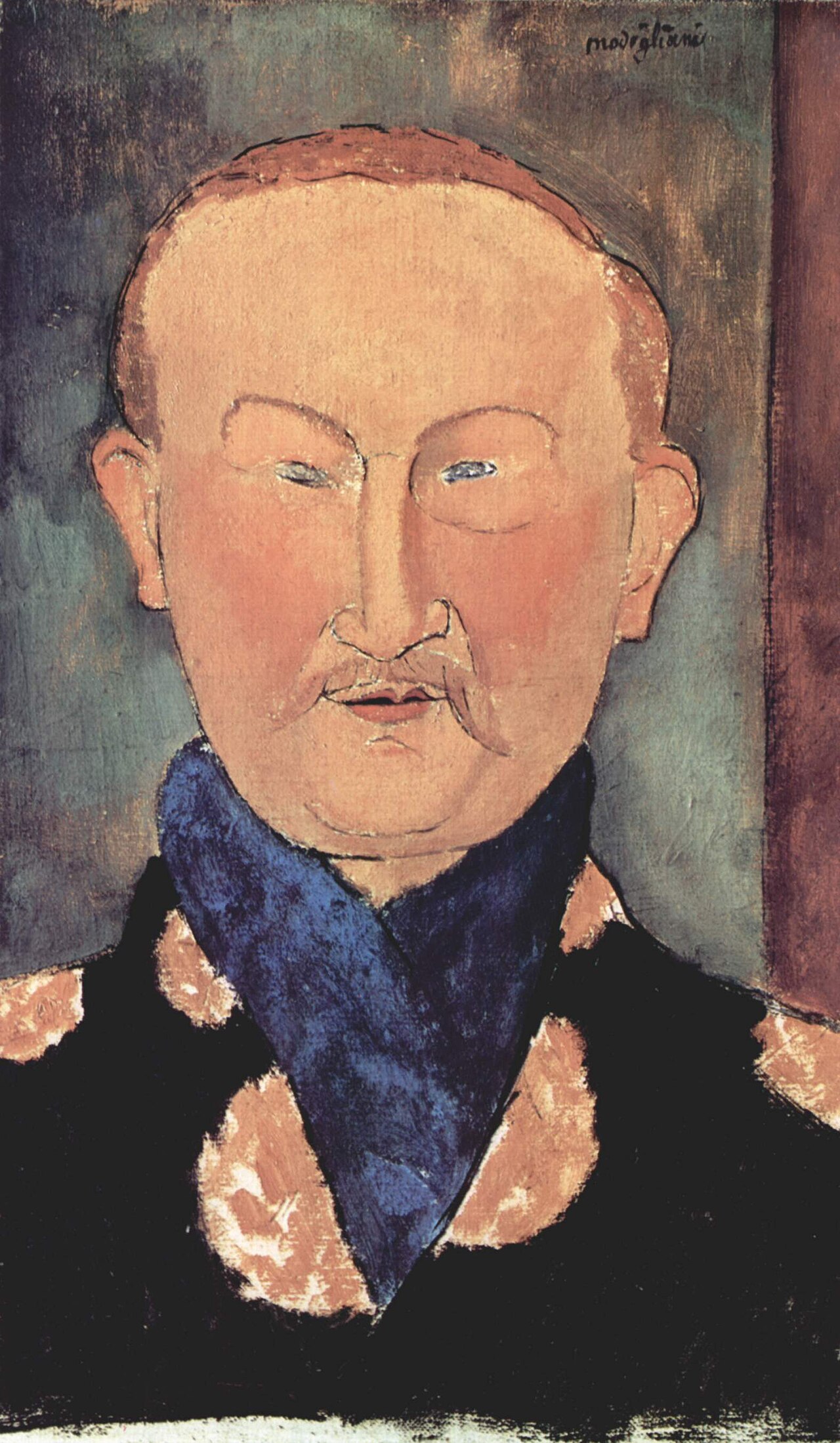
Léon Bakst is a narrow upright portrait of 1917, held by the National Gallery of Art in Washington in the Chester Dale Collection, under accession number 1963.10.173. The sitter was a painter and stage designer working in Paris; he kept the portrait himself until his death in 1924. With us it is made as a hand-painted copy, oil on canvas, to order, in eight sizes or in a size you give us; before dispatch we send you a photograph of the finished canvas.
| Title: | Léon Bakst |
| Other titles: | Leon Bakst (the title in the National Gallery of Art’s record) |
| Painter: | Amedeo Modigliani (1884–1920) |
| Year of creation: | 1917 |
| Original size (width × height): | 33 × 55 cm |
| Original technique: | oil on canvas |
| Painting style: | expressionism, École de Paris |
| Located: | National Gallery of Art, Washington – Chester Dale Collection (inv. 1963.10.173) |
| Our reproduction: | hand-painted copy, oil on canvas, eight sizes or a custom size |
Léon Bakst – Amedeo Modigliani
What is on the canvas?
A man to the chest, in a narrow upright format — at 33 × 55 cm the canvas is one of the narrowest on this shelf, and that narrowness is part of the effect: the figure is pressed between the edges and reads taller than it is. The face is long, the forehead high, the hair thin and combed back. The eyes are almond-shaped and dark, the nose straight, the mouth small. The sitter wears a dark coat and a lighter shirt. The neck is lengthened in Modigliani’s way, the shoulders dropped. The ground is even and without detail. Because the crop is so tight, there is nothing to pull the eye away from the face.
Who was Léon Bakst?
Léon Bakst was a painter and stage designer who worked in Paris chiefly for the ballet; his sets and costumes changed the look of European stage design in the decade before the First World War. He died in 1924, four years after Modigliani. The National Gallery of Art’s record tells us something about him that is rarely known: Bakst kept his own portrait and owned it until he died. With Modigliani that is unusual, because the canvases normally went straight to the dealer. Both belonged to the circle we now call the École de Paris.
The record of the original, and how the canvas travelled
The original is oil on canvas; the National Gallery of Art measures it 55.3 × 33 cm and dates it 1917 — this time with no hedge, which at this museum is not to be assumed, since it dates another Modigliani from the same collection only as “about”. The museum gives the whole route like this: Léon Bakst, Paris, until his death in 1924; then M. Frederick Manaud, Paris; then the Paris house of Bing et Cie, which sold the canvas on 13 April 1928 to Chester Dale; and in 1963 it came to the National Gallery of Art with Dale’s bequest. The date of that sale is recorded to the day, which for Modigliani’s canvases is rare. The work also has its own Wikidata entry.
The motif among the painter’s works
Chester Dale bought Modigliani in the twenties, and his bequest brought the Washington gallery several canvases; beside this one our shelf carries Madame Kisling, Adrienne (Woman with Bangs) and Café Singer. Bakst also belongs to a second group: the portraits of other artists that Modigliani painted throughout his years — on the shelf the example is Portrait of Léopold Survage. The whole selection is in the Amedeo Modigliani gallery, and we have written a longer article about the painter.
How is our hand-painted version made?
A painter paints it, with a brush, in oil on canvas, to your order. Every canvas painting takes some weeks, and each copy comes out slightly its own; that is not a fault but the consequence of a person working rather than a machine. On this motif the proportion decides everything: the canvas is very narrow, and widened even a little in the copy it loses the compression that gives the figure its height. So on this work we never adapt the proportion to a standard size, but suggest a custom one instead. Before dispatch you receive a photograph of the finished canvas and approve it. It is never a print.
Which size for which wall?
For this motif we suggest 40 × 70 cm, the size closest to the original’s proportion. A narrow upright format earns its place where a wall is divided — between two windows, beside a cupboard, in a hallway — and it is exactly there that the other motifs on this shelf come out too wide. For a larger wall 50 × 85 cm is a good choice. Because the original is narrow, a custom size is often better here than a standard one; we make it to order, and a post-impressionist painting in an unusual proportion is no exception for us.
Frequently asked questions
Where is the original?
In the National Gallery of Art in Washington, Chester Dale Collection, accession number 1963.10.173.
Is it true the sitter owned his own portrait?
Yes. The museum’s record names Léon Bakst as the first owner, until his death in 1924.
Can I have a size that is not listed?
Yes, and with this narrow format it is often the better choice. Send us the width and the height in centimetres.
Does this portrait have painted pupils?
We cannot say. At the resolution available to us the eye is a small mottled patch in which the iris cannot be separated from the brushwork. We would rather write that down than guess. Among the 76 works on this shelf it is the only one on which we could not reach a verdict: the full list.
How closely does it follow the original’s proportions?
The original measures 33 × 55 cm. The closest of our sizes is 60 x 100 cm: the proportions are the same, only the canvas is a different size.
- Subject: a man to the chest in a very narrow upright crop, thin hair combed back, a dark coat, an even ground
- Original: 33 × 55 cm, oil on canvas, 1917, National Gallery of Art, Washington, inv. 1963.10.173
- Ours: hand-painted oil on canvas, eight sizes or a custom size, with a photograph to approve before dispatch
- Worth knowing: the canvas’s first owner was the sitter himself — Bakst kept it until his death in 1924