




Description
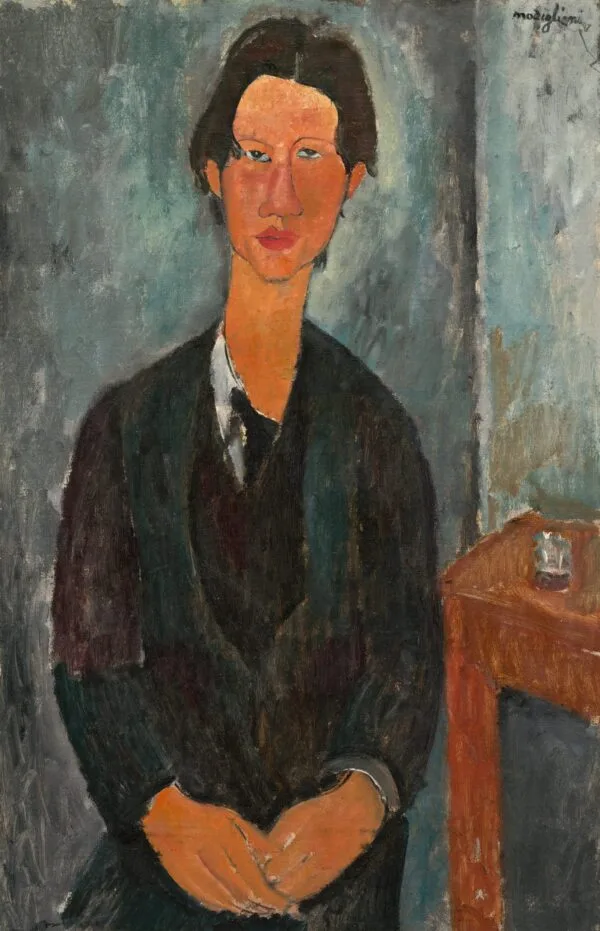
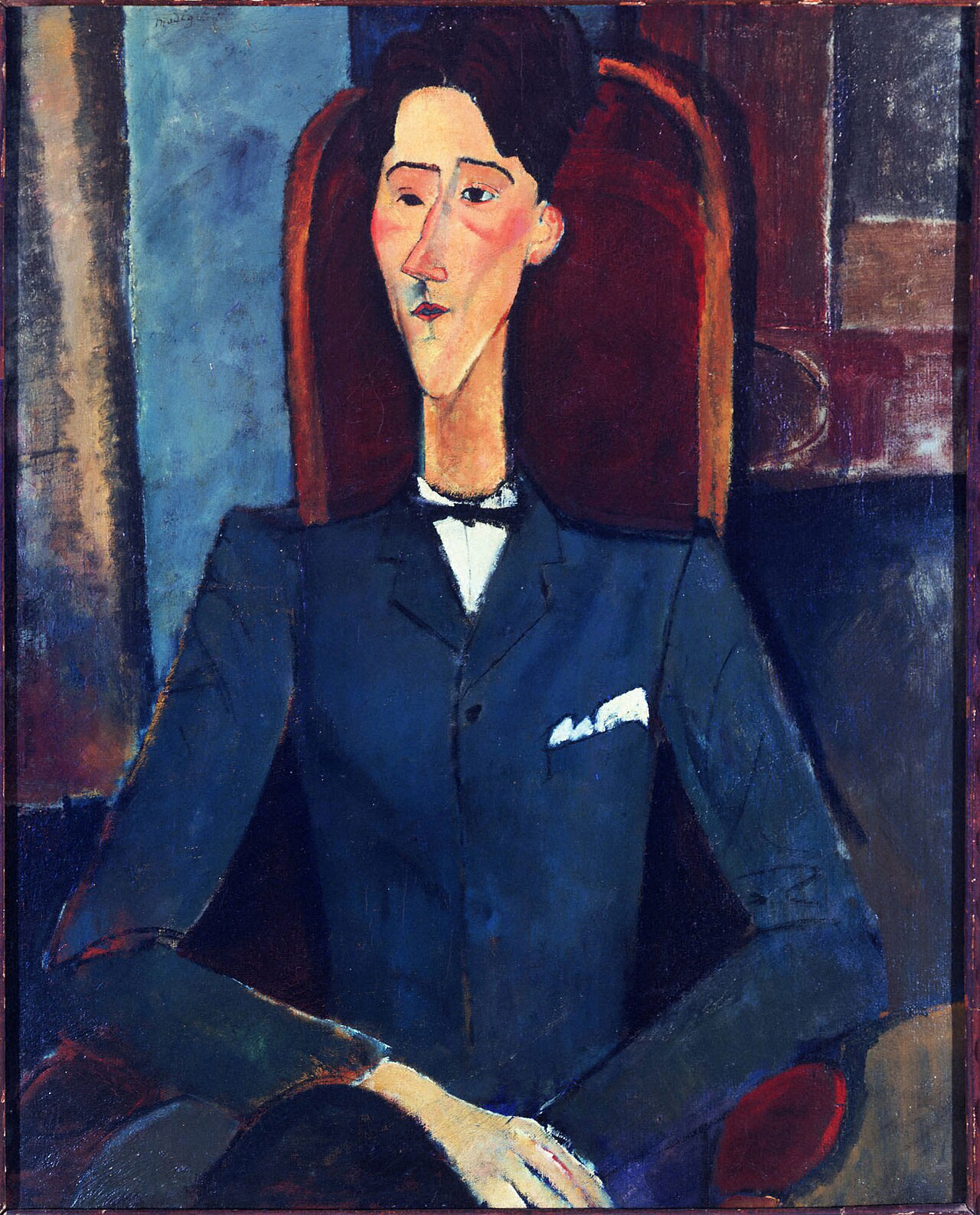
Jean Cocteau is a portrait of the poet painted in 1916, held in the Henry and Rose Pearlman Collection under the number L.1988.62.18 and on long-term loan to the Princeton University Art Museum. The sitter is upright in a red-brown armchair, in a blue-black suit and a black bow tie, against a blue wall divided into panels. With us it is made as a hand-painted copy, oil on canvas, to order, in eight sizes or in a size you give us; before dispatch we send you a photograph of the finished canvas.
| Title: | Jean Cocteau |
| Other titles: | Portrait of Jean Cocteau · Ritratto di Jean Cocteau (as Wikidata lists it) |
| Painter: | Amedeo Modigliani (1884–1920) |
| Year of creation: | 1916 (signed modigliani at the upper left) |
| Original size (width × height): | 81.3 × 100.4 cm |
| Original technique: | oil on canvas |
| Painting style: | expressionism, École de Paris |
| Located: | The Henry and Rose Pearlman Collection, on long-term loan to the Princeton University Art Museum (inv. L.1988.62.18) |
| Our reproduction: | hand-painted copy, oil on canvas, eight sizes or a custom size |
Jean Cocteau – Amedeo Modigliani
What is on the canvas?
A young man sits square to us in a deep armchair whose red-brown wings rise on both sides. The head is long and slightly tilted, the dark hair swept back from a high forehead, the brows drawn into arches, the eyes dark almonds, the cheeks pink. The neck is very long and carries a white collar and a black bow tie. The suit is blue-black and three-piece, with a white pocket square showing. Both hands are folded low in the lap. Behind him a blue wall is divided into panels, interrupted at the upper right by a brown band. For a Modigliani this is an unusually orderly picture: it is built out of straight edges and right angles, and the sitter is held inside them.
Why did the room dislike the poet?
The collection’s own record tells how the sitting came about. In the spring of 1916 Pablo Picasso brought the poet Jean Cocteau to the painters and poets who gathered at Moïse Kisling’s studio in Montparnasse, the circle we now call the École de Paris. Cocteau was a Right Bank poet and he irritated the Left Bank company: the poet Pierre Reverdy recalled afterwards that Cocteau talked incessantly, his voice like the rain beating on the roof, while everybody ignored him. Both Modigliani and Kisling painted him that season. It was Kisling who later sold this canvas to the owner of the Café de la Rotonde, and it is from there that the long chain of named owners begins. Modigliani, for his part, painted the man with his mouth shut and his hands in his lap.
The record of the original, and how the canvas travelled
The original is oil on canvas; the collection measures it 100.4 cm high and 81.3 cm wide, so on our page, where width comes first, it reads 81.3 × 100.4 cm. The year 1916, the medium and the number L.1988.62.18 are the collection’s own, and the letter L in that number marks a loan: the picture belongs to the Henry and Rose Pearlman Foundation and is housed by the museum at Princeton. The ownership chain is named the whole way — from Cocteau himself, through Léopold Zborowski and Paul Guillaume, to New York by 1944 and to Henry Pearlman by 1951. Among the canvases on this shelf a chain that complete is rare. One deviation we state plainly: the Princeton museum’s own pages refuse our requests outright, so we link the Pearlman Collection’s record instead of theirs and take nothing from a page we could not read. The work also has its own Wikidata entry.
The motif among the painter’s works
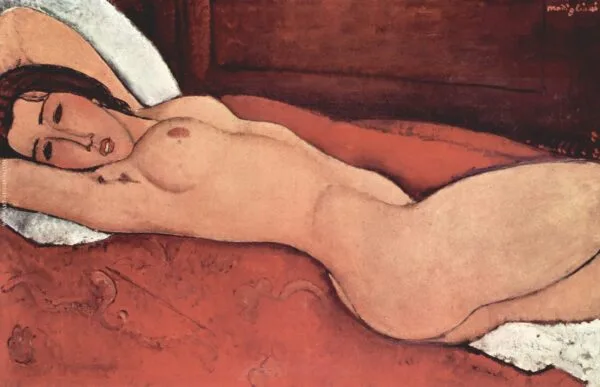
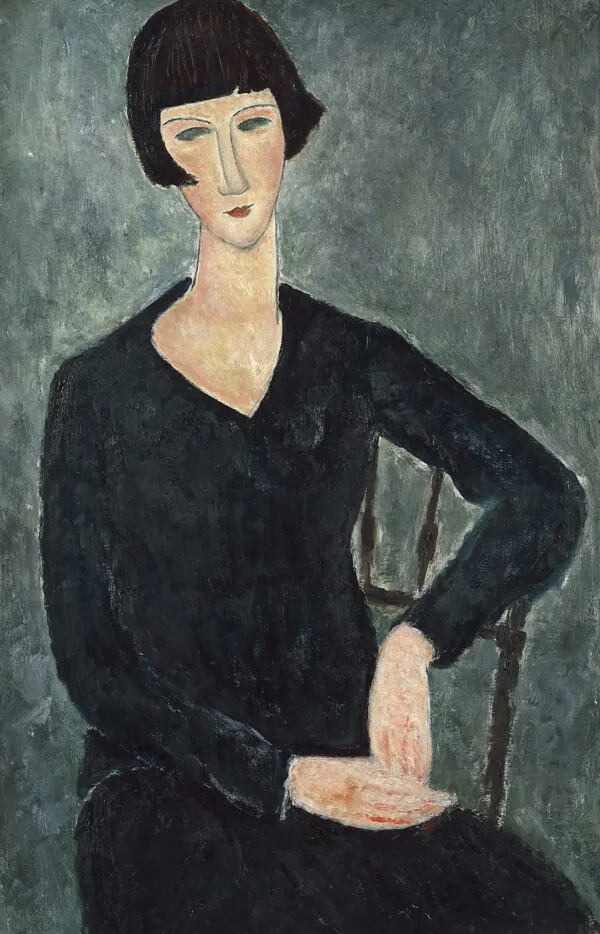
Every dealer in that chain is himself a sitter on this shelf, which is what makes this group worth seeing together: Portrait of Léopold Zborowski, Paul Guillaume, and Portrait of Moïse Kisling — the man in whose studio this sitting happened and who painted his own version of it. From the same year the shelf carries The Servant Girl, a face with none of this one’s furniture. The whole selection is in the Amedeo Modigliani gallery, and we have written a longer article about the painter.
How is our hand-painted version made?
A painter paints it, with a brush, in oil on canvas, to your order. Every canvas painting takes some weeks, and each copy comes out slightly its own; that is the consequence of a person working rather than a machine. On this motif the difficulty is the geometry. The blue of the suit and the blue of the wall are close, and the figure has to stay separate from the panelling behind it without either blue being pushed out of key. The armchair is the single red mass in the picture and it decides the balance: too strong and it swallows the sitter, too weak and the composition falls apart. The white pocket square and the collar are the only bright notes, and they must stay small. Before dispatch you receive a photograph of the finished canvas and approve it. It is never a print.
Which size for which wall?
For this motif we suggest 70 × 90 cm. It is a modern, geometric picture — the blue of the suit, the blue of the wall, one red mass of armchair — so it works where a painting is asked to carry order rather than mood: an office, a study, an entrance hall. Of the sizes we offer, 43 × 53 cm follows the proportions of the original most closely, and it is also the smallest, which suits a narrow wall or a space above a desk. For a main wall 90 × 110 cm carries it comfortably. A post-impressionist painting in a size that is not on the list is no trouble: we make it to order.
Frequently asked questions
Where is the original?
In the Henry and Rose Pearlman Collection, number L.1988.62.18, on long-term loan to the Princeton University Art Museum.
Who is the sitter?
Jean Cocteau, the French poet, playwright and film-maker, painted in 1916 when he was in his twenties.
Is Portrait of Jean Cocteau the same work?
Yes. That is the longer form of the same title; it is the same canvas.
Does Cocteau have pupils in this painting?
Only one. The viewer’s right eye carries a round black pupil with white beside it, while the left is a dark wedge without one. Among Modigliani’s portraits that asymmetry is rare. We counted all 76 works: which ones have pupils.
How closely does it follow the original’s proportions?
The original measures 81.3 × 100.4 cm. The closest of our sizes is 43 x 53 cm, which departs from the original’s proportions by 0.19%.
- Subject: a young man upright in a red-brown armchair, blue-black suit and black bow tie, a very long neck, a panelled blue wall behind
- Original: 81.3 × 100.4 cm, oil on canvas, 1916, Henry and Rose Pearlman Collection, inv. L.1988.62.18
- Ours: hand-painted oil on canvas, eight sizes or a custom size, with a photograph to approve before dispatch
- Worth knowing: Cocteau was famous for talking more than anyone else in the room, and Modigliani painted him silent, with his hands in his lap