







































Description
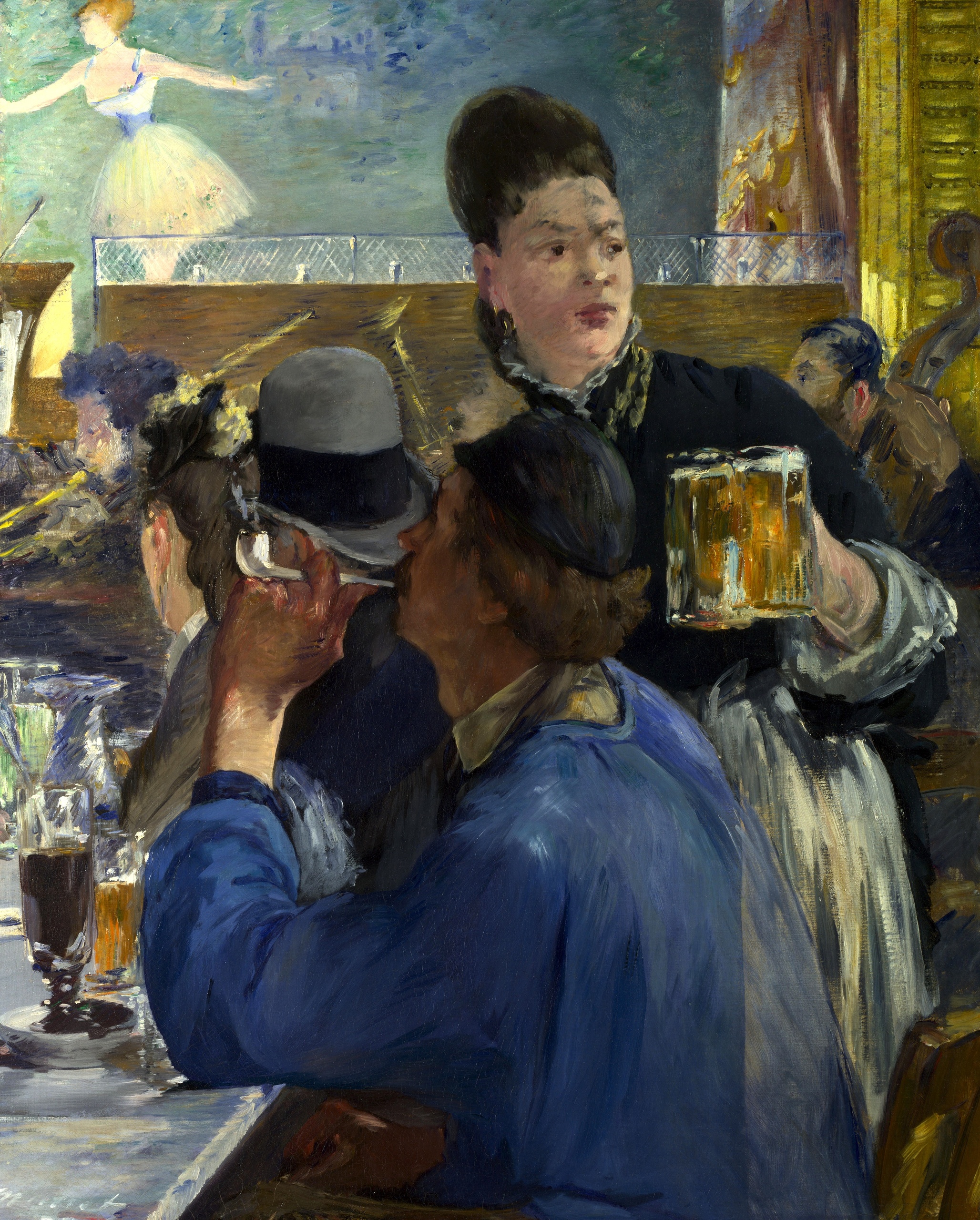
Corner of a Café-Concert is Édouard Manet’s scene from the Brasserie de Reichshoffen in Paris, painted around 1878–80: a waitress with two glasses of beer looks out across the room, a workman in a blue smock smokes a pipe in front of her, and a dancer performs on a small stage behind. The original, oil on canvas, is 97.1 cm high and 77.5 cm wide and hangs in the National Gallery in London. Our painter paints it for you by hand in oil on canvas, in 8 portrait sizes from 33 x 42 to 150 x 195 cm or made to measure, and you see a photograph before it ships.
| Title: | Corner of a Café-Concert |
| Other titles: | Coin de café-concert (French title) |
| Painter: | Édouard Manet (1832–1883) |
| Year painted: | 1879 (about 1878–80) |
| Original size: | 97.1 cm x 77.5 cm (height x width) |
| Original technique: | Oil on canvas |
| Painting style: | Realism and Impressionism |
| Located at: | National Gallery, London, United Kingdom |
| Our reproduction: | Hand-painted in oil on canvas, 8 sizes or made to measure |
Corner of a Café-Concert – Édouard Manet
What does Corner of a Café-Concert show?
Just right of centre stands the waitress in a dark dress, ruffled white collar and pale grey apron, her dark hair piled high. In her outstretched hand are two foaming glasses of beer, and her serious gaze passes every customer and runs across the room.
In the foreground a workman in a blue smock and dark cap lifts a white clay pipe to his mouth. Beside him, seen from behind, sits a man in a grey bowler hat, and further back is the profile of a woman with flowers in her hair. On the marble table at the left stand a dark beer, a light beer and a carafe.
Behind a lattice rail a dancer in a pale tutu spreads her arms on a small stage. At the right the neck of a double bass and its player rise from the orchestra; bits of a trombone and a violin bow flash at the left.
Who is the waitress, and why did Manet paint her?
The setting is the Brasserie de Reichshoffen, a Paris beer hall. Manet admired its waitresses, who could serve one beer without spilling a drop from the glasses in their other hand.
Wanting a live model, he asked the most skilled waitress to pose. She agreed only if her boyfriend came along: he is the man in blue with the pipe.
The Reichshoffen was a brasserie à femmes, a new kind of beer hall of the late 1860s where women served, and such waitresses were commonly associated with prostitution. Manet shows his at work, delivering beer, not soliciting. Caught between two orders and turned to no one, she keeps her profession ambiguous, which some read as Manet engaging with the changing society of his day.
Why is this painting so admired?
Édouard Manet (1832–1883), born into a wealthy Paris family, was one of the first nineteenth-century artists to paint modern life and a pivotal figure in the move from Realism to Impressionism.
On this canvas you can watch him build a composition. The waitress’s head forms a pyramid with the heads of the two men, and the raised hand of the man in blue balances the beers in her hand. Manet pulled foreground and background close together so the scene could stand for any brasserie.
The performers are not the subject; the waitress is, her brightly lit face set apart from the crowd. The English-language Wikipedia article covers the brasserie, the model and the divided canvas.
Where is the original, and how did it come from a larger canvas?
The original, oil on canvas measuring 97.1 x 77.5 cm (height x width), belongs to the National Gallery in London, accession number NG3858.
In August 1878 Manet began a larger canvas, Café-Concert de Reichshoffen, and cut it in two while working. The left side, about two thirds of it, became At the Café; the right became this painting. He added a strip about 19 cm wide at the right to bring the waitress nearer the centre, and the vertical line down the back of the smock still marks the old edge, because the thinner paint on the strip has aged faster.
With stage, dancer and orchestra added, this half is thought the more reworked; Manet also painted a related work, The Waitress. Shown first in 1880 at his solo show at La Vie Moderne, then in Lyon in 1883 and at the École des Beaux-Arts in 1884, it never hung at the Salon. The few critics praised it as well observed but objected to a waitress from the dubious world of bohemia.
Corner of a Café-Concert or another Manet?
This canvas painting suits anyone who likes city life, beer and music.
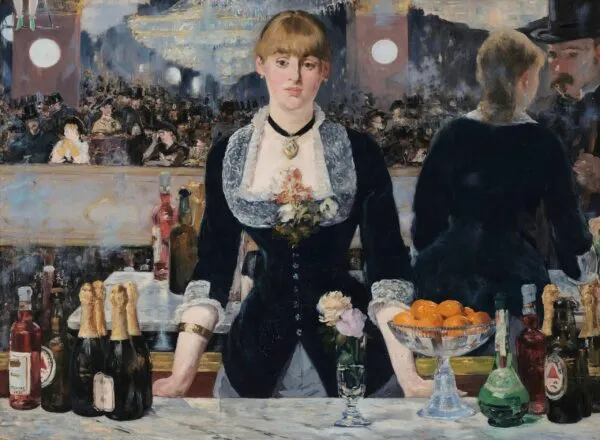
The same beer hall appears in The Café-Concert: a grey-bearded gentleman in a black top hat, a young woman and a waitress drinking from a beer glass, with a singer on stage. In the summer Manet began this canvas, Paris hung out its tricolours, as The Rue Mosnier with Flags shows for the Fête de la Paix at the end of June 1878.
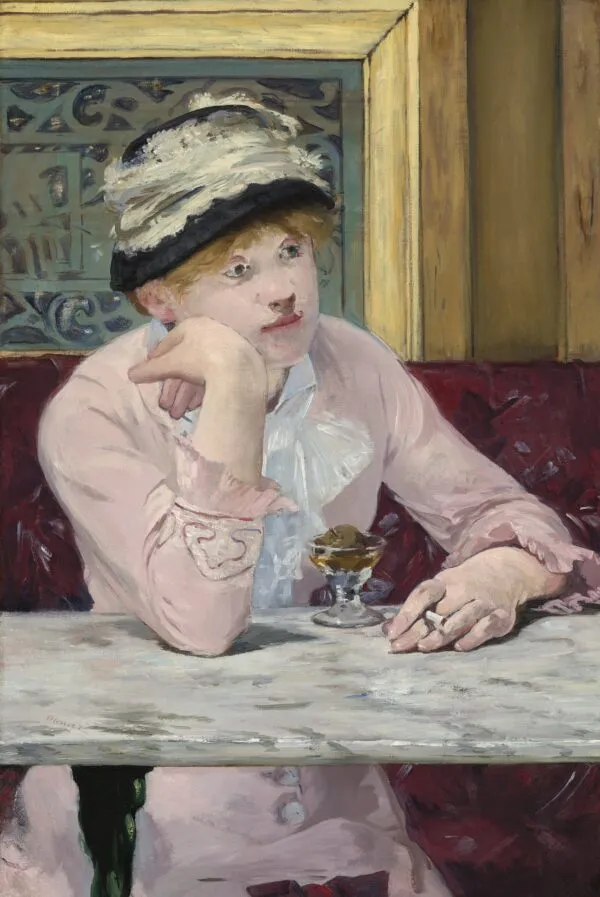
For drama, choose Rochefort’s Escape, a rowing boat on a deep blue night sea; for calm, Flowers in a Crystal Vase, carnations and clematis from Manet’s last years. You will find the rest of our famous Manet paintings, every one made to order, under Édouard Manet.
How do we hand-paint Corner of a Café-Concert?
Manet worked in oil on a canvas 97.1 cm tall. Your copy is an oil painting reproduction made entirely by brush, built up layer by layer in oil on canvas at the size you pick.
Our painter starts with the big shapes, the blue smock, the dark dress and the marble table edge, which hold the composition. Then come the green-blue background, stage and dancer, and last the beer foam, the glints on the glass, the white collar and the pipe.
Manet left the background loose and the waitress crisp, so on your wall too the stage stays far off and she stays near.
Which size suits which wall?
In short: 33 x 42 or 43 x 53 cm for a narrow wall, 55 x 66 to 78 x 95 cm above a chest of drawers or a sofa, and 97 x 122 cm or more for a large wall at home or in a pub.
We paint it in 8 portrait sizes (width x height): 33 x 42, 43 x 53, 55 x 66, 60 x 78, 78 x 95, 97 x 122, 120 x 155 and 150 x 195 cm. The original measures 77.5 x 97.1 cm (width x height), so the first four sizes are smaller, 78 x 95 cm is about the same, and 97 x 122, 120 x 155 and 150 x 195 cm are larger than the original.
As a painting for the living room it works best at 97 x 122 cm above the sofa, where every figure reads from across the room.
Can I order another size or a frame?
Yes. For other proportions we keep the waitress, the workman and the stage whole and adjust only the table edge or background. For this beer-hall scene, just tell us the measurements you need and we quote a price and a date.
The waitress and her beers travel rolled, stretched on a stretcher bar or framed; our workshop in Slovenia does the stretching, framing and careful packing. Pick the moulding in our 3D app, which exists only for choosing frames; seeing the painting on your own wall is a separate service. Gold suits the beer, dark wood the blue smock.
When will my painting arrive?
Work starts once you confirm the order, and the painting is ready to ship within 15 to 45 working days; before it leaves we send you a photograph and make any changes you ask for.
Orders within Slovenia and the rest of the EU travel without customs duties, and our returns policy applies to each one.
This Paris beer-hall scene suits lovers of beer, music or Paris, or a new bar. If you do not know their wall, a wall art voucher leaves the size to them.
Frequently asked questions
Where can I see the original?
At the National Gallery in London, accession number NG3858.
Who is the man with the pipe?
The waitress’s boyfriend; she would only pose for Manet if he came too.
Is this a print?
No. Every brushstroke is made by our painter: it is a hand-painted copy in oil on canvas.
How big is the original?
97.1 cm high and 77.5 cm wide; our 97 x 122, 120 x 155 and 150 x 195 cm sizes are larger.
Do you paint this corner in sizes off the list?
Yes. Give us a width and a height, and an offer with price and delivery time comes back.
How long does it take?
15 to 45 working days from your order; a photograph of the finished work reaches you before dispatch.
Does it suit a kitchen, a dining room or a gift?
Yes. The beer-and-music scene livens up a kitchen, dining room or home bar and pleases anyone fond of Paris.
Was this painting once part of a larger canvas?
Yes. Manet cut a larger beer-hall painting in two; this is its right-hand part.
- Subject: a waitress with two beers, a workman in a blue smock with a pipe, and a dancer on the stage of a Paris beer hall.
- Original: oil on canvas, about 1878–80, 97.1 x 77.5 cm, National Gallery, London.
- Ours: an Édouard Manet reproduction brushed in oil on canvas, in 8 portrait sizes or made to measure.
- Worth knowing: the right-hand half of a larger painting that Manet cut in two.