







































Description
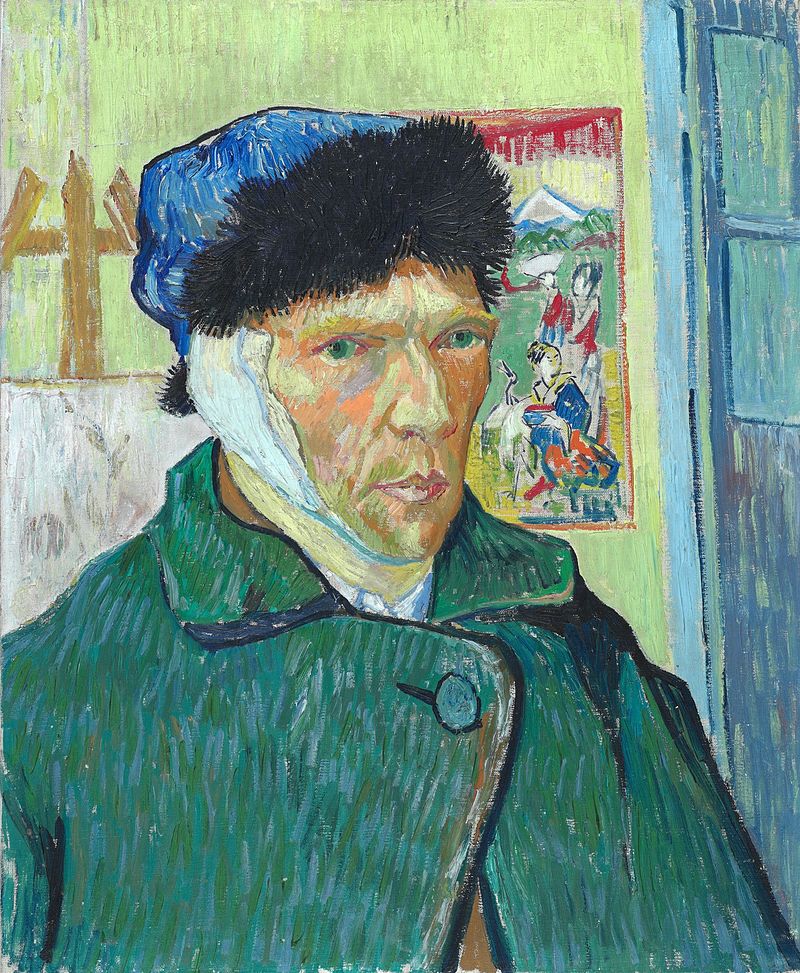
Self-Portrait with Bandaged Ear is the painting Vincent van Gogh made in Arles in January 1889, a week after he left hospital: he shows himself in a fur cap and a green coat, with a bandage over his ear and under his chin, in front of an easel and a Japanese print. The original measures 60.5 x 50 cm and belongs to the Courtauld Gallery in London. We paint it by hand in oil on canvas, in 16 sizes from 40 x 50 to 127 x 160 cm or to your own measurement, and send you a photograph of the finished work for approval before dispatch.
| Title: | Self-Portrait with Bandaged Ear |
| Other titles: | Self-Portrait with a Bandaged Ear · Autoritratto con l’orecchio bendato |
| Painter: | Vincent van Gogh (1853–1890) |
| Year painted: | January 1889, Arles |
| Original size: | 60.5 cm x 50 cm |
| Original technique: | Oil on canvas |
| Painting style: | Post-Impressionism |
| Located at: | Courtauld Gallery, London (inv. P.1948.SC.175) |
| Our reproduction: | Hand-painted oil on canvas, 16 sizes or made to measure |
Self-Portrait with Bandaged Ear – Vincent van Gogh
What does Self-Portrait with Bandaged Ear show?
Van Gogh painted himself from the chest up, with a serious, steady face. He wears a blue cap trimmed with black fur and a heavy green overcoat buttoned high. A white bandage covers the side of his head and runs down under his chin, so the injured ear itself is hidden. Nothing in the portrait is dramatic: he looks like a man who has dressed for the cold and gone back to work.
Behind him are three things: an open window, a canvas on an easel with only a few marks on it, and a Japanese woodblock print with figures in a landscape. The colours are strong and simple, the green of the coat, the blue of the cap, the white of the bandage and the bright tones of the print, each laid down with short, visible strokes.
Why the fur cap, the easel and the Japanese print?
Each object has a reason. The Courtauld Gallery explains that the fur cap was a recent purchase: it held the thick bandage in place and kept out the winter cold of January 1889, so it is a reminder of the hard conditions in which he was working. The canvas on the easel has only just been begun, a quiet sign that he meant to go on painting.
The print on the wall was one he owned: Geishas in a Landscape, a Japanese woodblock print made by Satō Torakiyo in the 1870s. Van Gogh collected hundreds of Japanese prints and admired their bold colours and flat areas, and the museum calls them an important source of inspiration for him. Here he copied part of the print into the background, so his own collection appears in his own portrait.
What does Self-Portrait with Bandaged Ear tell us about Van Gogh?
In December 1888 Van Gogh cut off most of his left ear. The Courtauld Gallery describes it as a desperate act, committed after a heated argument with Paul Gauguin, the painter who had come to stay with him in Arles. When Van Gogh came back from hospital, Gauguin had gone, and with him the dream of a studio of the south, where artists would share ideas and work side by side.
He painted this portrait a week after leaving hospital. The museum reads it as proof of his determination to keep painting, an impression strengthened by the new canvas on the easel and by his confident handling of colour and brushwork. The bandage is on the right side of his face only because he painted himself in a mirror; the injured ear was the left one.
Where does the original hang, and how did it reach London?
The original hangs in the Courtauld Gallery at Somerset House in London, under the number P.1948.SC.175. When Van Gogh died in 1890, the painting belonged to Julien Tanguy, the Paris colour merchant he had portrayed twice in 1887; how Tanguy came to own it is not known. It was exhibited in Paris in 1901 and again in 1905.
The collector Samuel Courtauld bought it in 1928 and left it to the gallery in his bequest of 1948. On 17 January 1889 Van Gogh wrote to his brother Theo that he had made a new self-portrait, and this is believed to be that painting. There is more on its history on Wikipedia.
Self-Portrait with Bandaged Ear or Self-Portrait as an Artist – which one to choose?
We paint two self-portraits in which Van Gogh shows himself as a working painter, about a year apart. This page is the one from Arles in January 1889: the fur cap, the bandage, the green coat and the Japanese print, with the original in London. The other is Self-Portrait as an Artist, painted in Paris in the winter of 1887–88: he stands at the easel with his palette and brushes, and the original is in the Van Gogh Museum in Amsterdam.
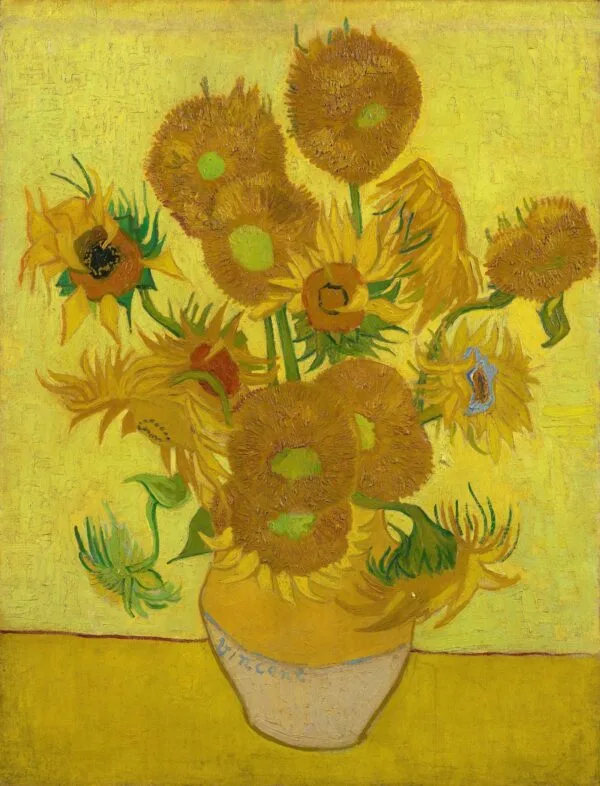
Choose this one for the portrait with the story and the strong contrast of green, blue and white; choose the Paris portrait if you want the painter shown with the tools of his trade. From his time in Arles we also paint Sunflowers I, Bedroom in Arles and the night scene Café Terrace at Night.
Shortly before this self-portrait, in Arles at the end of 1888, Van Gogh painted Van Gogh’s Chair, his own rush-seated chair with a pipe on it, and we paint it by hand as well.
How is our hand-painted Self-Portrait with Bandaged Ear made?
The painter first draws the head, the cap and the line of the bandage, then the shoulders and the three objects in the background, and only then brings in the colour: the green of the coat, the blue of the cap with its dark fur, the white of the bandage and the tones of the Japanese print. Our oil painting reproduction is painted by hand in oil on canvas with real impasto: the paint goes on thickly, so the brushstrokes stand up from the canvas, as they do on the original, where every stroke of the coat and the cap can be seen.
The face takes the most time, to keep his calm, direct look.
Every painting is a hand-painted copy made for your order, so no two are quite the same. A print shows only a flat surface; on our painting the strokes and the layers of paint are real, and you can feel them under your fingertips.
Which size for which wall?
Short answer: 70 x 90 or 80 x 100 cm above a sofa, a bed or a sideboard, 49 x 60 or 50 x 62 cm above a chest of drawers or in a study, and 100 x 120 or 120 x 150 cm for a large empty wall. The upright format suits a narrow wall, the space between two windows or a hallway.
There are 16 sizes, from 40 x 50 to 127 x 160 cm. The 49 x 60 and 50 x 62 cm sizes are closest to the original, which is 60.5 cm high and 50 cm wide, so on your wall the face appears at the scale Van Gogh gave it. A portrait is best seen at eye level, so a painting for the living room should not hang too high; above a 160 cm sofa, a width of 80 cm works well, and the largest sizes suit a staircase or a high entrance hall.
Hang it with the centre of the canvas about 150 cm above the floor, and 20 to 30 cm above a sofa or a headboard.
What if I need a custom size or a frame?
If none of the 16 sizes fits your wall, we paint it to measure. We recommend keeping the proportions close to the original, otherwise the face gets squeezed or stretched. Send us the width and height you want and we will quote a price and a lead time. Every painting we make is stretched over a wooden stretcher and ready to hang.
For the moulding, use our 3D application: it shows each of our frame profiles on this subject, so you can compare gold, silver, black, white and natural wood before you decide – the application is for choosing the frame only. If you would like to see how the painting will look on your own wall, that is our separate room placement service. A plain dark wood frame or a narrow gold one suits the green and blue of this portrait.
How does delivery work, and what is the guarantee?
Every painting is made to order in our studio in Slovenia, so allow 15 to 45 days depending on the size you choose. We ship it stretched and protected, framed if you chose a frame, across the EU with no customs. Before dispatch you receive a photograph of the finished work to approve; if anything is not right, we correct it while the canvas is still in our workshop. Our returns policy applies to every order.
More famous Van Gogh paintings are in the Vincent van Gogh gallery, and there is more about the painter in our article on Vincent van Gogh. For a gift, a wall art voucher lets the recipient choose size and subject.
Frequently asked questions
Where does the original Self-Portrait with Bandaged Ear hang?
In the Courtauld Gallery at Somerset House in London, which holds it under the number P.1948.SC.175. It came to the gallery with the bequest of the collector Samuel Courtauld in 1948, twenty years after he bought it. It is not in the Van Gogh Museum in Amsterdam or in the Musée d’Orsay in Paris.
When and where did Van Gogh paint Self-Portrait with Bandaged Ear?
In Arles, in the south of France, in January 1889, a week after he left hospital. In a letter of 17 January 1889 he told his brother Theo that he had made a new self-portrait, and this is believed to be the one. It belongs to the weeks after Gauguin had left Arles.
Why is the right ear bandaged in Self-Portrait with Bandaged Ear?
Because Van Gogh painted himself in a mirror. The ear he injured in December 1888 was his left one, but in the mirror it appears on the right, so the bandage sits on the right side of his face in the painting. The Courtauld Gallery points this out in its own description of the work.
Why did Van Gogh paint Self-Portrait with Bandaged Ear?
The museum sees it as proof of his determination to go on painting. He made it a week after leaving hospital, with a freshly begun canvas on the easel behind him and a Japanese print he valued on the wall. Rather than hide the injury, he painted it plainly and turned his attention back to colour and brushwork.
What is the Japanese print in Self-Portrait with Bandaged Ear?
It is Geishas in a Landscape, a Japanese woodblock print made by Satō Torakiyo in the 1870s, which Van Gogh owned. He collected hundreds of Japanese prints and admired their bold colours and spatial effects. In the portrait he painted part of it on the wall behind him, a sign of how much Japanese art meant to his work.
Why does Van Gogh wear a fur cap in Self-Portrait with Bandaged Ear?
The cap was a recent purchase. According to the Courtauld Gallery, he bought it to keep his thick bandage in place and to protect himself from the winter cold of January 1889. That is why the cap is read as a reminder of the hard conditions in which he was working at the time.
Is Self-Portrait with Bandaged Ear the same painting as the one with a pipe?
No. From the same weeks there is a second self-portrait in which he wears the cap and the bandage and smokes a pipe. That is a different painting and not part of the Courtauld collection. This page is the Courtauld version, with the easel and the Japanese print in the background and no pipe.
How many self-portraits did Van Gogh paint besides Self-Portrait with Bandaged Ear?
More than 35. Many date from his Paris years, when he often used himself as a model because he could not afford to pay sitters. This portrait belongs to his time in Arles and is one of the best known of them all. We also paint his Paris portrait at the easel, Self-Portrait as an Artist.
Is the original Self-Portrait with Bandaged Ear for sale?
No. It belongs to the Courtauld Gallery in London, in the collection of the Samuel Courtauld Trust, so it is not on the market and has no price. What we offer is our version painted by hand in oil on canvas, priced on this page according to the size you choose.
Does your Self-Portrait with Bandaged Ear have the raised brushstrokes of the original?
Yes. We paint it in impasto, so the brushstrokes stand up from the canvas as they do on Van Gogh’s original, where the strokes of the coat and the fur cap are clearly visible. A print cannot have this relief, because its surface is flat. What you receive is a real canvas painting, photographed for your approval before dispatch.
- Subject: Van Gogh in a fur cap and a green coat, with a bandaged ear, in front of an easel and a Japanese print.
- Original: January 1889, 60.5 x 50 cm, Courtauld Gallery, London.
- Ours: a Van Gogh reproduction painted by hand in oil on canvas with raised brushstrokes, in 16 sizes from 40 x 50 to 127 x 160 cm or made to measure.
- Worth knowing: you receive a photograph of the finished work for approval before dispatch.