













Description
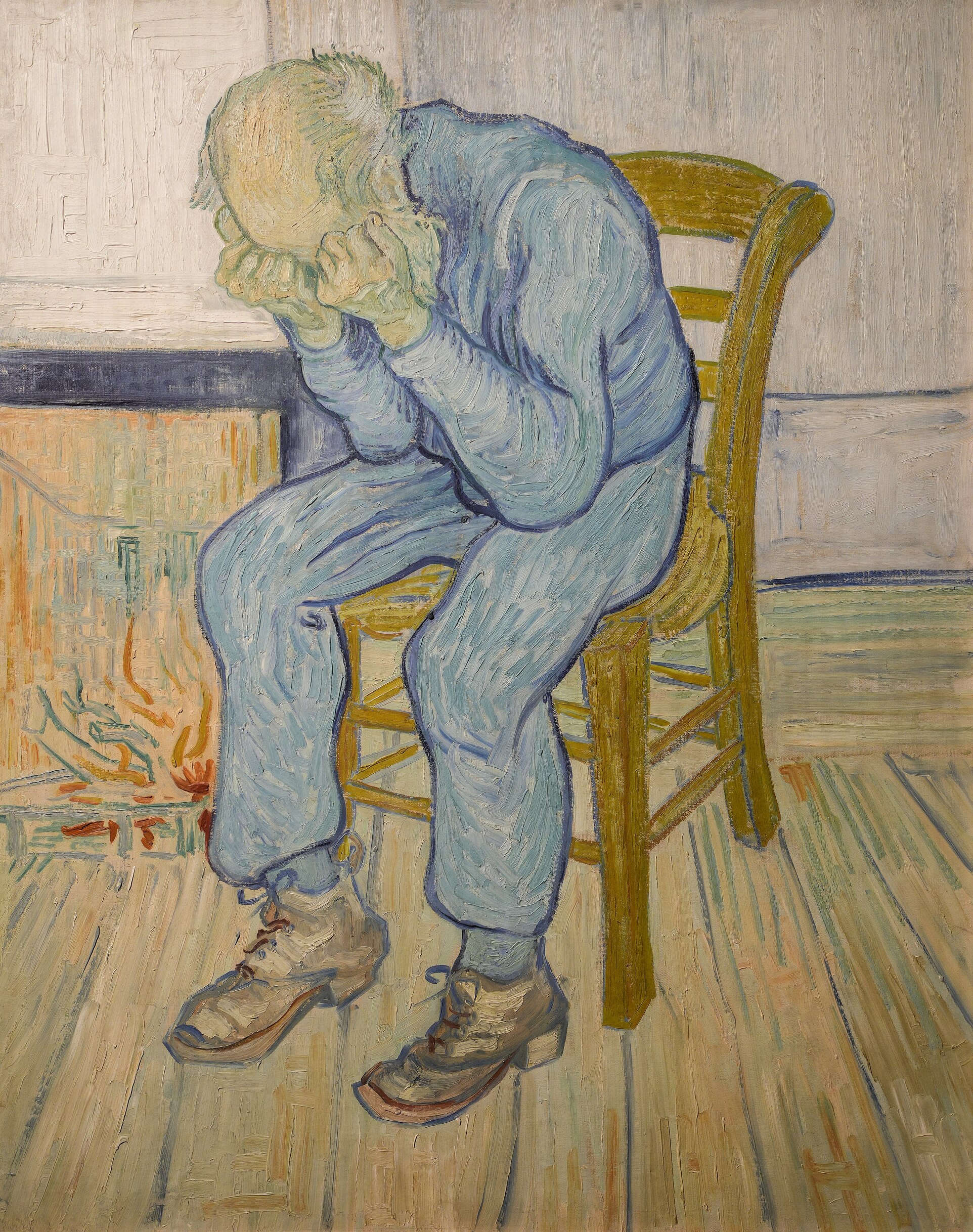
At Eternity’s Gate is the painting Vincent van Gogh made in May 1890 in Saint-Rémy-de-Provence: an old man in a pale blue suit sits on a yellow wooden chair beside a fire, bent forward, his fists pressed against his eyes. The original measures 81.8 x 65.5 cm and hangs in the Kröller-Müller Museum in Otterlo, the Netherlands. We paint it by hand in oil on canvas, in 17 sizes from 40 x 50 to 169 x 203 cm or to your own measurement, and send you a photograph of the finished work for approval before dispatch.
| Title: | At Eternity’s Gate |
| Other titles: | Sorrowing Old Man · Treurende oude man · Worn Out: At Eternity’s Gate |
| Painter: | Vincent van Gogh (1853–1890) |
| Year painted: | May 1890, Saint-Rémy-de-Provence |
| Original size: | 81.8 cm x 65.5 cm |
| Original technique: | Oil on canvas |
| Painting style: | Post-Impressionism |
| Located at: | Kröller-Müller Museum, Otterlo (inv. KM 111.041) |
| Our reproduction: | Hand-painted oil on canvas, 17 sizes or made to measure |
At Eternity’s Gate – Vincent van Gogh
What does At Eternity’s Gate show?
An old man sits alone in a bare room on a simple yellow wooden chair. He leans so far forward that his elbows rest on his knees, and he presses both fists into his eyes, so that his face is hidden completely. His head is bald, with a fringe of white hair; his suit is pale blue, its folds drawn with dark blue outlines. Heavy brown laced boots stand on a floor of long boards. On the left a small fire burns in the fireplace, and its orange flames are the strongest warm colour against the pale wall.
There is no story to follow, only a posture that needs no explanation. Van Gogh painted the figure in long strokes of blue that follow the curve of the back and the bent knees, and built up the head and the clenched hands with thick paint. The Kröller-Müller Museum notes that the chair and the stove possibly come from the asylum where he was living.
Why did Van Gogh paint the old man again in 1890?
The figure is older than the painting. In 1882, in The Hague, Van Gogh made a series of studies of Adrianus Jacobus Zuyderland, a pensioner and war veteran from an almshouse. He wrote that he had drawn two figures of an old man “with his elbows on his knees and his head in his hands”. One of these pencil drawings, Worn Out, became a lithograph a few days later. Seven impressions of it are known, and one of them is annotated At Eternity’s Gate.
In February 1890, at the asylum near Saint-Rémy, he suffered the most severe relapse of his illness, which lasted about nine weeks. At the end of April, still recovering, he decided to rework several figure drawings from his early years in the Netherlands. According to the museum, he was curious how they would turn out in the completely different style he had since developed. So the painting is not a literal copy in colour: he changed the composition, and it seems likely that a patient of the asylum posed for the old man.
What does At Eternity’s Gate mean?
Van Gogh explained the idea himself in 1882, when he made the lithograph. He wrote that one of the strongest pieces of evidence for “something on high”, a God and an eternity, was the unutterably moving expression of an old man sitting quietly in the corner of his hearth. Even the poorest woodcutter, heath farmer or miner, he added, can have moments that give him a sense of an eternal home that he is close to.
That is why the title matters. Without it the painting could be read as pure despair; with it, the old man sits at a threshold rather than at an end. The theologian Kathleen Powers Erickson wrote that even in his deepest sorrow Van Gogh held on to a faith in God and eternity. He painted this version about two months before his own death.
Where does the original hang?
The original hangs in the Kröller-Müller Museum in Otterlo, in the Netherlands, where it is currently on display. The museum lists it as Sorrowing Old Man (‘At Eternity’s Gate’), in Dutch Treurende oude man, oil on canvas, 81.8 x 65.5 cm, dated May 1890, under the identifier KM 111.041.
The 1970 catalogue raisonné of his work called it Worn Out: At Eternity’s Gate. In 2021 the Van Gogh Museum authenticated a drawing that had been in a Dutch private collection since 1910 as a preliminary study for Worn Out, and put it on display. More about the painting, the lithograph and the drawings is on Wikipedia.
At Eternity’s Gate or Pietà (after Delacroix) – which should you choose?
Both paintings were made at the asylum near Saint-Rémy, and both are reworkings of a print. Pietà (after Delacroix), painted in September 1889, follows a lithograph after Eugène Delacroix: the Virgin Mary mourning the dead Christ, in deep blue and gold under a stormy sky. At Eternity’s Gate, painted in May 1890, goes back to his own lithograph of 1882: one old man in an ordinary room, with no religious figures at all.
For one quiet figure in a study or a reading corner, choose At Eternity’s Gate; for two figures and a dramatic sky, choose the Pietà. For a lighter wall from the same asylum there are Irises and The Starry Night, both painted in 1889, and from Arles, from the January before he came to Saint-Rémy, the Self-Portrait with Bandaged Ear.
How is our hand-painted At Eternity’s Gate made?
The painter first draws the old man, the chair, the fireplace and the floor, and checks the proportions against the original, because everything depends on the angle of the bent back. Then come the pale wall and the floorboards in long strokes, the blue suit with its dark contour lines, the yellow chair and the flames, and last the bald head and the hands, painted thickly. Our oil painting reproduction is painted by hand in oil on canvas with real impasto: the paint goes on thickly, so the brushstrokes stand up from the canvas as they do in the original and catch the light.
Here the relief matters more than usual, because Van Gogh laid the paint on the head and the hands very thickly. A print shows only a flat surface; on our painting the strokes are real.
Every painting is a hand-painted copy made for your order, so no two are quite the same. Before dispatch we photograph it and send you the photograph to approve.
Which size for which wall?
Short answer: 65 x 80 or 72 x 91 cm above a desk, a chest of drawers or an armchair in a reading corner, 80 x 100 or 90 x 108 cm above a sofa, and 120 x 155 cm for a large empty wall. The upright format suits a narrow wall, the space between two windows or a hallway.
There are 17 sizes: 40 x 50, 50 x 60, 55 x 70, 60 x 75, 65 x 80, 69 x 85, 72 x 91, 80 x 100, 90 x 108, 100 x 120, 104 x 135, 113 x 146, 120 x 155, 130 x 162, 140 x 170, 149 x 180 and 169 x 203 cm (width x height). The original is 65.5 cm wide and 81.8 cm high; our 65 x 80 cm size is the closest to it, so the painting on your wall is almost as large as it is in the museum. The subject is intimate and suits a study, a library, a quiet bedroom or a consulting room. A painting for the living room should cover about two thirds of the width of the furniture below it; an upright canvas can be narrower when it hangs above a slim piece of furniture.
Hang it with the centre of the canvas about 150 cm above the floor. Above a sofa or a headboard, leave 20 to 30 cm between the furniture and the bottom edge.
What if I need a custom size or a frame?
If none of the 17 sizes fits your wall, we paint it to measure. We recommend keeping the proportions close to the original, otherwise the figure gets squeezed or stretched. Send us the width and height you want and we will quote a price and a lead time. Every painting we make is stretched over a wooden stretcher and ready to hang.
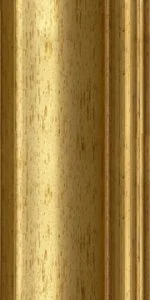
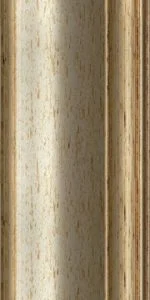
For the moulding, use our 3D application: it shows each of our frame profiles on this subject, so you can compare gold, silver, black, white and natural wood – the application is for choosing the frame only. Seeing the painting on your own wall is our separate room placement service. The pale blues suit a light natural wood or a simple silver profile.
How does delivery work, and what is the guarantee?
Every painting is made to order in our studio in Slovenia, so allow 15 to 45 days depending on the size you choose. We ship it stretched and protected, framed if you chose a frame, across the EU with no customs. Before dispatch you receive a photograph of the finished work to approve, and we correct anything that is not right. Our returns policy applies to every order.
More famous Van Gogh paintings are in the Vincent van Gogh gallery, and there is more about the painter in our article on Vincent van Gogh. If it is a gift, keep in mind that this is a moving painting rather than a cheerful one; if you are not sure of the subject or the size, a wall art voucher lets the recipient choose.
Frequently asked questions
Where does the original At Eternity’s Gate hang?
In the Kröller-Müller Museum in Otterlo, the Netherlands, where it is currently on display. The museum lists it as Sorrowing Old Man (‘At Eternity’s Gate’), oil on canvas, under the identifier KM 111.041. It is not in the Van Gogh Museum in Amsterdam.
When and where did Van Gogh paint At Eternity’s Gate?
In May 1890, at the Saint-Paul asylum near Saint-Rémy-de-Provence, where he had been living since May 1889. He painted it at the beginning of the month, after a relapse that had kept him from working normally for about nine weeks, about two months before his death.
Who is the old man in At Eternity’s Gate?
In the 1882 drawings he was Adrianus Jacobus Zuyderland, a pensioner and war veteran from an almshouse in The Hague, whom Van Gogh drew several times. For the 1890 painting the Kröller-Müller Museum thinks it likely that Van Gogh asked a patient of the asylum to pose, so the man on the canvas is probably someone else in the same pose.
What is the message of At Eternity’s Gate?
It shows grief, but Van Gogh meant more than grief. When he made the lithograph in 1882 he wrote that the moving expression of an old man sitting quietly by his hearth was strong evidence of “something on high”, of a God and an eternity. The title places the old man at a threshold: a moment of sorrow that still holds the sense of an eternal home.
Is At Eternity’s Gate a painting or a film?
This page is about the painting: Van Gogh’s oil on canvas of May 1890, now in the Kröller-Müller Museum. Julian Schnabel’s 2018 film about Van Gogh’s last years carries the same title. The image of the old man itself goes back to drawings Van Gogh made in The Hague in 1882.
How big is the original At Eternity’s Gate?
The original is 81.8 cm high and 65.5 cm wide, an upright format that already works above a desk or a chest of drawers. Our 65 x 80 cm size is the closest to the original, and there are smaller and larger sizes from 40 x 50 up to 169 x 203 cm, as well as custom sizes for a particular wall.
Is At Eternity’s Gate a good painting to give as a gift?
It is a moving gift rather than a cheerful one. It suits someone who knows Van Gogh’s life and letters, or who wants a serious canvas painting for a study, a library or a quiet room. For a celebration, a brighter work such as Irises may fit better.
Does your At Eternity’s Gate have the raised brushstrokes of the original?
Yes. We paint our At Eternity’s Gate in impasto: the paint goes on thickly, so the brushstrokes stand up from the canvas as on Van Gogh’s original. You see it best on the bald head, the clenched hands and the long blue strokes of the suit, where the relief catches the light. A print cannot have this relief, because its surface is flat.
- Subject: an old man in a pale blue suit sitting by the fire, bent forward, his fists pressed against his eyes.
- Original: May 1890, Saint-Rémy, 81.8 x 65.5 cm, Kröller-Müller Museum, Otterlo.
- Ours: a Van Gogh reproduction painted by hand in oil on canvas, in 17 sizes from 40 x 50 to 169 x 203 cm or made to measure.
- Worth knowing: you receive a photograph of the finished work for approval before dispatch.