


Description
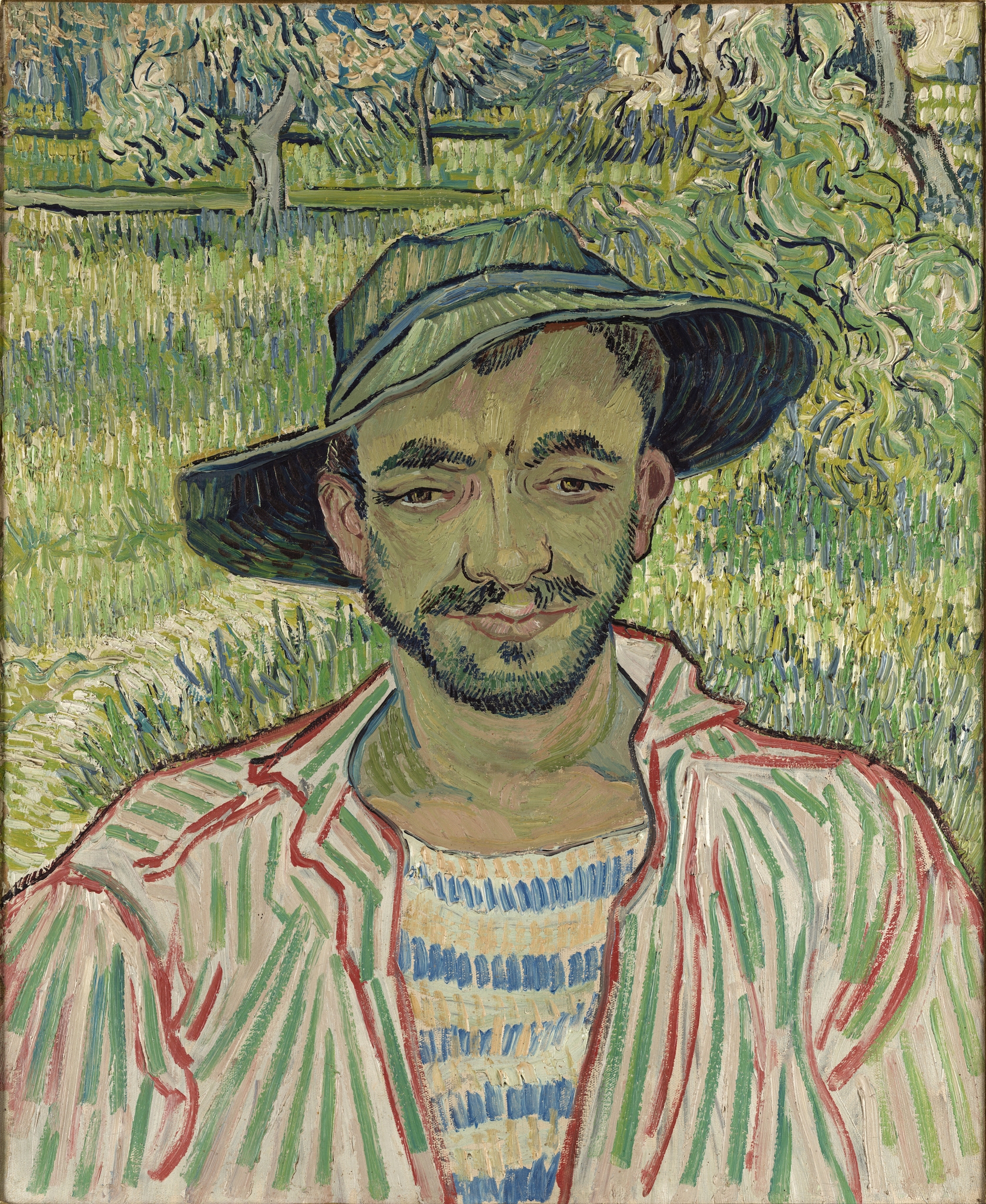
Portrait of a Young Peasant (The Gardener) is the painting Vincent van Gogh made in 1889 in Saint-Rémy-de-Provence: a young man with a beard and a wide dark hat, in a white shirt with red and green stripes, looks out at us from a sunlit garden. The original measures 61 x 50 cm and hangs in the Galleria Nazionale d’Arte Moderna e Contemporanea in Rome. We paint it by hand in oil on canvas, in 17 sizes from 40 x 50 to 100 x 120 cm or to your own measurement, and send you a photograph of the finished work for approval before dispatch.
| Title: | Portrait of a Young Peasant (The Gardener) |
| Other titles: | Il giardiniere · The Gardener · Provençal Peasant · Paysan provençal |
| Painter: | Vincent van Gogh (1853–1890) |
| Year painted: | September 1889, Saint-Rémy-de-Provence |
| Original size: | 61 cm x 50 cm |
| Original technique: | Oil on canvas |
| Painting style: | Post-Impressionism |
| Located at: | Galleria Nazionale d’Arte Moderna e Contemporanea, Rome |
| Our reproduction: | Hand-painted oil on canvas, 17 sizes or made to measure |
Portrait of a Young Peasant (The Gardener) – Vincent van Gogh
What does Portrait of a Young Peasant show?
A young man is seen from the chest up, in the centre of the canvas, facing us. He wears a wide dark hat tilted to one side, so that its brim draws a slanting line down towards his left shoulder. His face is tanned, with thick arched eyebrows, a moustache and a slightly untidy beard, and his lips are outlined in red. He looks a little downwards: calm, with a trace of melancholy.
Over his shoulders he wears a white shirt with long vertical red and green stripes, and under it a shirt with horizontal yellow and blue stripes. Behind him there is no wall but a garden in full sun: bright green grass on the left, a narrow path just above his shoulder, bushes on the right and, at the top, tree trunks and the crowns of trees. Man and garden share the same light.
Why does the painting have two names?
Van Gogh never mentions this portrait in his letters, so he gave it no title himself. In the catalogues of his work it is listed as a peasant or as Portrait of a Young Peasant, with the numbers F531 and JH1779. His friend Émile Bernard called it Paysan provençal, Provençal Peasant, in letters of 1911.
The name The Gardener, Il giardiniere in Italian, is fairly recent. It probably comes from the background, which looks more like a garden than a field. Another explanation is that the sitter may have been the gardener of the asylum at Saint-Rémy, where Van Gogh was a patient, but no source names the man. The museum in Rome lists the work as Il giardiniere, so both names refer to the same canvas.
What does Portrait of a Young Peasant mean?
Peasants were a subject Van Gogh returned to all his life, from his early years in Nuenen to his copies after Jean-François Millet. Most of those paintings show hard work in the fields. This young man is different: he is shown at ease in a friendly, sunlit nature, and the lines of the composition, the hat, the shoulders and the path behind him, make him merge with the landscape.
In early September 1889, after a serious attack of his illness and weeks without work, Van Gogh wrote to his brother Theo that his desire to make portraits was terribly strong. A few weeks later he wrote that portraits seemed to him the most serious and best part of his work. The colours carry the idea: the shirt sets red against green, two complementary colours, and the shirt beneath sets yellow against blue.
Where does the original hang?
The original hangs in Rome, in the Galleria Nazionale d’Arte Moderna e Contemporanea, which shows it as Il giardiniere, oil on canvas, 1889. The museum also owns his L’Arlésienne (Madame Ginoux) of 1890.
In 1910 the Florentine collector Gustavo Sforni bought it in Paris and showed it that year at the first Italian exhibition of Impressionism. His heir, the lawyer Giovanni Verusio, hid it at the end of the war in a box under the straw of a lemon greenhouse near Florence. After a sale in 1977, the Italian State used its right of pre-emption in 1989; the painting has been in the Galleria Nazionale since 1995. The full story is on Wikipedia.
Portrait of a Young Peasant or a Saint-Rémy landscape – which should you choose?
All five paintings below come from the year Van Gogh spent at the asylum near Saint-Rémy. Portrait of a Young Peasant is the only one of them with a face that looks back at you, painted in the summer greens of the garden. Irises, from May 1889, fills the whole canvas with flowers from the asylum garden, and Cypresses, from June 1889, shows two dark trees against a moving sky.
The Siesta (after Millet), painted that winter, shows two peasants resting in the hay, and At Eternity’s Gate, from May 1890, an old man grieving by the fire. For a warm, direct portrait in a living room or a kitchen, choose the young peasant; for colour without a figure, choose Irises or Cypresses; for a quiet peasant scene, The Siesta.
How is our hand-painted Portrait of a Young Peasant made?
The painter first draws the head, the hat and the shoulders and checks the proportions against the original, because the face must sit exactly in the centre. Then come the garden in short vertical strokes, the path and the bushes, then the striped shirts in long, quick strokes, and last the face in small, careful touches of olive green, pink and red. Our oil painting reproduction is painted by hand in oil on canvas with real impasto: the paint goes on thickly, so the brushstrokes stand up from the canvas as they do in the original and catch the light.
Here the relief shows the two speeds of the painting: fine, close strokes in the face, long ones in the shirt and the grass. A print shows only a flat surface; on our painting every stroke is real.
Every painting is a hand-painted copy made for your order, so no two are quite the same. Before dispatch we photograph it, sending you the photograph to approve.
Which size for which wall?
Short answer: 50 x 60 or 60 x 75 cm above a chest of drawers, a sideboard or a kitchen table, 72 x 91 or 80 x 100 cm above a sofa, and 100 x 120 cm for a large empty wall. The upright format suits a narrow wall, the space between two windows or a hallway.
There are 17 sizes: 40 x 50, 50 x 60, 55 x 70, 56 x 70, 58 x 70, 60 x 75, 63 x 80, 65 x 80, 69 x 85, 70 x 88, 72 x 91, 80 x 97, 80 x 100, 84 x 103, 85 x 105, 87 x 105 and 100 x 120 cm (width x height). The original is 50 cm wide and 61 cm high; our 50 x 60 cm size is the closest to it, so the portrait on your wall is almost exactly as large as it is in Rome. A larger size suits a living room or a garden room. A painting for the living room should cover about two thirds of the width of the furniture below it; an upright canvas can be narrower when it hangs above a slim piece of furniture.
Hang it with the centre of the canvas about 150 cm above the floor, so that the young man looks at the room at eye level. Above a sofa or a sideboard, leave 20 to 30 cm between the furniture and the bottom edge.
What if I need a custom size or a frame?
If none of the 17 sizes fits your wall, we paint it to measure. We recommend keeping the proportions close to the original, otherwise the face gets squeezed or stretched. Send us the width and height you want and we will quote a price and a lead time. Every painting we make is stretched over a wooden stretcher and ready to hang.
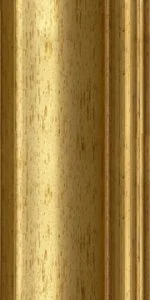
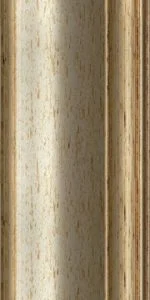
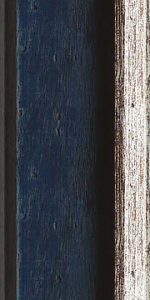
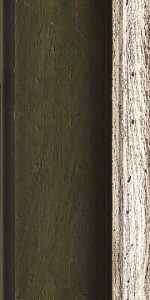
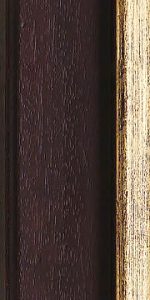
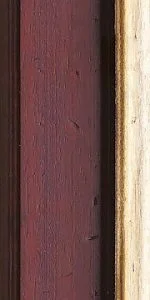
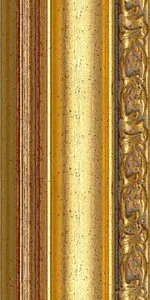
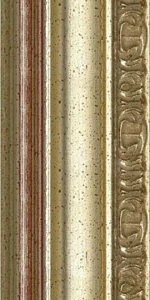
For the moulding, use our 3D application: it shows each of our frame profiles on this subject, so you can compare gold, silver, black, white and natural wood – the application is for choosing the frame only. Seeing the painting on your own wall is our separate room placement service. The greens and the warm skin tones suit a natural wood or a warm gold profile; a plain white frame keeps the summer light fresh.
How does delivery work, and what is the guarantee?
Every painting is made to order in our studio in Slovenia, so allow 15 to 45 days depending on the size you choose. We ship it stretched and protected, framed if you chose a frame, across the EU with no customs. Before dispatch you receive a photograph of the finished work to approve, and we correct anything that is not right. Our returns policy applies to every order.
More famous Van Gogh paintings are in the Vincent van Gogh gallery, and there is more about the painter in our article on Vincent van Gogh. The portrait makes a good gift for someone who loves their garden; if you are not sure of the size, a wall art voucher lets the recipient choose.
Frequently asked questions
Where is the original Portrait of a Young Peasant today?
In Rome, in the Galleria Nazionale d’Arte Moderna e Contemporanea, which lists it as Il giardiniere, oil on canvas, 1889. It has been there since 1995, and in 2002 the European Court of Human Rights confirmed the Italian State as its owner. It is regarded as the most important Van Gogh in an Italian public collection.
When and where did Van Gogh paint Portrait of a Young Peasant?
In 1889 in Saint-Rémy-de-Provence, where he was a patient at the Saint-Paul asylum. Because he never mentions the canvas in his letters, the month is an estimate: the catalogue of Jan Hulsker places it in September 1889, when he wrote that his desire to paint portraits was terribly strong. Most critics now accept that date.
Who is the man in Portrait of a Young Peasant?
Nobody knows his name. Van Gogh does not mention the portrait in any letter, and the sources only say that he is a young man from Provence. One explanation for the title The Gardener is that he may have been the gardener of the asylum at Saint-Rémy, but that remains a hypothesis rather than a fact.
Why is Portrait of a Young Peasant also called The Gardener?
The title The Gardener, Il giardiniere, is fairly recent and probably comes from the background, which looks like a garden rather than a field. Van Gogh gave the work no title himself. Émile Bernard called it Provençal Peasant, and the catalogues list it as a peasant portrait, so both names describe the same painting in Rome.
Was Portrait of a Young Peasant ever stolen?
Yes. On the night of 19 to 20 May 1998 three armed thieves stole it from the Galleria Nazionale in Rome, together with Van Gogh’s L’Arlésienne and Cézanne’s Le Cabanon de Jourdan. The three paintings were recovered forty-six days later, and eight people were arrested. The portrait has hung in the museum again ever since.
How much is Portrait of a Young Peasant worth?
The original is state property and not for sale, so it has no current market price. Its history gives an idea of its value: it was sold in 1977 for 600 million lire, and in 1988 a sale to the Guggenheim in Venice was planned for 14 billion lire before the Italian State bought it back for the original sum.
What colours did Van Gogh use in Portrait of a Young Peasant?
The young man’s shirt sets red against green, two complementary colours, and the shirt beneath sets yellow against blue, two primary ones. The garden behind him is built from white, yellow, green and blue strokes, and the face from olive green and pink. This balance of contrasts gives the portrait its summer light.
How big is the original Portrait of a Young Peasant?
The original is 61 cm high and 50 cm wide, an upright format that already works above a chest of drawers or a sideboard. Our 50 x 60 cm size is the closest to it, and there are smaller and larger sizes up to 100 x 120 cm, so the portrait can also become the main canvas painting of a large wall.
Does your Portrait of a Young Peasant have the raised brushstrokes of the original?
Yes. We paint it in impasto: the paint goes on thickly, so the brushstrokes stand up from the canvas as on Van Gogh’s original. You see it best in the long stripes of the shirt, in the short strokes of the grass and in the brim of the hat, where the relief catches the light. A print cannot have this relief.
- Subject: a young bearded man in a wide dark hat and a striped shirt, in front of a sunlit garden.
- Original: September 1889, Saint-Rémy, 61 x 50 cm, Galleria Nazionale d’Arte Moderna e Contemporanea, Rome.
- Ours: a Van Gogh reproduction painted by hand in oil on canvas, in 17 sizes from 40 x 50 to 100 x 120 cm or made to measure.
- Worth knowing: you receive a photograph of the finished work for approval before dispatch.