















Description
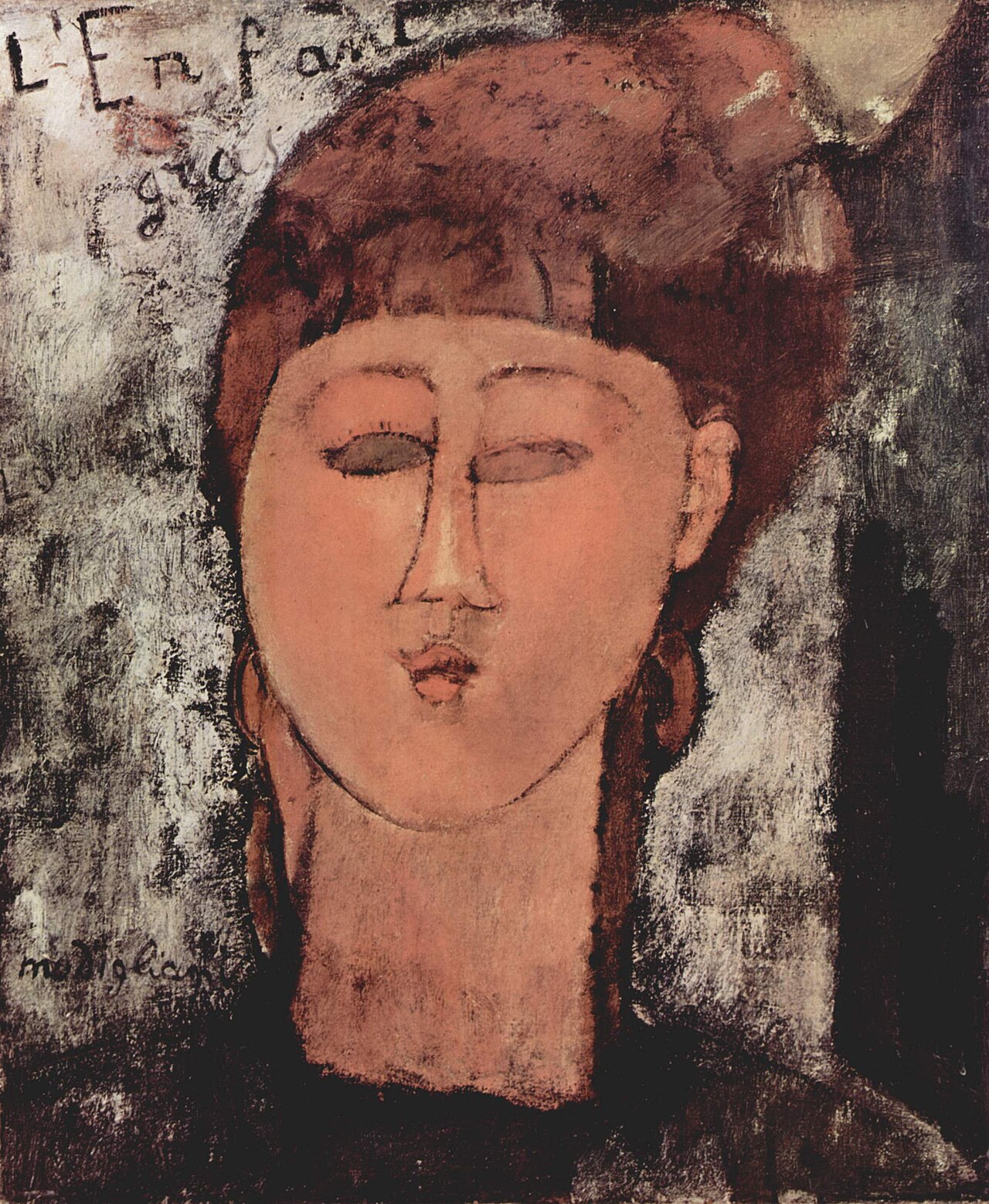
L’enfant gras is a small canvas of 1915 held by the Pinacoteca di Brera in Milan. The French title means the fat child and describes what is there: a round child’s face with full cheeks, painted in a few broad areas. With us it is made as a hand-painted copy, oil on canvas, to order, in eight sizes or in a size you give us; before dispatch we send you a photograph of the finished canvas.
| Title: | L’enfant gras |
| Other titles: | Enfant gras (the title in the Pinacoteca di Brera’s record) |
| Painter: | Amedeo Modigliani (1884–1920) |
| Year of creation: | 1915 |
| Original size (width × height): | 38 × 46 cm |
| Original technique: | oil on canvas |
| Painting style: | expressionism, École de Paris |
| Located: | Pinacoteca di Brera, Milan – Lamberto Vitali collection |
| Our reproduction: | hand-painted copy, oil on canvas, eight sizes or a custom size |
L’enfant gras – Amedeo Modigliani
What is on the canvas?
A child, given to the shoulders, turned almost square to the viewer. The face is round and full, which in Modigliani is the exception — his faces are as a rule long ovals. The cheeks are broad and reddish, the chin small, the mouth tiny. The eyes sit high and are not symmetrical. The hair is dark and short, combed across the forehead. The clothing is plain and dark. The ground is uniform, with no objects and no depth. The whole canvas is built from a few broad areas, and that is exactly why it reads larger than it is: at 38 × 46 cm it is among the smallest on this shelf.
The year 1915 and “le grand style”
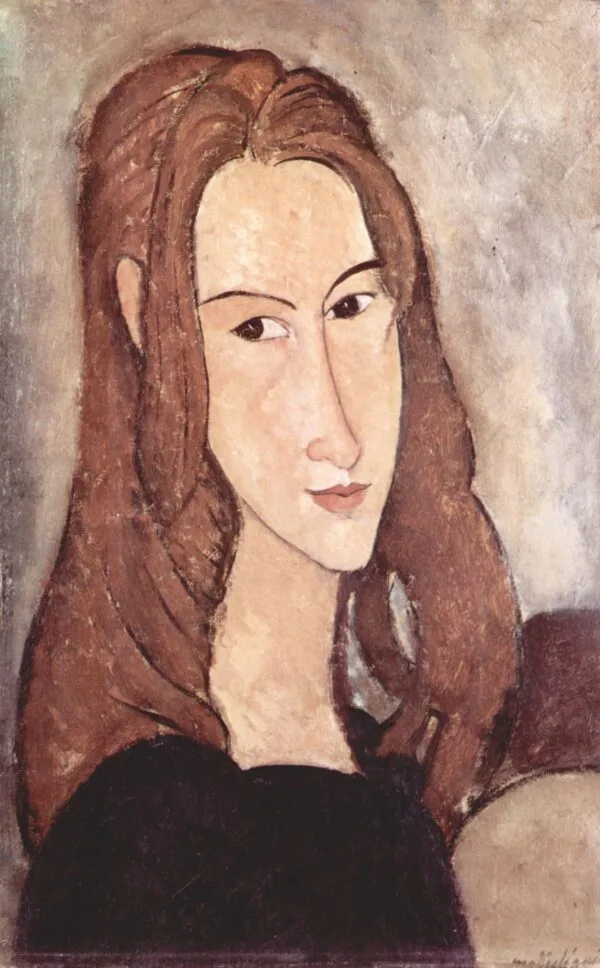
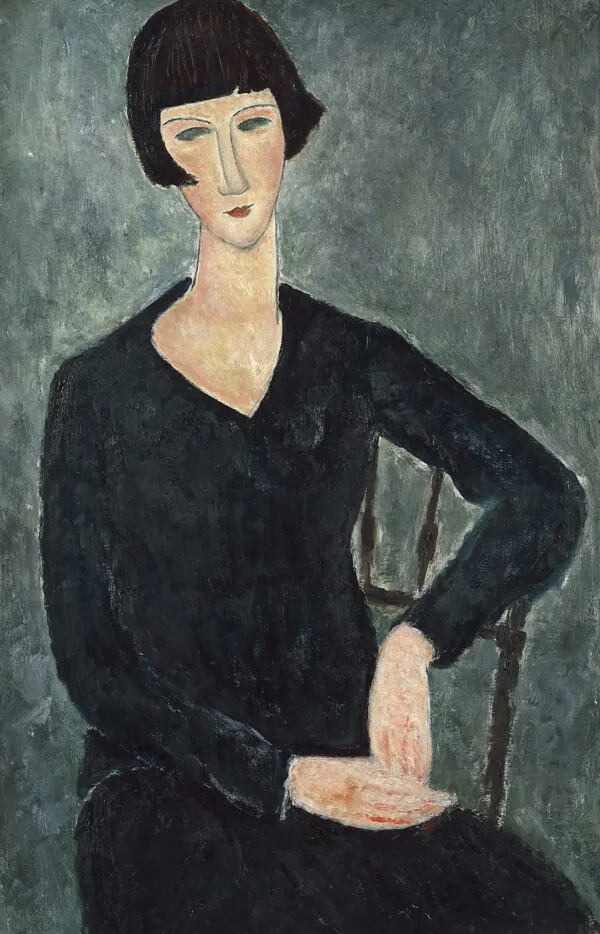
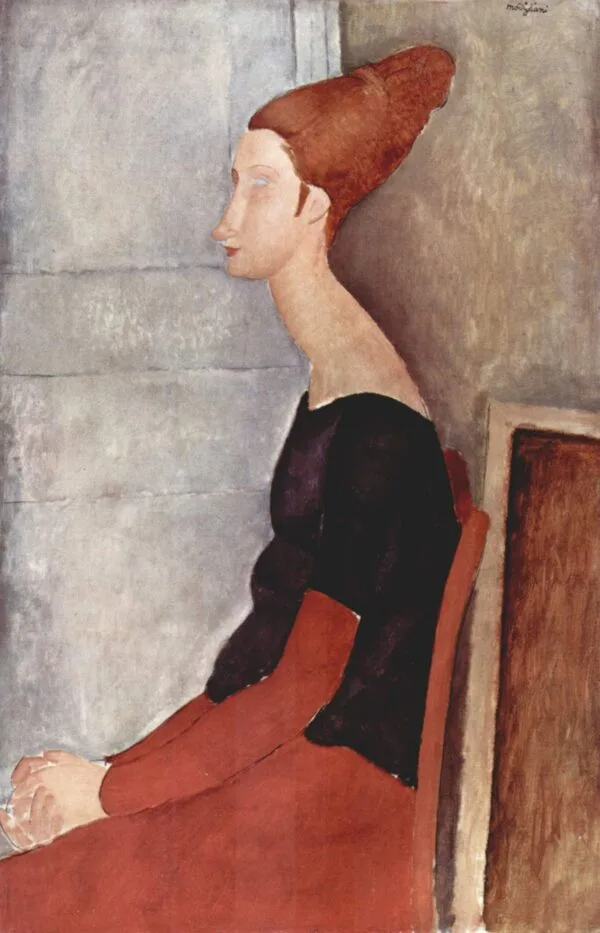
Brera’s record places this canvas at a precise moment. 1915 is the year in which Modigliani began, in his own words, le grand style — a run of portraits and nudes with highly geometricized traits, in unreal tones laid on in broad and dense areas of paint. That is exactly why the child’s face here is so flat: it is not awkwardness, it is a decision. The same run includes the Portrait of Moïse Kisling, which Brera also holds. From the same year our shelf carries Madam Pompadour and The Red Head, and later The Boy. The circle Modigliani was working in then is the one we now call the École de Paris. The whole selection is in the Amedeo Modigliani gallery, and we have written a longer article about the painter.
⚠️ The record of the original, and a correction to the collection
The original is oil on canvas, and Brera measures it 45.5 × 37.5 cm; our figure of 38 × 46 cm is that rounded to the whole centimetre. Here we have corrected something, and the correction is worth explaining. This page previously gave Emilio Jesi’s collection as the route by which this canvas reached Brera. That is not right. Brera’s own text distinguishes the two routes explicitly: this canvas was previously in Paul Guillaume’s collection and was acquired in 1938 from the Barbaroux gallery in Milan by the collector Lamberto Vitali; it was the Portrait of Moïse Kisling that arrived at Brera with the Jesi donation, not this work. So it was only this page that was wrong. The Jesi route belongs to the Kisling portrait, and there we give it correctly. We print no accession number: the museum’s public page gives none for this work, while it does give the collection, and we claim no more than that. The work also has its own Wikidata entry.
Who was Lamberto Vitali?
Vitali was a Milanese collector and among the first in Italy to take Modigliani seriously. He came across the work at the Venice Biennale of 1922, seven years after this canvas was painted, and in 1929 he brought out a small collection of Modigliani’s drawings together with the publisher and critic Giovanni Scheiwiller. In the introduction he wrote a sentence Brera quotes to this day: either he is blind, or Italy will have to make up its mind to recognise in Modigliani a draftsman who can stand alongside its classics of the past. In 1922 that was not the general view; some decades later it became one.
How is our hand-painted version made?
A painter paints it, with a brush, in oil on canvas, to your order. Every canvas painting takes some weeks, and each copy comes out slightly its own; that is not a fault but the consequence of a person working rather than a machine. On this motif the trap is obvious: a child’s face is easy to paint as charming, and the original is not charming — it is serious and a little absent. So the painter does not soften the areas and puts no highlights in the eyes. Before dispatch you receive a photograph of the finished canvas and approve it. It is never a print.
Which size for which wall?
For this motif we suggest 50 × 60 cm. The original is small, but the face is built from broad areas and takes enlargement better than most portraits on this shelf; 60 × 75 cm is therefore a perfectly possible choice for a main wall. For a child’s room or a hallway, 40 × 50 cm is enough. If you want a post-impressionist painting in a size that is not on the list, we make it to order.
Frequently asked questions
Where is the original?
In the Pinacoteca di Brera in Milan, in the Lamberto Vitali collection.
Why do you give no accession number?
Because the museum’s public page gives none for this work. We give the collection because the museum gives it; we do not invent numbers.
How closely does it follow the original’s proportions?
The original measures 38 × 46 cm. The closest of our sizes is 50 x 60 cm, which departs from the original’s proportions by 0.88%.
- Subject: a round child’s face to the shoulders, broad reddish cheeks, eyes set high, a uniform ground
- Original: 38 × 46 cm, oil on canvas, 1915, Pinacoteca di Brera, Milan, Lamberto Vitali collection
- Ours: hand-painted oil on canvas, eight sizes or a custom size, with a photograph to approve before dispatch
- Worth knowing: we corrected the collection — this canvas came to Brera through Vitali, not with Jesi
The eyes on this canvas are painted without pupils. We counted all 76 Modigliani works on this shelf: 53 are like that, 17 are not – work by work.