


Description
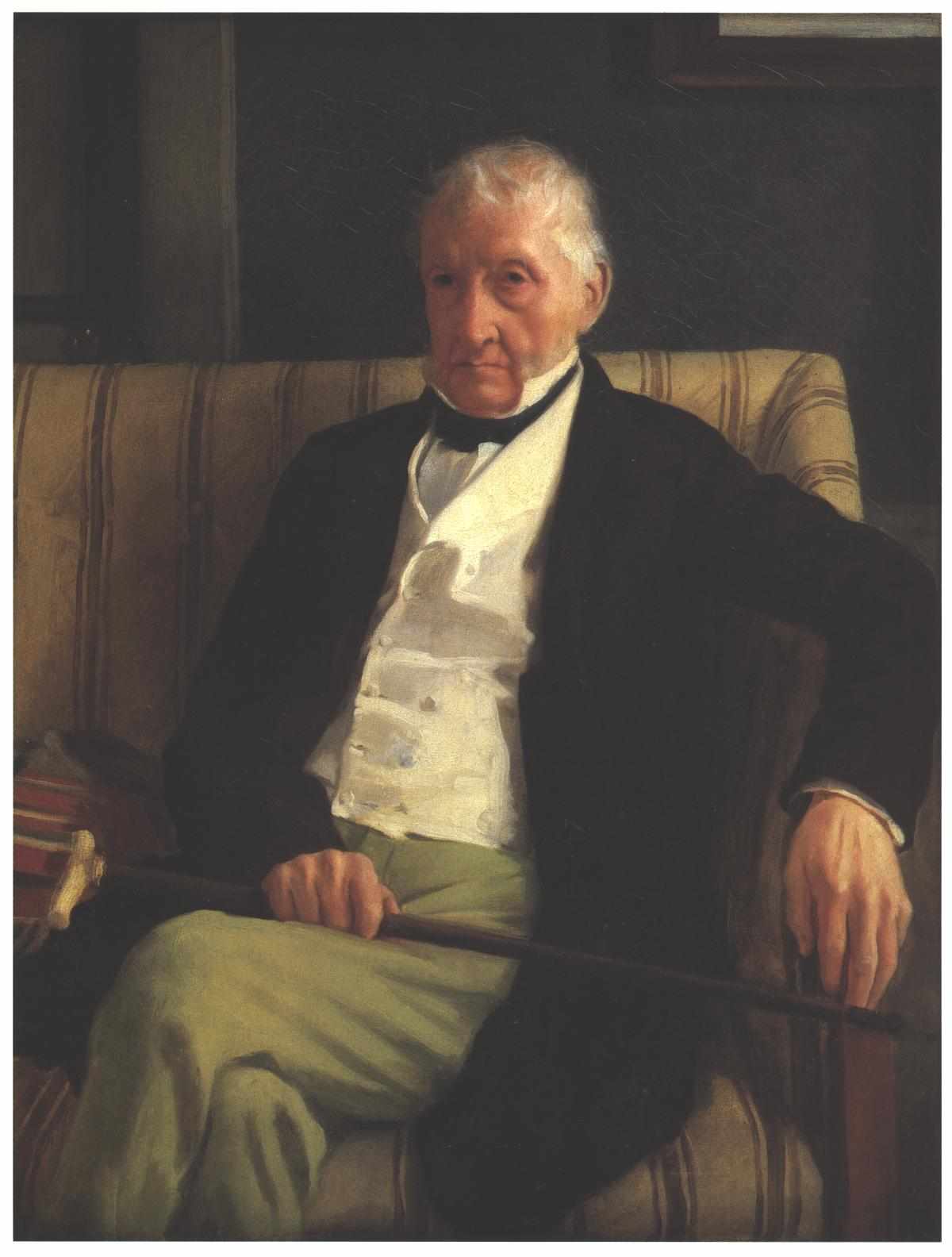
Hilaire de Gas shows an elderly man with white hair seated in a striped armchair, looking straight out at us; across his lap he holds a dark cane horizontally, and his left hand rests on the arm of the chair. He wears a black coat, a pale waistcoat and light green trousers, the most unexpected colour on the canvas. As a canvas painting this is an upright, serious portrait in a dark room. The original is oil on canvas and is held in the Musée d’Orsay in Paris under the inventory number RF 3661. We make it as a hand-painted work on linen, in sizes from 30 x 35 to 80 x 90 cm or to your own measurements, and you receive a photograph of the finished work for approval before dispatch.
| Title: | Hilaire de Gas |
| Other titles: | Hilaire Degas |
| Painter: | Edgar Degas (1834–1917) |
| Year of execution: | 1857 |
| Original size: | 53 cm x 41 cm |
| Original technique: | Oil on canvas |
| Painting style: | Impressionism |
| Located at: | Musée d’Orsay, Paris (inv. no. RF 3661) |
| Our reproduction: | hand-painted oil on linen canvas, 6 sizes from 30 x 35 cm to 80 x 90 cm, custom sizes on request |
Hilaire de Gas – Edgar Degas
Who is shown?
Hilaire de Gas, the painter’s grandfather, named in the title already. He sits in an armchair, turned slightly to the side but with his face straight towards us – and that is a rarity in Degas, whose figures almost never look at the viewer. His hair is white and thin, his face deeply lined, his jaw heavy, his expression stern without being hard. He was already old then, and Degas was barely past twenty. This is not a commissioned portrait but a portrait within the family.
What is on the canvas?
The format is upright and the crop is tight: the figure fills nearly the whole canvas. The armchair is covered in striped fabric of cream and olive that opens like a fan behind his shoulders. The man wears a black coat, a white shirt with a high collar and a black bow, and over his chest a pale waistcoat with buttons. The trousers are light green – the most unexpected colour in the scene and the only one that breaks the relation of dark to light. His right hand holds a dark cane horizontally across his lap, its pale handle visible at the left; his left hand rests on the chair arm at the right. At the lower left lies a reddish striped fabric. The background is dark brown, with a slightly lighter area barely distinguishable at the upper right and a vertical pale strip at the far left.
Why does this particular scene matter?
Because this is Degas before Degas. The canvas was made while the painter was still young and working from the old masters; there are no cut-off edges here and no scenes caught in passing. Instead there is a firmly built, serious portrait in a tradition he later abandoned. That is exactly what makes it interesting: it shows what he could do before he decided to paint differently. And yet something of his own is already here – the light green trousers, which no portraitist of that time would have set in the middle of all that black.
What does the scene mean?
Family respect without flattery. The face is not made younger and not corrected; a line is a line. Impressionism in Degas never began with colour but with his relation to the sitter, and here we see it in embryo: the man is painted as he is. An impressionist painting of this kind is not yet impressionist in appearance, but it is in candour. As wall art it carries a room through quiet presence rather than through colour.
The motif among Degas’s works
Family accompanied Degas all his life. Lorenzo Pagans and Auguste De Gas puts the painter’s father in the second plane as a listener; the grandfather does not appear there, but the line is the same. The Collector of Prints shows the portrait of a man surrounded by objects, and A Woman Seated beside a Vase of Flowers reverses the same idea and pushes the person to the edge. How Degas saw himself in those same years is shown by the Self-Portrait at the Art Institute of Chicago, and where the turn away from posing led him by The Millinery Shop in the same collection.
How is our hand-painted version made?
With a brush and oil colours, not a printer, and here the technique of the original is the same as ours. Every one of our canvases is made layer after layer, and in this scene the face is the hardest part: this is an old man in whom every line means something, and if the painter smooths them the portrait loses its seriousness. The other demanding part is the light green trousers, which have to stay exactly as bright as they are, or the scene collapses into a uniform dark. Every reproduction is made afresh and no two copies are ever quite the same, because the hand does not repeat the same stroke twice; every hand-painted copy is therefore its own. For this work we have no photographs of our finished canvases, so we show and describe none here. The photograph of your canvas reaches you before dispatch.
Which size for which wall?
If you do not know which: 50 x 55 cm. One thing has to be said plainly here: our six sizes are squarer than the original, which measures 53 x 41 cm and is distinctly narrow. The 43 x 47 cm size comes nearest to it in size, while none of them comes near it in proportion; if you want the original’s proportion, we paint it to measure. The 30 x 35 and 43 x 47 cm sizes are for a narrow wall, a hallway or a shelf. The 50 x 55 and 60 x 70 cm sizes are the most usual choice above a chest of drawers or a desk; at them the face is large enough for the lines to read, which with this portrait is decisive. The 70 x 80 cm size belongs beside a sofa or in a dining room. At 80 x 90 cm we are at the sizes where a large painting seats the figure close to life size. Measure your chosen size on the wall with a paper cut-out first; with an upright format the mistake is usually made in the height. None of the sizes is held in stock as a finished item: every copy is made to order and stays a single piece.
Custom size, stretcher bar and frame
If none of the six sizes suits your wall, or if you want the narrow proportion of the original, we paint to your measurements and keep the proportions of the scene, so that the chair keeps its fan behind his shoulders and the cane stays whole; that is our painting made to order. Every copy is delivered stretched on a wooden bar, ready to hang. For the frame, use our 3D application: on this motif it shows every moulding profile we carry, so you can compare gold, silver, black, white and natural wood – it is for choosing a frame and nothing else. If you want to see how the work looks on your own wall, that is our separate room-placement service.
Delivery and guarantee
Every copy is made to order in our studio in Slovenia, so allow 15 to 45 days depending on the size you choose; for the largest sizes the time is usually at the upper end. We send it stretched and protected for transport, framed if you chose a frame, to sixteen countries in the European Union, without customs duties. You receive a photograph of the finished work for approval before dispatch, and our returns policy applies to every order. The whole range is in the Edgar Degas gallery, and the painter’s life is described in our article about Edgar Degas.
Frequently asked questions
Who is Hilaire de Gas?
The painter’s grandfather. Degas named him in the title, which is rare among his models.
Why does he look straight at us?
Because this is an early work, made in a tradition Degas later abandoned. His later figures almost never look at the viewer.
What is he holding?
A dark cane held horizontally across his lap; its pale handle is visible at the left edge.
Why are the trousers green?
Because they were. It is the most unexpected colour on the canvas and the only one that breaks the relation of black to light.
Where is the original located?
In the Musée d’Orsay in Paris, under the inventory number RF 3661.
How large is the original?
53 by 41 cm, so distinctly narrow. Our 43 x 47 cm size comes nearest to it in size.
Why are our sizes not in the original’s proportion?
Because this motif is offered here in a range of sizes squarer than the original. If you want the original’s proportion, we paint it to your measurements.
Is this a print?
No. The work is painted by hand in oil colours; the brushstrokes are visible and can be felt.
Which size should I choose?
Above a chest of drawers usually 50 x 55 cm, for a narrow wall 43 x 47 cm. The size guide is above.
Can I have a size that is not listed?
Yes, we paint to measure and keep the proportions of the scene while doing it.
Is it suitable as a gift?
Yes, especially for someone who likes classical portraits or family histories. Because every copy is made to order, allow for the making time; if you would rather leave the choice to them, there is our gift voucher.
- Subject: an elderly man with white hair in a striped armchair, a horizontal cane across his lap, light green trousers
- Original: Edgar Degas, an oil painting on canvas, 53 x 41 cm, Musée d’Orsay in Paris (RF 3661)
- Ours: hand-painted in oil, six sizes from 30 x 35 to 80 x 90 cm, stretched and framed on request
- Worth knowing: the sitter is the painter’s grandfather – and one of the few people in Degas who looks straight at the viewer