







































Description
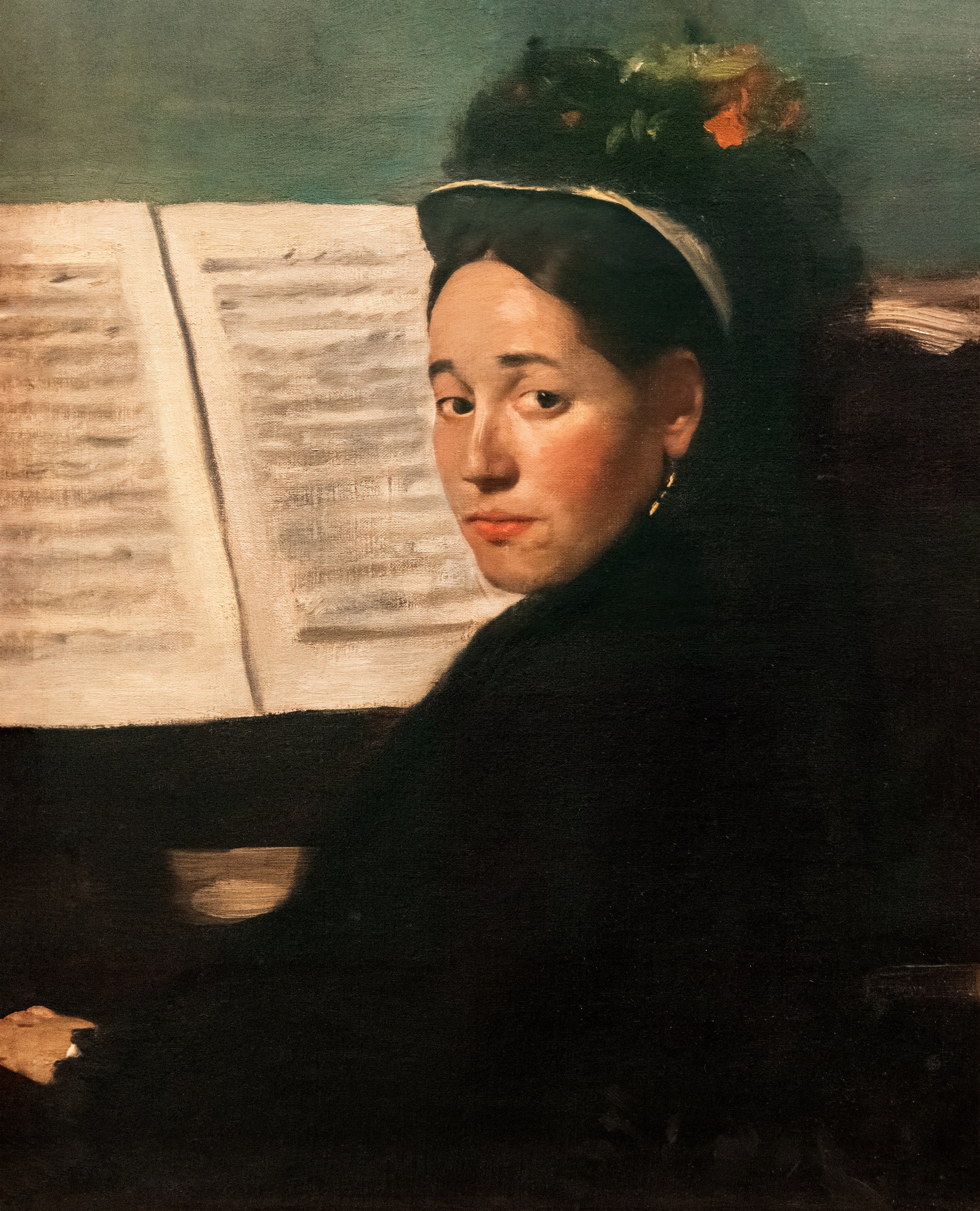
Mademoiselle Dihau at the Piano shows a young woman seated at a piano, turning over her shoulder to look straight out at us. She wears a dark green-black dress and a black hat with green leaves and one orange flower; a pale band runs along the brim, and a small gold earring catches the light. Behind her, on the music desk, stands an open score — two large pale pages, the brightest part of the scene. The lower half is taken up by the dark lacquered body of the piano. The original is an oil painting on canvas and is held by the Musée d’Orsay in Paris under the inventory number RF 2416. We make it as a hand-painted work, in sizes from 40 x 60 to 150 x 210 cm or to your own measurements, and you receive a photograph of the finished work for approval before dispatch.
| Title: | Mademoiselle Dihau at the Piano |
| Other titles: | Mlle Dihau au piano |
| Painter: | Edgar Degas (1834–1917) |
| Year of execution: | 1869–1872 |
| Original size: | 40 cm x 32 cm |
| Original technique: | Oil on canvas |
| Painting style: | Impressionism |
| Located at: | Musée d’Orsay, Paris (inv. no. RF 2416) |
| Our reproduction: | hand-painted oil on linen canvas, 7 sizes from 40 x 60 cm to 150 x 210 cm, custom sizes on request |
Mademoiselle Dihau at the Piano – Edgar Degas
Who is shown?
A single woman, whom the title names: Mademoiselle Dihau, a pianist. She sits at the piano, turned away from us, but she has swung her head round over her shoulder and looks straight out. Her face is the only lit part of her; everything else — dress, shoulders, back — is dark green-black. On her head is a black hat with green leaves and one orange flower, a pale band along the brim. A small gold earring catches the light at her ear. Her expression is calm and a little tired, like someone who has been interrupted.
What is on the canvas?
Very little, and all of it dark except in two places. Behind the woman stands an open score: two large pale pages, one with faintly written notes — the brightest part of the scene and, at the same time, the light source for it. The lower half is taken by the dark lacquered body of the piano, in which a pale reflection is softly mirrored. The background is a plain dark green-grey wall. There are few colours: green-black, cream, skin, and one orange point on the hat.
Why does this particular scene matter?
Because it is the portrait of a musician who is not playing at that moment. The music is on the desk, the piano is open, but she has turned her head away from both. That is Degas’s way: he leaves the event aside and paints the moment beside it. The second thing is how the light is arranged. Neither a window nor a lamp is shining, but paper — it is the white page of music that lights the face. The scene is built so that the music literally supplies the light.
What does the scene mean?
Closeness, not performance. Impressionism for Degas always meant the exactness of observing a known person in a known room, and here it is both. An impressionist painting of this kind is therefore not a concert scene but a visit. As wall art it is dark and concentrated; it needs a pale wall or a directed light, or the page of music is lost. A canvas painting beside a piano, in a music room or in a quiet corner suits it exceptionally well.
The motif among Degas’s works
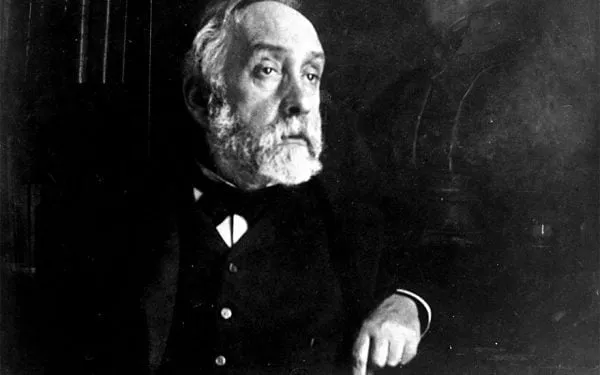
The Dihau family is a whole group of works in Degas. The Orchestra at the Opera belonged for many years to the same family, Mademoiselle Marie Dihau is a smaller portrait of the same woman, and Joseph-Henri Altès the portrait of a flautist of the same orchestra. This work is catalogued in the Degas catalogue raisonné as MS 782, and how Degas saw himself in an equally dark key is shown by the Self-Portrait at the Art Institute of Chicago.
How is our hand-painted version made?
With a brush and oil colours, not a printer, and here the technique of the original is the same as ours: oil on canvas. Every one of our canvases is made layer after layer, and in this motif the difficulty lies in the relation between the dark and the face. Dress, hat and piano are almost a single dark area, and inside it three different blacks have to stay apart: cloth, hat and lacquer. Painted the same, the woman loses her body. The pages of music are the second trap: made too hard a white, they become paper instead of light. We paint the face last, because it settles everything else. Every reproduction is made afresh and no two copies are ever quite the same, because the hand does not repeat the same stroke twice; every hand-painted copy is therefore its own. For this work we have no photographs of our finished canvases, so we show and describe none here. The photograph of your canvas reaches you before dispatch.
Which size for which wall?
If you do not know which: 50 x 70 cm. The original measures 40 x 32 cm and is therefore very small; our 40 x 60 cm size comes nearest to it in size, while in proportion the nearest is 60 x 80 cm, because our sizes run narrower and taller than the original. The 40 x 60 and 50 x 70 cm sizes are for a smaller room or beside a piano, where the work is seen close to. The 60 x 80 cm size is the most frequent choice above a chest of drawers. The 80 x 110 and 90 x 130 cm sizes are for a larger wall, where the dark half is given its space and the face holds up from a distance. The 120 x 170 cm size is for a tall room, and at 150 x 210 cm we are at the sizes where a large painting really breathes and the head is bigger than life — a strong effect with a motif this dark. Measure your chosen size on the wall with a paper cut-out first; with an upright format the mistake is usually made in the height. None of the sizes is held in stock as a finished item: every copy is made to order and stays a single piece.
Custom size, stretcher bar and frame
If none of the seven sizes suits you, or if you want the original’s proportion, we paint to your measurements and keep the proportions of the scene, so that both pages of music stay whole and the hat above is not cut off; that is our painting made to order. Every copy is delivered stretched on a wooden bar, ready to hang. For the frame, use our 3D application: on this motif it shows every moulding profile we carry, so you can compare gold, silver, black, white and natural wood – it is for choosing a frame and nothing else. If you want to see how the work looks on your own wall, that is our separate room-placement service.
Delivery and guarantee
Every copy is made to order in our studio in Slovenia, so allow 15 to 45 days depending on the size you choose; for the largest sizes the time is usually at the upper end. We send it stretched and protected for transport, framed if you chose a frame, to sixteen countries in the European Union, without customs duties. You receive a photograph of the finished work for approval before dispatch, and our returns policy applies to every order. The whole range is in the Edgar Degas gallery, and the painter’s life is described in our article about Edgar Degas.
Frequently asked questions
Who is the sitter?
Mademoiselle Dihau, a pianist, whom the title of the work already names. She kept the painting herself until 1923, when it went to the Louvre.
Is she playing?
Not at that moment. The music is on the desk and the piano is open, but she has turned her head away from both and is looking towards us.
What is the bright thing behind her?
An open score. The two pale pages are the brightest part of the scene and also what lights her face.
What is she wearing on her head?
A black hat with green leaves and one orange flower; a pale band runs along the brim.
Where is the original located?
In the Musée d’Orsay in Paris, under the inventory number RF 2416.
How large is the original?
40 by 32 cm, so very small. Our 40 x 60 cm size comes nearest to it in size.
Why are two years given?
Because the catalogue of works gives a period, 1869–1872, rather than a single year. Where the year is not settled, we do not settle it either.
Are your sizes in the same proportion as the original?
No – ours run narrower and taller. In proportion the nearest is 60 x 80 cm; if you want the original’s proportion, we paint it to your measurements.
Is this a print?
No. The work is painted by hand in oil colours; the brushstrokes are visible and can be felt.
Can I have a size that is not listed?
Yes, we paint to measure and keep the proportions of the scene while doing it.
Is it suitable as a gift?
Yes, especially for a pianist or for someone who likes quiet, dark portraits. Because every copy is made to order, allow for the making time; if you would rather leave the choice to them, there is our gift voucher.
- Subject: a pianist at the piano, turned over her shoulder towards us, an open score behind her, the dark body of the instrument below
- Original: Edgar Degas, an oil painting on canvas, 40 x 32 cm, Musée d’Orsay in Paris (RF 2416)
- Ours: hand-painted in oil, seven sizes from 40 x 60 to 150 x 210 cm, stretched and framed on request
- Worth knowing: the scene is lit not by a window but by the sheet of music – on this canvas the music literally supplies the light