


Description
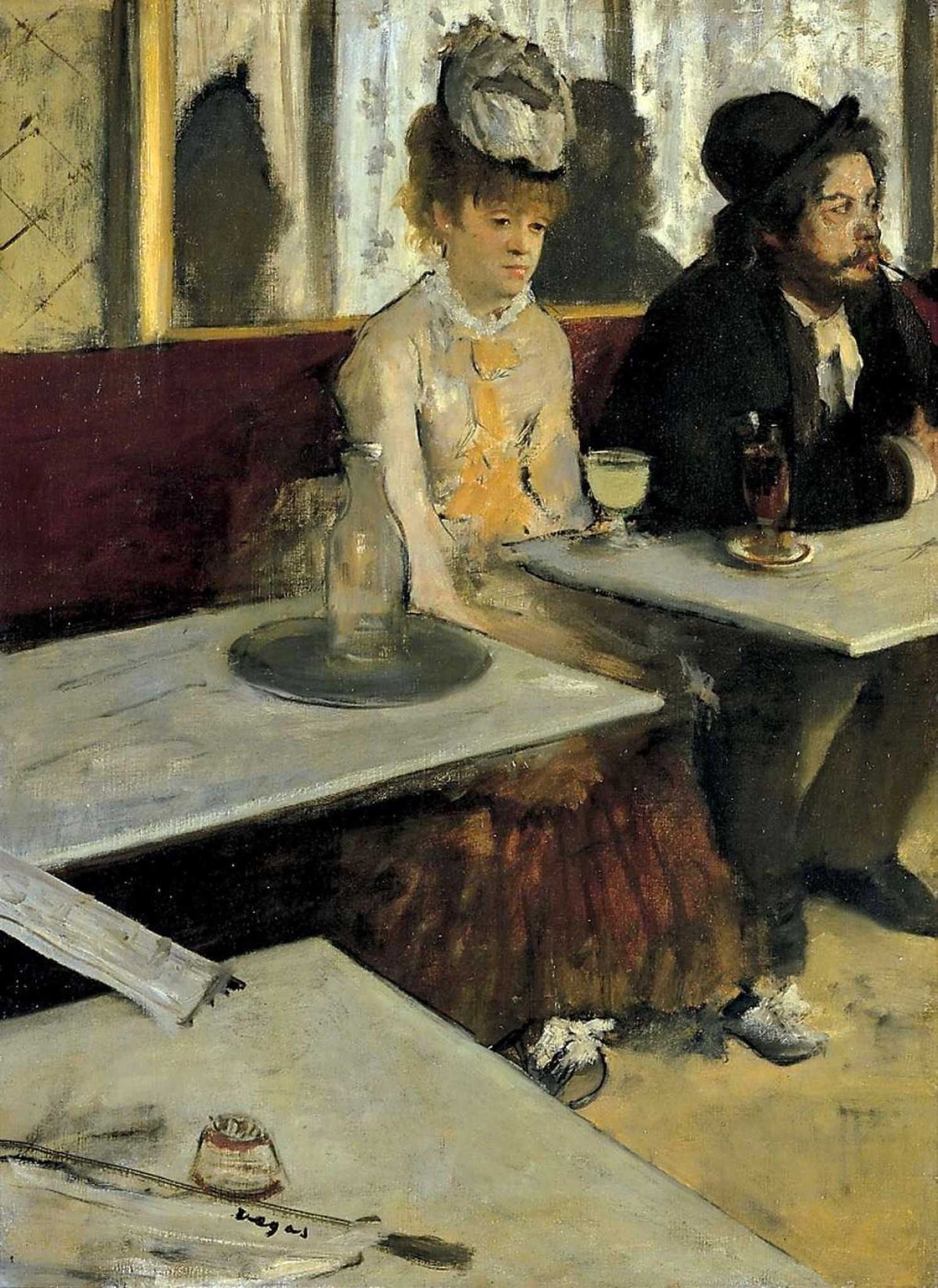
The Absinthe Drinker shows a woman and a man seated on the same bench in a Paris café, not looking at each other. A glass of pale green absinthe stands in front of her, he has a pipe and looks out of the scene, and at the lower left a newspaper on a wooden holder juts into the frame. As a canvas painting this is the silence between two people, not a scene of night life. The original is held by the Musée d’Orsay in Paris under the accession number RF 1984. We make it as a hand-painted oil on linen canvas, in seven sizes or to your own measurements, and you receive a photograph of the finished work for approval before dispatch.
| Title: | The Absinthe Drinker |
| Other titles: | L’Absinthe |
| Painter: | Edgar Degas (1834–1917) |
| Year painted: | 1875–1876 |
| Original size: | 92 cm x 68 cm |
| Original technique: | Oil on canvas |
| Painting style: | Impressionism |
| Located at: | Musée d’Orsay, Paris (acc. no. RF 1984) |
| Our reproduction: | hand-painted oil on linen canvas, 7 sizes from 40 x 60 cm to 150 x 210 cm, custom sizes on request |
The Absinthe Drinker – Edgar Degas
Who is shown?
Two figures in a café, a woman and a man, on the same bench against the wall. We give no names: who sat for them is not confirmed in the record available to us, and we do not guess here. What is certain is what lies between them – nothing. They do not speak, do not look at each other and are not turned towards each other. The central figure is a woman, and that is plain on the canvas.
What is on the canvas?
The format is upright, and the space is cut up by marble tables that step forward towards the viewer. The woman sits a little left of centre, in a pale dress with an orange-yellow bodice and a light hat with a bow; her hair is reddish, her eyes lowered, her face without expression. In front of her stands a glass of pale green drink, and on the nearer table a water carafe on a grey tray. To the right sits a man in a dark coat and dark hat, bearded, with a pipe, turned away so that the right edge almost cuts him off; before him is a taller glass of red-brown drink on a saucer. At the lower left a newspaper on a wooden holder juts in, of the kind hung up in cafés for the customers. Behind the figures runs the dark red back of the bench, and above it a wall with a large mirror and pale panels. The whole left half is nearly empty.
Why does this particular scene matter?
Because with it Degas left history subjects behind and turned to the Paris of his own day. In the 1860s he painted antiquity and the Bible; here the subject is an ordinary afternoon in a café, with no hero and no event. The scene is built like an unposed photograph: the composition runs at an angle, both figures are pushed into the upper right third, and the empty table tops take the foreground. It is exactly this emptiness that makes the silence between them audible – take the tables away and move the figures together, and a completely different scene appears.
What does the scene mean?
Loneliness in company. They sit together and yet each alone, and the work passes no judgement – it does not say whether they are unhappy, tired or merely quiet. As an impressionist painting it is unusual in not being sunny: impressionism is mostly tied to light out of doors, while this is an interior, evenly lit and without drama. The colours are quiet – ochre, brown, grey – and the only living notes are the orange bodice, the green drink and the white hat. It is that reserve which makes it hang well where nothing should shout, and it is the kind of wall art that keeps its distance.
The motif among Degas’s works
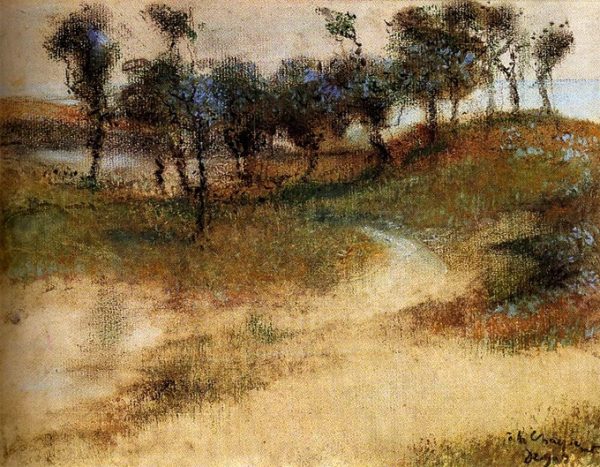
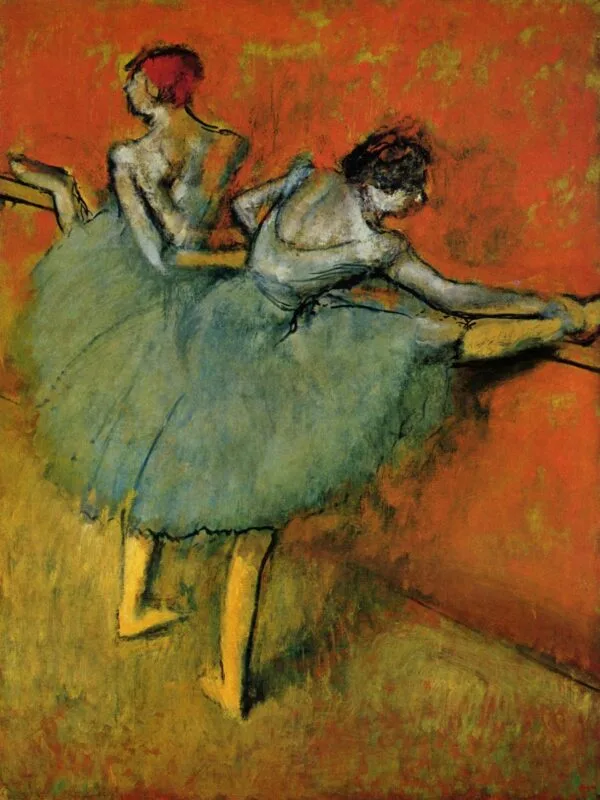
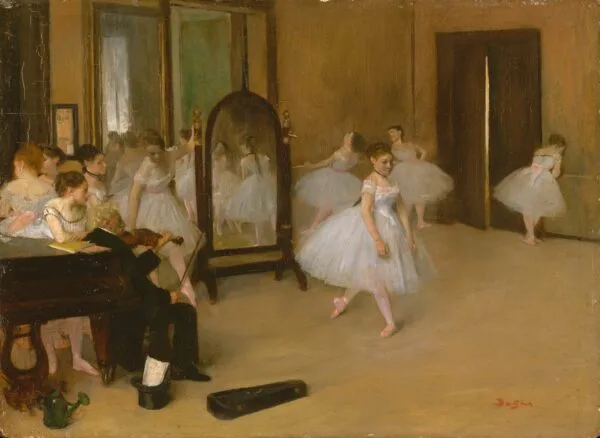
This is Degas’s turning point, so in our range it reads well beside both sides of that turn. Young Spartans Exercising is the history composition he left behind; The Dancing Class is the world of rehearsals and dancers he went towards; and Beach Scene shows the same contemporary life out of doors. If you want to see where that road led, you can also look at The Millinery Shop at the Art Institute of Chicago, a Paris interior from the same years, and The Star in the same collection, the motif the painter is best known for.
How is our hand-painted version made?
It is made with a brush and oil colours, not a printer. The hardest part of this motif is not the figures but the empty table tops: the marble has to stay cool and smooth without going dead, or the foreground collapses and the scene loses its depth. The same is true of the woman’s face, which must stay expressionless and yet alive – add a trace of sadness or a smile and the work says something the original does not. Every reproduction is made afresh and no two copies are quite the same, because a hand does not repeat the same stroke twice; every hand-painted copy is therefore its own. This family has no photographs of our finished canvases, because the work has not been painted since we began photographing every piece – so we show and describe none here. The photograph of your canvas reaches you before dispatch.
Which size for which wall?
If you do not know which: 60 x 80 cm. The format is upright and the proportion of our sizes follows the original, so the distance between the empty foreground and the figures stays as it should be. The 40 x 60 and 50 x 70 cm sizes are for a narrow wall, a hallway or a group of smaller works; 60 x 80 cm is the size most people choose, and the one at which the woman’s face is still readable from a few steps away; 80 x 110 and 90 x 130 cm go above a chest of drawers or into a dining room, where the work may take over the wall. The 120 x 170 and 150 x 210 cm sizes belong in a high room where it should hang alone – at those two a large painting really has air around it and the marble becomes a surface in its own right. Measure your chosen size on the wall with a paper cut-out first. None of the sizes is held in stock as a finished item: every copy is made to order and stays a single piece.
Custom size, stretcher bar and frame
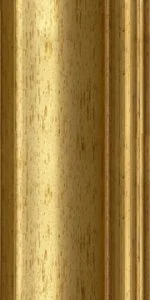
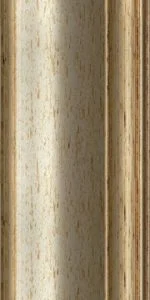
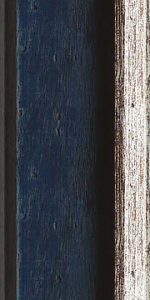
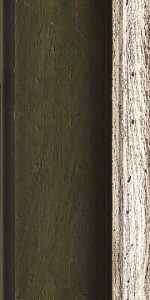
If none of the seven sizes suits your wall, we paint to your measurements and keep the proportions of the scene, so that the empty foreground with its tables does not lose its share; that is our painting made to order. Every copy is delivered stretched on a wooden bar, ready to hang. For the frame, use our 3D application: on this motif it shows every moulding profile we carry, so you can compare gold, silver, black, white and natural wood – it is for choosing a frame and nothing else. If you want to see how the work looks on your own wall, that is our separate room-placement service.
Delivery and guarantee
Every copy is made to order in our studio in Slovenia, so allow 15 to 45 days depending on the size you choose; for the two largest sizes the time is usually at the upper end. We send it stretched and protected for transport, framed if you chose a frame, to sixteen countries in the European Union, without customs duties. You receive a photograph of the finished work for approval before dispatch, and our returns policy applies to every order. The whole range is in the Edgar Degas gallery, and the painter’s life is described in our article about Edgar Degas.
Frequently asked questions
What is the woman drinking?
Absinthe, which gives the work its name. The glass of pale green drink stands on the table in front of her.
Who are the two figures?
We give no names, because they could not be confirmed in the record available to us. A woman and a man with a pipe are visible.
Why do they not look at each other?
Because that is precisely the subject. Degas built the scene so that neither a glance nor a word passes between them.
What is at the lower left?
A newspaper on a wooden holder, of the kind hung up in Paris cafés for the customers. It juts in from the edge.
Where is the original?
In the Musée d’Orsay in Paris, under accession number RF 1984.
When was it painted?
In 1875 and 1876. It is oil on linen and measures 92 by 68 centimetres.
Is this a print?
No. It is painted by hand in oil on canvas; the brushstrokes are visible and can be felt.
Which size should I choose?
For a living room usually 60 x 80 cm, for a narrow wall 50 x 70 cm. The size guide is above.
Can I have a size that is not listed?
Yes, we paint to measure and keep the proportions of the scene while doing it.
How is it delivered?
Stretched on the bar, and framed if you chose that, in 15 to 45 days after you approve the photograph.
Is it suitable as a gift?
Yes, especially for someone who likes restrained scenes and the city without flattery. Because every copy is made to order, allow for the making time; if you would rather leave the choice to them, there is our gift voucher.
- Subject: a woman with a glass of absinthe and a man with a pipe on the same bench, without a glance and without a word
- Original: Edgar Degas, 1875–1876, oil applied to canvas, 92 x 68 cm, Musée d’Orsay in Paris (RF 1984)
- Ours: hand-painted in oil, seven sizes from 40 x 60 to 150 x 210 cm, stretched and framed on request
- Worth knowing: almost the whole left half is empty table tops – it is that emptiness which makes the silence between the figures visible