


Description
The Circus is Seurat’s last large canvas: a white horse at the gallop, an acrobat standing on its back, and three tiers of audience above the ring, all of it built from tiny dots of pure colour. The museum record dates the work to 1891 — the same year the painter died. The original is held by the Musée d’Orsay in Paris under accession number RF 2511. We make it as a hand-painted canvas painting, oil on canvas, in eight sizes or to your own measurements, and you receive a photograph of the finished work for approval before dispatch.
| Title: | The Circus |
| Other titles: | Le Cirque · Der Zirkus |
| Painter: | Georges Seurat (1859–1891) |
| Year painted: | 1891; the museum record notes no signature |
| Original size: | 152 cm x 186 cm |
| Original technique: | Oil on canvas |
| Painting style: | Pointillism |
| Located at: | Musée d’Orsay, Paris (acc. no. RF 2511) |
| Our reproduction: | hand-painted in oil on linen, 8 sizes from 50 x 60 cm to 180 x 220 cm, custom sizes on request |
The Circus – Georges Seurat
Who is in the ring?
Performers and an audience, with not one name in the museum record. A white horse gallops across the middle of the ring, and on its back an acrobat in yellow and white stands with her arms flung wide. At the right the ringmaster stands in a dark suit with a whip, and above him a second acrobat turns over in mid-air. Right at the front, with his back to us, a clown with reddish hair and a pale cloak cuts across the bottom edge of the scene like a curtain. Above the barrier three tiers of spectators rise: below, gentlemen in top hats and women in hats; higher up, people dressed more plainly; at the very top, only faces. None of them is a portrait — the audience stands there as a pattern, not as a group of individuals.
What is on the canvas?
The canvas is upright, and unusually tall for a scene of movement. The lower half is the ring: an orange-yellow ground over which the barrier lifts in a wide arc. Horse, acrobat and clown are painted almost without shadow, in pure yellow, orange and white dots, while the background and the spectators’ clothes sit in cool blues and violets. Every line bends upward and to the right — the whip, the mane, the acrobat’s arms, the edge of the curtain — so that the scene reads as a single sweep. The border is painted too: Seurat laid a band of blue and red dots around the whole work, and that border belongs to the painting rather than framing it. We keep it.
Why does this painting matter?
Because it is the last of the large canvases on which this French painter tested his own theory. The museum dates the work to 1891, the same year Seurat died at thirty-one. The Circus is also the most openly constructed of his paintings and the purest pointillism he made: the composition is built from a few great arcs and diagonals which, by the colour theories of the day, were supposed to mean lift and gaiety — which is why the whole thing reads more like a diagram of movement than a record of a performance. The French state received the canvas in 1927 under the bequest of the collector John Quinn and has held it ever since.
What does the scene mean?
Entertainment, painted as geometry. In late-nineteenth-century Paris the circus was cheap amusement for every class, and Seurat used it as a stage on which to test whether colour and the direction of a line really do carry a mood. The performers laugh and fly; the audience sits still in rows, expressionless — the contrast between ring and tier is the heart of the work. Look longer and you notice that nobody in that audience is watching the same scene we are. This is not a scene about the circus but about what it is to watch.
Where does The Circus sit in Seurat’s work?
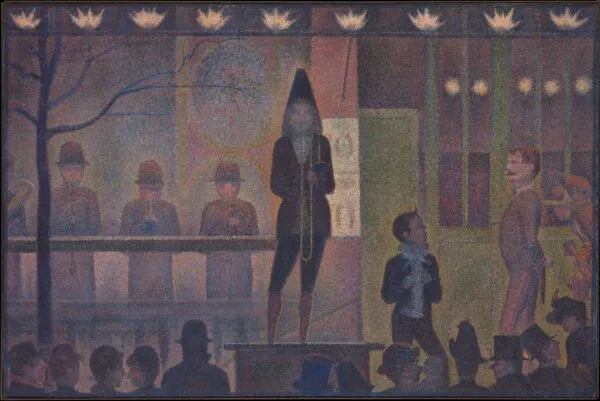
At the end of a line that began on the bank of the Seine. The first large canvas was Sunday Afternoon on the Island of La Grande Jatte, then came The Models (Les Poseuses), and then Seurat turned to popular entertainment: Invitation to the Sideshow (La Parade de Cirque), held by the Metropolitan Museum of Art in New York, shows the evening pitch outside the tent, and Le Chahut shows the dance in a cabaret. The Circus is the last of them and the only one that looks into the arena itself — and, of the four, the one most people mean when they picture a famous painting of a circus. Anyone collecting the group can have it here in one format and one hand — the same fine art reproduction standard across all four.
How is our hand-painted version made?
It is made with a brush and oil paint, never a printer. Our painter works from a high-resolution museum file and builds the surface the way Seurat built it: dot after dot, so that the colours mix in the eye and not on the palette. On this subject that is unusually exacting, because the yellow ring has to stay warm even where cool blue dots surround it. We keep the painted border, because it is part of the work. Because everything is done by hand, no two canvases are ever quite the same and every hand-painted copy stays a one-off. We do not yet hold our own photographs of a finished canvas for this work; the first time it is painted we will photograph it and the photographs will appear here.
Which size for which wall?
If you do not know which: 90 x 110 cm. The original measures 152 x 186 cm and our 150 x 190 cm is the closest to it, effectively one to one. The format is upright, close to a 5 : 6 ratio, so it does not want a wide wall but a tall one: between two windows, in a stairwell, beside a door, or above a narrow chest. 50 x 60 and 60 x 70 cm belong in a hallway or in a group of smaller works; 70 x 90 and 90 x 110 cm are the everyday choices for a living room; 111 x 139 and 130 x 160 cm stand alone above a sofa; 150 x 190 and 180 x 220 cm are for tall rooms, where the horse and the acrobat reach nearly life size. Every copy of this subject is made to order.
Custom size, stretcher bar and frame
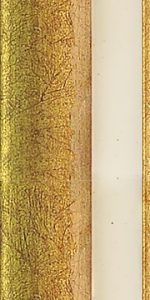
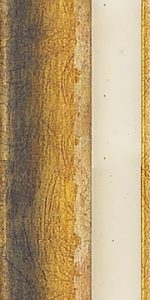
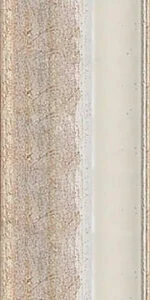
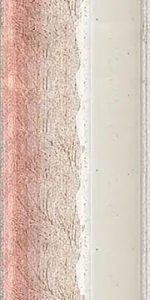
If none of the eight sizes fits your wall, we paint to your measurements and keep the ratio of the original so the arc of the ring is never squeezed; that is our custom size painting service. You can order the painting in three forms: as a rolled canvas without a stretcher, stretched on a wooden stretcher bar and ready to hang, or framed; you choose the form when you order. You choose the frame in our 3D frame viewer: on this subject it shows every profile we carry — gold, silver, black, white, natural wood — and it is for choosing a frame and nothing else. To see the work on your own wall, use our separate room-visualisation service, ordered on its own.
Delivery and guarantee
Every copy is made to order in our Slovenian studio, so allow 15 to 45 days depending on the size; the largest formats take longest. We ship it in the form you chose when ordering — rolled, stretched or framed — protected for transport, across the EU, customs-free. Before dispatch you approve a photograph of the finished work, and our returns policy applies to every order. The full range is in the Georges Seurat gallery, and his life and Neo-Impressionism itself are described in our article about Georges Seurat, which also explains what separates a good oil painting reproduction from a poor one.
Frequently asked questions
Where is the original?
In the Musée d’Orsay in Paris, under accession number RF 2511. The museum received it in 1927 under John Quinn’s bequest.
Do the people in the scene have names?
The museum record names none of them. Performers and spectators alike are types, not portraits of particular people.
Is “Le Cirque” the same work?
Yes. That is the French title the Musée d’Orsay uses; the English is “The Circus”. One and the same canvas.
Is this a print?
No. The work is painted by hand in oil on linen; the brushwork is visible and can be felt.
Which size should I choose?
For an ordinary living room, 90 x 110 cm; for the size closest to the original, 150 x 190 cm. The full guide is above.
Can I have a size that is not listed?
Yes. We paint to measure, keeping the side ratio of the original.
How is it delivered?
In the form you chose (rolled, stretched on a stretcher or framed), 15 to 45 days after you approve the photograph.
What is the painting about, in one sentence?
Everyone is moving and nobody is watching: a performance turned into geometry, painted entirely out of dots.
Is the original for sale and what is it worth?
No. The canvas is in the public collection of the Musée d’Orsay and is not for sale; a hand-painted canvas of ours is the only way to have it at home.
How high should I hang it?
Centre at eye level, about 145–150 cm from the floor. Because the subject is upright and weighted at the bottom, hang the larger sizes a little lower.
Is it suitable as a gift?
The smaller sizes make a good gift: the subject is lively and asks little of a room. If you would rather leave the choice to the person receiving it, there is our gift voucher.
- Subject: a white horse, an acrobat and a clown in the ring, three tiers of motionless audience above them – 1891
- Original: 152 x 186 cm, oil, Musée d’Orsay, Paris (acc. no. RF 2511)
- Ours: hand-painted in oils, eight sizes, 50 x 60 to 180 x 220 cm, as a rolled canvas, stretched or framed — your choice
- Worth knowing: the dotted blue-and-red band around the canvas is not a frame — Seurat painted it himself