Description
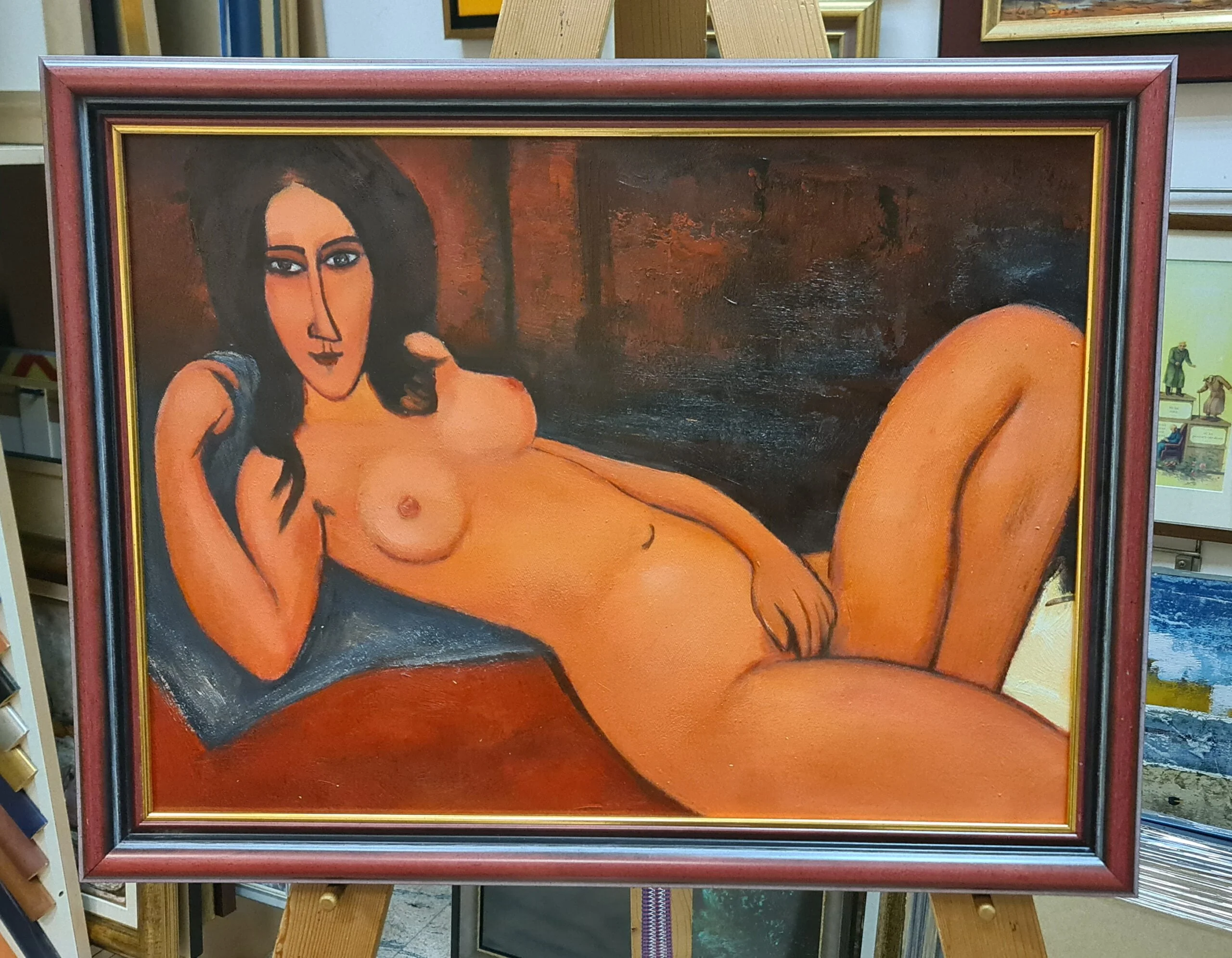
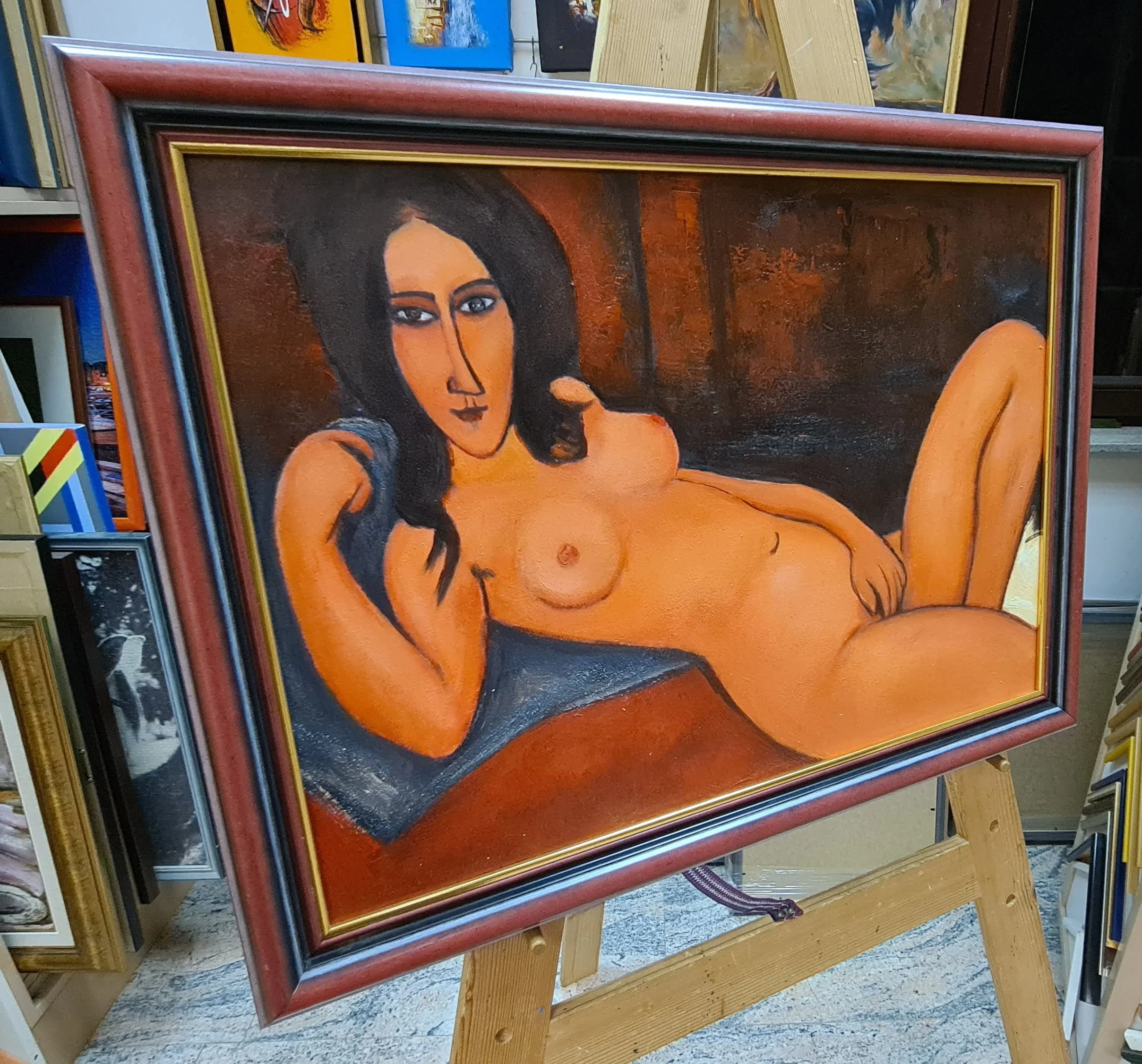
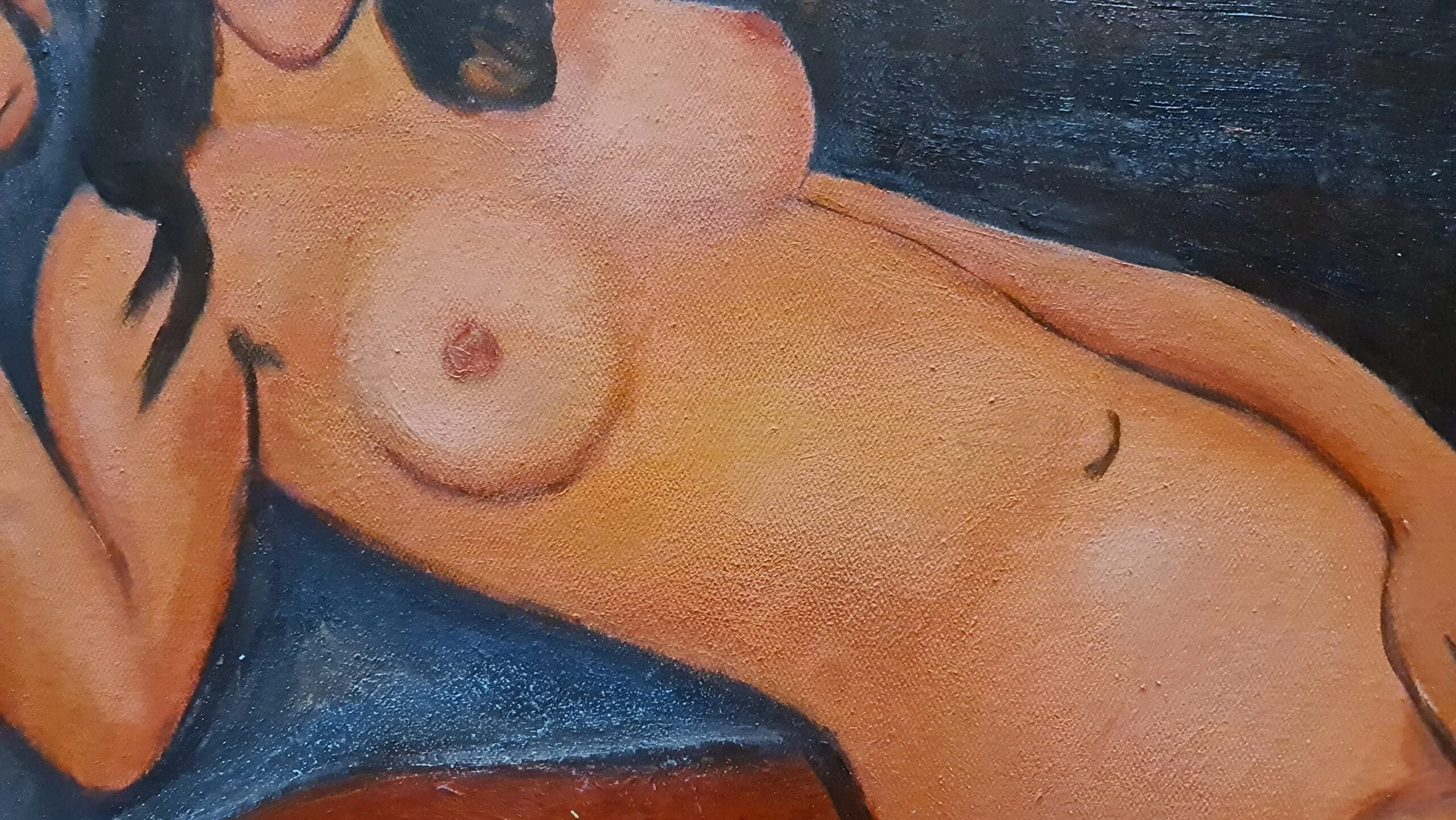
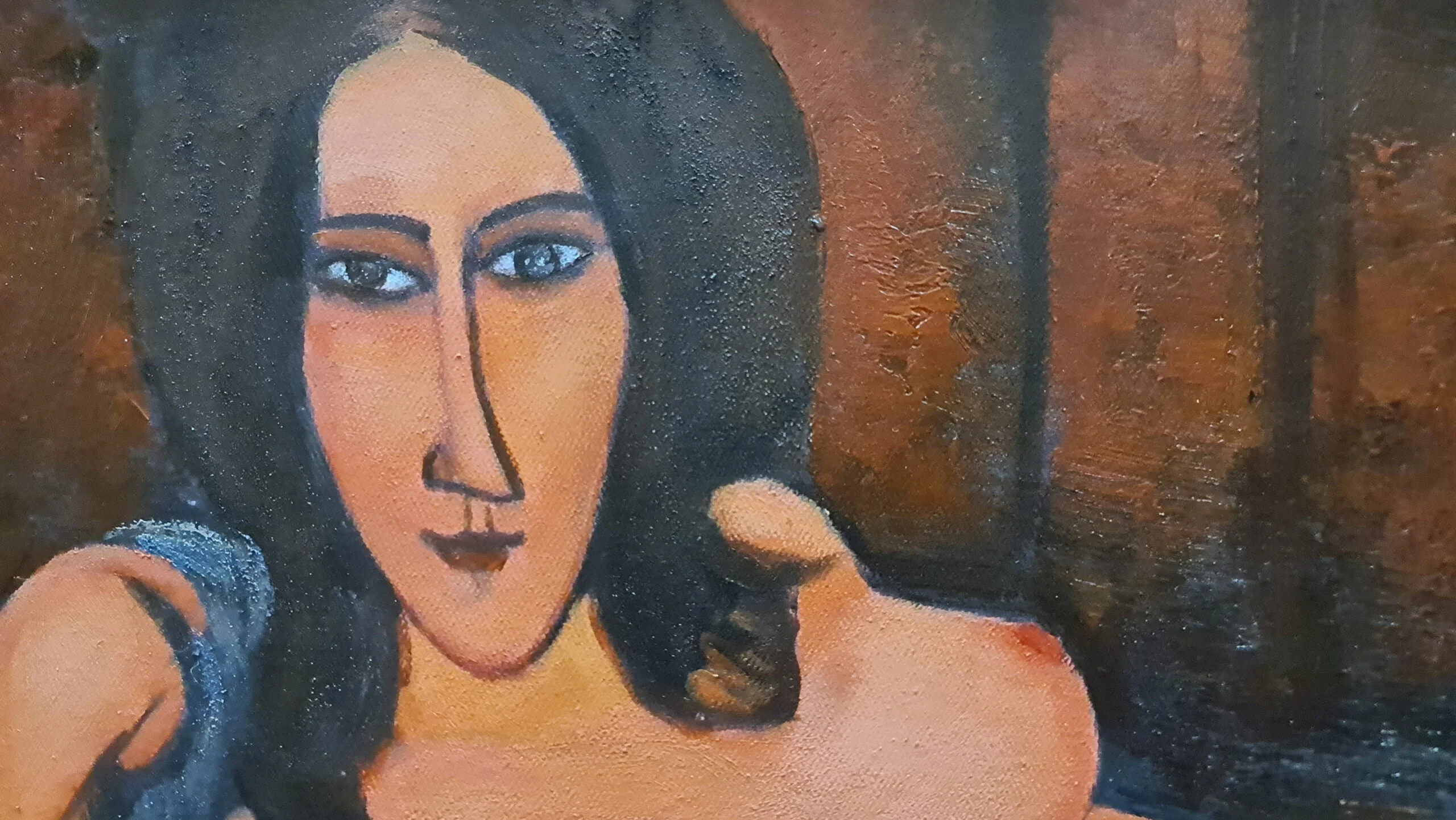
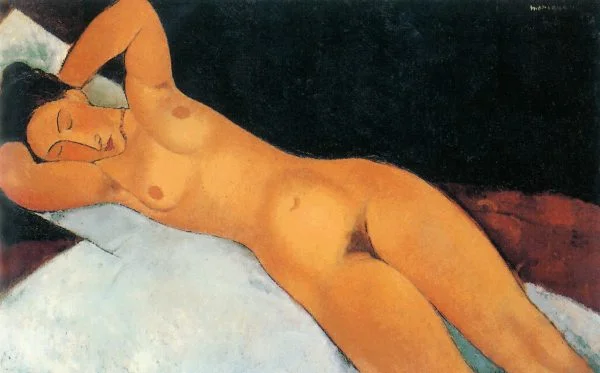
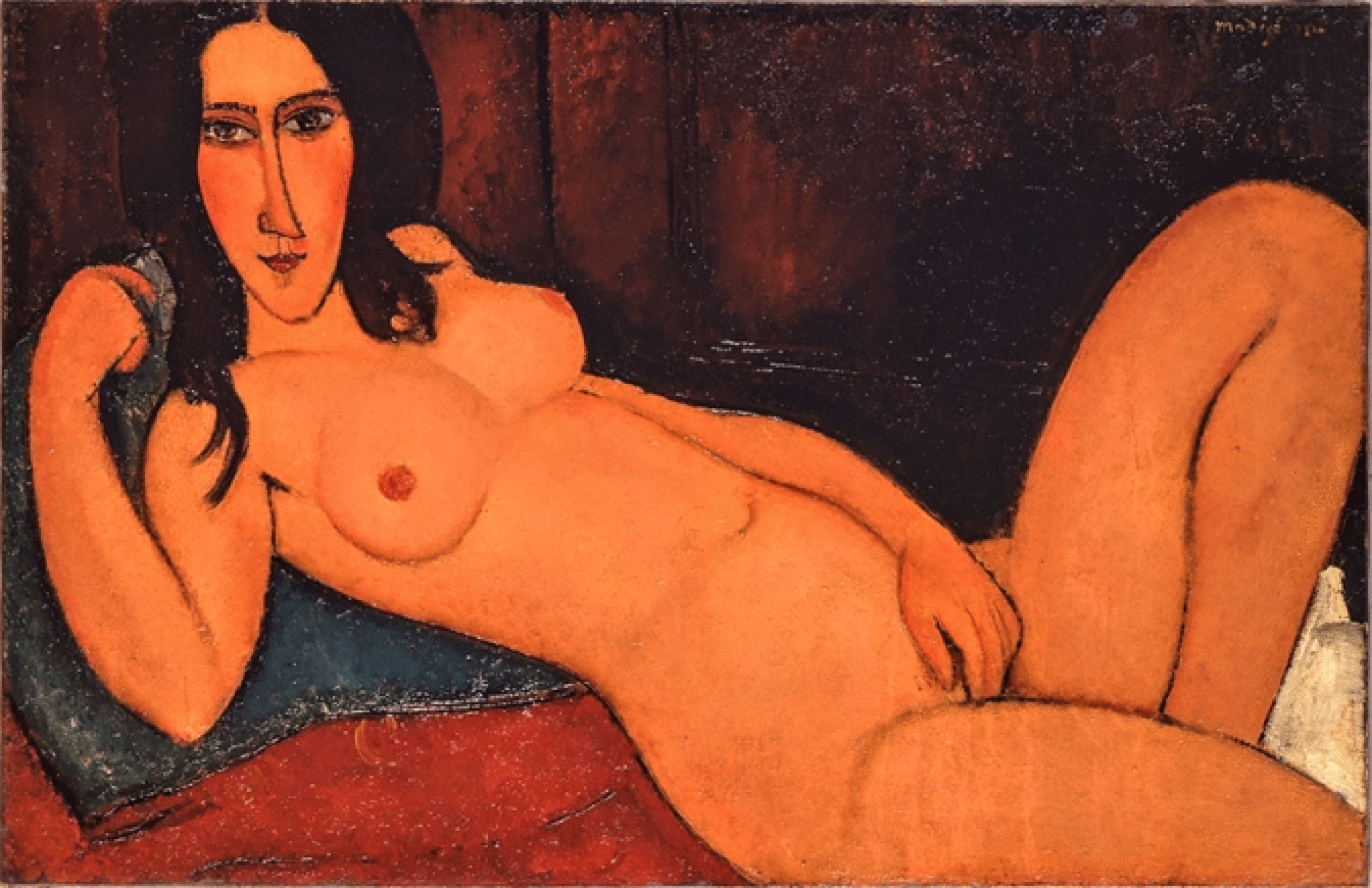
Nude with Loose Hair, in French Nu couché aux cheveux dénoués, is an oil on canvas painted by Amedeo Modigliani in 1917; the original is 60 cm tall and 92.2 cm wide and hangs in the Nakanoshima Museum of Art in Osaka under accession number 000125. Our canvas painting is a hand-painted copy of that work: an academy-trained painter makes it in oil on cotton canvas, in eight sizes from 70 × 45 cm to 180 × 120 cm or in the size you specify, and before dispatch we photograph it and send you the photograph for approval.
| Title: | Nude with Loose Hair |
| Other titles: | Nu couché aux cheveux dénoués · Reclining Nude with Loose Hair |
| Painter: | Amedeo Modigliani (1884–1920) |
| Year: | 1917 |
| Original size (height × width): | 60 × 92.2 cm, landscape format |
| Original technique: | Oil on canvas, signed in white at the upper right |
| Painting style: | Modern art, École de Paris |
| Where it is: | Nakanoshima Museum of Art, Osaka – museum record (acc. 000125) |
| Our reproduction: | hand-painted oil on canvas, eight sizes from 70 × 45 cm to 180 × 120 cm, custom size on request |
Nude with Loose Hair – Amedeo Modigliani
What do we see on the canvas?
The canvas is landscape and the figure fills it end to end. The woman lies against a dark blue-green cushion, her head at the left edge, her body reaching in a long soft arc towards the right. The hair is dark and loose — that is what gives the work its title — and falls in thick strands over her shoulders. The face is painted in the familiar oval, with a long nose and a small mouth. The body is built from warm ochre and peach tones, with no hard shadows, in one unbroken contour running from shoulder over hip to knees; one hand rests low on the body. The ground is dark reddish brown and almost without detail, the bedding beneath the figure a deep red. Because of that colour scale the pale body looks lit from inside. At the upper right the signature is painted in white.
What do the photographs on this page show?
All four photographs show our own hand-painted canvas, not the original. The first photograph shows the work square-on and whole, in a dark red-brown frame with a black inner band and a fine gold line. The second photograph shows the same canvas at an angle, among other framed works. The third photograph is a close view of the torso: the breast, the navel, the unbroken contour and the blue-green cushion at the lower left. The fourth photograph is a close view of the head — the face, the dark hair and the eyes looking straight ahead. The frame shown is one of many; you choose it yourself.
Why does this nude look back?
In most of his portraits Modigliani left the eyes empty, without pupils, and it is that emptiness which gives his heads their familiar absence. Here he did otherwise: the pupils are painted and the gaze goes straight at the viewer. Because of that small decision the work reads more as a portrait than as a nude — whoever stands in front of it is noticed. In colour it is a post-impressionist painting in the sense in which post-impressionism meant building the body out of planes rather than describing light: the body is not modelled by shadow but is a single warm surface held by its contour. In Paris Modigliani belonged to that circle of immigrant painters we now call the École de Paris.
Where is the original today?
In the Nakanoshima Museum of Art in Osaka, under accession number 000125; the museum record gives oil on canvas, the year 1917, the measurements 60.0 × 92.2 cm and acquisition by purchase. The route there is unusually long: from the hands of Léopold Zborowski, the painter’s dealer, the work went to the Paris gallerist Berthe Weill, then in 1925 to the Bing gallery and to Pierre Loeb’s gallery, and in 1928–29 it was acquired by the Japanese critic Fukushima Shigetarō. In 1934 it was shown for the first time in Tokyo, and in 1989 the city of Osaka bought it. So a work from Montparnasse entered a Japanese public collection and stayed there. Older catalogues also give 65 × 100 and 62 × 100 cm; we hold to the owner’s measurement, the 60 × 92.2 cm the catalogue confirms.
The exhibition the police closed
Berthe Weill, who appears in this canvas’s recorded route, was the Paris gallerist at whose gallery Modigliani mounted the only solo exhibition of his life, in December 1917. It opened on 3 December at 50 rue Taitbout, and she put the nudes in the window. The police demanded their removal that same day, and the exhibition closed a few hours after it opened. This work was made in that very year and later passed through her hands. The painter did not experience the show as a success; he sold little and died three years later, without seeing what those canvases would come to mean.
How is our hand-painted version made?
The work is made by an academy-trained painter in oil on cotton canvas, stretched over a wooden frame. It is not a print: every stroke is laid by hand, and your canvas always differs a little from the one in the photographs in brushwork and thickness of paint. With this subject the hard part is precisely that single contour: broken or corrected, the body loses its arc and the work falls into pieces. The painter therefore begins with the dark ground and the cushion, which settle how warm the body will look, and only then draws the outline in one movement. When the paint is dry we photograph the work and send the photograph for approval.
Which size for which wall?
Closest to the original’s format is 90 × 60 cm: the same height, just two centimetres less width. The small ones, 70 × 45 and 80 × 50 cm, suit a smaller sideboard or a narrow space. The medium ones, 101 × 65, 110 × 70 and 120 × 80 cm, work above a bed or a sofa, which for this subject is the most natural place: the landscape format ties to the width of the furniture below it. The large ones, 150 × 100 and 180 × 120 cm, want a free wall and at least three metres of distance; at those sizes the figure is larger than life. Since the work is dark and warm it carries a coloured wall too, but it is at its best where you leave it some emptiness at the sides.
Custom size, stretcher and frame
If your wall asks for a size that is not on the list, we will make it. Give us the width and height in centimetres; we check whether the proportion carries the original’s crop and tell you what changes at the edges — here it shows first at left and right, because the figure runs edge to edge and cannot be narrowed without losing the arc. You can choose whether it arrives stretched on a wooden frame, ready to hang, or rolled in a tube, which is cheaper to ship. You pick the frame in our 3D application, which shows it realistically on the work, and on request we set the work into a photograph of your wall. If you are looking for a work we do not carry, see our made-to-order paintings.
Delivery and guarantee
We deliver to your address, the canvas held clear of the outer wall of the packaging. Lead time depends on size and the workshop’s load: we estimate it when you order and tell you if it changes. We guarantee workmanship and materials: if the work arrives damaged or does not match the photograph you approved, we repaint it at our own cost. Because you see it in a photograph before it ships, most questions are settled before it leaves.
Frequently asked questions
Where is the original?
In the Nakanoshima Museum of Art in Osaka, Japan, accession number 000125.
Why are the measurements written out in words?
Because with landscape works the order of the numbers misleads easily. The canvas is 60 cm tall and 92.2 cm wide.
Does this nude really have painted pupils?
Yes, and in Modigliani that is rare. The gaze goes straight at the viewer.
Which size should I choose?
Above a bed or sofa, 120 × 80 or 150 × 100 cm. If you want the original’s size, 90 × 60 cm.
Do the photographs on this page show the original?
No. All four show our own hand-painted canvas, photographed here.
Is the original for sale?
No. It belongs to a public museum collection, it is not on the market, and so we put no value on it.
How high should it hang?
With its centre about 145 cm above the floor, and a little lower above a bed, so that a hand’s width is left between the headboard and the lower edge.
Which other Modigliani nudes do you have?
See Nude Sitting on a Divan, Reclining Nude, Red Nude and Reclining Nude III, and among the portraits Portrait of Lunia Czechowska. The full choice is in the Amedeo Modigliani gallery, and we have written a longer article about the painter.
How closely does it follow the original’s proportions?
The original measures 92.2 × 60 cm. The closest of our sizes is 101 x 65 cm, which departs from the original’s proportions by 1.12%.
- Subject: a reclining female figure with loose dark hair, leaning on a blue-green cushion, one hand low on the body
- Original: 60 × 92.2 cm, oil on canvas, 1917, Nakanoshima Museum of Art, Osaka (acc. 000125)
- Our version: hand-painted oil on canvas, eight sizes from 70 × 45 to 180 × 120 cm; closest to the original is 90 × 60 cm
- Worth knowing: one of the few Modigliani nudes with painted pupils, which is why it looks back
The eyes on this canvas do have pupils. Of the 76 Modigliani works on this shelf 17 are like that, and 53 have no pupils – work by work.