


























Description
| Title: | Camille Monet on Her Deathbed |
| Other titles: | Camille sur son lit de mort · Camille Monet auf dem Totenbett |
| Painter: | Claude Monet (1840–1926) |
| Year painted: | 1879 |
| Original size: | 68 cm x 90 cm |
| Original technique: | Oil on canvas |
| Painting style: | Impressionism |
| Located at: | Musée d’Orsay, Paris (inv. RF 1963 3) |
| Our reproduction: | Hand-painted oil on canvas, eight sizes or made to measure |
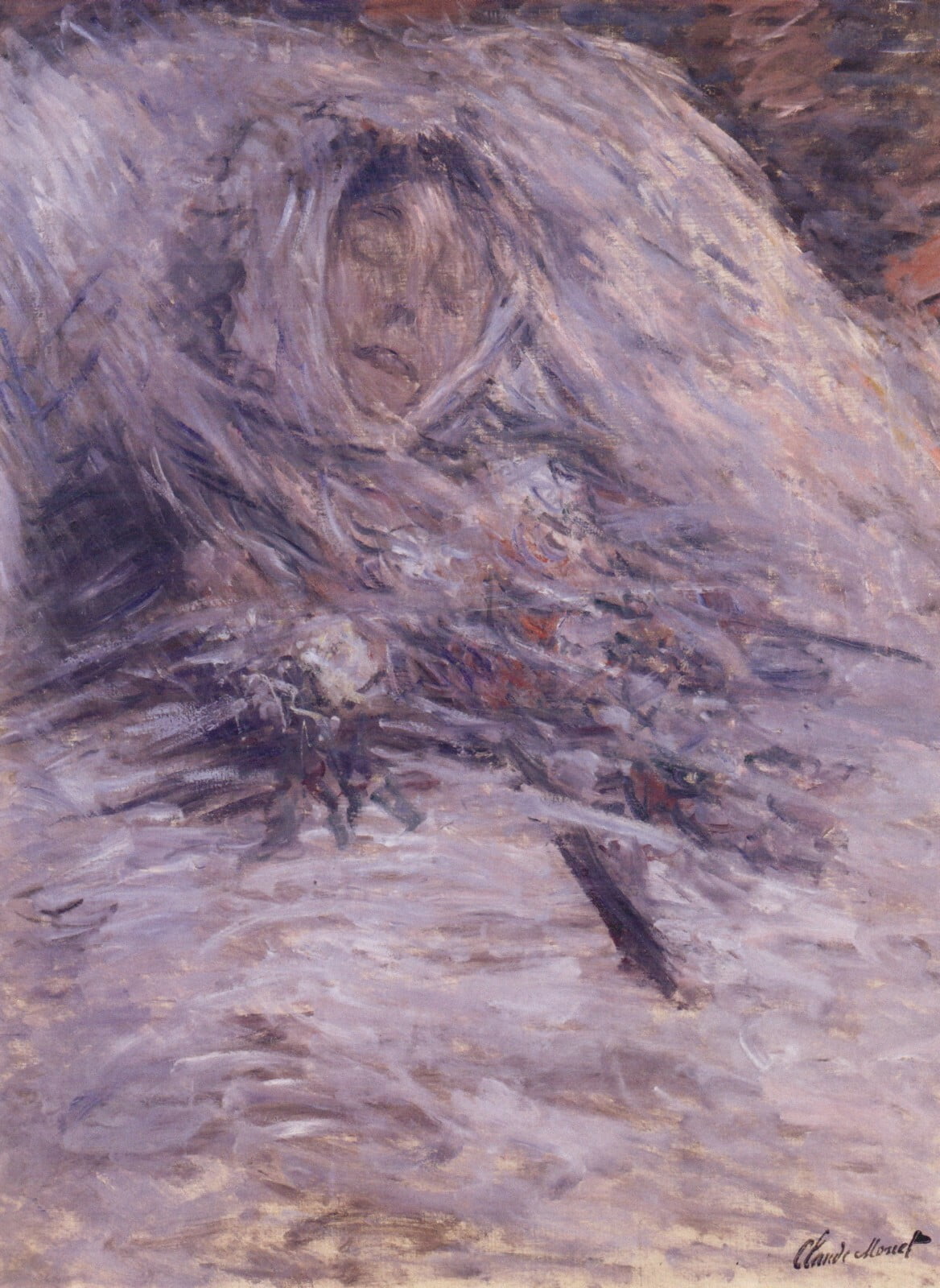
Camille Monet on Her Deathbed is Monet’s portrait of his wife Camille, painted in 1879 in the hours after her death. The head lies on the pillow a little above centre, the face is barely resolved, and fast diagonal strokes in violet, blue-grey and ochre run across the whole surface. The original hangs in the Musée d’Orsay in Paris. We make it as a hand-painted copy in oil on canvas, in eight sizes or to your own measurement, with a photograph of the finished work sent for approval before dispatch.
Camille Monet on Her Deathbed – Claude Monet
Who is shown?
Camille Doncieux, born in 1847, Monet’s first wife. She was his model while he was still an unknown painter, and she stands behind most of the female figures in his early work. They married in 1870. She died on 5 September 1879 at Vétheuil, aged thirty-two, after a long illness, and this canvas was made at her bedside.
What is on the canvas?
An upright format with not a single object drawn on it. The head lies on the pillow above centre and a little to the left, turned slightly towards the viewer; the eyes are closed, the mouth a little open, and the face is made of a few strokes and only resolves once the eye has rested on it for a moment. Everything else is bedding: long, fast diagonal strokes in violet, blue-grey, pale pink and ochre, running from the top right corner towards the bottom left and filling the entire surface. Low at the centre lies a small posy of flowers, the only nameable object. A dark diagonal falls at the lower right. This canvas painting has no wall, no window and no light source — only a curtain of movement through which the face appears. The canvas is signed at the lower right.
Why does this work matter?
Because it is among the strangest portraits of the nineteenth century. The deathbed portrait was an established genre then, but it was painted calmly, with firm contours and in dark tones. Monet did the opposite: the colour is light, the stroke restless, the contour falls apart. An impressionist painting that was meant to fix a face instead lets it disappear. That is precisely why this is one of the few works in which the method is applied not to light on water but to something it had never attempted.
What did Monet say about making it?
He later described to Georges Clemenceau what had happened at the bedside: looking at the dead face, he caught his own eye following the change of colours automatically, as though before any other subject, and was frightened by the habit. That account is the reason one stands differently in front of this work than in front of his others: what we see is not a painter deciding to express something, but the consequence of a habit that did not stop. An oil painting reproduction neither softens that nor tries to.
Which Camille is this?
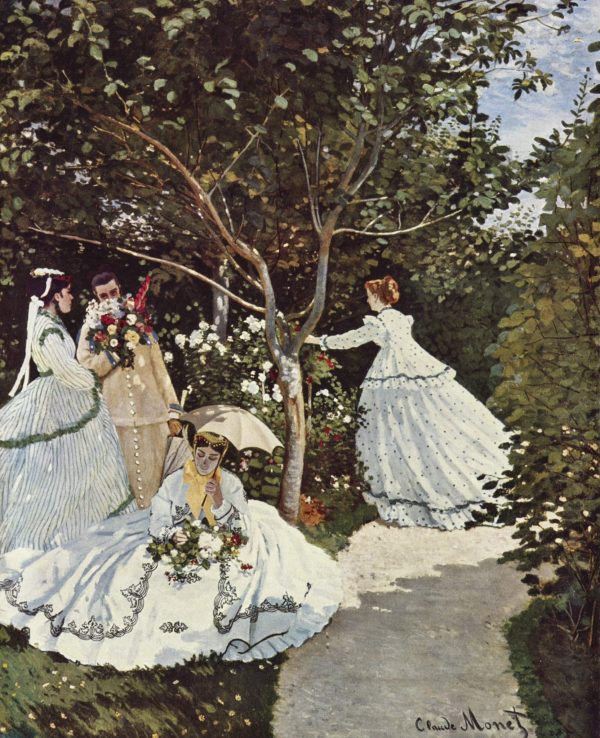
Camille recurs throughout Monet, but almost always in movement and almost never with a defined face. She posed for all four figures in Women in the Garden; she sits at the table with their son Jean in The Luncheon; she stands in the grass with a parasol and Jean in Woman with a Parasol. The woman with a parasol facing left, however — Woman with a Parasol (Facing Left) — is not Camille but Suzanne Hoschedé, painted seven years after Camille’s death, a confusion that arises often with Monet. You can also see her alive in Camille Monet on a Garden Bench at the Metropolitan Museum, six years before this canvas.
How is our hand-painted version made?
For a copyist this canvas is among the harder ones, because there is no drawing to transfer. The painter starts from the colour of the whole surface — violet, grey and ochre go on together, wet into wet — and only then looks for the head, which has to arise out of the same strokes as the bedding around it rather than be a drawn face laid on top. If the face resolves too far, the work loses exactly what makes it what it is. That is why we always send a photograph of the finished work before dispatch: with this subject the balance between sharp and blurred is the only thing that really needs approving.
Which size for which wall?
Short answer: 68 x 90 cm is the size of the original and enough for most walls. For a smaller room take 50 x 65 or 60 x 80 cm, for a large wall 100 x 130 or 120 x 160 cm. The middle sizes, 80 x 110 and 90 x 120 cm, cover most living rooms. A painting for living room walls is usually one of Monet’s brighter subjects; this one is not. As impressionist wall art this subject is quiet and pale, without strong contrast, so it works where people stand close and still — beside a stair, in a study, in a bedroom — and less well on a large, busy wall where its colour is lost.
How high to hang the painting: put the centre of the canvas about 150 cm above the floor. Because the subject is quiet, do not hang it too high — it needs to be looked at from close by.
Made to measure, stretcher and frame
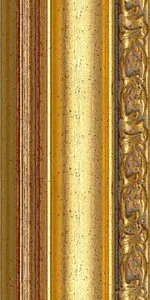
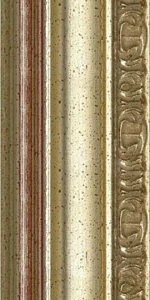
If none of the listed sizes suits, we paint to measure — send the width and the height and we will quote a price and a lead time. The original measures 68 x 90 cm, a ratio of about 1 : 1.32. The canvas is stretched over a wooden stretcher and the edges are painted, so it does not look unfinished without a frame. A narrow moulding in a dark or natural wood suits this subject; a wide gold one takes its quiet away.
Delivery and guarantee
We ship to the United Kingdom, Ireland and across the EU, wrapped in protective film and packed in a rigid box. Before dispatch we send a photograph of the finished work; if something on it is wrong, it is corrected before the piece leaves the workshop. Lead time depends on the size and on how full the workshop is. Every other Monet reproduction we paint is in the Claude Monet gallery, and we write about painting and about choosing a subject on the blog.
If the painting is a gift and you are unsure of the size, there is a wall art voucher: the recipient chooses the size and the subject.
Frequently asked questions
Where is the original?
In the Musée d’Orsay in Paris, under inventory number RF 1963 3. The museum received it in 1963 as a gift from Katia Granoff.
What year is it from?
From 1879, the year of Camille’s death. The museum also records the size as 90 cm high and 68 cm wide, and the technique as oil on canvas.
What does the painting mean?
It is a farewell: Monet painted Camille on the morning she died in 1879. He later admitted to Clemenceau that even in his grief he found himself watching the colours change on her face.
Where was the painting made?
In the family’s house at Vétheuil on the Seine, where Camille died on 5 September 1879.
- Painted by hand. Oil on canvas, no print and no machine application.
- Eight sizes or made to measure. From 50 x 65 to 120 x 160 cm, including 68 x 90 cm, the size of the original.
- A photograph before dispatch. You see the finished work before it leaves the workshop.
- Figures from the museum. Year, size and inventory number are given as the Musée d’Orsay records them.