





Description
| Title: | Fishing Boats on the Beach at Étretat |
| Other titles: | Fischerboote am Strande von Étretat · Falaises et barques à Étretat · Hollowed Cliff near Étretat |
| Painter: | Claude Monet (1840–1926) |
| Year painted: | 1884 |
| Original size: | 100.5 cm x 73.5 cm |
| Original technique: | Oil on canvas |
| Painting style: | Impressionism |
| Located at: | Wallraf-Richartz-Museum, Cologne (inv. WRM 3120) |
| Our reproduction: | Hand-painted oil on canvas, eight sizes or made to measure |
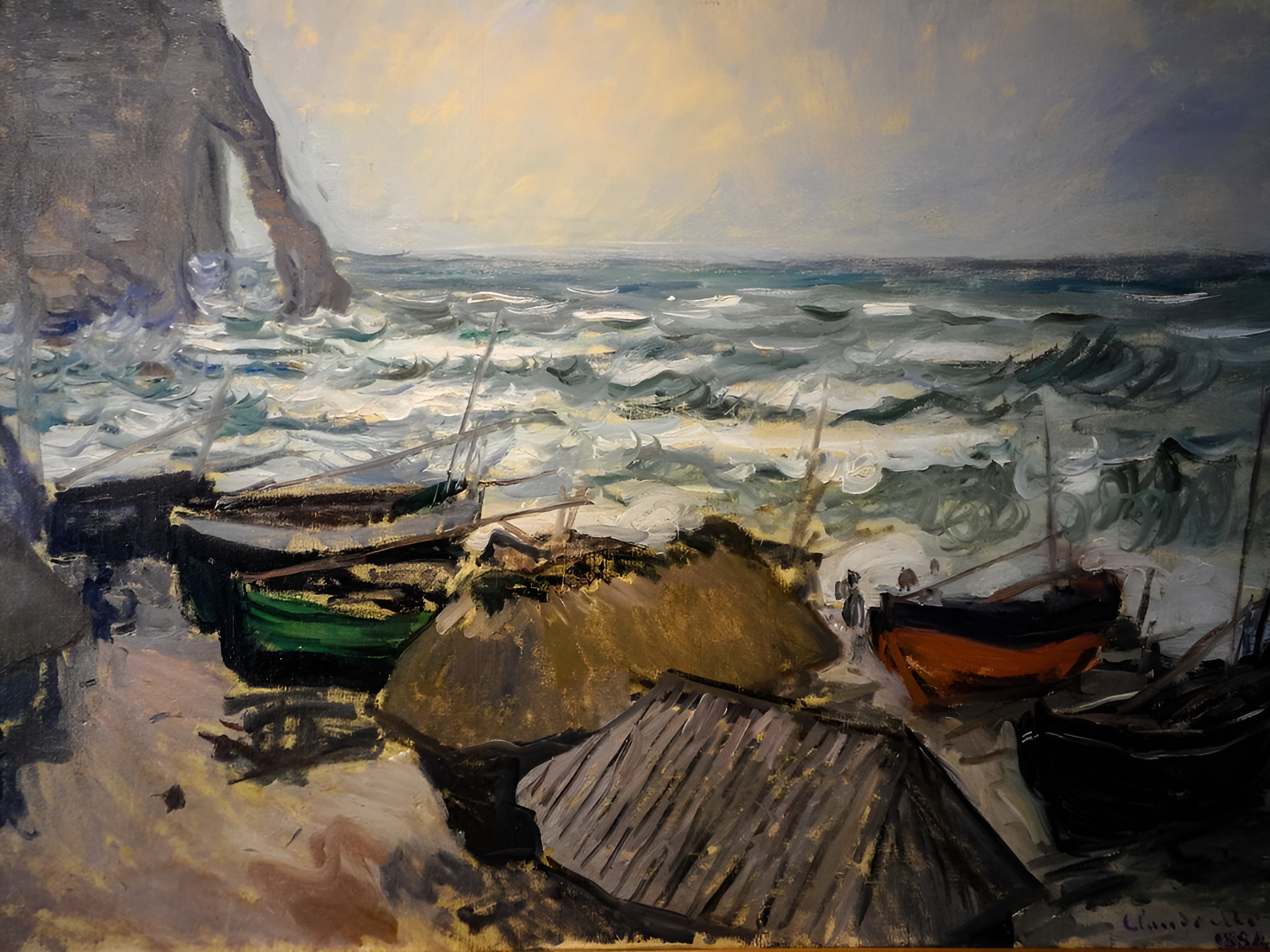
Fishing Boats on the Beach at Étretat is a hand-painted oil painting after Monet’s canvas of 1884: boats hauled up the shingle below the chalk cliff, a rough sea across the whole upper half, and upturned fishermen’s huts in the foreground. The original measures 100.5 x 73.5 cm and is held at the Wallraf-Richartz-Museum in Cologne. We paint it in eight sizes or to your own measurement, with a photograph of the finished work sent for approval before dispatch.
Fishing Boats on the Beach at Étretat – Claude Monet
What is shown?
The chalk cliff rises on the left, and an arch opens in it with pale sky showing through — the famous Porte d’Aval, the thing Étretat is best known for. The cliff is in shadow, brown-grey, and takes the whole left edge. The upper half of the canvas belongs to the sea: grey-green, furrowed, with white crests running one behind another towards the shore. Below lies the shingle, pink-brown and smooth. On it are the boats hauled up: a dark one with a pale gunwale at the left, a green one a little further on, a bright orange one right of centre, and darker ones at the right edge; masts and oars stand at angles among them. Right at the front are two upturned fishermen’s huts, one thatched and one boarded in grey. A few small figures stand at the middle right. This canvas painting has no event in it: it has a day when nobody puts out to sea.
Why are the boats on the shingle and not in the water?
Because the sea has driven them ashore. The waves break in white crests right across the canvas, and that is exactly why every boat is drawn up high on the beach and the masts lean at angles. The upturned huts in the foreground come from the same world: in Normandy a fishing boat past its working life was tipped onto its keel, roofed with thatch or boards, and used to keep nets in. So the subject is about waiting rather than fishing — and that is why it is calm, even though the sea is not.
The record for this canvas
The canvas is held under inventory number WRM 3120 at the Wallraf-Richartz-Museum in Cologne, dated 1884, the technique given as oil on canvas and the measurement as 73.5 x 100.5 cm; the museum gives the height first and we give the width first — that is 100.5 cm wide and 73.5 cm high. In the catalogue of Monet’s paintings it carries the number 822. The year is not an estimate: it stands as a full year with no hedge, and the signature at the lower right of the canvas carries the date as well. An impressionist painting from this year belongs to Monet’s Normandy stays, when he came back to Étretat for several winters running. The record for this canvas is here, and the nineteenth-century collection it belongs to is presented by the museum on its own site.
Why does the work have more than one name?
Because it is catalogued in three languages and each picked a different part of the scene. The official title is the German one, “Fischerboote am Strande von Étretat” — fishing boats on the beach at Étretat — and that is the title we use as well. In French it is recorded as “Falaises et barques à Étretat”, cliffs and boats, and the English entry calls it a hollowed cliff. All three describe the same canvas: the first counts the boats, the second adds the cliff, the third looks only at the arch in the rock. That is why the other names are in the table above — if you look for the work elsewhere, you will find it under any of them.
Other Monet coastal subjects here
From the same beach, a year later and at the moment of putting out: The Departure of the Boats, Étretat. Fishing boats on the open sea, from Monet’s early years: Fishing Boats at Sea. The cliffs a few dozen kilometres along the coast are in The Cliff Walk at Pourville. And what the sea does when it strikes with its full weight is Storm on the Belle-Île Coast.
How is our hand-painted version made?
This subject is demanding because of the sea. White foam is not white paint but a grey lighter than everything around it; laid in pure white, the sea sets like snow. So the work begins with the sky and the water, because they set the light for everything else; then the cliff, which has to stay dark and still; and only last the boats. They are small but they carry all the colour in the work — the green hull and the orange one are the only clean colours on the canvas, and the painter saves them for the end so they stay alive. A work this size takes several days, and the oil painting reproduction you receive is made in exactly that order.
Which size for which wall?
Short answer: 101 x 74 cm above a sofa, the size closest to the original — 5 mm wider and 5 mm taller; 80 x 60 cm for a smaller wall; 150 x 110 cm for a large open one. A painting for living room walls should take up about two thirds of the width of the sofa. The subject lies wide and has depth — cliff to the left, sea to the horizon — so it works above a longer piece of furniture. Impressionist wall art like this also copes with a hallway or a stairwell, where you pass it side-on: the arch in the cliff then only shows itself once you are close.
How high to hang the painting: put the centre of the canvas about 150 cm above the floor. Because the horizon sits high, it also works a little lower — the sea is then at eye level.
Made to measure, stretcher and frame
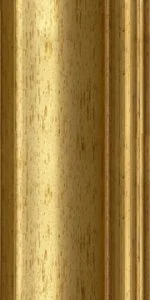
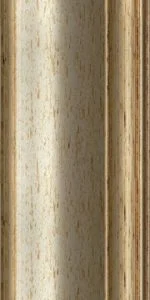
If none of the eight sizes suits, we paint to measure — send the width and the height and we will quote a price and a lead time. The canvas is stretched over a wooden stretcher and the edges are painted, so the work does not look unfinished without a frame. Cooler grey-brown wood or a narrow dark moulding suits this subject; a warm gilt frame pulls the work towards yellow and the sea loses the coldness that is the point of it.
Delivery and guarantee
We ship to sixteen countries in the European Union, among them Slovenia, Croatia, Austria, Germany, Italy and Hungary, wrapped in protective film and packed in a rigid box. Before dispatch we send a photograph of the finished work; if something on it is wrong, it is corrected before the piece leaves the workshop. Lead time is longer at the large sizes. You will find our other Monet reproduction subjects in the Claude Monet gallery, and we write about painting and about choosing a subject on the blog.
If the painting is a gift and you are unsure of the size, there is a gift voucher: the recipient chooses the size and the subject.
Frequently asked questions
What year is the original from?
1884. The year stands in the record as a full year, not an estimate, and the signature at the lower right of the canvas carries the date as well.
Where is the original?
At the Wallraf-Richartz-Museum in Cologne, under inventory number WRM 3120. The museum has no public page for this canvas where you could look at it, so we do not give one.
What are the two rounded shapes in the foreground?
Upturned boats. In Normandy a fishing boat past its working life was tipped onto its keel, roofed with thatch or boards, and used to store nets and gear; several rows of them stood on the beach.
Why did Monet paint Étretat so often?
He was drawn by the chalk cliffs and the three natural rock arches. Monet came back to Étretat every year from 1883 to 1886 and painted more than fifty canvases there, watching the same shore in changing light and weather.
- Hand-painted. Oil on canvas, no print and nothing applied by machine.
- Eight sizes or made to measure. From 50 x 40 to 150 x 110 cm; 101 x 74 cm is 5 mm wider and 5 mm taller than the original.
- Photograph before dispatch. You see the work finished before it leaves the workshop.
- Figures from the record. Year, size, technique and inventory number are given as the record for this canvas holds them.