


Description
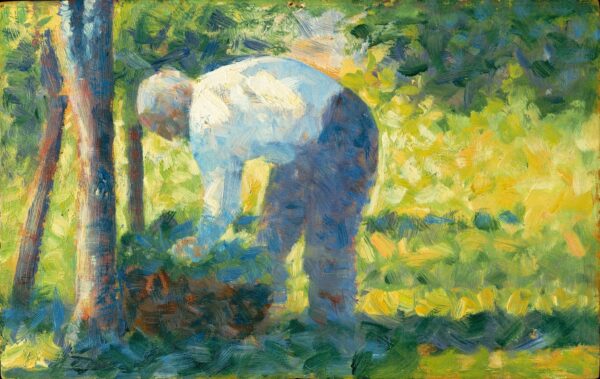
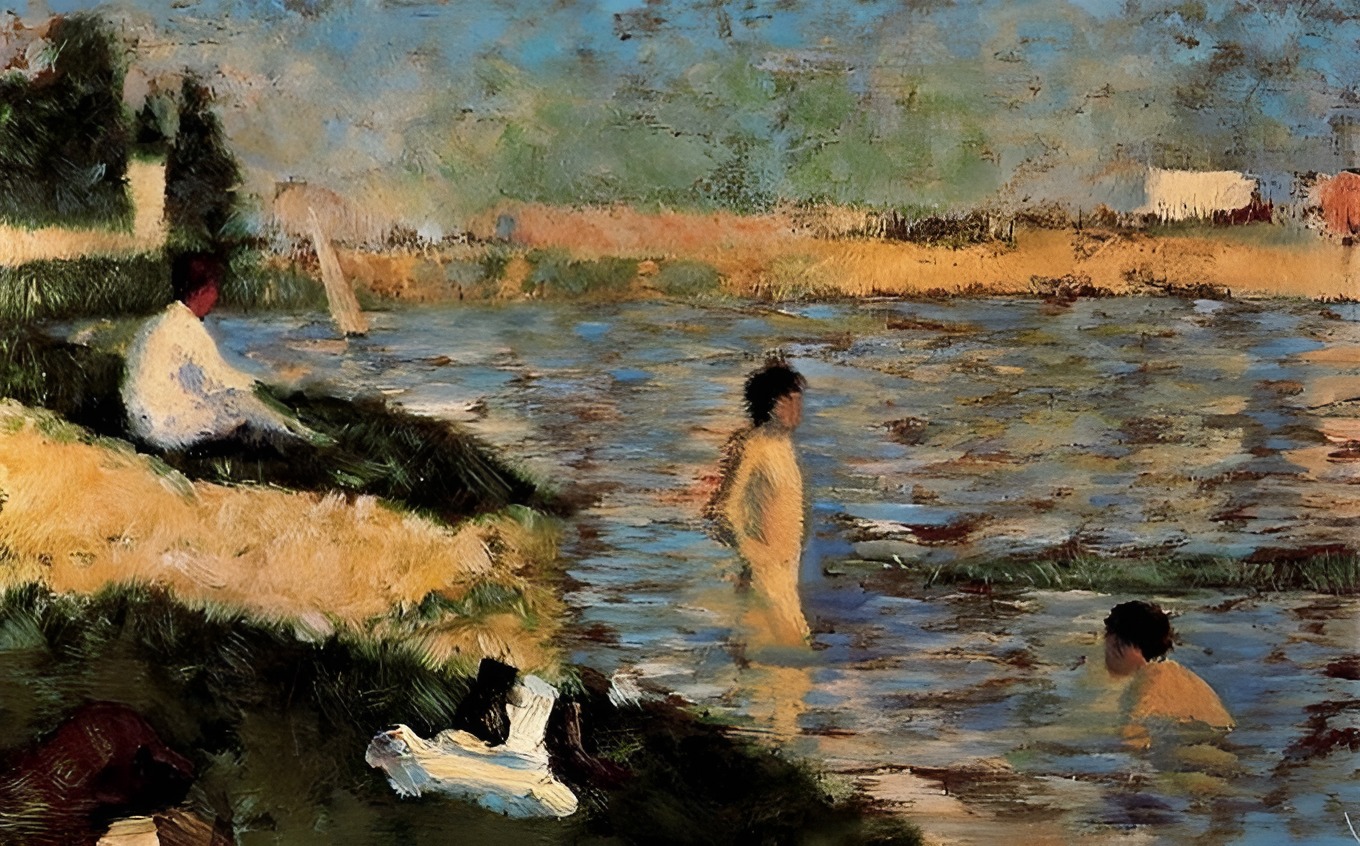
Boys Bathing is a small wooden panel that Georges Seurat painted outdoors in 1883 in preparation for his first large canvas. The original measures barely 25 x 15.5 centimetres, is oil on wood, and is held in Paris by the Musée d’Orsay under inventory number RF 1965 13. From us it is painted entirely by hand, oil on canvas, in eight sizes or to your own measurements, and before dispatch you receive a photograph of the finished work for approval.
| Title: | Boys Bathing |
| Other titles: | Étude pour « Une baignade à Asnières » · Boys Bathing |
| Painter: | Georges Seurat (1859–1891) |
| Year painted: | 1883 |
| Original size: | 25 cm x 15.5 cm |
| Original technique: | Oil on wood |
| Painting style: | Early period, before Pointillism |
| Located at: | Musée d’Orsay, Paris (inv. no. RF 1965 13) |
| Our reproduction: | hand-painted oil on canvas, 8 sizes from 25 x 16 cm to 120 x 75 cm, custom size on request |
Boys Bathing – Georges Seurat
What is in the painting?
A few young men by the water, painted quickly and from a distance. The panel is barely a quarter of a metre wide, so there are no faces on it, no details of clothing, no story – only figures, the bank, the water and the light of a late afternoon. The colour is laid in short, separate strokes that the eye assembles only at a distance. That is exactly why a panel like this is not a pencil sketch but a note in colour: the painter was recording who would stand where, and which colour would lie in which place.
Why did the painter work on such small wood?
Because wood was portable and quick. Seurat carried these panels with him along the Seine and painted them in a single sitting, outdoors, in front of the motif; back in the studio they served him as material for the large canvas. The museum says what this is in the title of the work itself: it is a study for the Bathers at Asnières. The panel is therefore not a self-contained idea but a step – and it is precious for exactly that reason, because it shows a decision at the moment when it was still open.
Where can you see the finished canvas in it?
In the arrangement. The figures on this panel lie and sit by the water the way they will later lie and sit on the large canvas: bodies along the bank, water behind them, the horizon high. Bathers at Asnières, held by the National Gallery in London, was made a year later and measures over two metres across; this panel measures a quarter of a metre. Between them lie one year and roughly a hundredfold difference in area, and the scene is the same.
This panel stands right at the beginning of Seurat’s road. From the same years we also sell Figure in a Landscape at Barbizon and Vase of Flowers, both still entirely before the method we know him for. Out of this panel grew the first large scene by the Seine, and the high point of that development is held by the Art Institute of Chicago; here you will find it as Sunday Afternoon on the Island of La Grande Jatte. Pointillism as a method and neo-impressionism as a movement both came only after this panel.
What does the work mean?
Less than you might expect, and that is where its calm comes from. There is no story here about labour, poverty or leisure – only young people by the water on a summer afternoon. A canvas painting of this kind explains nothing; it is a note about light and proportion, made so that the painter could satisfy himself that the motif held together. On a wall it works in exactly that way: quiet, asking nobody to read it, like an open window onto a summer day.
How did it reach the Orsay?
As a gift. The museum gives the mode of acquisition as the donation of Baroness Eva Gebhard-Gourgaud in 1965, and that is where the inventory number RF 1965 13 comes from – the year inside the number is the year of the gift, not of the painting. The route before that the museum does not publish on the surface we are able to read, and so we do not describe it: we state what the museum states, and we add nothing it does not record.
How is our hand-painted version made?
By hand and with a brush, never with a printer. Our painter works in oil paint on linen and keeps what matters in this motif: the short, separate strokes and the light that holds them together. Enlarging is where the difficulty lies – if the strokes grow with the scale the scene turns hard, and if they stay tiny it disappears. Every hand-painted copy is therefore one of a kind and no two are quite alike; this is not an oil painting reproduction printed onto canvas but a painting made from scratch. Before dispatch we photograph the piece and send you the photograph for approval.
We hold no studio photographs of the finished work for this subject at present. When it is next painted we will photograph it and the shots will appear on this page.
Which size for which wall?
If you do not know which: 70 x 45 cm. The original is extraordinarily small – 25 x 15.5 cm – and our smallest size, 25 x 16 cm, is the closest size we offer; it is not quite one to one, being half a centimetre taller, but nothing comes closer. The format is horizontal and markedly low, so it works well above a bed, above a chest of drawers, or in the band above a door: 50 x 30 and 60 x 40 cm are the everyday choice for a hallway or an office, 70 x 45 and 80 x 50 cm work as a standalone piece, and 90 x 55, 100 x 60 and 120 x 75 cm belong on long walls, where the scene takes on a width the original never had. Every fine art reproduction of this subject is made to order.
Custom size, stretcher bar and frame
If none of the eight sizes fits your wall, we paint the work to your measurements and keep the ratio of the original so the scene is never stretched; that is our custom size painting service. You can order the painting in three forms: as a rolled canvas without a stretcher, stretched on a wooden stretcher bar and ready to hang, or framed; you choose the form when you order. You choose the frame in our 3D frame viewer: on this subject it shows every frame profile we carry, so you can compare gold, silver, black, white and natural wood — it is for choosing a frame and nothing else. To see how the work will look on your own wall, use our separate room-visualisation service.
Delivery and guarantee
Every copy is made to order in our studio in Slovenia, so allow 15 to 45 days depending on the size you choose. We ship it in the form you chose when ordering — rolled, stretched or framed — protected for transport, across the EU, customs-free. Before dispatch you receive a photograph of the finished work for approval, and our returns policy applies to every order. The full range by this painter is in the Georges Seurat gallery, and his path from panels like this one to the large canvases is described in our article about Georges Seurat, which also explains what separates a good famous painting copy from a poor one.
Frequently asked questions
Where is the original?
In Paris, in the collection of the Musée d’Orsay, under inventory number RF 1965 13. The museum records it under the title Étude pour « Une baignade à Asnières ».
What year is the work from?
The museum dates it to 1883 — a single year, with no “circa” and no span. We previously gave 1883-1884 here; the museum’s figure is the more precise one and we have corrected it.
How large is the original really?
The museum gives a height of 15.5 and a length of 25 centimetres, so 25 x 15.5 cm in our width-by-height notation. We previously gave 25 x 16 cm; the difference is half a centimetre and it is corrected to the museum.
Is it really painted on wood?
Yes. The museum records oil on wood. Seurat carried these small panels outdoors because they were firm and dried quickly; our version is made on canvas, for durability and for hanging.
What does it mean that this is a study?
That it was made in preparation for another work. The museum records it as a study for the Bathers at Asnières, the large canvas now held by the National Gallery in London.
Which size should I choose?
For a hallway or an office, 60 x 40 cm; as a standalone piece, 70 x 45 cm. If you want the size closest to the original, choose 25 x 16 cm. The full size guide is above.
Can I have a size that is not listed?
Yes. We paint to measure, keeping the side ratio of the original.
Is this a print?
No. The work is painted by hand in oil on linen; the strokes are visible and can be felt, which a print cannot imitate.
How is it delivered?
In the form you chose (rolled, stretched on a stretcher or framed), 15 to 45 days after you approve the photograph of the finished work.
Is the original for sale?
No. The panel is in the public collection of the Musée d’Orsay and is not for sale; a hand-painted canvas is the only way to have the subject at home.
Is it suitable as a gift?
Very. The scene is quiet and sits in almost any room, and the low horizontal format is rewarding above furniture. If you would rather leave the choice to the person receiving it, there is a gift voucher.
- Subject: a few young men by the water on a summer afternoon, painted from a distance and in short strokes
- Original: 25 x 15.5 cm, oil on wood, Musée d’Orsay, Paris (RF 1965 13), a gift of 1965
- Ours: hand-painted in oil on linen, eight sizes from 25 x 16 to 120 x 75 cm, as a rolled canvas, stretched or framed — your choice
- Worth knowing: this French painter made the panel outdoors in a single sitting, in preparation for a canvas over two metres wide