


Description
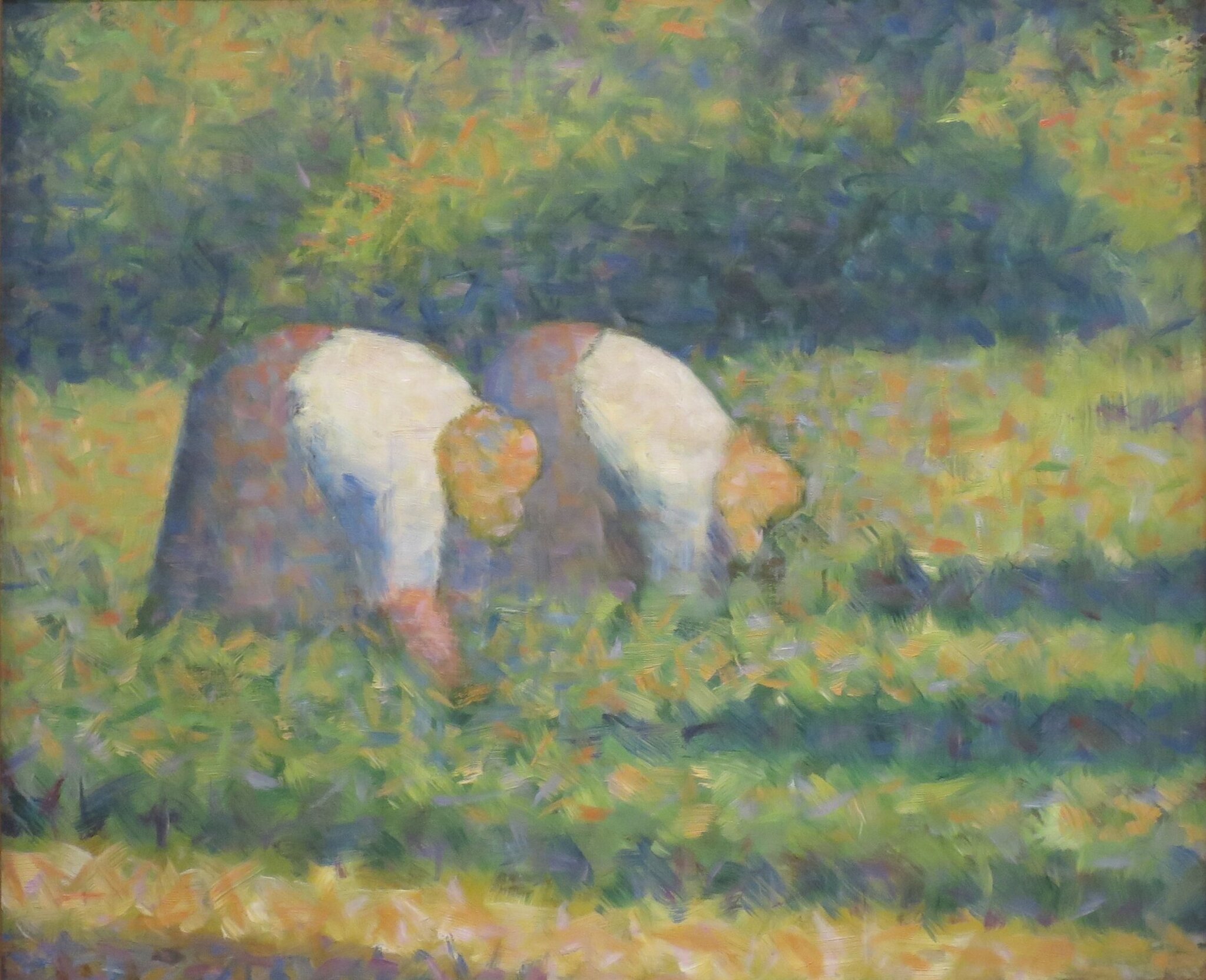
Farm Women at Work is an early Seurat of 1882–83: two women bent over their work in a field. The original measures 46 x 38.7 centimetres, is oil on canvas, and is held by the Solomon R. Guggenheim Museum in New York, in its founding collection. From us it is painted entirely by hand, in eight sizes or to your own measurements, and before dispatch you receive a photograph of the finished work for approval.
| Title: | Farm Women at Work |
| Other titles: | Farm Women at Work – the title the museum itself uses |
| Painter: | Georges Seurat (Paris 1859–1891) |
| Year painted: | 1882–83 |
| Original size: | 46 cm x 38.7 cm |
| Original technique: | Oil on canvas |
| Painting style: | Early rural study – crosshatched strokes, before the dots; the painter’s own name for the method was chromoluminarism |
| Located at: | Solomon R. Guggenheim Museum, New York (Solomon R. Guggenheim Founding Collection, by gift) |
| Our reproduction: | hand-painted oil on canvas, 8 sizes from 46 x 38 cm to 150 x 120 cm, custom size on request |
Farm Women at Work – Georges Seurat
What is on the canvas?
Two women at work in a field, bent over a row. The title the museum itself uses says that much, and we claim no more about the scene than it does. The work is small – 46 x 38.7 centimetres – and the two figures are not placed as a portrait would place them: the labour is what stands in front.
The museum files it among the small works of agrarian life in which Seurat is only just approaching what we know him for. A canvas painting from these years is not a scene trying to convince you; it is an exercise in getting light onto canvas, and a field was enough for that.
The crosshatch before the dot
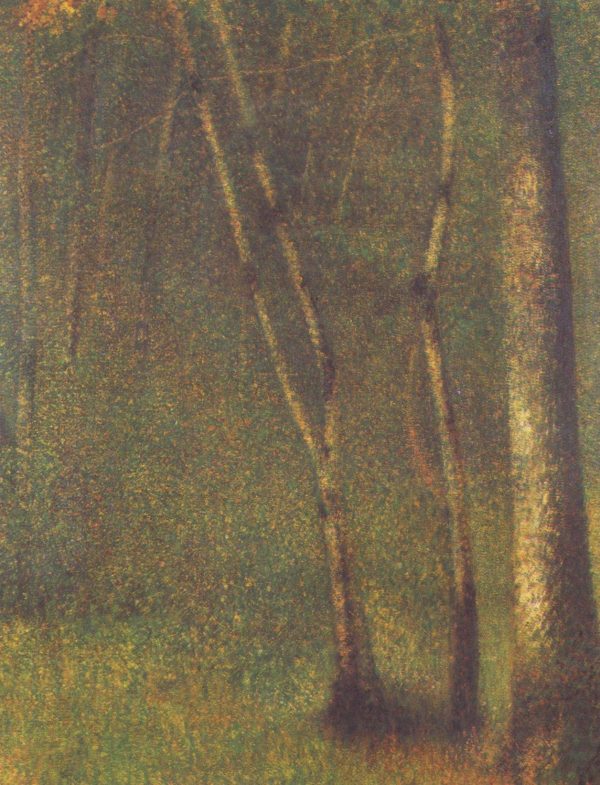
The museum describes the brushwork precisely: these are crosshatched brushstrokes, and it is exactly those, in these small works of agrarian life, that give away his first experiments with dividing colour. The colour is not yet broken into points, but it is already separated – laid down in distinct directions that overlap.
That is why this work is worth looking at for anyone who knows Seurat only from the dots. The method did not arrive all at once; it grew out of the crossed strokes you are looking at here, and several years of work lie between the one and the other.
Chromoluminarism – the painter’s own word
The museum says something that shops rarely print: Seurat called his own technique chromoluminarism, because setting individual hues side by side was supposed to elicit a stronger effect of light. The word we use today is not his – according to the museum, the critics of his day christened it.
Those words are pointillism and neo-impressionism. Both stuck, and we use both, because that is what people search for; but anyone who wants to know how the painter thought about his own work will find the right word in the first one. It is about light, not about dots.
The museum also names what led him there: theories of colour, optics and perception set out by Michel-Eugène Chevreul, Ogden Rood and Charles Henry. Seurat wrote very little about his ideas, and he died at thirty-one, of diphtheria.
Millet, and where the series begins
The museum fixes the year: in 1881 Seurat began a series of rural studies to which the museum’s own paintings belong, and the prompt came from Jean-François Millet, the Barbizon painter. That is not a guess of ours but a sentence from the museum’s own entry.
From that same series, we also sell Peasant Woman Seated in the Grass, held by the same museum – of the five works by Seurat in that collection, these are the two we sell. Barbizon itself appears in Figure in a Landscape at Barbizon, and the labourer with a pick in The Stone Breaker, in Washington. All of them come from a handful of years.
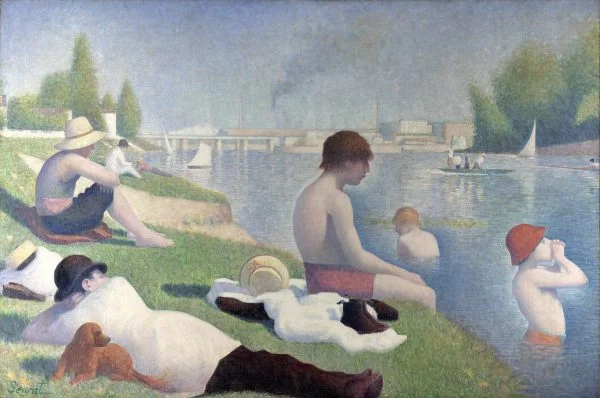
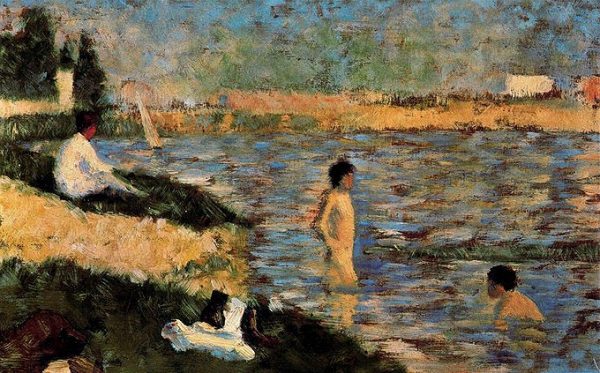
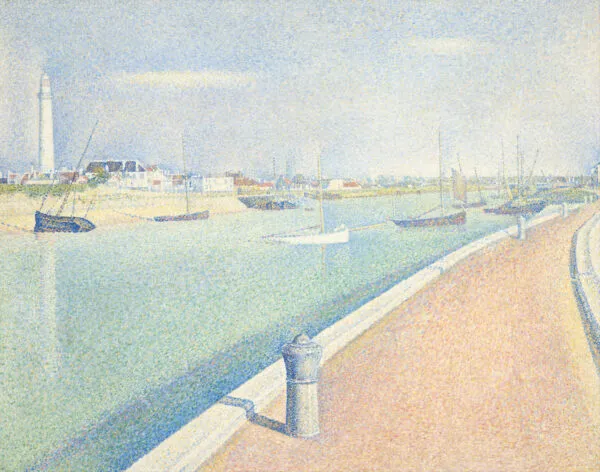
Where the series led, the museum says next: 1884 brought the transitional Bathers at Asnières, and 1886, at the eighth and last Impressionist exhibition, Sunday Afternoon on the Island of La Grande Jatte. Later came the empty coasts, among them The Channel of Gravelines, Grand Fort-Philippe.
Why is the year a span, and why is there no accession number?
The museum gives 1882–83, a span and not a single year, and that is how we give it. Nowhere on this page is one year of making written down as a fact, because the institution that holds the work has not written it that way.
An accession number we do not give at all, and that is worth explaining. The museum’s own entry gives title, year, medium, measurement, collection and how it was acquired – the object number it does not. The string 41.713 does appear on the museum’s pages, but every time only inside the name of an image file. It very probably is the right number and it matches the form the museum uses; a published catalogue field it is not. So we do not print it. If the museum publishes it, we will add it.
How is our hand-painted version made?
By hand and with a brush, never with a printer. Our painter works in oil colours on canvas, and with this subject the hardest thing is to keep the crossed strokes: smooth them out and the scene becomes an ordinary piece of genre, and the very thing that makes the work interesting disappears. That is why every hand-painted copy is one of a kind and no two are quite alike.
For this subject we have no studio photographs of our own yet. When we next paint it, we will photograph it, and the photographs will appear on this page. What holds meanwhile holds for every oil painting reproduction we make: before dispatch you receive a photograph of the very canvas painted for you, and it leaves only once you have approved it.
Which size for which wall?
The original measures 46 x 38.7 centimetres, width first and then height, the way we give measurements everywhere. The format is landscape and nearly square.
Our smallest rung, 46 x 38 cm, is less than a millimetre from the original – the museum gives the measurement itself, independently of our ladder, which is why we can say so. If you want the work at the size it was made, that is the size to choose. For a living room we suggest 60 x 50 or 70 x 60 cm; 80 x 65 and 90 x 75 cm stand on their own; 120 x 100 and 150 x 120 cm turn the small study into a large work, which a crossed stroke carries without difficulty.
Custom size, stretcher and frame
If none of the eight sizes fits your wall, we paint to your measurements and keep the ratio of the original, so the scene is never stretched; that is our custom size painting. You can order the painting in three forms: as a rolled canvas without a stretcher, stretched on a wooden stretcher and ready to hang, or framed; you choose the form when you order.
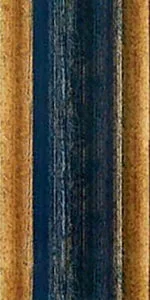
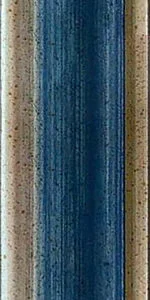
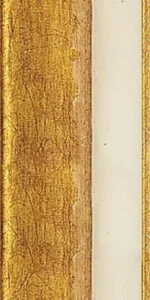
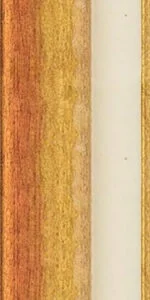
You choose the frame in our 3D frame viewer. On a work this small the frame counts for more than on a large one: at 46 x 38 cm a wide frame swallows the scene and a narrow one gathers it. Our separate room-placement service shows how it will look on your own wall.
Delivery and guarantee
Every copy is made to order in our studio in Slovenia, so allow 15 to 45 days depending on size. We ship it in the form you chose when ordering — rolled, stretched or framed — protected, across the EU, customs-free. You approve a photograph first, and our returns policy applies. The full range by this painter is in the Georges Seurat gallery, and his work is described in our article on Georges Seurat. A fine art reproduction of a famous painting is always made here the same way.
Frequently asked questions
Where is the original?
In New York, at the Solomon R. Guggenheim Museum, in its founding collection, which it entered by gift.
What year is it from?
The museum gives 1882–83 – a span and not a single year, so that is how we give it.
How big is the original?
The museum gives 38.7 x 46 centimetres by height and width, which in our width-by-height notation is 46 x 38.7 cm.
Why do you not give an accession number?
Because the museum does not publish one. The string 41.713 appears there only inside the name of an image file, and that is not a published field.
Is this painted in dots?
No. The museum describes crosshatched brushstrokes, which the dots grew out of later; this is the work that came before them.
What does chromoluminarism mean?
It is what Seurat called his own method, the museum says – for the stronger effect of light that setting hues side by side was meant to produce.
Who prompted him in this?
Jean-François Millet and the Barbizon school, as the museum records; Seurat began the series of rural studies in 1881.
Which size should I choose?
For a living room, 60 x 50 cm. If you want the size of the original, choose 46 x 38 cm.
Can I have a size that is not on the list?
Yes. We paint to measure and keep the ratio of the sides of the original.
Is this a print?
No. The work is painted by hand in oil colours; the strokes can be seen and felt, which a print cannot imitate.
Is it suitable as a gift?
Yes. The subject is quiet and small sizes read as personal. To leave the choice to the recipient, there is a gift voucher.
- Subject: two women at work in a field – a small early study of country labour
- Original: 46 x 38.7 cm, oil, Solomon R. Guggenheim Museum, New York
- Our version: a hand-painted canvas, eight sizes from 46 x 38 to 150 x 120 cm
- Important: this French painter called the method chromoluminarism himself – the dots came later