


Description
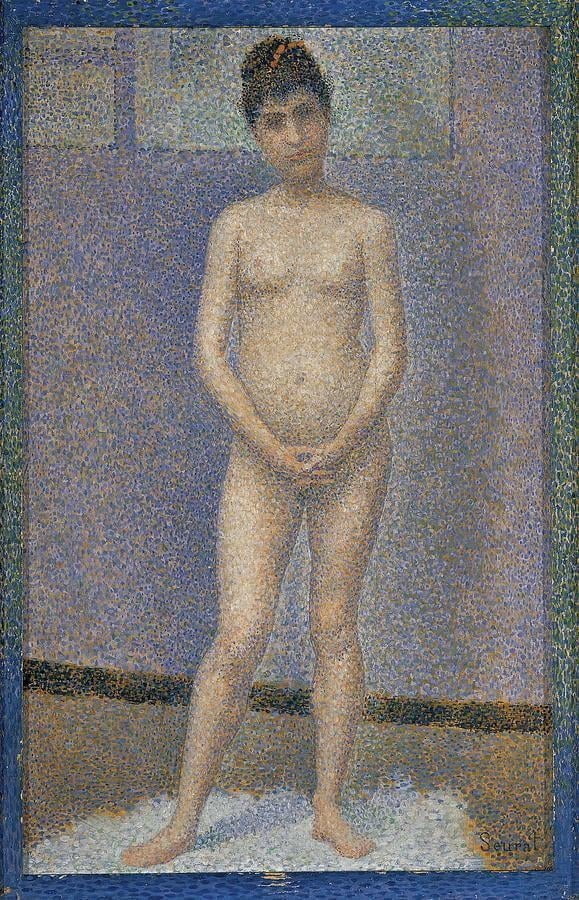
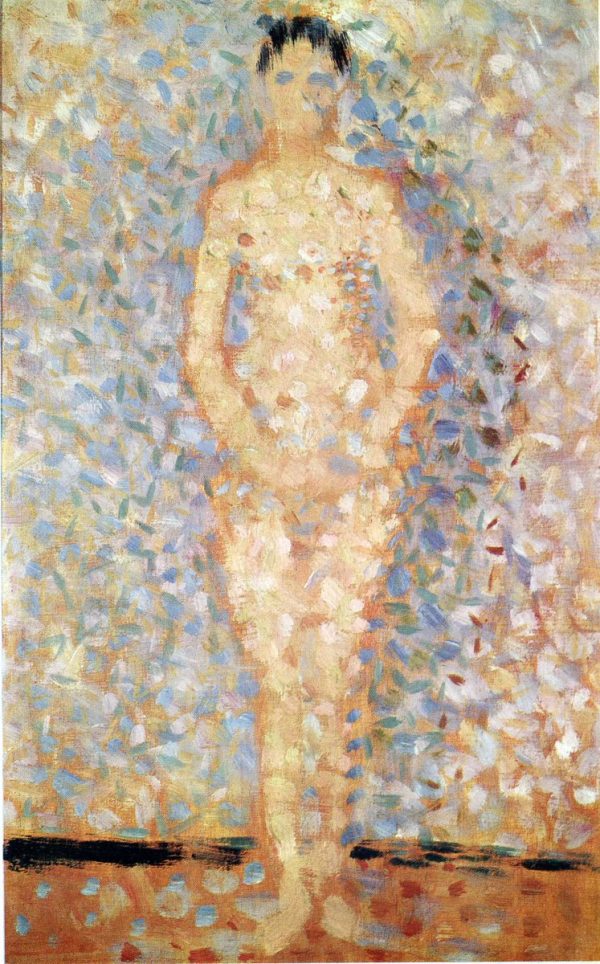
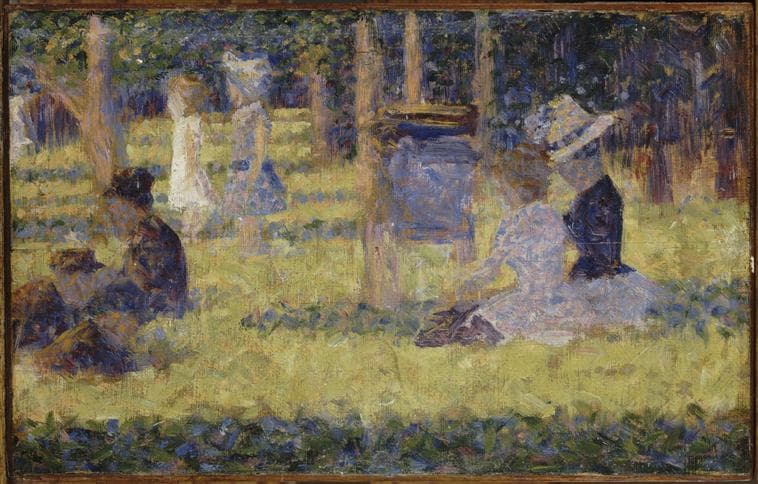
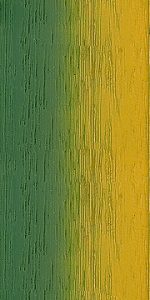
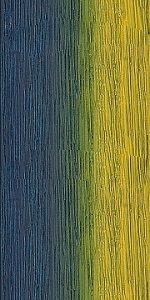
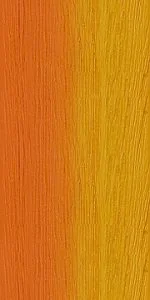
The Study for La Grande Jatte is a small oil panel that the museum dates between 1884 and 1886. The original measures 25 x 16 centimetres, is oil on wood, and is held in Paris by the Musée d’Orsay under inventory number RF 2828. From us it is painted entirely by hand on canvas, in five sizes or to your own measurements, up to 80 x 50 cm, and before dispatch you receive a photograph of the finished work for approval.
| Title: | Study for La Grande Jatte (right) |
| Other titles: | Étude pour « Un dimanche après-midi à l’île de la Grande Jatte » (the museum’s own designation) |
| Painter: | Georges Seurat (Paris 1859–1891) |
| Year painted: | between 1884 and 1886 |
| Original size: | 25 cm x 16 cm |
| Original technique: | Oil on wood |
| Painting style: | Pointillism, a preparatory panel for the large canvas; neo-impressionism |
| Located at: | Musée d’Orsay, Paris (inventory no. RF 2828, anonymous gift, 1930) |
| Our reproduction: | hand-painted oil on canvas, 5 sizes from 25 x 16 cm to 80 x 50 cm, custom size up to 80 x 50 cm on request |
Study for La Grande Jatte (right) – Georges Seurat
What is on the panel?
The panel is a preparatory work for the large canvas Sunday Afternoon on the Island of La Grande Jatte. The museum records it exactly that way — as a study for that work — and gives it no closer description.
The museum’s own designation is the general one: Étude pour « Un dimanche après-midi à l’île de la Grande Jatte ». The more precise naming, the right-hand middle distance of the scene, is carried by our title so that the studies in our Seurat gallery can be told apart; it is not the museum’s title. What we actually know are the facts the museum publishes: when it was made, what it is made of, how big it is and when it entered the collection.
A canvas painting of this size is a working tool. Pointillism was still forming then, and it was on panels like this that Seurat checked the balance of light and shade before carrying it onto a canvas over three metres wide. Neo-impressionism got its name only later; the method was born on boards like this one.
A study, not the finished canvas
The large canvas is held by the Art Institute of Chicago and, by its own record, measures 207.5 x 308.1 centimetres. This panel measures 25 x 16 centimetres. The ratio is roughly one to twelve across the width.
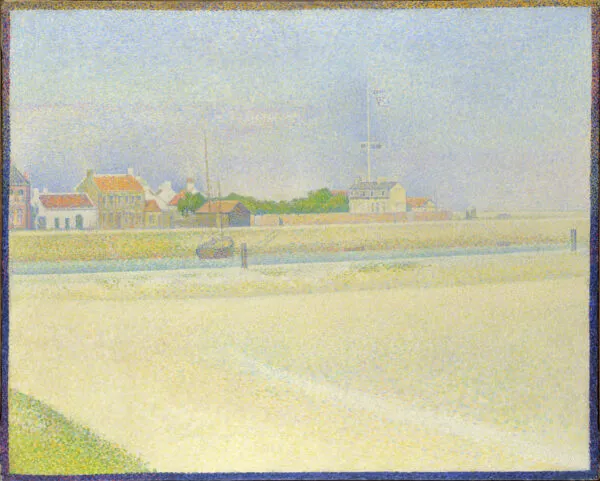
Both are in our Seurat gallery: Sunday Afternoon on the Island of La Grande Jatte and this study. Two more preparatory works for the same canvas are here too — Study for A Sunday on La Grande Jatte and Study for La Grande Jatte (London) — along with Gray Weather, Grande Jatte, which shows the same island in other weather.
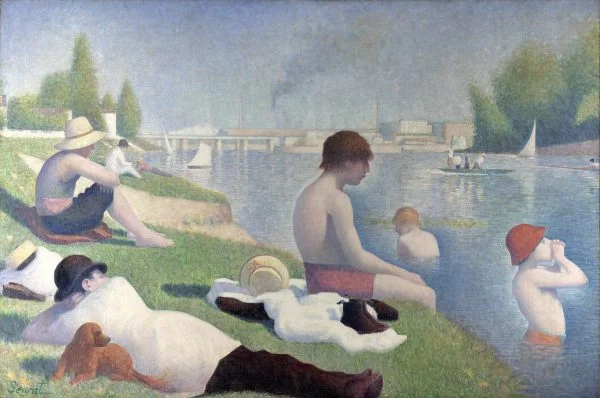
Anyone who wants to see what Seurat was doing immediately before the Grande Jatte should look at Bathers at Asnières. There too a whole run of small panels came before the large canvas.
Why does the year read between 1884 and 1886?
Because that is how the museum writes it. In its record it dates the work with the words entre 1884 et 1886 — between 1884 and 1886 — and not with a single year.
This page used to say 1886. The museum does not claim that, so we have corrected it. Where an institution gives a span we give the span, and in the data we send to search engines we then send no year at all: better nothing than a number the museum does not confirm.
The span makes sense here. The large canvas took years, and the preparatory panels went with it; an exact day is not known for work like this, and the museum does not invent one.
How did it come to the museum?
The museum’s record gives a single sentence about the acquisition: an anonymous gift of 1930. It publishes no chain of owners before that, so we give none either — we do not know it.
That is the difference between this page and some others in our Seurat gallery, where museums publish a work’s whole passage through the hands of its owners. Where that is missing, we do not replace it with guesswork.
Where do the museum’s measurement and the online data diverge?
For this panel the online databases repeat a measurement of 15.2 x 24 centimetres and the year 1884. The museum’s own record says otherwise: H. 16 ; L. 25 cm, and between 1884 and 1886.
We give the museum’s. The rule in our Seurat gallery is simple: the institution that holds a work comes before any database that merely reports on it. So the table reads 25 x 16 cm and the span of years, even when you find something else elsewhere.
And this too: the museum gives its measurements in whole centimetres, which means they are rounded. A few millimetres of difference between sources, on a wooden panel this size, is entirely expected; we chose the source that actually holds the work.
How is our hand-painted version made?
By hand and with a brush, never with a printer. The original is oil on wood and our version is oil on canvas — we do not blur that. The painter carries the scene across stroke by stroke at the size you choose, and with a subject this small the hardest thing is keeping the stroke open: if the dots close up, the panel loses the quality of a sketch.
For this subject we have no studio photographs of our own yet. When we next paint it, we will photograph it, and the photographs will appear on this page. What holds meanwhile holds for every oil painting reproduction we make: before dispatch you receive a photograph of the very canvas painted for you, and every hand-painted copy is one of a kind — no two are quite alike.
Which size for which wall?
The original measures 25 x 16 centimetres, width first and then height, the way we give measurements everywhere. The format is landscape and markedly drawn out.
On this work our smallest size is exactly 25 x 16 cm — the same number the museum publishes for the original. Let us say plainly what that means: it is a very small object, about the size of a palm, and on an empty wall it disappears. For a shelf, a desk or a narrow alcove it is right; for a living room we suggest 60 x 40 or 80 x 50 cm, which is also our largest size. In between there are still 50 x 30 and 70 x 45 cm.
Custom size, stretcher and frame
If none of the five sizes fits your wall, we paint to your measurements, up to 80 x 50 cm, and keep the ratio of the original, so the scene is never stretched; that is our custom size painting. You can order the painting in three forms: as a rolled canvas without a stretcher, stretched on a wooden stretcher and ready to hang, or framed; you choose the form when you order.
You choose the frame in our 3D frame viewer. On a small sketch the frame counts for more than on a large canvas: a wider, quiet surround gives it the weight it does not have on its own. Our separate room-placement service shows how it will look on your wall.
Delivery and guarantee
Every copy is made to order in our studio in Slovenia, so allow 15 to 45 days depending on size. We ship it in the form you chose when ordering — rolled, stretched or framed — protected, across the EU, customs-free. You approve a photograph first, and our returns policy applies. The full range by this painter is in the Georges Seurat gallery, and his work is described in our article on Georges Seurat. A fine art reproduction of a famous painting is always made here the same way.
Frequently asked questions
Where is the original?
In Paris, at the Musée d’Orsay, inventory number RF 2828. It came to the museum in 1930 as an anonymous gift.
What year is it from?
The museum dates the work between 1884 and 1886 and gives no single year; that is how we give it too.
Why does it no longer say 1886?
Because the museum does not claim that. Its record gives a span, and where the old entry on this page did not match it we corrected it.
How big is the original?
The museum gives a height of 16 and a width of 25 centimetres, which in our width-by-height notation is 25 x 16 cm.
Why does it say 15.2 x 24 cm elsewhere?
That measurement is repeated in online databases. We give the one published by the museum that holds the work.
Is the original on canvas?
No. The original is oil on wood; we paint ours in oil colours on canvas, which we say explicitly on this page.
How big is the work this is a study for?
The Art Institute of Chicago gives 207.5 x 308.1 cm. This panel is therefore about twelve times smaller across the width.
Which size should I choose?
For a living room, 60 x 40 or 80 x 50 cm. The smallest size equals the original, but it really is tiny — right for a shelf or an alcove, not for a large wall.
Can I have a size that is not on the list?
Yes. We paint to measure, up to 80 x 50 cm, and keep the ratio of the sides of the original.
Is this a print?
No. The work is painted by hand in oil colours; the strokes can be seen and felt, which a print cannot imitate.
Is it suitable as a gift?
Yes. The small sizes are easy to give, the large ones make an impression. To leave the choice to the recipient, there is a gift voucher.
- Subject: a preparatory panel for Sunday Afternoon on the Island of La Grande Jatte
- Original: 25 x 16 cm, oil on wood, Musée d’Orsay, Paris (RF 2828), between 1884 and 1886
- Our version: a hand-painted canvas, five sizes from 25 x 16 to 80 x 50 cm
- Worth knowing: this French painter built the large canvas out of dozens of panels like this one