


Description
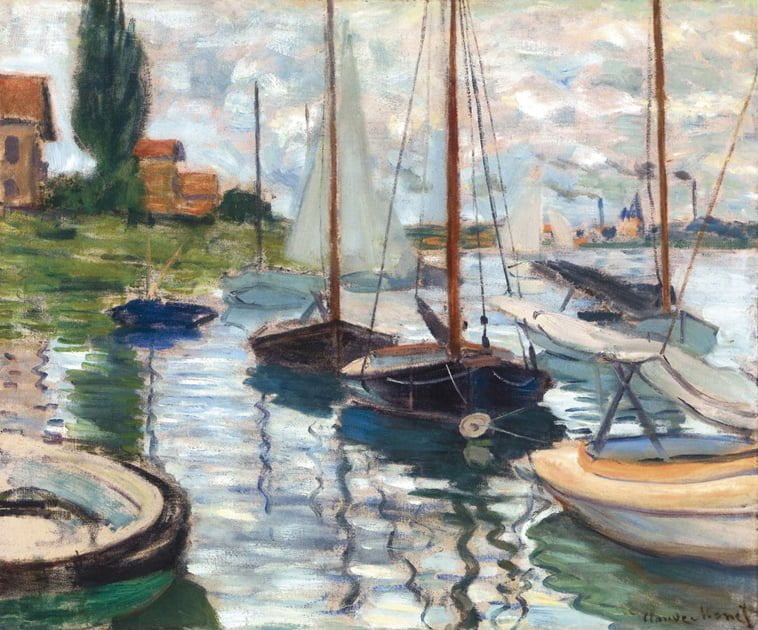
Boats at Rest at Petit-Gennevilliers is an oil painting reproduction of Monet’s river scene of 1874: moored pleasure boats stand close together on a still Seine, their masts cutting across the whole sky, an empty rowing boat pushing in at lower left. The original measures 65.4 x 54.3 cm, is oil on canvas, and belongs to the Fine Arts Museums of San Francisco under accession number 1962.23, on view at the Legion of Honor. We paint it in nine sizes or to your measure, with a photograph of the finished work for approval before dispatch.
| Title: | Boats at Rest at Petit-Gennevilliers |
| Other titles: | Bateaux sur la Seine à Gennevilliers · Sailboats on the Seine at Petit-Gennevilliers |
| Painter: | Claude Monet (1840–1926) |
| Year painted: | 1874 (the museum record does not note a signature) |
| Original size: | 65.4 cm x 54.3 cm |
| Original technique: | Oil on canvas |
| Painting style: | Impressionism |
| Located at: | Fine Arts Museums of San Francisco, Legion of Honor (acc. no. 1962.23) |
| Our reproduction: | Hand-painted oil on canvas, nine sizes or to your measure |
Boats at Rest at Petit-Gennevilliers – Claude Monet
What is on the canvas?
The canvas is small and lies on its side, yet the scene is full to the edges. At lower left a pale rowing boat sits so near that the bottom edge halves it; we look down into a faint pink interior. To its right a dark, almost black hull pushes into the middle, a pale round disc hanging at its side, the fender of a moored boat. At the far right stands a third hull in ochre, a furled white sail laid lengthwise along it on a wooden X-shaped crutch. Three tall masts rise from the group, thin and brown, running from the bottom edge to the top. The left bank is green, with a dark poplar and an ochre house with a reddish roof. The upper right corner holds the far bank, tiny sails and a chimney. The water is short horizontal strokes in which the masts return as long wavering reflections. At lower right stands the signature “Claude Monet”, with no year beside it.
Why is the view so close?
Because Monet did not step back. He stood almost level with the water, never looking for the distance that would have tidied the mooring into the background. The hulls take the lower half, the masts the upper, and the canvas edges cut them calmly: the rowing boat at lower left is not whole. This is a portrait of hulls and masts rather than a prospect along the river, which is why it reads larger than it is.
What does the scene mean?
The boats are pleasure boats, moored and at rest, sails furled and decks empty: a Sunday place to sail from, not a harbour. Behind them stands a factory chimney. Monet sets no argument between boats and chimney; both are simply there, in one look across the water. The suburb on the Seine was then a place of rest and of work at once, and the scene shows it without explanation. Anyone after an impressionist painting that paints a condition instead of an event will find one here.
Where did Monet stand?
The museum record gives the place of creation as Gennevilliers. Petit-Gennevilliers was a hamlet on the left bank, opposite Argenteuil, where Monet was then living; this bend of the river was a favourite place to sail. The painter crossed to the side facing his own bank and painted back across the water; the mooring lay there, which is why the group is seen head-on and from so near. The record says no more, and neither do we.
What does the museum record say?
The museum lists the work as Sailboats on the Seine at Petit-Gennevilliers, 1874, oil on canvas. It gives the measurements as height by width, 54.293 x 65.4 cm, and adds the framed size, 87.948 x 76.676 cm (width first). Our table puts width first, so we read 65.4 x 54.3 cm. Wikidata carries the same work with the height rounded to 54 cm; where museum and database disagree, the museum stands. In its provenance note the museum ties the work to Wildenstein’s catalogue raisonné, where it is number 227. The record notes no signature: we read it off the canvas itself, and so do not set it beside the year.
The work’s journey from Paris to San Francisco
The museum publishes the whole line of owners, keeping some stations in brackets as unconfirmed. As it lists them: Georges Feydeau (1862–1921), Paris; his sale at the Hôtel Drouot on 4 April 1903, lot 35, through Gaston Bernheim; the Prince de Wagram, Paris; Georg Caspari, Berlin, around 1920; Hugo and Käthe Perls, Berlin, by 1920; Sadie Adriani, Berlin. In 1962 Bruno and Sadie Adriani of Monterey, California, gave it to the California Palace of the Legion of Honor, and in 1972 it passed by administrative transfer to the Fine Arts Museums of San Francisco. For the Berlin stations the museum cites an article of December 1920 and a curatorial note. We neither count the stations nor retell the line.
The motif among the Monet works we sell
Monet painted moored boats on the Seine more than once, so before ordering any Monet reproduction it pays to read the size and the museum, not only the title. A year later came Red Boats, Argenteuil in the Harvard Art Museums: 61.8 x 82.5 cm, far wider and differently pitched — a sunlit blue and white expanse seen from a distance, a red hull on the right, signed with the year 75. Ours is nearer, tighter, under an overcast sky. Our other Monet subjects sit mostly on the same reach: The Argenteuil Basin shows the same water from further off, The Railway Bridge at Argenteuil and Bridge at Argenteuil bring in the two structures that crossed it, and The Promenade near Argenteuil gives the same bank without the water.
How is our hand-painted version made?
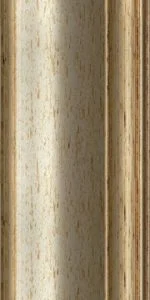
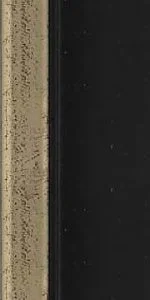
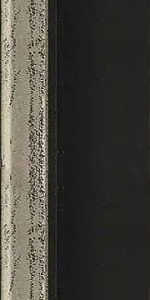
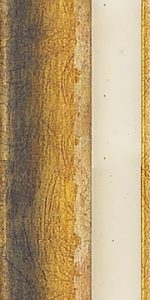
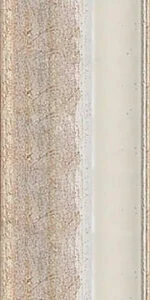
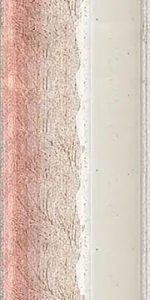
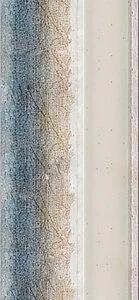
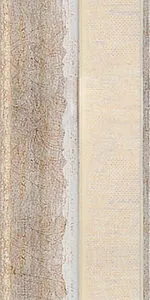
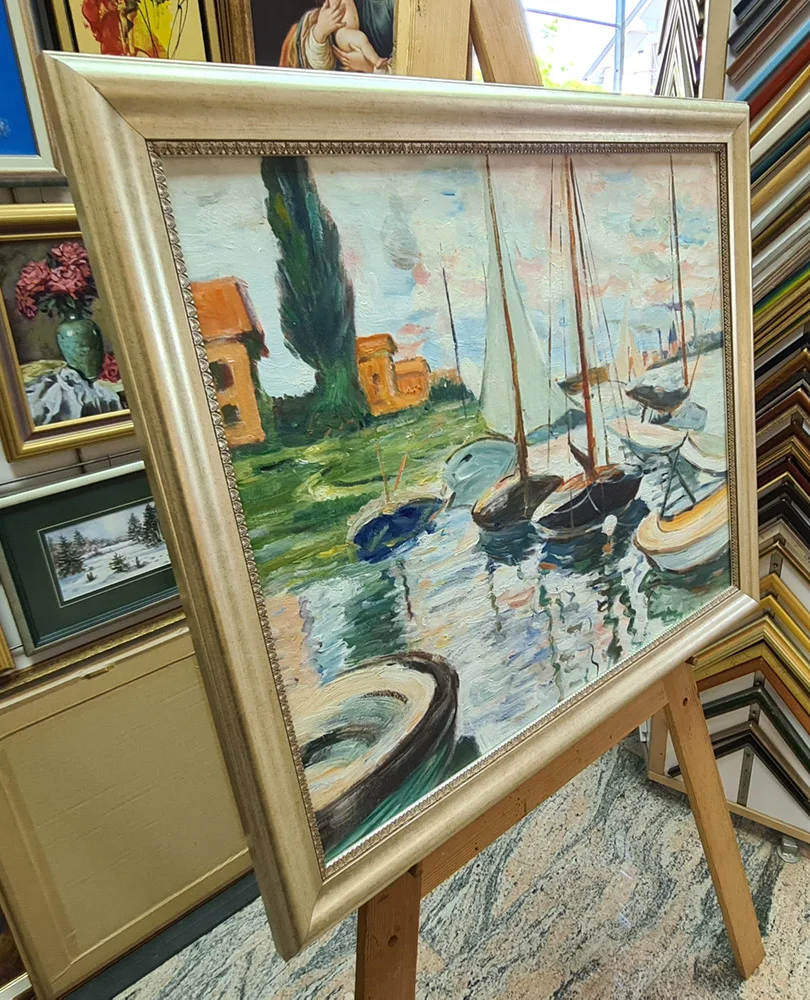
Each order is brushed in oil onto canvas stretched over a wooden bar: nothing printed, nothing prepared in advance, so what you buy is a hand-painted oil painting. In the first photograph on this page is what the buyer receives: our finished canvas in a pale silver moulding with a fine beaded inner lip, on a wooden easel in the workshop. The shot is angled from the left, so the frame’s depth and the paint surface show. Most of the work here is in the masts: three thin, long strokes must run the full height without breaking or thickening. You receive a photograph of your own canvas before dispatch; what you would not approve does not leave the workshop.
Which size for which wall?
Short answer: 70 x 80 cm above a chest of drawers, 90 x 110 cm above a sofa, 150 x 180 cm for a large empty wall. There are nine sizes. 50 x 60 cm and 60 x 70 cm suit a hallway. 70 x 80 cm and 80 x 100 cm suit a chest of drawers or a guest bed. 90 x 110 cm and 100 x 120 cm look most natural above a sofa, and 110 x 131 cm, 120 x 140 cm and 150 x 180 cm on a high wall. Mind the format: the original lies on its side while all nine of our sizes stand upright, so none repeats its proportions. As a painting for living room walls this subject carries warm and cool light equally, the palette being pale to begin with.
How high to hang the painting: the centre about 150 cm from the floor, a little lower at the largest sizes; keep the waterline below eye level.
Custom size, stretcher bar and frame
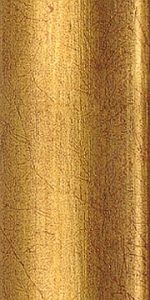
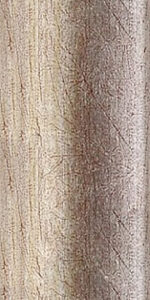
If you want the original’s proportions, a landscape format of roughly 65 to 54, a custom size is the only route: send us the width and the height and we will quote price and lead time. The canvas is stretched over a wooden bar and the edges are painted, so it needs no frame to look finished. Pale, cool mouldings suit it best, carrying on the faint sky.
Delivery and guarantee
A canvas painting travels to sixteen countries of the European Union — among them Slovenia, Austria, Germany, Italy and Hungary — wrapped in protective film and firmly packed. Production takes 15 to 45 days. You receive a photograph of the finished canvas before dispatch: if anything is wrong, we put it right while the work is in the workshop. Other Monet subjects are in the Claude Monet gallery, and we write about how a painting is made on our blog.
If the painting is a gift and you are unsure of the size, there is a gift voucher: the recipient chooses the size and the subject.
Frequently asked questions
Where is the original?
At the Fine Arts Museums of San Francisco, accession 1962.23, on view at the Legion of Honor.
Are there any people in the painting?
No. Only boats, water, the bank and houses, not one figure.
What does the painting say in one sentence?
That in 1874 Monet stepped right up to the moored boats and painted their cluster, not the river.
Is the original for sale and what is it worth?
No. It is in a public collection in San Francisco, a gift of 1962, and we do not quote a value.
- Subject. Moored pleasure boats on the Seine at Petit-Gennevilliers, three tall masts across the full height, an empty rowing boat at lower left, a factory chimney on the far bank.
- Original. Oil on canvas, 65.4 x 54.3 cm, 1874; Fine Arts Museums of San Francisco, acc. 1962.23, gift of Bruno and Sadie Adriani, catalogue raisonné no. 227.
- Ours. Nine sizes from 50 x 60 to 150 x 180 cm, or made to your measure, which alone keeps the landscape proportions of the original.
- Worth knowing. The museum writes height by width and we put width first; the same canvas is 54.3 x 65.4 cm there and 65.4 x 54.3 cm here.