


Description
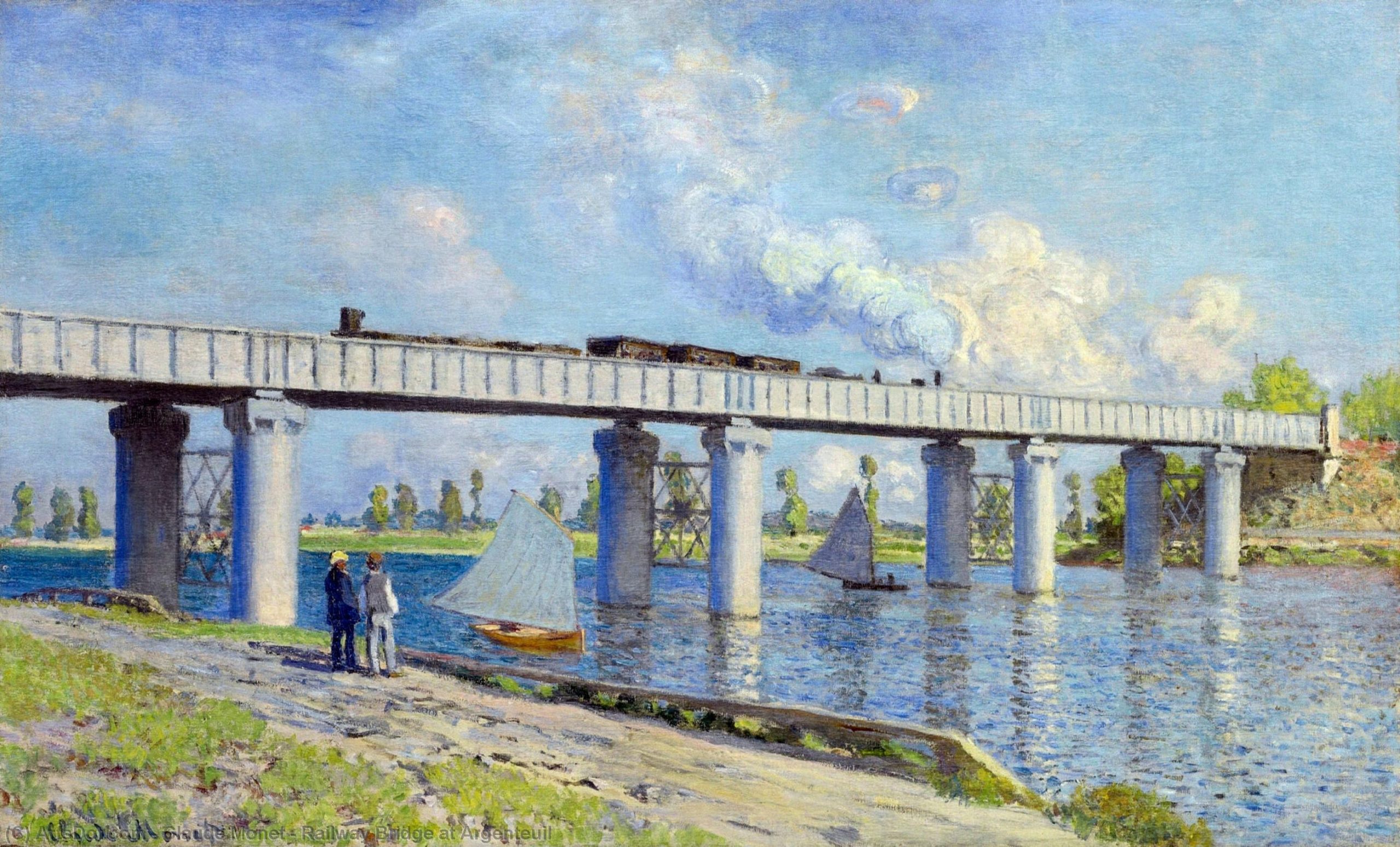
The Railway Bridge at Argenteuil is a hand-painted reproduction of Monet’s river scene of 1873: a pale viaduct on tall piers crosses the whole canvas, a train runs along it under a plume of steam, and two figures stand on the bank beside a moored boat. The original measures 99 x 60 cm, is oil on canvas and is signed lower left; the catalogue raisonné lists it as number 279 and closes with a private collection, so it cannot be visited. We paint it in eight sizes or to your own, with a photograph of the finished work for approval before dispatch.
| Title: | The Railway Bridge at Argenteuil |
| Other titles: | Le Pont du chemin de fer à Argenteuil · Die Eisenbahnbrücke bei Argenteuil |
| Painter: | Claude Monet (1840–1926) |
| Year painted: | 1873, signed “Claude Monet” lower left (the signature carries no date) |
| Original size: | 99 cm x 60 cm |
| Original technique: | Oil on canvas |
| Painting style: | Impressionism |
| Located at: | In a private collection — not in a public collection and not on display (Wildenstein catalogue raisonné, no. 279) |
| Our reproduction: | Hand-painted oil on canvas, eight sizes or to measure |
The Railway Bridge at Argenteuil – Claude Monet
What is on the canvas?
The format is landscape and wide. A pale railway viaduct spans the full width on tall cylindrical piers; the parapet is a dense row of short vertical strokes, with iron lattice bracing between them. A dark train crosses: the locomotive left of centre, its funnel above the parapet, brown-black wagons trailing behind. To the right of the train a white plume of steam rises, breaks up and merges with the clouds. At lower left a sandy bank with green grass, and on it two figures: one in a dark coat and pale hat, one in a light jacket. Beside them a moored boat, pale sail and brown-yellow hull; further right a second, smaller one with a dark hull. The lower right half is the Seine, in short blue strokes, the piers repeated as vertical reflections. Behind the bridge a low green bank with poplars, and above it a pale blue sky with white and lilac cloud.
Why does the bridge cut across the whole canvas?
Because Monet made no attempt to soften it. The viaduct runs almost horizontally and unbroken, the piers dividing the scene into even bays — an engineer’s drawing, not a landscape painter’s. That is why everything else is soft: the water in trembling strokes, the steam in a loosened cloud, the bank in broad planes. This canvas painting puts an industrial form in the middle of a river scene and does not try to reconcile the two. The bridge is not background; it is the subject, painted with the same care as the water beneath it.
Where did Monet stand, and who painted the same spot?
The catalogue raisonné says something the canvas cannot: the motif was taken from the bank at Argenteuil, not far from the house Monet lived in then. This was not an excursion but a view from the neighbourhood. The entry adds a line worth reading — Renoir painted a canvas at the same spot. Two painters, one bank, one bridge. Argenteuil was then a favourite place for Sunday sailing, which explains both boats, and the railway is what brought Parisians here at all.
What does the catalogue raisonné say?
The work is entered in the Wildenstein catalogue raisonné as number 279, with titles in French, English and German. The measurements are given as 60 x 99 cm, height before width; our table puts width first, so we read 99 x 60 cm. The entry records the signature “Claude Monet” lower left and no year within it — 1873 comes not from the canvas but from its placement in the catalogue among that year’s works and from Wikidata, which gives the year to year precision. It matched neither the catalogue nor the proportions of our own photograph, but did almost match one of our own sizes, so the catalogue’s figure replaced it. Where an old entry and a source disagree, the source stands.
The work’s journey from the painter to a private collection
The catalogue lists a long line of owners and does not assert the first: it records as a possibility that the singer Jean-Baptiste Faure bought the work from Monet in June 1874. Paris names follow — the Prince de Wagram, Bernheim-Jeune, Georges Petit, Barbazanges — then sales in New York, Paris and London, and a private collection. What the entry says, we repeat; what it does not say, we do not add. So we do not say where it hangs today: the last publicly known change of hands was an auction, and the buyer was not named.
The motif among the Monet works we sell
Take care with the name: the other bridge there is a stone road bridge, and that is Bridge at Argenteuil — another work, another collection, another scene. Confusion is easy because Monet painted the railway bridge more than once: one such canvas is in the Philadelphia Museum of Art, which lists it as Railroad Bridge, Argenteuil of 1873; that one is smaller and seen at an angle. The same bank without the structure is The Promenade near Argenteuil, the field above it Poppies near Argenteuil, and the river with no bridge and no people The Seine at Bougival.
How is our hand-painted version made?
Our oil painting reproduction is brushed on canvas stretched over a wooden bar, in oil and to order — nothing is printed. The work is in two things: the line of the bridge, which must stay straight without going stiff, and the water, which must stay alive without falling apart. The reflections of the piers hold the scene together, so we paint them last. You still receive a photograph of your own canvas before dispatch: a hand-painted copy you would not approve does not leave the workshop.
Which size for which wall?
The short answer: 80 x 61 cm above a chest of drawers, 100 x 80 cm above a sofa, 150 x 110 cm for a large empty wall. Eight sizes are available. 50 x 40 cm and 60 x 45 cm suit a hallway or stairwell. 70 x 50 cm and 80 x 61 cm are the usual measures above a chest of drawers. 90 x 70 cm and 100 x 80 cm sit most naturally above a sofa. 120 x 90 cm and 150 x 110 cm are for a high wall or a dining room. Because the original is markedly wide, our standard sizes do not carry the same proportions; for the original ratio exactly, order to measure. A painting for living room walls with this motif takes warm and cool light equally, since the palette is light to begin with.
How high to hang the painting: the centre about 150 cm from the floor, lower at the larger sizes. Keep the line of the bridge near eye level, or the scene tips.
Custom size, stretcher bar and frame
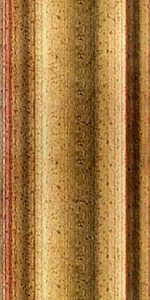
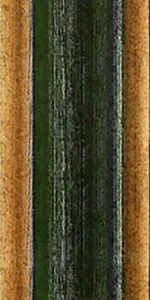
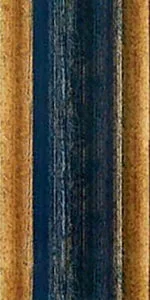
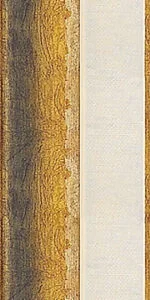
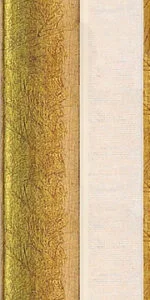
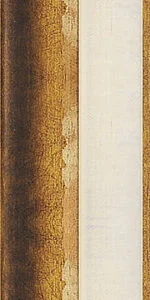
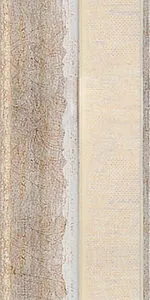
If none of the eight sizes suits your room, we paint the work in the measure you set — send the width and height and we tell you the price and the date. Work to measure is the only way to get the ratio of 99 to 60, the band the original is. The hand-painted oil painting is stretched over a wooden bar with the edges painted, so it does not look unfinished without a frame. A narrow dark moulding with a gold inner edge suits the motif; a wide pale frame narrows the gap between white bridge and sky, and that gap gives the work its depth.
Delivery and guarantee
Every Monet reproduction we make travels to sixteen countries of the European Union — among them Slovenia, Croatia, Austria, Germany, Italy and Hungary — wrapped in film and firmly packed, in a large crate at the biggest sizes. Production takes 15 to 45 days. You receive a photograph of the finished canvas before dispatch: if something is not right, we correct it while the work is in the workshop. Other Monet motifs are in the Claude Monet gallery, and we write about painting on our blog.
If the painting is a gift and you are unsure of the size, there is a gift voucher: the recipient chooses the size and the subject.
Frequently asked questions
Where is the original?
In a private collection. The catalogue raisonné lists it as number 279 and closes the line of owners there, so it is in no museum.
Are there any people in the painting?
Two figures stand on the bank at lower left, beside a moored boat. The entry names no one, so neither do we.
What does the painting say in one sentence?
That in 1873 Monet laid a railway through the middle of a Sunday scene and made no attempt to reconcile the two.
How many times did Monet paint the railway bridge at Argenteuil?
Several times. According to the Musée d’Orsay, in 1874 alone he painted the railway bridge four times and the nearby road bridge seven times — the two bridges were among his favourite motifs at Argenteuil.
- Subject. A railway viaduct across the full width, a train with a plume of steam, two figures beside a moored boat, and the Seine holding the reflections of the piers.
- Original. Oil on canvas, 99 x 60 cm, 1873, signed lower left; catalogue raisonné no. 279, private collection.
- Ours. Eight sizes from 50 x 40 to 150 x 110 cm, or made to measure, which alone keeps the original ratio.
- Worth knowing.