



- Room of inspirations
Reproductions of Paintings by Famous Painters
Vincent van Gogh
Dutch painter regarded as one of the greatest Post-Impressionists. He is known for his striking colors, emphatic brushwork and contoured forms. His work had a strong influence on the development of Expressionism in modern art. Van Gogh’s art became popular only after his death, especially in the late 20th century, when his works sold for record sums at auctions around the world. Partly because of his extensive letters, van Gogh also lives on in the popular imagination as a brilliant artist who was misunderstood in his lifetime.

Vincent van Gogh – Almond Blossom

Vincent van Gogh – Café Terrace at Night (Place du Forum)

Vincent van Gogh – Sunflowers
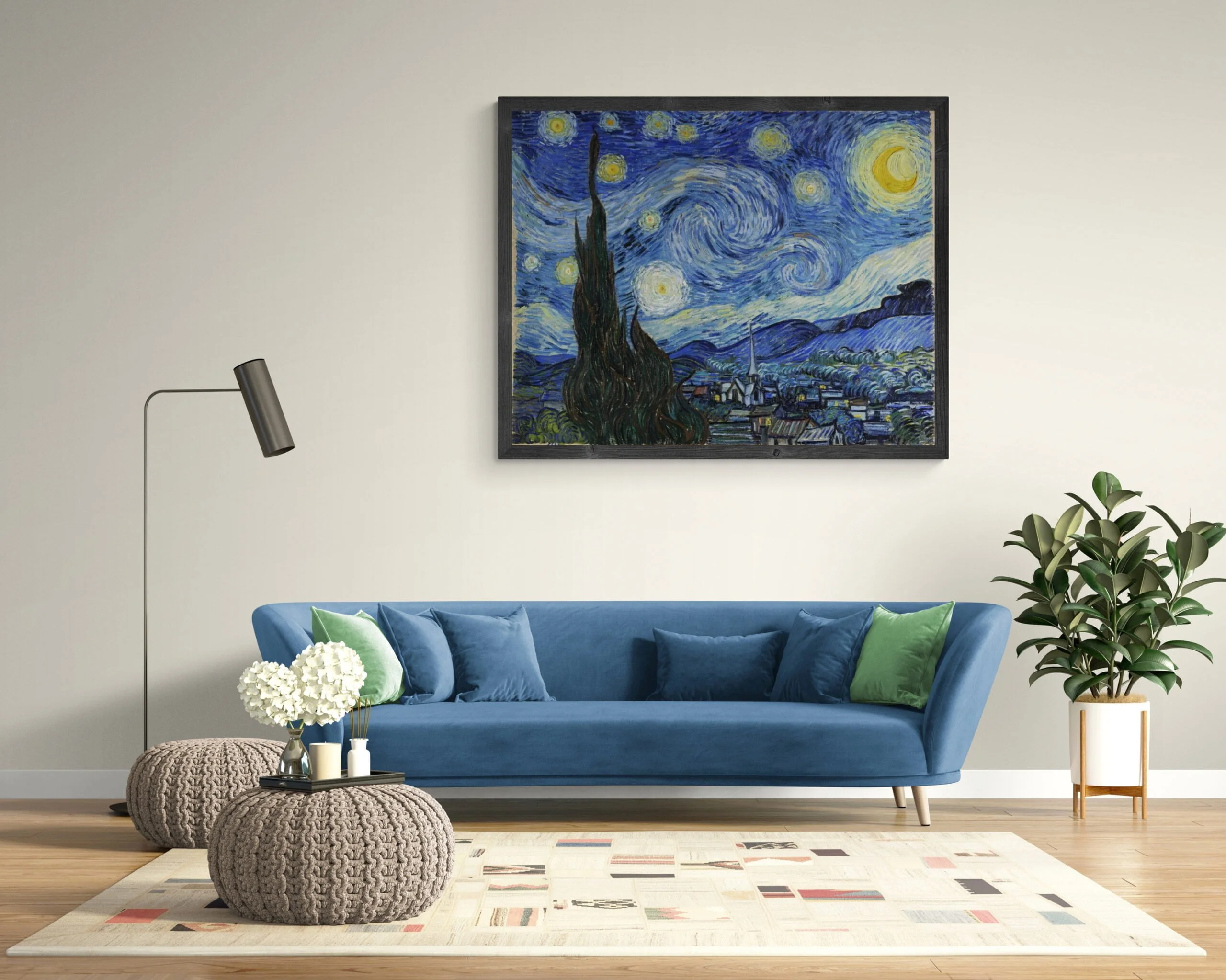
Vincent van Gogh – The Starry Night

Vincent van Gogh – Wheatfield with Crows
Gustav Klimt
After studying at the Vienna School of Arts and Crafts, Gustav Klimt opened his own studio in 1883, specializing in murals. His early work was in the classical style typical of late-19th-century academic painting, as his murals for Vienna’s Burgtheater (1888) and for the staircase of the Kunsthistorisches Museum show.
Gustav Klimt’s signature style emerged in 1897. He founded the Vienna Secession, a group of painters who rebelled against academic art and practiced a more decorative technique akin to Art Nouveau. Soon afterwards he painted three allegorical ceiling paintings for the Great Hall of the University of Vienna, which were harshly criticized for their erotic symbolism and pessimism. They caused such a scandal that the paintings were rejected.
His later murals, the Beethoven Frieze and the frieze in the dining room of the Stoclet Palace in Brussels, are marked by precise linear drawing and a bold, free use of flat, ornamental patterns of color and gold leaf. Klimt’s most successful works are The Kiss (1908–09) and a series of portraits of fashionable Viennese matrons, such as Fritza Riedler (1906) and Adele Bloch-Bauer I (1907). In these works he renders the human figure without shadow and heightens the lush sensuality of the skin by surrounding it with flat, highly ornamental, brilliantly composed decorative elements.

Gustav Klimt – The Tree of Life

Gustav Klimt – The Kiss
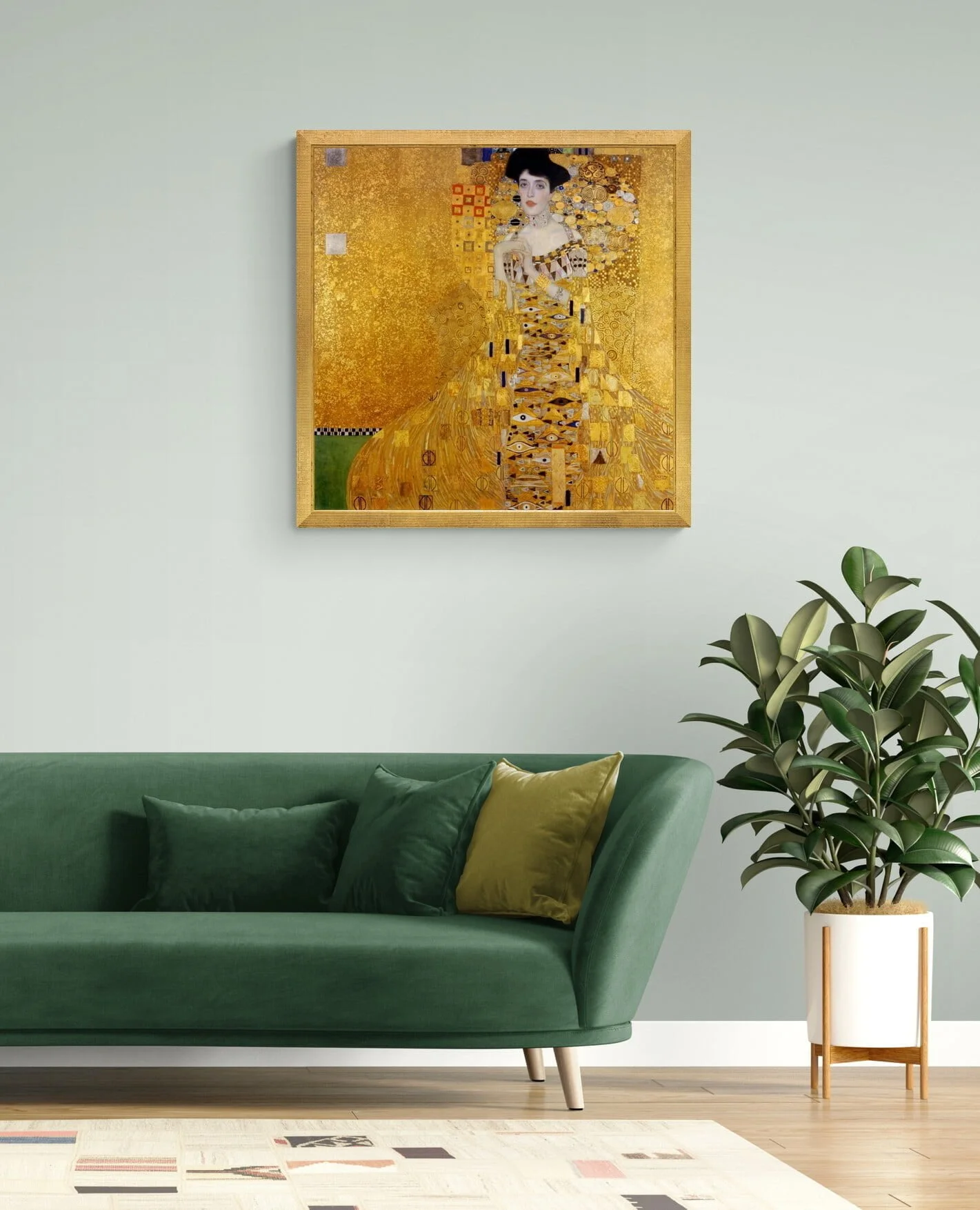
Gustav Klimt – Portrait of Adele Bloch-Bauer I

Gustav Klimt – Water Serpents

Gustav Klimt – The Tree of Life (detail)
Claude Monet
Claude Monet (14 November 1840 – 5 December 1926) was the founder of French Impressionist painting and the most consistent and prolific practitioner of the movement’s philosophy of expressing one’s own perceptions before nature. The term Impressionism comes from the title of his painting Impression, Sunrise.
The defining feature of Monet’s work is his commitment to Impressionism and its core principles, such as a focus on texture, light and brushstrokes. Monet’s attention shifted from the subject – a boat, a landscape or a person – to the way color works on the canvas. His art seeks to capture what the eye sees and the dynamic changes of a landscape with perspective and light. This devotion to Impressionism began as a way of breaking free from the rigid constraints of the Paris Salon, but it endured as the signature style that defined his body of work.

Claude Monet – The Water Lily Pond (Le bassin aux nymphéas)

Claude Monet – Impression, Sunrise

Claude Monet – Blue Water Lilies

Claude Monet – Woman with a Parasol (The Walk)

Claude Monet – Poppies near Argenteuil
Edgar Degas
“Yesterday I spent the whole day in the studio of a strange painter called Edgar Degas,” the Parisian man of letters Edmond de Goncourt wrote in his diary in 1874. “Of all the subjects in modern life, he has chosen laundresses and ballet dancers. . . it is a world of pink and white. . . the most delightful pretext for using pale, soft tints.”
Edgar Degas, then 39, would go on painting ballerinas for the rest of his career. “People call me the painter of dancing girls,” Degas later told a Paris art dealer. “It has never occurred to them that my chief interest in dancers lies in rendering movement and painting pretty clothes.”
Degas wanted to change the image people had of him, for his words express a love of the grace of drawing and the charm of color. As a student, Edgar Degas dreamed of drawing like Raphael and Michelangelo, and he later revived the French pastel tradition that had flourished with the 18th-century master Chardin. But like his contemporaries Manet, Cézanne and the Impressionists, he lived in the age of photography and electricity, and he turned to aspects of modern life – slums, brothels and horse races. Bathing nudes became a favorite subject, and he once compared his more modern studies with Rembrandt’s with mocking wit. “He was lucky, that Rembrandt!” he said. “He painted Susanna in the bath; I paint women in the tub.”

Edgar Degas – Landscape by the Sea

Edgar Degas – Ballet Dancers in the Wings

Edgar Degas – Dancers in Pink

Edgar Degas – Dancers at the Barre

Edgar Degas – Four Dancers
Paul Gauguin
Paul Gauguin’s style changed over his years of work, but many of his major works share the following traits:
Bold brushstrokes
Paul Gauguin used thick, expressive brushstrokes. He often added wax to his paints to make them smoother.
Expressive use of color
In his Synthetist period, Gauguin often painted vivid areas of color surrounded by thick, dark outlines. His color tones became more subdued later in life.
Unprimed hessian canvas
During his years in Tahiti, Gauguin painted mostly on unprimed hessian or on sacking. The coarse material let the weave of the fabric show through the paint. Gauguin probably chose it because he could not afford more expensive canvas, but he found that it gave his paintings a texture that heightened the aesthetic he was after.
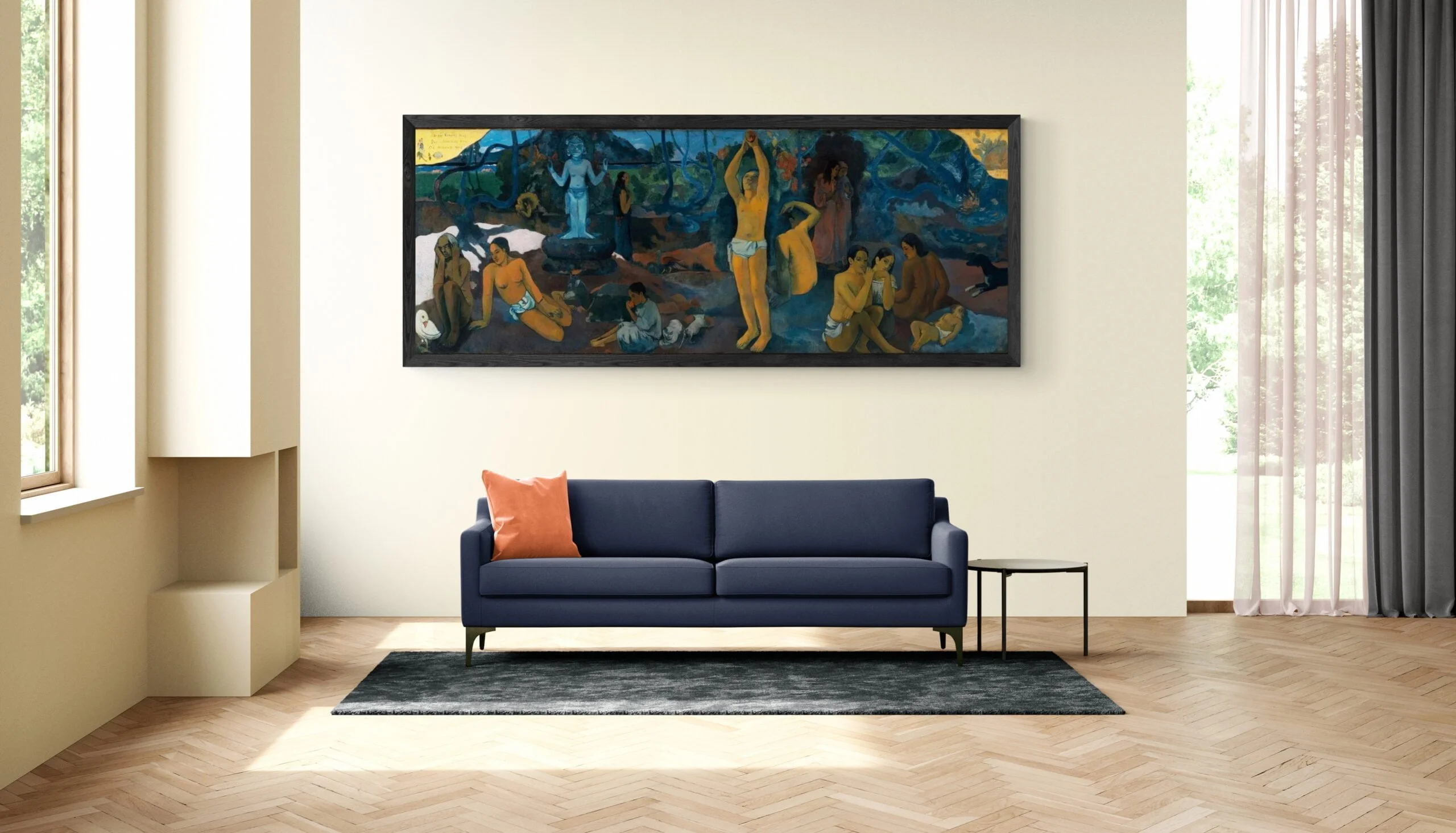
Paul Gauguin – Where Do We Come From? What Are We? Where Are We Going?

Paul Gauguin – Cruel Tales (Exotic Saying)

Paul Gauguin – Woman Holding a Fruit (Where Are You Going?)

Paul Gauguin – The Yellow Christ

Paul Gauguin – Rocks by the Sea (Rochers au bord de la mer)
Paul Cézanne
Paul Cézanne’s modern style and technique were avant-garde and were therefore misunderstood for many years. Even other famous painters of his day, the Impressionists, scorned Cézanne’s progressive style. After the first Impressionist exhibition, many of them asked that he be barred from exhibiting with them at later shows, because Cézanne’s compositions were too controversial.
Cézanne worked with thickly applied layers of paint and undefined forms, trying to simplify everything into shapes that could be broken down. Although he was close to the Impressionist Camille Pissarro and was influenced by his plein-air painting, Cézanne was not an Impressionist. He was a thoroughly modern artist who fitted no category of painting style. His style paved the way for Fauvism and Cubism.

Paul Cézanne – Still Life with Cherries and Peaches

Paul Cézanne – The Great Pine

Paul Cézanne – Road before the Mountains, Sainte-Victoire

Paul Cézanne – Lake Annecy

Paul Cézanne – Bend in Forest Road