


Description
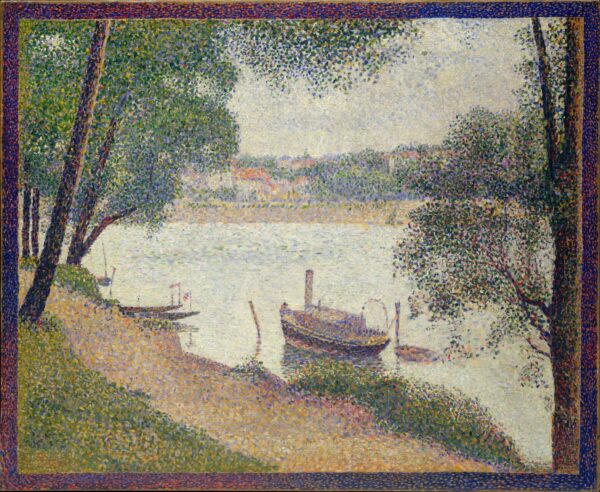
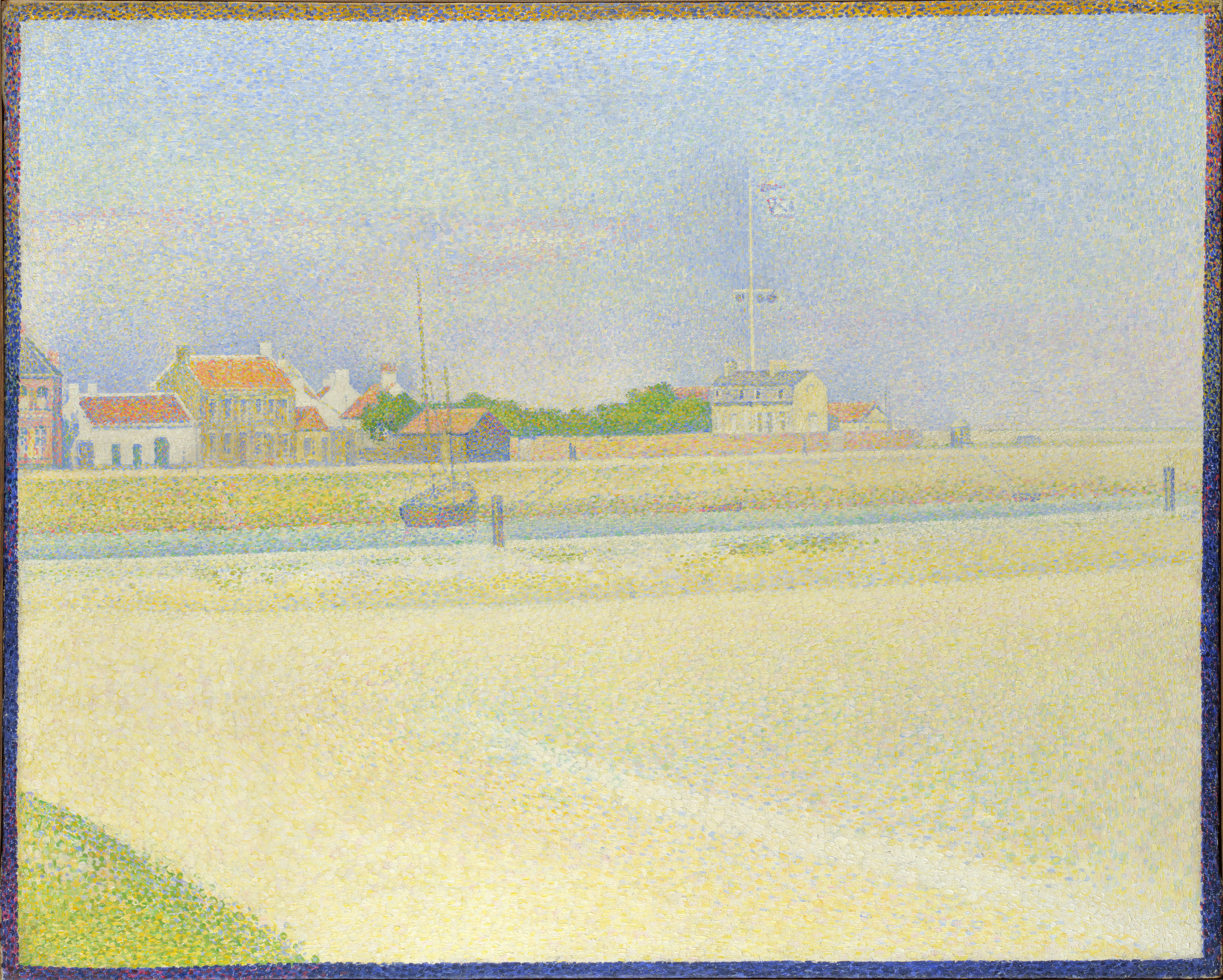
The Channel of Gravelines, Grand Fort-Philippe is Seurat’s coastal scene of 1890: morning light over a wide, empty stretch of sand left by the receding tide. The original measures 81 x 65 centimetres, is signed, and is held in London by The National Gallery under inventory number NG6554. From us it is made as a hand-painted work, oil on canvas, in eight sizes or to your own measurements, and before dispatch you receive a photograph of the finished work for approval.
| Title: | The Channel of Gravelines, Grand Fort-Philippe |
| Other titles: | The Channel of Gravelines, Grand Fort-Philippe · Le Chenal de Gravelines, Grand Fort-Philippe |
| Painter: | Georges Seurat (1859–1891) |
| Year painted: | 1890 (signed) |
| Original size: | 81 cm x 65 cm |
| Original technique: | Oil on canvas |
| Painting style: | Pointillism |
| Located at: | The National Gallery, London (inv. no. NG6554, Room 44) |
| Our reproduction: | hand-painted oil on canvas, 8 sizes from 70 x 55 cm to 246 x 197 cm, custom size on request |
The Channel of Gravelines, Grand Fort-Philippe – Georges Seurat
What is in the painting?
An empty shore in the morning. The museum describes it exactly: the painter stood on the sand dunes and looked at the shore in morning light, after the receding tide had left a broad expanse of open beach. Across a narrow channel a semaphore flies signals that the harbour waters are too shallow for boats, and along the seawall runs a single row of low buildings. The scene is almost deserted, apart from some distant figures.
The horizontal blue stripe of the channel divides the canvas into two near-equal halves of sky and sand.
Where is Gravelines, and why did the painter go to the coast?
Gravelines is a small port on the northern French coast between Calais and Dunkirk. The museum says that in the years before his early death Seurat spent several summers on the Channel coast, producing more than twenty works of its harbours and marine views; this is one of four he made in 1890 near Gravelines.
And it says why those places. Unlike Monet, drawn to dramatic cliffs, Seurat chose subdued locations – ones with man-made structures: harbour walls, jetties, buildings, masts and poles, which gave him verticals and horizontals to frame the landscape. The title names Grand Fort-Philippe, but by the museum’s own record the painter stood on the dunes of Petit-Fort-Philippe and looked across: both are the museum’s, and we give both, because we also sell The Channel of Gravelines, Petit Fort-Philippe.
How is it made?
Out of small dots. The museum describes how Seurat covers the canvas with a shimmering mosaic of dots and strokes of unblended paint, to create subtle gradations of luminous tone. The strokes range from tiny dabs to broad ones. Two modulated colours dominate – the pale golden-yellow of the beach and the light blue of the sky – and neither is flat.
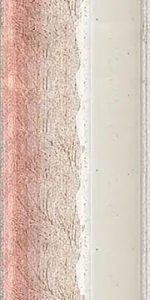
And one peculiarity worth knowing before you order: Seurat added a painted border of coloured dots, creating a transition between the image and the actual frame. Each section is calibrated to the adjacent area – deep indigo against the yellow sand, red dots where the border meets the green, orange above the sky. The method here does not stop at the edge of the scene; it carries across it.
Why does it feel so empty and yet so calm?
Because the emptiness is not a lack but a component. The museum calls this one of Seurat’s most reduced and spare compositions, and that is its strength: almost nothing happens, so everything there has its place.
The painter avoided stiffness with a device the museum describes precisely: he slightly elevated the horizontal axis, so that it rises almost imperceptibly from left to right, and that is what creates depth in an otherwise flat picture space. The triangular patch of green grass in the lower left corner is a shape Seurat often used – but the museum adds that contemporary photographs show there really was a grassy verge along the dunes. That, and one of the houses that still survives, confirms he worked from direct observation.
What happened to the original?
The museum publishes the whole route, and it begins, as with several other works by Seurat, in the family. After the painter’s death the canvas stayed with his mother, Mme Ernestine Seurat, 1828–1899, and passed to his brother-in-law Léon Alfred Appert, 1837–1925. After Appert’s death it was sold through the Paris dealer Etienne Bignou, then was with Reid and Lefevre in London, where Samuel Courtauld bought it in 1926 and gave it to his daughter Sydney Elizabeth Courtauld, later the wife of R. A. Butler. It stayed with the Butlers, Heinz Berggruen bought it in Paris in 1986, and in 1995 The National Gallery purchased it with a grant from the Heritage Lottery Fund. The stations are the museum’s.
Two names carry further. Léon Appert, the painter’s brother-in-law, opens the history at three other museums – Cambridge, Pasadena and Washington, where Seascape at Port-en-Bessin hangs; four institutions name him independently. Reid and Lefevre is the London dealer this canvas passed through – and that same name, garbled, stood on our page for Boats, Low Tide, Grandcamp, where we had to remove it, because a dealer is not a collection.
Where does this work stand among Seurat’s paintings?
Among the four Gravelines works of 1890, his last coastal ones, two of them in our gallery: The Channel of Gravelines, Evening is the same place at another hour of the day. He died in March 1891, aged thirty-one, and these coasts are the last thing he saw as a painter.
The method is called pointillism and the wider movement neo-impressionism; its summit, A Sunday on La Grande Jatte, is held by the Art Institute of Chicago. A famous painting from this circle looks different under different light, because the colours mix in the eye and not on the canvas, which is why a fine art reproduction of one has to be built the same way.
How is our hand-painted version made?
By hand and with a brush, never with a printer. Our painter works in oil colours on canvas, and here the emptiness is the hardest part: two large areas, sand and sky, have to stay alive while nothing happens. Too even and it goes stiff; too busy and it loses the calm that makes it work. Every hand-painted copy is one of a kind; this is not an oil painting reproduction printed onto canvas but a painting made from scratch. We paint the coloured border too if you want it – say so with the order. Before dispatch we photograph it and send you the photograph for approval.
For this subject we currently have no studio photographs of our own of the finished work. When we next paint it, we will photograph it, and the photographs will appear on this page.
Which size for which wall?
If you do not know which: 120 x 100 cm. The original measures 81 x 65 cm and sits between our first two rungs – 70 x 55 cm below, 100 x 80 cm above and the closest in proportion. The format is landscape and almost square.
The scene is empty and carries a large format well: 70 x 55 and 100 x 80 cm for an office or hallway, 120 x 100 and 140 x 110 cm as a piece in its own right, 160 x 130 and 180 x 140 cm ask for a wall of their own, 200 x 160 and 246 x 197 cm for large rooms. Every canvas painting of this subject is made to order.
Custom size, stretcher and frame
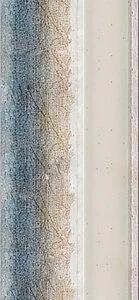
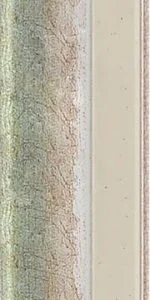
If none of the eight sizes fits your wall, we paint it to your measurements and keep the ratio of the original, so the horizon is never stretched: our custom size painting. You can order the painting in three forms: as a rolled canvas without a stretcher, stretched on a wooden stretcher and ready to hang, or framed; you choose the form when you order, and the frame in our 3D frame viewer. With this subject that choice is more interesting than usual: the original carries a painted border meant as a transition to the frame. To see the work on your own wall, that is our room-placement service.
Delivery and guarantee
Every copy is made to order in our studio in Slovenia, so allow 15 to 45 days depending on size. We ship it in the form you chose when ordering — rolled, stretched or framed — protected, across the EU, customs-free. You approve a photograph first, and our returns policy applies. The full range by this painter is in the Georges Seurat gallery, and his coastal summers in our article on Georges Seurat.
Frequently asked questions
Where is the original?
In London, at The National Gallery, inventory number NG6554, Room 44.
What year is the work from?
The museum dates it to 1890 – a single year, no “circa” and no range, so that is how we give it. The canvas is signed.
How big is the original?
The museum gives 65 x 81 centimetres, which in our width-by-height notation is 81 x 65 cm. We had the same measurement and the museum confirmed it.
What is the semaphore in the picture?
A signalling device across the channel which, the museum says, warns that the harbour waters are too shallow for boats.
Why is the title Grand Fort-Philippe if the painter stood in Petit-Fort-Philippe?
That is what the museum states: the title names the place shown, the painter stood on the dunes opposite. Both are its own words.
Does the original have a painted frame?
It has a painted border of coloured dots which, the museum says, creates a transition between the image and the actual frame. We will paint it too if you ask.
Who was Léon Appert?
The painter’s brother-in-law, 1837–1925. His name opens the history of this canvas and of three further Seurats in other museums.
Which size should I choose?
For a living room, 120 x 100 cm; the original sits between 70 x 55 and 100 x 80 cm. The full size guide is above.
Can I have a size that is not on the list?
Yes. We paint to measure and keep the ratio of the sides.
Is this a print?
No. It is hand-painted in oil colours; the strokes can be seen and felt, which a print cannot imitate.
Is it suitable as a gift?
Very. The scene is calm and light and suits almost any room. To leave the choice to the recipient, there is a gift voucher.
- Subject: an empty shore in morning light after the tide, with a signal tower across a narrow channel
- Original: 81 x 65 cm, oil colours on canvas, signed, The National Gallery, London (NG6554)
- Our version: a hand-painted oil painting on canvas, eight sizes from 70 x 55 to 246 x 197 cm
- Worth knowing: this French painter painted the coloured border round the scene as well, as a transition to the frame