


Description
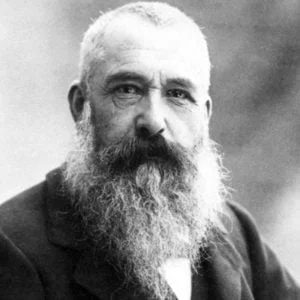
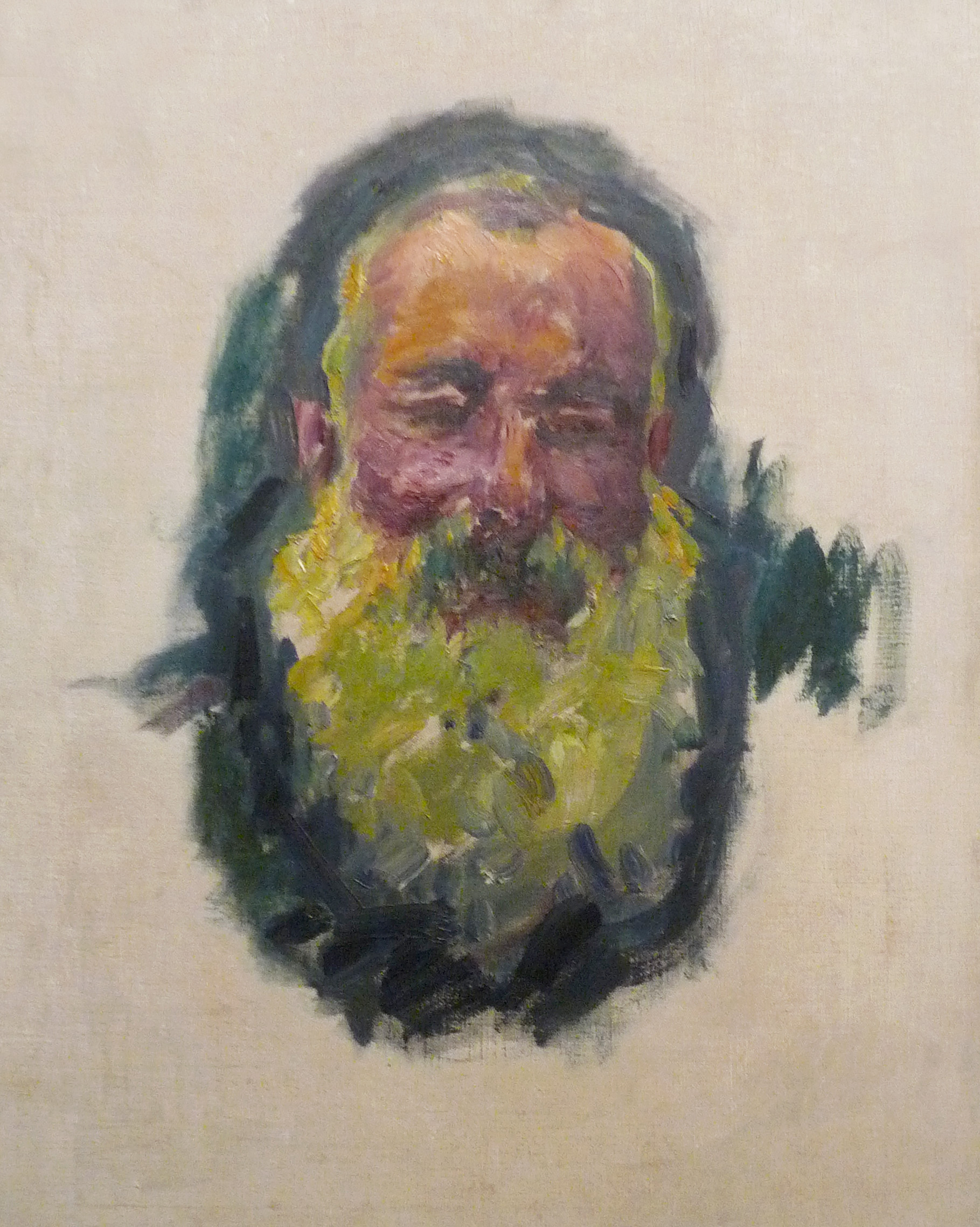
Self-Portrait is a hand-painted reproduction of Monet’s canvas in the Musée d’Orsay in Paris: the head faces us squarely, the high forehead is laid in pink, orange and yellow strokes, the eye sockets are deep violet, and the beard is broad and pale and built from dozens of short, dense strokes. Everything else is unpainted canvas with the weave showing through. The original measures 55 x 70.5 cm and is oil on canvas, accession number RF 2623. The museum dates it to 1917, and its own title for it is Portrait de l’artiste. We paint it in eight sizes or to your own measurement, with a photograph of the finished work sent for approval before dispatch.
| Title: | Self-Portrait |
| Other titles: | Portrait de l’artiste, that is Portrait of the Artist (the name in the museum record); in the Wildenstein catalogue the work is number 1843 |
| Painter: | Claude Monet (1840–1926) |
| Year painted: | 1917 according to the museum record, with no reservation; the canvas carries neither a signature nor a year, and the museum record has no field for inscriptions either |
| Original size: | 55 cm x 70.5 cm |
| Original technique: | Oil on canvas |
| Painting style: | Impressionism |
| Located at: | Musée d’Orsay, Paris (inv. RF 2623) |
| Our reproduction: | Hand-painted oil on canvas, eight sizes or made to measure |
Self-Portrait – Claude Monet
What is on the canvas?
A head, and almost nothing else, facing us squarely and taking up the upper two thirds. The forehead is high and bare, laid in pink, orange, yellow and brick strokes; the eye sockets are dark violet and the eyes inside them no more than two dark notches. The nose is one short pull; the mouth is lost in the beard.
The beard is the palest and most worked part of the canvas. It is broad and almost square, built from dozens of short, thick strokes in cream, yellow, olive green and grey-blue, the pale canvas showing between them here and there. The paint stands visibly above the weave.
Around the head lies the canvas’s only background: a ring of dark green and near-black strokes that thickens at the top into a shadow behind the hair. Below the beard a few dark blue strokes suggest shoulders and a collar. A patch of dark green strokes sits right of the head, and a small grey-blue pull reaches in from the left.
On the canvas it is the other way round: the beard is what the painter worked longest, and its strokes are short and many.
How much of the canvas is painted at all?
Less than half. Outside the head, the ring behind it and the strokes below the beard the canvas is unpainted: a pale grey-pink ground with the weave showing and a few rust-coloured specks. The strokes do not fade into a background; they stop at an edge, and behind it there is nothing.
We looked at the top, the bottom and the left edge at full resolution: there is no paint there. The canvas has been left as it is, and we do not interpret that – the museum record says nothing about it, so we do not guess whether the work is unfinished or meant this way.
Is there a signature on the canvas?
There is none. We went over the whole canvas on our photograph and on the museum’s plate: nowhere is there a name or a year. The record carries no field for inscriptions either, so we are not departing from the museum; both are silent about the same thing.
The year 1917 in the table is therefore the museum’s alone.
What does the museum record say about the size?
The work is held by the Musée d’Orsay in Paris under accession number RF 2623. With the frame it gives 57 x 72 cm, reordered the same way.
That figure is not the museum’s but a rounding, and it is in exactly that form that Wikidata publishes it. Where the museum record and a database disagree the museum stands, because it holds the work and measured it.
The museum does not call it Self-Portrait
In the museum record the work is called Portrait de l’artiste, Portrait of the Artist, and not Autoportrait. It is the same canvas and the same record; both titles stand in the table, because a reader may meet either of them.
Here the item is sold as Self-Portrait, and that is what we call it, because it is the title a buyer will find it under.
How did the canvas reach Paris?
As a gift, and the date says something: for this work the museum gives don Georges Clemenceau, 1927. The record’s own line about the painter gives his dates too, 1840 and 1926, so the canvas entered a public collection the year after he died.
The record says no more. It publishes no chain of owners, and nothing about how the canvas reached the donor, so we do not tell that story. One more figure follows from those two dates: when the work was made the painter was seventy-six or seventy-seven, depending on a month the record does not give. Both stand here.
Which other portraits by Monet do we sell?
The portrait is a rarity in this painter; our Claude Monet gallery holds a few. Camille Monet on Her Deathbed and Meditation, Madame Monet on the Sofa show his first wife, Madame Monet in a Kimono places her in a kimono before fans, and Jean Monet on His Hobby Horse shows their son. Woman with a Parasol is a figure in a landscape rather than a portrait, but from the same circle.
The same museum holds a portrait of this painter that he did not paint. Claude Monet, accession RF 3666, is a work by Auguste Renoir of 1875; it measures 60.5 x 84 cm and came with the Raymond Koechlin bequest in 1931. Forty-two years lie between the two.
How is our hand-painted version made?
Every order is painted individually by an artist, in oil on cotton or linen: that is how every canvas painting of ours is made, with no print and no machine step. An oil painting reproduction of this motif is demanding for a reason that reverses every other subject: a large part of the canvas must stay empty, and empty canvas is only painted by being left alone.
The second test is the beard: short strokes that must not run together into one surface, or the face loses its weight. An impressionist painting does not take a high gloss, so every Monet reproduction leaves our studio matt, even where the paint is thickest.
Which size for which wall?
Eight sizes are available, from 40 x 51 to 150 x 190 cm, and there are two answers. By size the nearest is 50 x 60 cm, 5 cm narrower and 10.5 cm shorter than the canvas in Paris. By ratio the nearest is 70 x 90 cm, at 1.2857 against the original’s 1.2818.
For this subject the choice depends on distance more than usual. A portrait is looked at from close to, so in a hallway or by a bookcase 50 x 60 cm is enough; on an open wall, standing further back, 70 x 90 cm or 80 x 100 cm works. As a painting for the office this subject is not the obvious choice, because it looks the viewer straight in the face. Every size is listed with the item.
How high to hang the painting: the centre about 150 cm above the floor, so the eyes on the canvas sit near the viewer’s own.
Made to measure, stretcher and frame
For a size that is not on the list, made to measure is the only route: write to us with the width and height in centimetres. The canvas can arrive stretched on a wooden stretcher or rolled in a tube. A frame is not included; the museum keeps the canvas in a pale wooden moulding hard to tell from the unpainted canvas itself.
Delivery and guarantee
Making takes two to three weeks, a few days longer at the largest sizes, because the oil must dry between layers. If the work arrives damaged or differs noticeably from the approved photograph, we replace it or refund the price. A hand-painted copy is not a factory article and small differences in the brushwork are to be expected; damage is not.
If the painting is a gift and you are unsure of the size, there is a voucher: the recipient chooses the size and the subject.
Frequently asked questions
Where is the original?
In Paris, in the Musée d’Orsay, under accession number RF 2623.
What is it about, in one sentence?
About a face the painter finished, and the canvas around it that he did not.
What year is it from?
1917, when Monet was 76. That is how the Musée d’Orsay dates it.
Where did Monet paint the self-portrait?
At Giverny, where he lived from 1883 until his death; in those years he worked mostly in the large studio he had built for the water lilies.
- Subject. A head facing the viewer, a high bare forehead, a broad pale beard of short strokes, a ring of dark green strokes behind it, unpainted canvas everywhere else.
- Original. Oil on canvas, 55 x 70.5 cm, 1917; Musée d’Orsay, Paris, inv. RF 2623.
- Ours. Eight sizes; 50 x 60 cm is nearest by size, 70 x 90 cm by ratio.
- Worth knowing. The museum gives a height of 70.5 cm where the database rounds it to 70; the museum’s figure is the one here.