



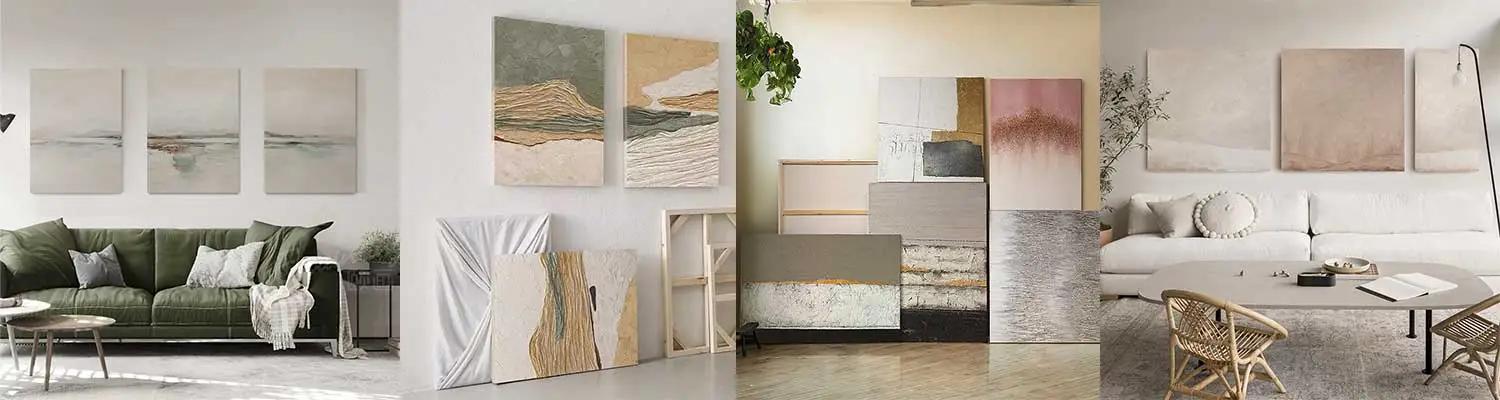

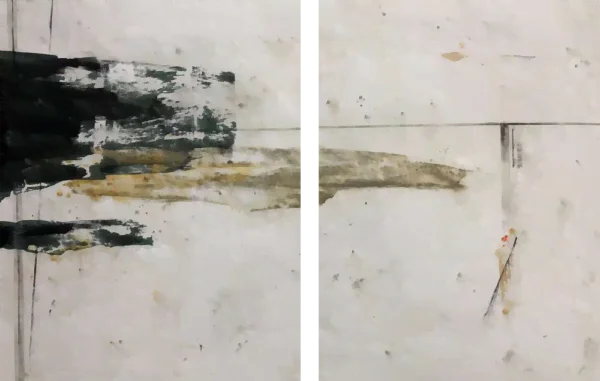


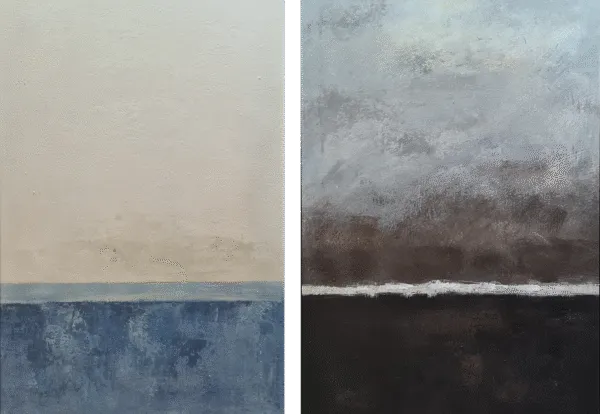

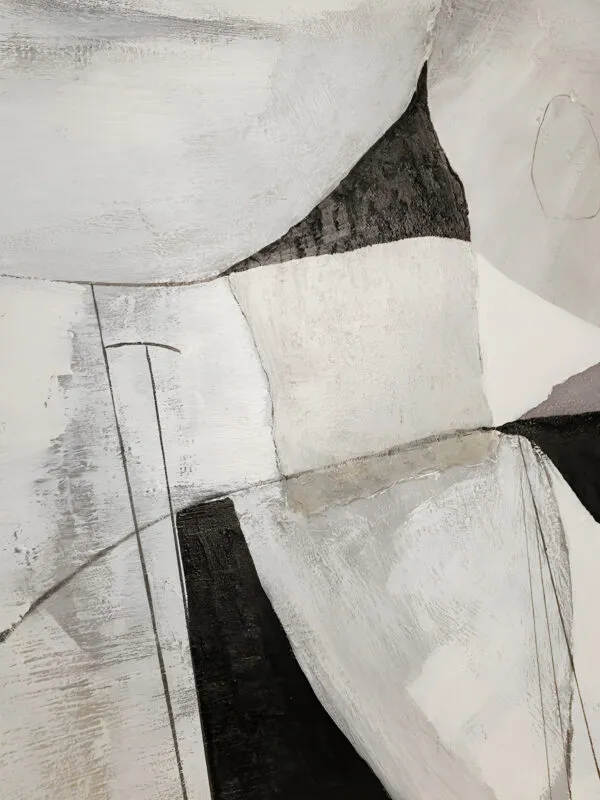
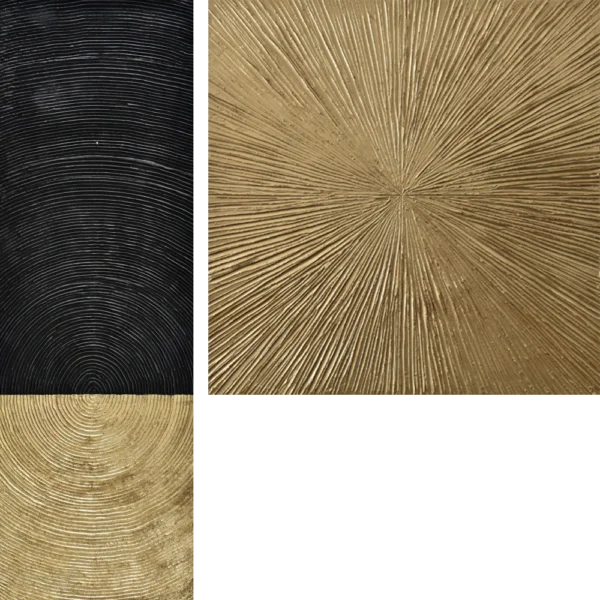


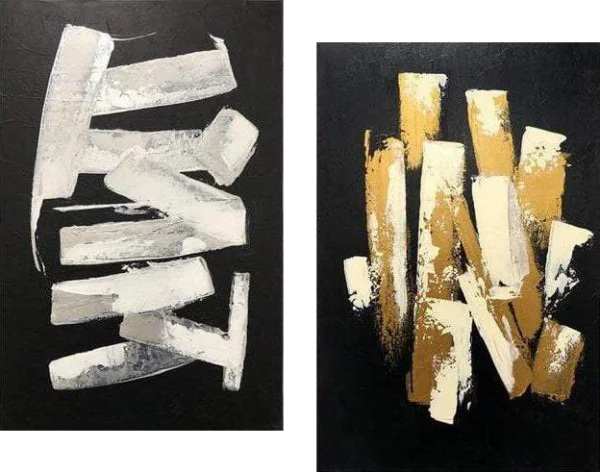

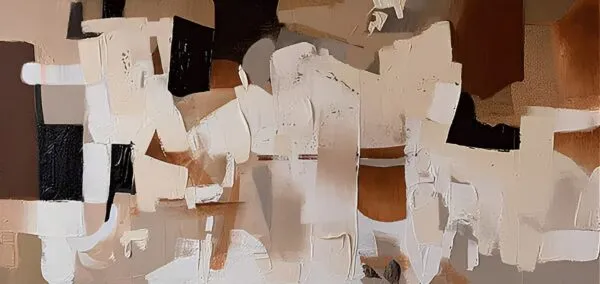
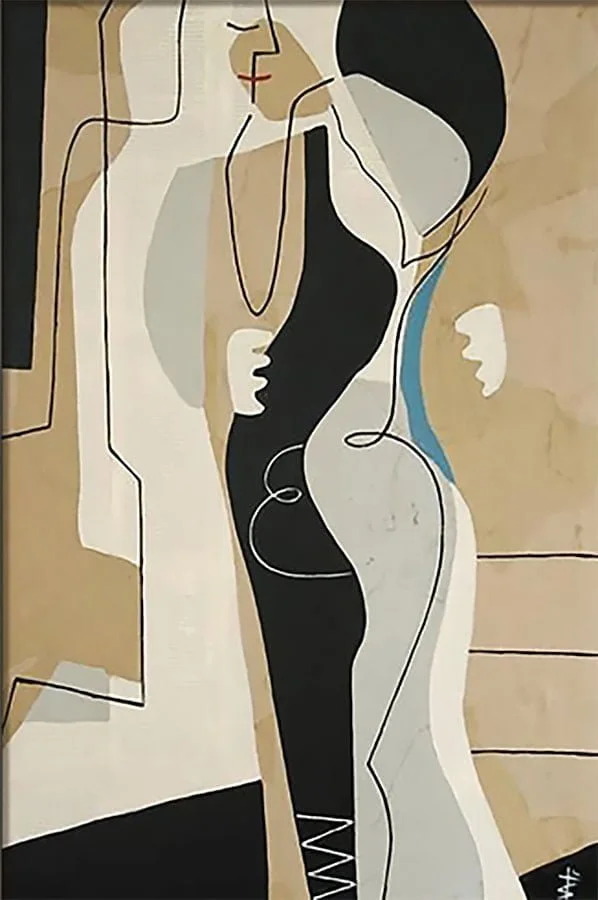
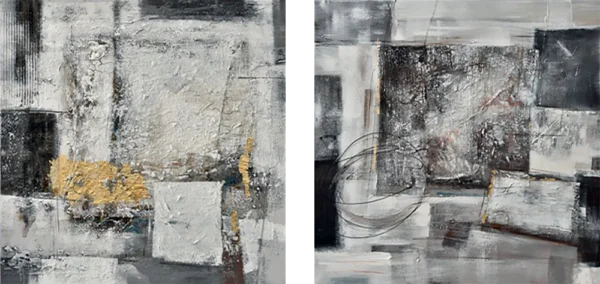

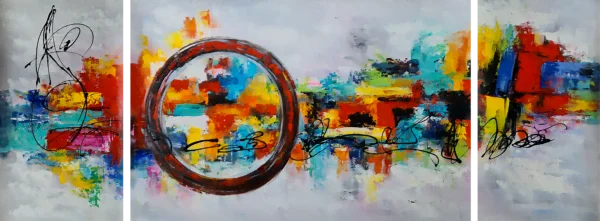

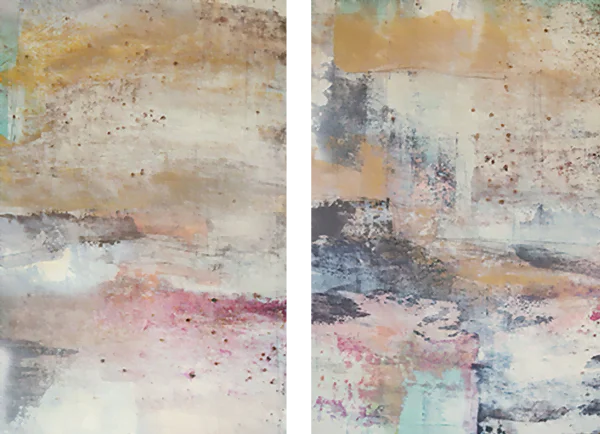
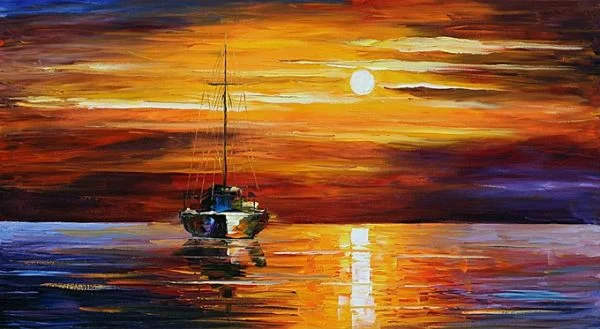






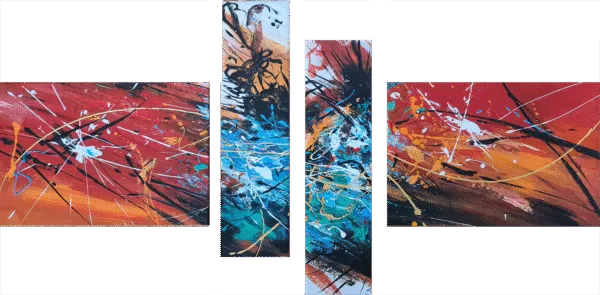
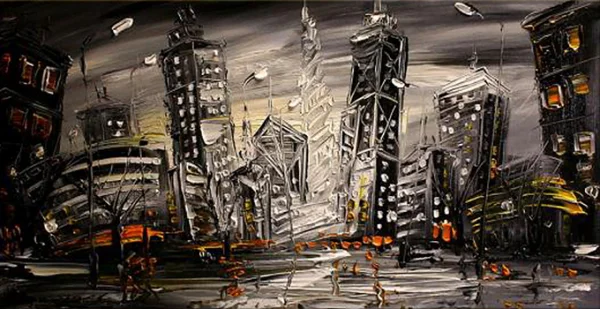


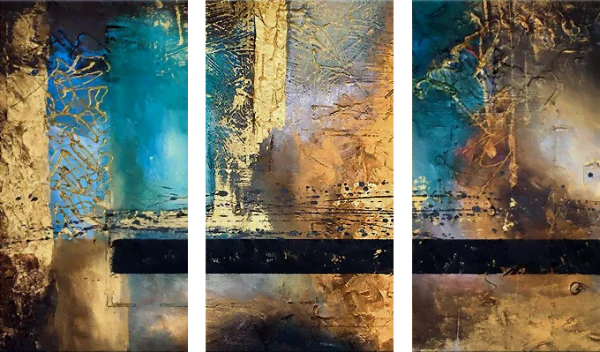
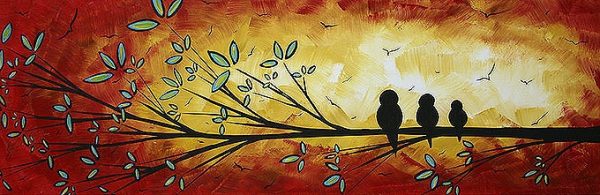

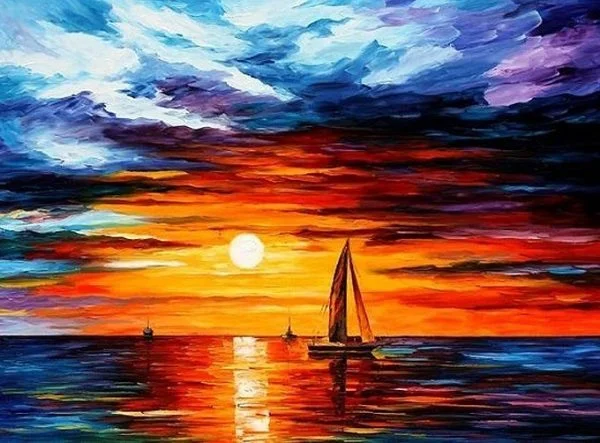
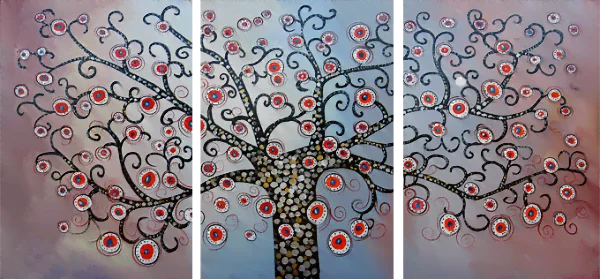
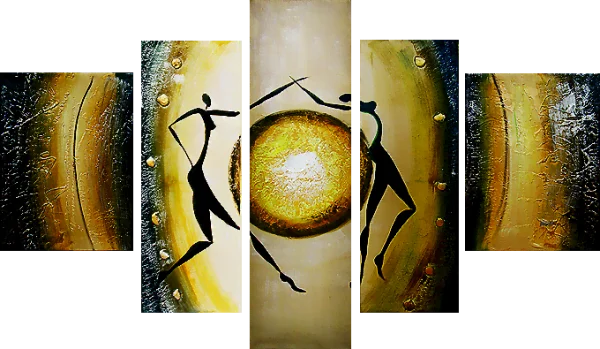
Abstract and modern paintings on canvas, painted by hand by our painters – not prints. Choose from more than 600 paintings in one, two or more panels, with prices from 79 €. Each painting is painted to order, and you choose whether it arrives rolled, stretched on a frame or framed.
How to choose an abstract painting for your room
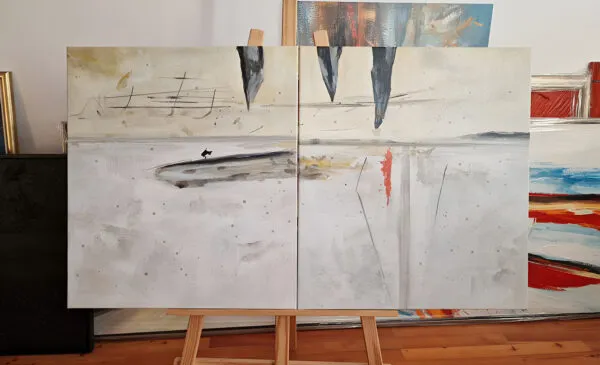
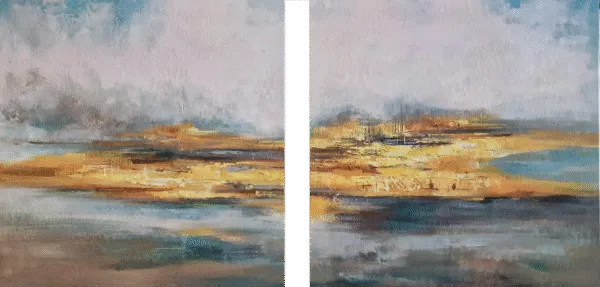
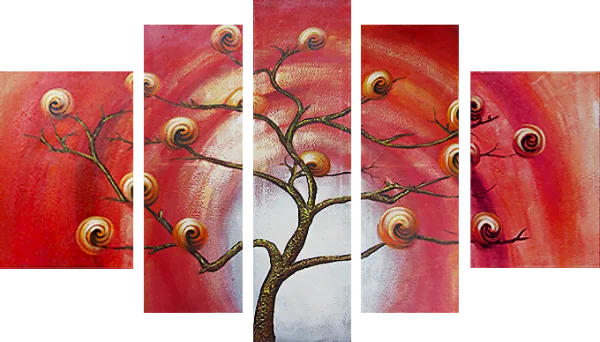
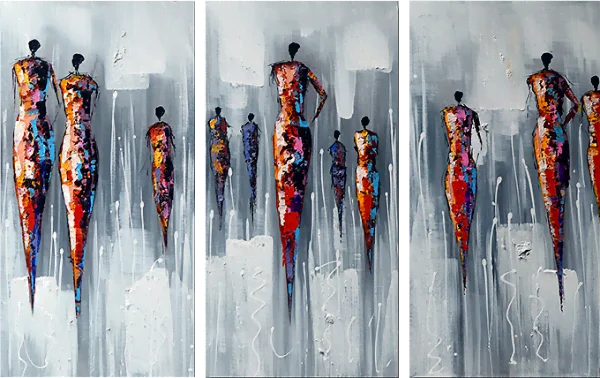
Above a sofa, bed or sideboard a painting looks best at about two thirds of the width of the furniture below it. A narrow wall suits a vertical painting; a long wall suits a horizontal or multi-panel painting. Two-panel paintings and single-panel paintings also have their own categories. If you are not sure, send us a photo of your wall: we prepare a free preview of the painting in your room, usually within 24 hours. For a long wall, see our triptych paintings.
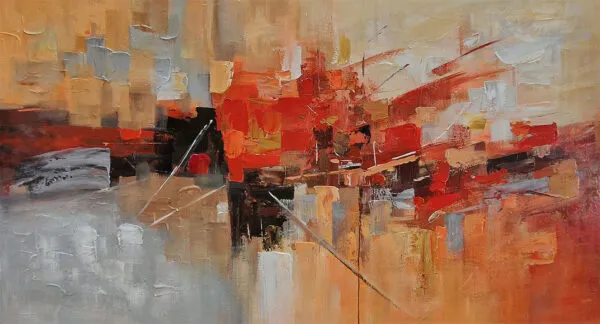
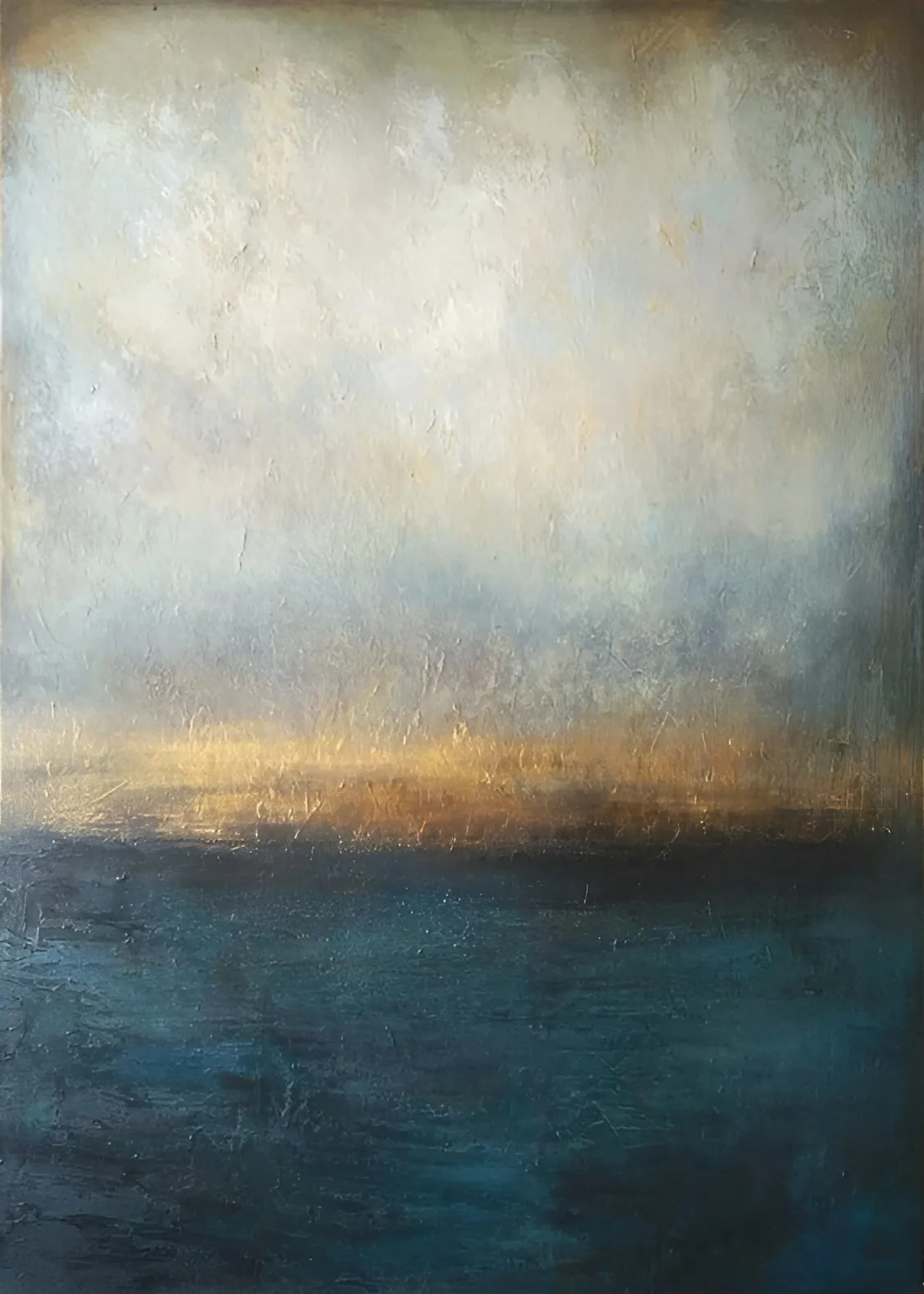
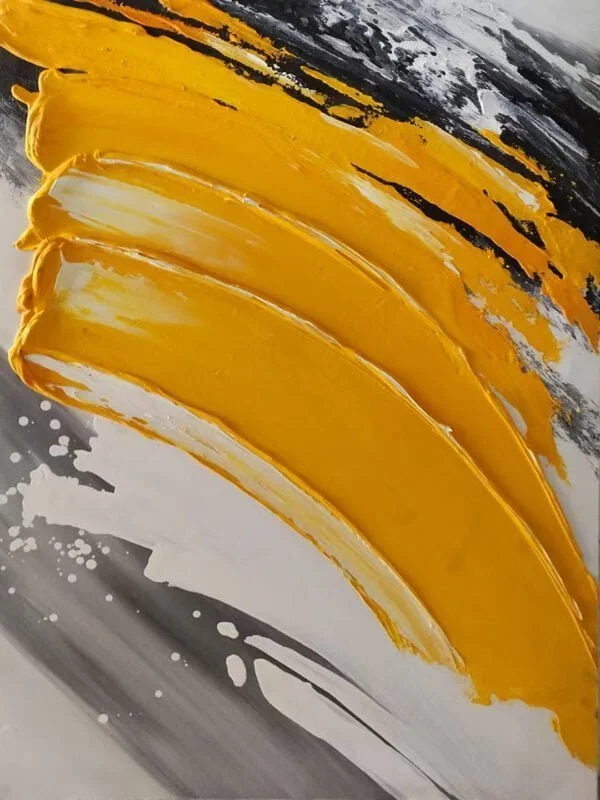
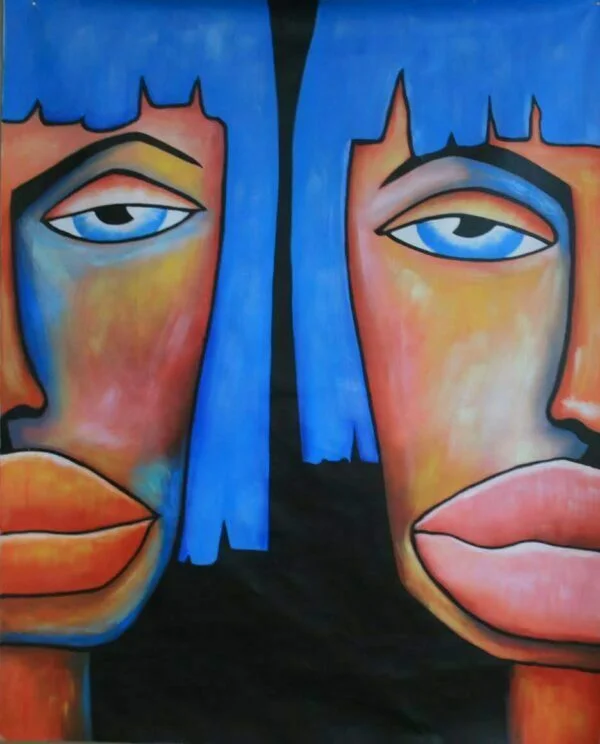
A few abstract paintings from the collection: Abstract painting – Orange Eruption, Abstract painting – Golden Reflection and Abstract painting – Colour Mesh.
If you are looking for a painting to hang above the sofa, see also our paintings for the living room, with tips on size and hanging height.
How the paintings are made and how you receive them
Every painting is painted by hand by one of our painters, so each has its own brushstrokes and differs slightly from the photo. Stretching and framing are done in Slovenia. The stretcher is 2.5 cm deep, and you can choose from more than 50 frames. Multi-panel paintings are always sent stretched and unframed; on request we frame each panel separately. Before dispatch we send you a photo of the finished painting. Some paintings are in stock; use the “In stock” filter to find them. If you want a painting in another size or from your own idea, see custom paintings.
Frequently asked questions
What is an abstract painting?
An abstract painting shows no recognisable objects or people; it works through colour, shape, line and texture. That is why it fits a room and its furniture more easily than a painting with a clear subject.
Are the paintings hand-painted or printed?
Every painting in this category is painted by hand on canvas by our painters. They are not prints.
How much does an abstract painting on canvas cost?
Prices start at 79 €. The final price depends on the size, the number of panels and whether you want it rolled, stretched or framed.
What size painting should go above a sofa?
About two thirds of the sofa’s width. For a 210 cm sofa that means a painting or multi-panel painting about 140 cm wide. Send us a photo of your wall and we will show you the painting in your room for free.
Will the painting arrive rolled, stretched or framed?
You choose. Rolled is the cheapest to ship, stretched is ready to hang, and framed comes with the frame you pick. Stretching and framing are done in Slovenia. Multi-panel paintings always arrive stretched, unframed.
How long does delivery take?
Paintings in stock are dispatched within 6 working days. Paintings painted to order arrive in 15 to 45 working days.
Can I see the painting before it is sent?
Yes. Before dispatch we send you a photo of the finished painting.
Where can I buy wall art paintings?
Here in our online shop: over 600 modern and abstract paintings, hand-painted by a painter in oil or acrylic. You choose the size and receive the painting rolled, stretched or framed; before dispatch we send you a photo of it.